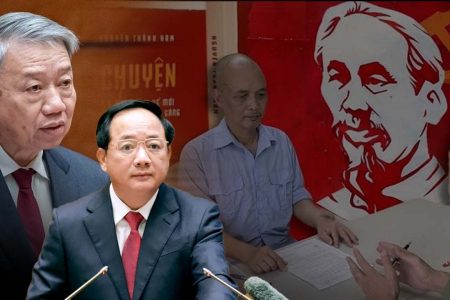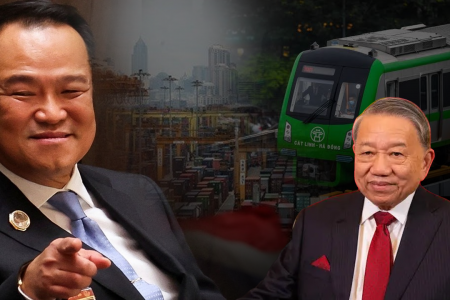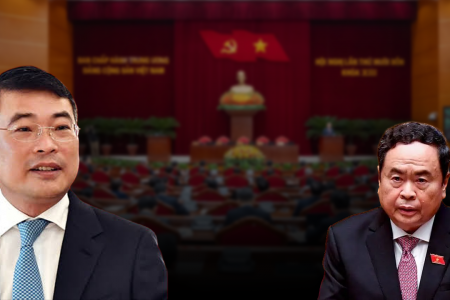
Just five months after the 14th Party Congress concluded in April 2026, unusual developments within Ba Dinh’s political circles are beginning to clearly reveal serious internal rifts. In particular, this follows the incident involving the book “Chuyện Với Thanh,” which highlighted divisions among factions within the party.
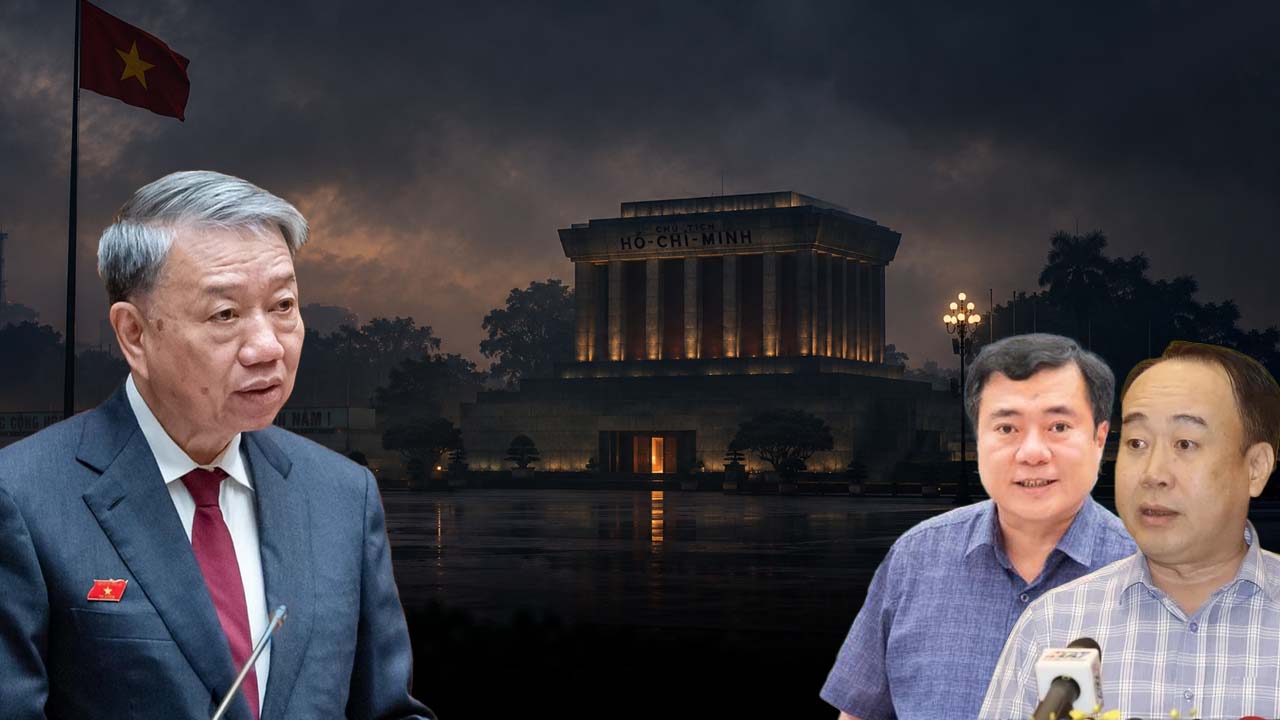
Against this backdrop, on September 18, 2026, the Politburo’s simultaneous announcement of 12 decisions on high-level personnel appointments signaled a major upheaval in the turbulent personnel landscape.
The list features a dense concentration of “sons and grandsons of prominent figures,” such as Nguyen Sinh Nhat Tan, son of former National Assembly Chairman Nguyen Sinh Hung; Nguyen Sy Hiep, son of former National Assembly Chairman Nguyen Van An; and Tran Quan, son of the late President Tran Dai Quang.
All three were assigned to serve as Deputy Secretaries in key provinces and cities. This is seen as a step back and a concession by To Lam to the “veteran cadres” within the party.
At the same time, a number of deputy heads of Party committees at the central level were also reassigned to key localities. Conversely, the central leadership was strengthened by recalling local leaders to serve in advisory roles.
According to well-informed sources, this rapid wave of personnel shifts is linked to General Secretary To Lam’s message calling for a complete end to the “glossy” mindset among officials.
Accordingly, the political system will operate on the principle of “coming in, going out, moving up, and moving down,” ensuring that officials who fail to fulfill their duties for two consecutive quarters are immediately replaced.
However, according to international analysts, the period from July 2026 to the present has witnessed a series of changes in ministerial and provincial Party Secretary positions.
Many officials have been reassigned back to their original positions; a notable example is Mr. Do Thanh Binh, who left the Ministry of Home Affairs to become Party Secretary of Can Tho City.
Consequently, this intense wave of personnel “rotation” is not merely a routine reassignment but carries two profound and contrasting strategic implications.
On the one hand, this may be evidence of General Secretary To Lam’s high concentration of power, and the widespread reshuffling of key leadership positions in both the central government and provincial and municipal administrations indicates that he is taking the initiative.
Mr. To Lam is resolutely establishing a new, effective, and substantive order. This is evident in the deployment of police officers to civilian sectors, as well as the reassignment of “Party princes” to localities to test their capabilities before being entrusted with greater authority.
However, on the flip side, international observers are still asking: Could this actually be a failure in personnel planning immediately following the 14th Party Congress, and did significant internal party pressures force the Party leader to accept this reshuffling?
Specifically, senior officials who have only recently taken office are already being forced to change positions repeatedly.
A prime example is Quang Tri Party Secretary Nguyen Van Phuong, who has been rotated through multiple localities and positions in just a short period of time.
This easily creates a sense of unease among cadres. This situation will cause grassroots leadership to fall into a state of confusion, leading them to work half-heartedly.
The public also has deep concerns about this rapid succession of leadership changes. The constant turnover of leadership positions in provinces and cities—with new leaders taking over after just a few months—not only results in significant waste of money and time but also erodes public trust and confidence.
Furthermore, such rapid upheaval exposes major gaps in personnel management; it highlights a lack of thorough vetting and an inability to accurately assess the capabilities of senior officials before making promotion or appointment decisions.
Public opinion is calling on General Secretary To Lam to review the process and exercise greater caution in selection to avoid hasty decisions that create personnel shocks.
Tra My – Thoibao.de