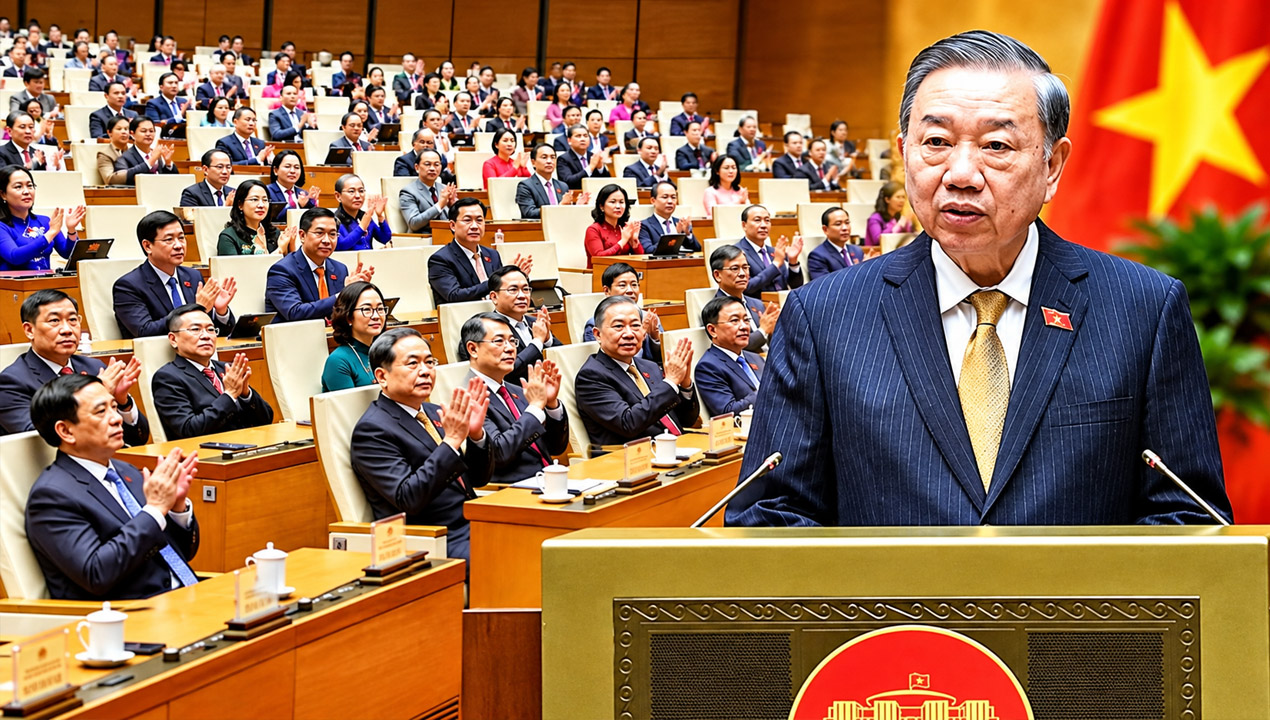
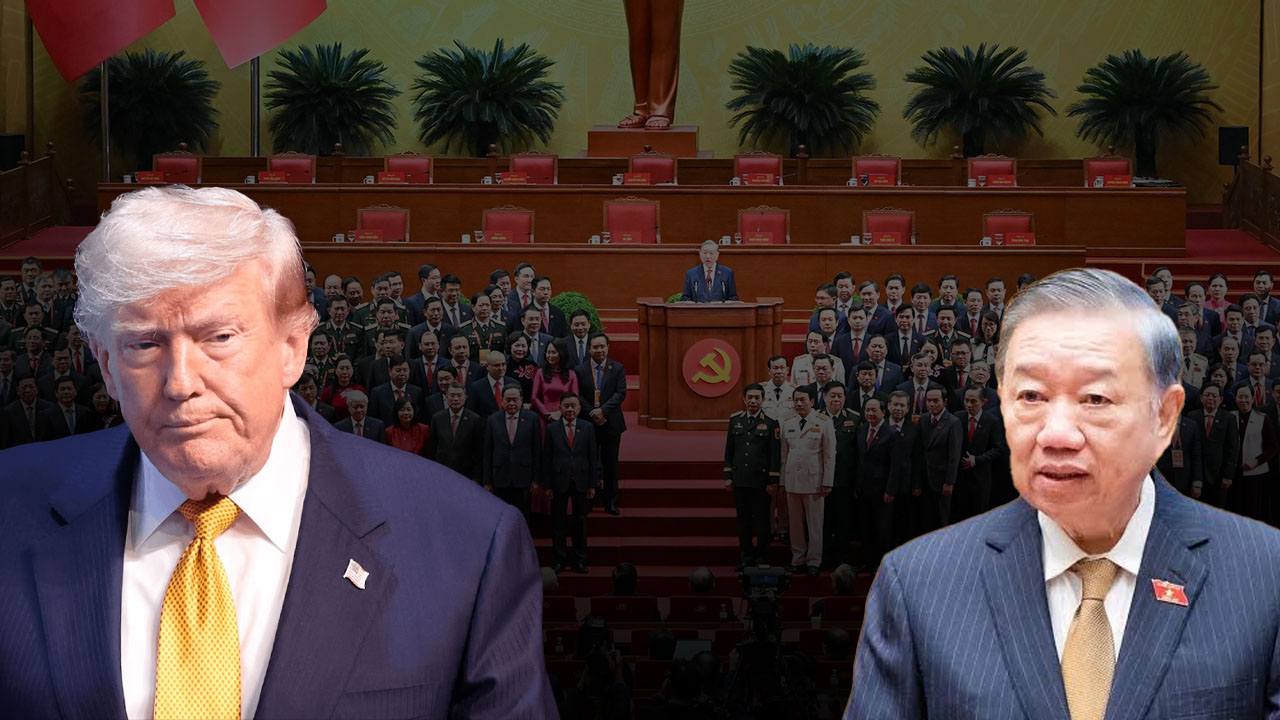
11月6日午前、国会議事堂にて、トー・ラム氏は、ベトナム国会が初の憲法を採択してから80周年(1946年11月9日~2026年11月9日)を記念する式典で演説を行った。演説の中で、同氏は、党組織と党員が憲法や法律を模範的に遵守すると同時に、人民の監視を受けなければならないと強調した。一見単純な指摘のように思えるが、権力を握る者たちにとっては決して軽視できない要求である。

注目すべきは、ト・ラム氏が「人民は国家権力の主体である。主権は、政策の策定への参加、公権力の活動の監視、および憲法と法律の規定に基づく諸問題の決定において保障されなければならない」と断言した点である。このように、主権は記念行事の場で言及されるだけでなく、公権力機構の具体的な活動とも結びついている。

しかし、その断言と現実の間には常に隔たりが存在し、行動によって検証される必要がある。国民は実際に政策の策定に参加できているのか? 公務員や公的機関に対する監視は、十分に実質的かつ効果的か?最初の憲法が制定されてから80年が経過した今も、これらの問いは、国民の主権に関する公約を測る重要な物差しである。なぜなら、もし国民が権力の主体であるならば、国民による監視も、単に厳粛な宣言にとどまることは許されないからである。

https://www.facebook.com/share/p/1PvoG7SWCg/

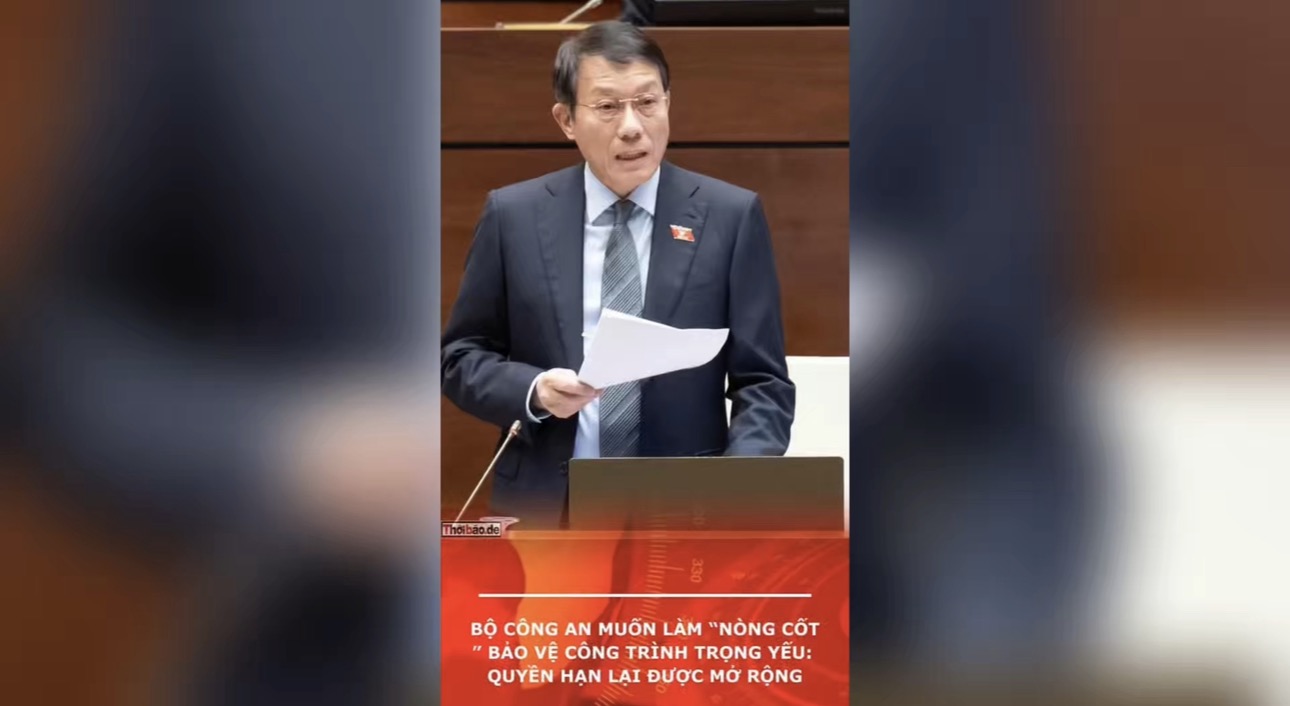
11月5日上午,國會就一項預計將於本屆會議期間通過的法律草案進行了討論。值得注意的是,公安部提議擴大其職能,使公安部隊成為保護涉及國家安全的重要設施的「中堅力量」。若獲通過,這將是關鍵設施保護責任劃分方式的一項重大變革。

Screenshot

值得注意的是,該草案已不再提及國防部以往所規定的角色。所提出的理由是,國防部轄下的設施已有《國防設施及軍事區管理與保護法》進行規範。換言之,一方已有專門法律規範,而另一方的角色則正在新草案中重新規劃。

不僅如此,草案還新增了「其他與國家安全相關的重要設施」類別,涵蓋各機關、組織及地方政府所屬的國家管理職能範圍內的設施,惟公安部及國防部所管轄的設施除外。適用範圍已擴大、職能受到強調,權限也提議予以擴充。值得關注的問題是,責任界線與監督機制將如何設計,以確保權力與問責並存?

https://www.facebook.com/share/p/1AdycAG4Jt/

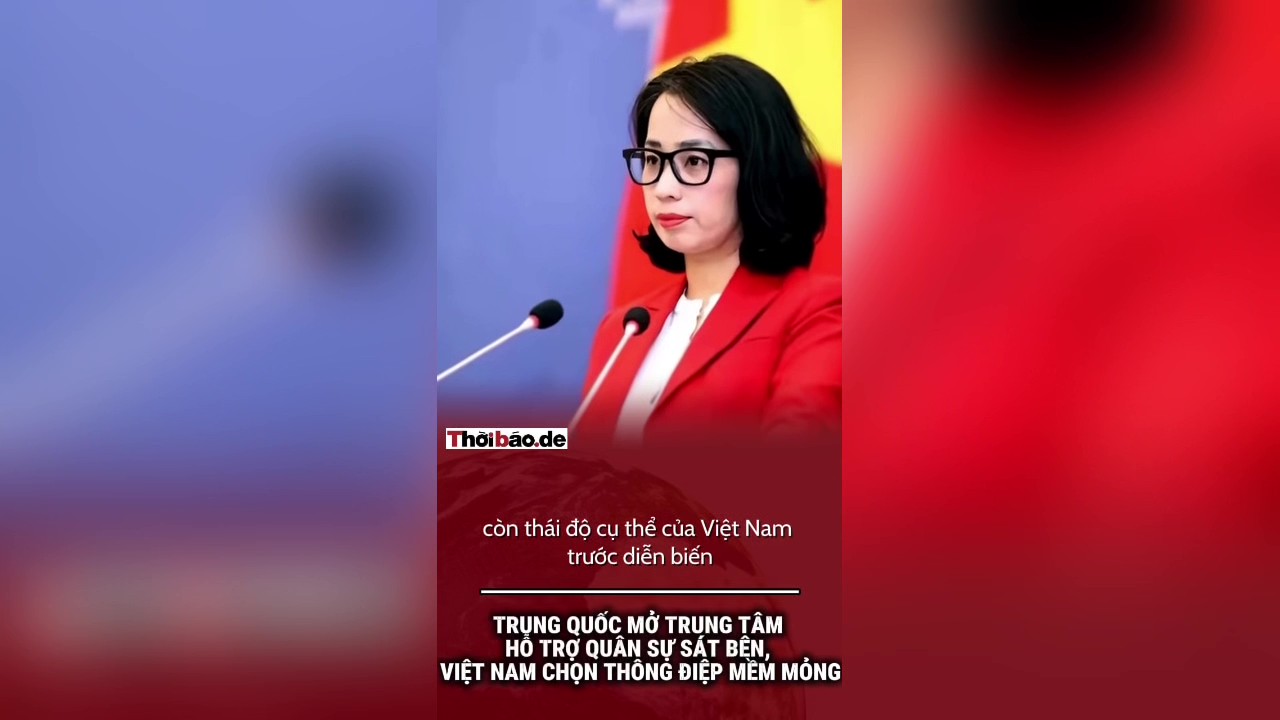
Во второй половине дня 5 ноября на очередной пресс-конференции пресс-секретарь Министерства иностранных дел Вьетнама г-жа Фам Тху Ханг ответила на вопрос об открытии Китаем центра военной поддержки в аэропорту Бан-Кеун в Лаосе. Это важный вопрос, связанный с военным присутствием Китая в соседней стране, в условиях, когда регион всегда чувствителен к изменениям в сфере безопасности и обороны.

Отвечая на вопрос, г-жа Ханг подчеркнула: «Вьетнам всегда стремится к тому, чтобы Лаос развивался мирно, независимо и самостоятельно». Это заявление звучит одновременно дружелюбно и соответствует духу дипломатии. Однако общественность, возможно, хотела бы узнать больше о том, как Вьетнам оценивает упомянутый центр военной поддержки, особенно с учетом того, что сама пресс-секретарь упомянула о независимости и самостоятельности Лаоса.

Примечательно, что г-жа Ханг не сообщила, испытывает ли Вьетнам опасения по поводу этого центра, и не упомянула, обсуждал ли Ханой этот вопрос с Пекином или Вьентьяном. Поэтому после пресс-конференции подтвердилось лишь желание, чтобы Лаос оставался мирным, независимым и самодостаточным. А конкретная позиция Вьетнама в отношении этих военных событий по-прежнему остается вопросом без ответа. Дипломатия порой несет в себе множество посланий, но есть и такие вопросы, на которые приходится продолжать ждать ответа.

https://www.facebook.com/share/p/1CFon4gGQh/

Bis heute haben die Behörden noch keinen Termin für die Bekanntgabe der Ergebnisse der Bürgerbefragung zum Projekt der Sun Group im Stadtteil Vinh Hung in Hanoi bekannt gegeben. Die Befragung hat zwar stattgefunden, doch die wichtigste Frage bleibt offen: Was haben die Einwohner gesagt und wie werden diese Meinungen berücksichtigt? Anscheinend macht das Warten nach der Anhörung die Bevölkerung nicht weniger ungeduldig als der Konsultationsprozess selbst.

Ein Ladenbesitzer in Vĩnh Hưng erklärte gegenüber „Luật Khoa“, dass diese Situation ihn an das Sông-Hồng-Projekt erinnere, bei dem die Bevölkerung nach wie vor durch Petitionen und auf den Straßen aufgehängte Transparente ihren Widerstand zum Ausdruck bringt. Er sagte: „Ich habe den Eindruck, dass es nach der Meinungsumfrage wieder so still ist wie beim Song-Hong-Projekt. Niemand im ganzen Dorf und in der ganzen Gemeinde war damit einverstanden, jetzt schreiben sie sogar Petitionen und hängen überall auf den Straßen Transparente auf. Man weiß nicht, wo man anfangen soll, und man weiß nicht, wem man glauben soll.“

Ein anderer Anwohner berichtete ebenfalls, dass in seiner ganzen Gasse niemand zugestimmt habe, aber was ihn beunruhige, sei die Frage, ob diese Meinungen tatsächlich berücksichtigt würden. Die Einholung von Meinungen der Bevölkerung sollte eigentlich ein Schritt sein, um der Gemeinschaft Gehör zu schenken. Wenn die Menschen jedoch nicht wissen, wie ihre Meinungen zusammengefasst werden und wann die Ergebnisse veröffentlicht werden, kann das Schweigen nach der Konsultation leicht zu einem großen Fragezeichen hinsichtlich der Transparenz und Rechenschaftspflicht werden.

https://www.facebook.com/share/p/1Bp6i6bGF5/

According to observers, a car, a plot of land, a small financial transaction, and even every aspect of a citizen’s daily life now face the risk of being placed on the “scales” of the Ministry of Public Security’s “Internet of Everything” technology.
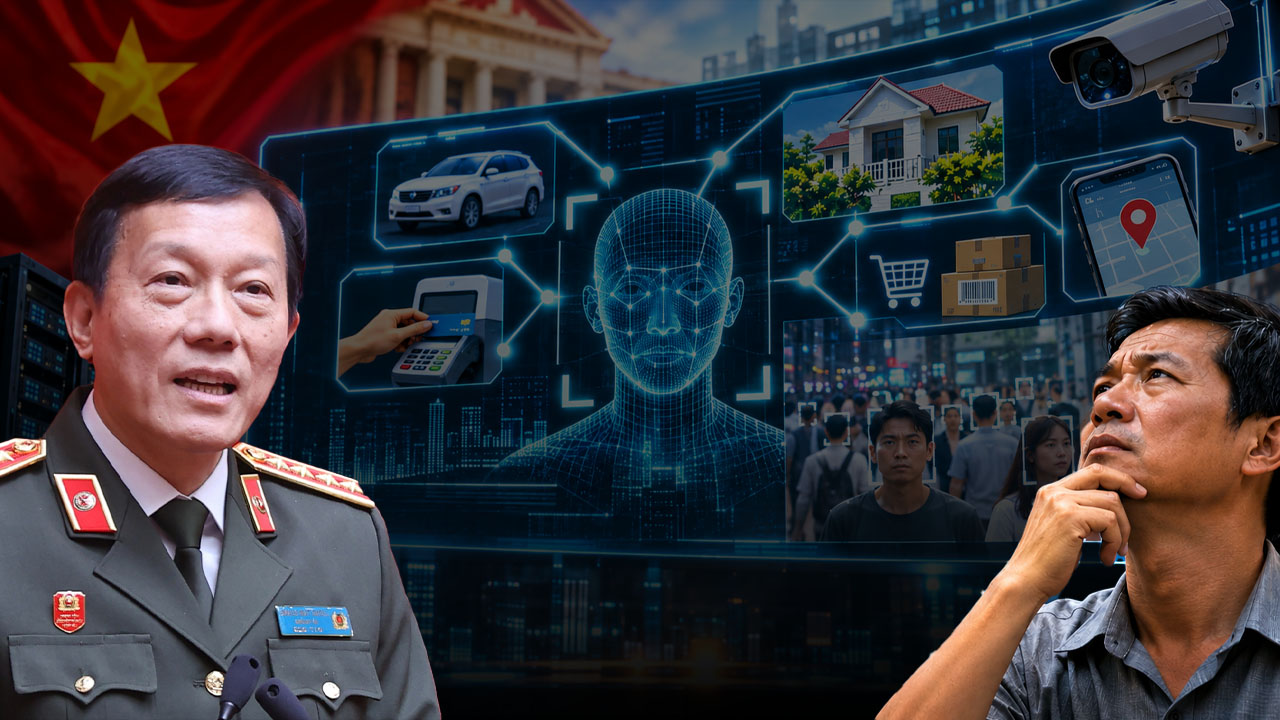
If implemented nationwide, this initiative would create a massive database system, seamlessly interconnected to enable regulatory agencies to easily identify, retrieve, and control information with unprecedented efficiency.


However, there is a thorny question that cannot be avoided: when the state holds the power to control every aspect of citizens’ lives, who will be the one to oversee that power?

This is a fair measure of the limits of state power, the boundaries of privacy, and the survival of institutions protecting human rights in the face of the threat of excessive surveillance.

In theory, no one denies the benefits that the Internet of Things can bring to the national governance system. Assigning identification codes to physical entities and economic transaction chains helps ensure transparent traceability of goods, identify unusual cash flows, and prevent trade fraud.

More importantly, it minimizes the cost of verifying information for the business community. When data streams are synchronized and linked, the loopholes previously obscured by decentralized management systems are eliminated.

However, the law of technology dictates that the broader the scope of data connectivity, the greater the accompanying risks. A platform originally designed for administrative management can easily become a tool for extensive surveillance if there are no sufficiently robust legal safeguards to restrain it.

The core issue lies in what types of data are permitted to be collected, who has access to this treasure trove of sensitive information, and how it will be used to serve national governance objectives.


When behavioral data, transaction histories, and all social activities are linked together without independent oversight mechanisms, the fragile line between government management and blatant intrusion into private life will be officially erased.


Furthermore, a system that centralizes vast amounts of personal data serves as prime targets for cyberattacks—not only compromising the privacy of millions of people but also posing a direct threat to national economic security.

Most alarming of all, the wave of the Internet of Things (IoT) is intertwined with the Ministry of Public Security’s trend toward expanding its power without limits. But as the scope of data collection continues to expand, the question of checks and balances on power has become more urgent than ever.

When a single agency serves as both a policy-maker and the direct manager of highly classified data systems, while also wielding powerful law enforcement tools and sanctions, the accountability mechanism is easily rendered ineffective.


Concerns about a police-state system in the current context are a legitimate self-defense reaction by society as a whole to the following questions: Where are the limits of the Ministry of Public Security’s power, and what tools do citizens have at their disposal to protect their legitimate rights when they are violated?

For this reason, the Internet of Things (IoT) project cannot be measured solely by technological ambition or the number of servers the state owns.


Public opinion holds that the more data collected from citizens, the more the Ministry of Public Security must be transparent and accountable to the public. Without a strict, independent legal framework established by the National Assembly and civil society organizations, digital transformation will not represent progress in national governance but rather a system of social control that far exceeds the necessary limits of a civilized society.

Trà My – Thoibao.de

=======

The Ministry of Public Security’s “Identification of All Things”: Digital Transformation or a Tool to Tighten Social Control?

“… The Ministry of Public Security’s policy of ‘identifying all things’ raises questions about the boundary between digital transformation governance and the risk of increased social control.”

#Vietnam #ChinhTruongVN #Thoibao

Theo thông tin từ báo chí, ngày 5/11, Chính phủ trình Quốc hội bổ sung chương trình mục tiêu quốc gia phòng, chống ma túy và tội phạm giai đoạn 2026–2035, với tổng vốn dự kiến hơn 63.450 tỷ đồng. Đáng chú ý, nội dung này được bổ sung vào chương trình kỳ họp và việc bổ sung chương trình đã được 100% đại biểu có mặt tán thành. Một quyết định liên quan đến nguồn ngân sách hàng chục nghìn tỷ đồng rõ ràng cần được công chúng quan tâm.

Theo tờ trình, giai đoạn 2026–2030 cần 45.301 tỷ đồng, trong đó 22.450 tỷ đồng đã được phê duyệt trước đó và đề nghị bổ sung 22.851 tỷ đồng. Giai đoạn 2031–2035 dự kiến cần thêm 18.151 tỷ đồng. Đây là những con số không nhỏ, đặt ra yêu cầu về kế hoạch phân bổ.

Chống ma túy và tội phạm là mục tiêu quan trọng, nhưng mục tiêu đúng đắn không đồng nghĩa với việc mọi khoản chi đều mặc nhiên hợp lý. Người dân có quyền biết tiền thuế của mình sẽ được sử dụng vào đâu, hiệu quả được đo lường thế nào và ai chịu trách nhiệm nếu ngân sách không đạt kết quả như cam kết. Bởi ngân sách có thể được thông qua bằng những lá phiếu đồng thuận, nhưng hiệu quả sử dụng từng đồng tiền công vẫn cần được chứng minh bằng thực tế.

https://www.facebook.com/share/p/1D7LdDSdAL/

Khuyến nghị chuẩn bị nhu yếu phẩm đủ dùng trong 72 giờ đang được nhiều quốc gia quan tâm, từ Thái Lan đến Liên minh châu Âu. Thế nhưng, khi thông tin này lan truyền tại Việt Nam, A05, Bộ Công an, lại phải lên tiếng nhắc nhở người dân không suy diễn thành dấu hiệu chiến tranh hay thảm họa sắp xảy ra. Một lời khuyến cáo phòng ngừa vốn nhằm giúp người dân chủ động trước tình huống bất ngờ, nay lại trở thành chủ đề cần được giải thích để tránh gây lo lắng.

Điều đáng chú ý là chính A05 cũng khuyến nghị người dân chuẩn bị nước uống, thực phẩm khô, đèn pin, pin dự phòng và thuốc thiết yếu ở mức hợp lý. Nói cách khác, chuẩn bị là cần thiết, nhưng đừng chuẩn bị theo cách khiến thị trường biến động. Người dân được khuyên nên sẵn sàng, đồng thời cũng được nhắc không nên suy diễn quá xa.

Trớ trêu ở chỗ, trong một thế giới liên tục đối mặt với thiên tai, khủng hoảng an ninh và rủi ro công nghệ, khả năng tự ứng phó của mỗi gia đình vốn là điều đáng khuyến khích. Điều người dân cần không phải những lời trấn an chung chung, mà là thông tin rõ ràng, nhất quán và hướng dẫn cụ thể. Bởi 72 giờ dự phòng không đồng nghĩa với dự báo thảm họa. Và chuẩn bị cho tình huống xấu nhất cũng không có nghĩa là tin rằng nó chắc chắn sẽ xảy ra.

https://www.facebook.com/share/p/1BnkDharqN/

Trong bối cảnh ngân sách nhà nước phải chịu nhiều áp lực, đề xuất bổ sung kinh phí của Bộ Công An đặt ra một câu hỏi đáng chú ý: trước khi yêu cầu thêm tiền từ ngân sách công, các khoản chi hiện tại đã được công khai và giải trình đến mức nào? Nhu cầu đầu tư cho an ninh, trật tự có thể là chính đáng, nhưng tính cần thiết của một khoản chi không thể thay thế yêu cầu minh bạch trong quản lý tài chính công.

Điều người dân cần không chỉ là những lời giải thích về nhu cầu kinh phí, mà còn là thông tin rõ ràng về mục đích sử dụng, hiệu quả đầu tư và cơ chế giám sát. Tiền ngân sách không phải tiền riêng của bất kỳ cơ quan nào. Đó là nguồn lực được hình thành từ đóng góp của xã hội và phải được quản lý theo nguyên tắc trách nhiệm giải trình.

Trớ trêu thay, trong khi người dân và doanh nghiệp phải cân nhắc từng khoản chi, những đề xuất xin bổ sung ngân sách lại càng cần được xem xét kỹ lưỡng. Không nên mặc nhiên coi yêu cầu cấp thêm tiền là điều hiển nhiên chỉ vì mục tiêu được đưa ra là cần thiết. Một bộ máy quản lý muốn nhận thêm ngân sách trước hết phải chứng minh mình sử dụng hiệu quả nguồn lực đang có. Bởi minh bạch không phải điều kiện phụ sau khi được cấp tiền, mà phải là nguyên tắc đi trước mọi quyết định chi tiêu công.

https://www.facebook.com/share/p/1DsSg6FQUi/

Một thủ đô khang trang, hiện đại là mong muốn chính đáng. Nhưng nếu cái giá của sự đổi thay ấy là hàng trăm nghìn người dân phải rời bỏ nhà cửa, sinh kế và môi trường sống quen thuộc thì câu chuyện phát triển cần được nhìn nhận một cách nghiêm túc. Những khu đất vàng sau giải tỏa có thể được quy hoạch thành các công trình hiện đại, nhưng những gia đình từng sinh sống ở đó có thể phải chuyển đến những khu tái định cư xa trung tâm, đối mặt với chi phí đi lại tăng cao, thời gian di chuyển kéo dài và nguy cơ mất đi nguồn thu nhập vốn có.

Điều đáng lo ngại không chỉ là chuyện có nhà mới hay không, mà là người dân có thể tiếp tục kiếm sống bằng nghề cũ hay không. Những cam kết về việc làm, sinh kế và chất lượng cuộc sống sau tái định cư cần được chứng minh bằng chính sách cụ thể, thay vì chỉ dừng lại ở những lời hứa. Bởi một căn hộ mới không tự động thay thế được mạng lưới mưu sinh đã hình thành qua nhiều năm.

Trớ trêu thay, nếu quá trình chỉnh trang đô thị không bảo đảm công bằng, người có tiềm lực tài chính có thể tận dụng cơ hội để sở hữu những căn hộ hiện đại, vị trí thuận lợi, trong khi người thu nhập thấp phải chật vật thích nghi với cuộc sống xa trung tâm. Thủ đô có thể đẹp hơn trên bản đồ quy hoạch, nhưng liệu cuộc sống của người dân có thực sự tốt hơn? Phát triển không nên chỉ được đo bằng những tòa nhà cao tầng, mà còn phải được đo bằng việc những người yếu thế có được bảo vệ hay không.

https://www.facebook.com/share/v/1EAiTFaRig/

The results of the 2026 U.S. midterm elections on November 3 sent a message that brought about a massive shift in the political landscape. American voters decided to hand control of both chambers of Congress to the opposition as a direct check on the current administration of President Donald Trump.

Two years after handing over full control of the executive and legislative branches to the Republican Party, American voters—facing the burdens of high taxes, soaring living costs, inflation, and risks in foreign policy—have now used their ballots to restore balance.


The results of the 2026 midterm elections once again affirm the core nature of the representative democratic system: the ability to quickly correct course based on direct pressure from the public’s votes.

Observing the developments in Washington, analysts cannot help but draw comparisons with Vietnam’s political system—which operates under a one-party system. The fundamental difference between the two systems lies in the mechanisms for checking and balancing power.


In a multiparty system, power is checked from the outside through fair competition among opposing political forces, oversight by an independent media, and regular elections.

When a policy or a leader of the ruling party breaks a promise or acts against the public interest, voters have the direct tool of the ballot to replace that leader or rebalance power.

In contrast, in Vietnam, the mechanism for correcting errors relies entirely on the Communist Party of Vietnam’s (CPV) internal self-inspection and oversight processes and its puppet National Assembly.

Even though, according to the Vietnamese Constitution, all state power originates from the people. Through their votes, the people delegate their power to National Assembly deputies. And the National Assembly is the highest authority that decides the nation’s most important issues.

However, in reality, any personnel changes or policy adjustments are made solely through the Party’s rectification efforts, anti-corruption measures, and internal disciplinary procedures—which are ineffective.


Even regarding the confidence vote mechanism in the National Assembly, its scope of application is limited by customary practices. In fact, key leadership positions within the Party system, such as the General Secretary, are not subject to the National Assembly’s confidence vote—since this position is elected by the Party’s Central Committee.


Additionally, officials newly appointed or preparing to retire in the year of the confidence vote are exempt from the process under the regulations.

The absence of an independent external oversight mechanism and a competitive electoral system means that policy adjustments in Vietnam rely entirely on the principles of democratic centralism, self-criticism, and criticism—which are largely superficial.


While Western democracies may exhibit divisions, superficial instability, or frequent changes in government, they always possess an effective and safe “safety valve” for power—through citizen participation via fundamental freedoms and the ballot.


In contrast, in Vietnam, where the space for dissent is shrinking and confidence votes are conducted behind closed doors, the gap between the people’s aspirations and decisions made at the highest levels grows ever wider.

The 2026 U.S. midterm elections serve as proof that no matter how powerful a government may be, it must ultimately yield to the will of the voters.


For Vietnam, the question “when will it be our turn?” is not merely a comparison of institutional forms, but a warning about the importance of a mechanism for substantive checks on power.

It is here that policy mistakes must be rectified by the authorities through public accountability to the people, rather than merely through closed-door internal rectification processes.

Trà My – Thoibao.de

=======

The 2026 U.S. Midterm Elections and the Question for Vietnam: Where Is the People’s Power?

“… The 2026 U.S. midterm elections demonstrate the role of the vote in checking power. This raises a question for Vietnam regarding the people’s right to self-governance.”

#Vietnam #VietnamPolitics #Thoibao