Căng thẳng Mỹ Trung kéo dài trên nhiều mặt trận
US- tensions lasted on many fronts

Vietnam and the US are marking 25 years of establishing relations between the two former enemies in the context of global volatility such as the Covid-19 pandemic or tensions and the confrontation has not decreased in the East Sea (South China Sea) and region.

On this occasion, a number of comments from researchers and analysts on foreign affairs and politics as well as observations of the US-Vietnam diplomacy shared with BBC News Vietnamese in their comments.

In which, there is an opinion that the Vietnam-US relations are facing a decisive and historic opportunity, which is progressive, optimistic, promising but should not forget to mention and solve human rights issues.

Meanwhile, there is another opinion that the US needs Vietnam because it sees the need for more friends and supports to confront China.

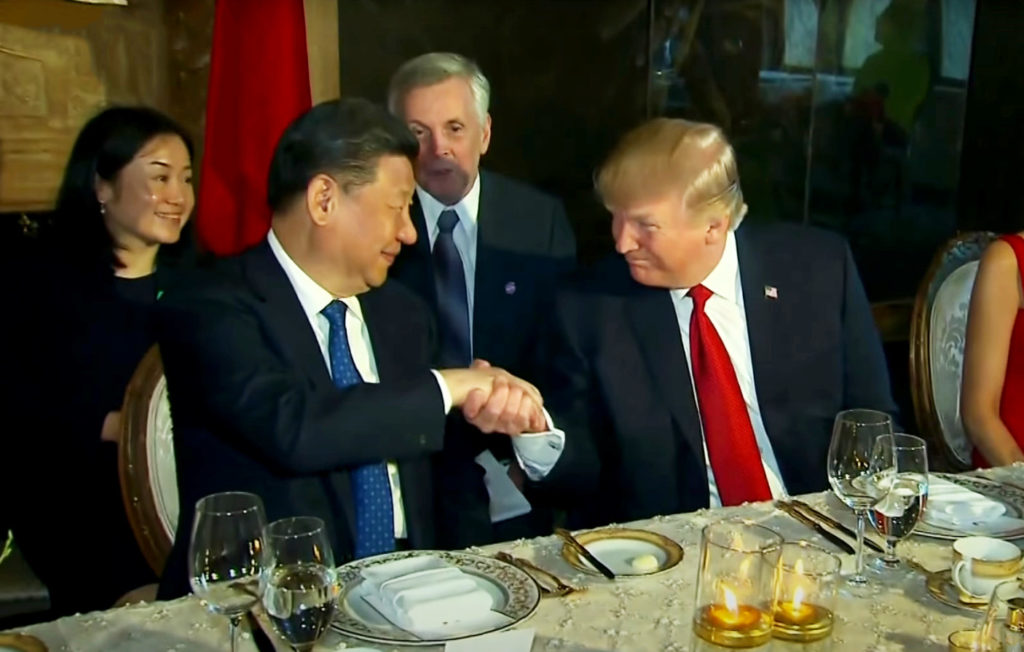
Chiều 12/11/2017, Tổng thống Hoa Kỳ Donald Trump vẫy tay chào tạm biệt Việt Nam tại sân bay Nội Bài, kết thúc chuyến thăm 3 ngày để tham dự APEC ở Đà Nẵng và chuyến thăm cấp nhà nước tại Hà Nội
President Trump speaks at the 2017 APEC CEO Summit on Facebook

“Historical opportunity”

Associate Professor, Dr. Jonathan London (Leiden University, Netherlands): There have been opinions about the limitations in Vietnam – US relations that both countries have not been able to  to strategic cooperation, because Vietnam – US system also has problems. And I think this is a very important point to emphasize. Vietnam must, of course, do everything it can to promote and protect the interests of the Vietnamese people, but it must be made clear that Vietnam also has an opportunity and a historic decision to make a choice.

Vietnam needs to try to adjust … I see that in this important time, with the developments, we want Vietnam and the US to develop stronger relations, then surely Vietnam has a chance to do what step by step to improve the relations of the two countries. But I emphasize one thing in the world, if talking about the South China Sea, no two countries have a sharing interest closer than the US and Vietnam, so after many years of war, the rights of the US and Vietnam are now very close to each other in terms of security. As for trade, it is clear that the two countries also share great benefits.

Associate Professor, Dr. Hoang Ngoc Giao (Director of Institute of Policy, Law and Development): I do not think that the strategic partnership between Vietnam and the US is impossible, it has not come yet, it it’s not the right time and now and at this stage in Vietnam’s foreign policy, shifts are heading towards that and China itself is contributing to that, the more aggressive China is, the more it will push Vietnam, then Vietnam in its three-No or four-No policy has a very clear saying that in case if Vietnam is threatened with security, national sovereignty, then Vietnam would cooperate, make friends with other countries.

I consider that in the past 25 years, the Government of Vietnam have very high efforts, although not meeting all the wishes and aspirations of the people, although at this time or another time, still try to ease the so-called problem of its northern friend.

Song Chi freelance journalist (former TV director): Through 25 years, the communists can see the fruits of their relationship quickly. But with the movements of the world, it is still 25 years to reach that level. This is mainly due to suspicion and lack of confidence from Vietnam.

In order to go into quality and substance, Hanoi needs to show more sincerity, stop swinging between the two sides, it should not praise Vietnam-US relations but still jubilantly recall the past victory against the US with hateful words while continues to regard China as good friend and good comrade.

Dr. Ha Hoang Hop (Senior research fellow, Iseas Institute, Singapore): The US-Vietnam relationship over the past 25 years is substantial with many achievements in all aspects – political, external, economic and communal associations, people-to-people exchanges, and human rights. At this point, this relationship will certainly follow the current trend, and make sure that the two countries will go faster, do more together, to bring bilateral relations to new and better levels.

Is there any lesson?

Question: Whether the two countries in the coming time need to learn, promote lessons or accomplish anything from the process of establishing this relationship so that it can develop in new contexts, medium- and long-term new stages?

Dr. Ha Hoang Hop: Vietnam and the US have a solid relationship on the basis of working together to ensure the national interests of each side, proactively addressing all changes and geopolitical fluctuations, geostrategy, regional and international security and international development; promote political consultations, human rights dialogues, and defense dialogues to deepen bilateral relations.

Journalist Song Chi: In the past, the Communist Party of Vietnam always made the wrong choices: wrong choice of political institution model, wrong path, and wrong allies and friends. Over the past few years, the the regime has missed many opportunities to change itselves, causing Vietnam to always miss ships and the country to lag behind other countries and increasingly rely heavily on China. Once again, the ball is in the hands of the Vietnamese government that the developing US-Vietnam relations are now an opportunity.

No one demanded that the party faces out against China. But what it can do is to prepare internal resources, release all that still holds back the people and curb the country’s development, so that Vietnam can become economically prosperous, and prepare at the same time militarily in order to gradually escape from China’s influence. Next, the ruling communists have to transform the nation into a free and democratic country, because it is clear that the model of democracy and freedom is by far the best development model of mankind.

Meanwhile, Vietnamese have to increase the pressure on the Vietnamese regime, must show the ruling communists that if they continue to choose to depend on China, they will lose popularity and legitimacy and the country will lose to China.

Elevate bilateral ties to strategic partnership?

On the question of whether the Vietnam-US partnership today is mature enough to be formalized and upgraded from a comprehensive partnership to a strategic one, analysts and commentators point to BBC. :

Assoc. TS Hoang Ngoc Giao: In short, it can be said that the road to a strategic partnership has been taking place from both sides. From the US side, it is also very enthusiastic and from Vietnam, I believe that there are appropriate steps to be taken to formally formulate a strategic partnership. In fact, political cooperation, defense and security as well as the economy for Vietnam are making progress.

There were also opinions, suggestions in Vietnam’s foreign policy that Vietnam and the US had bilateral trade agreements, but now is the time for Vietnam and the US to negotiate a new Vietnam – US trade deal or not?

This is very good for Vietnam and is also advantageous to build a foundation for defense and security relations such as Vietnam’s opening of Cam Ranh port and Da Nang port, cooperation on defense services with the US, This is a specific step, to prepare for the next step of formalizing strategic cooperation and this is a strategic cooperation that many Vietnamese also support and few people think otherwise. Having such cooperation, Vietnam is following the US.

Vietnam does not follow the US, Vietnam has its independence and I also share the statement of Professor Ngo Vinh Long that the story of cooperation in the East Sea (South China Sea) not only benefits Vietnam, but this is part of the US’s grand geostrategic and geopolitical strategy. This is a great benefit for the two countries, it is a very good opportunity for the two countries to cooperate on the basis of equality, respect for sovereignty and sovereignty of each other and respect each other’s political institutions.

Tiếp viên hàng không Vietnam Airlines trên chiếc phi cơ Airbus A350-900 XWB trong lễ tiếp nhận chiếc chuyên cơ đầu tiên này tại Hà Nội hôm 2/7/2015.
Vietnam Airlines flight attendant on the Airbus A350-900 XWB aircraft

Journalist Song Chi: The Vietnam-US partnership is objective, the world situation is mature enough to upgrade from a comprehensive partnership to a strategic partnership, but subjectively the Vietnamese state has not been ready because of differences in political institutions. Vietnam’s “3 no” and “4 no” foreign policy views make both sides neither and cannot be strategic partners or allies.

It is understandable that Hanoi does not want to provoke Beijing, does not want to choose sides, does not want to be the chess player on the world geopolitical chessboard, but neutrality – only works if Vietnam dont have to deal with aggressive and insatiable greedy China. The 3 Nos or Four Nos policy is obviously binding Vietnam’s own hands, allowing the Chinese to gradually invade.

Dr. Ha Hoang Hop: In fact, it is now possible to turn the two countries’ relationship into a strategic partnership, because the two countries have had specific economic, political and strategic relations. … through cooperation, investment, consultation, dialogue, especially political consultations and defense dialogues, human rights dialogues.

In the world there had bilateral and multilateral relations at first very substantive, but later reduced the level of substance or lost meaning, but the parties still do not need to declare together to change the relationship.

Expectations and wishes?

When asked what they expect to see in the US-Vietnam diplomatic relationship in coming years for both countries, commentators and observers point out:

Assoc. TS Jonathan London: I am one of the most optimistic people about the relationship between the US and Vietnam in the coming years and I just hope the political developments in Vietnam can make further progress to help Vietnam and the bilateral relationship to develop more strongly, but in general, it is very promising now, despite the issues of democracy and human rights, Vietnam will definitely have to mention in the coming years.

Journalist Song Chi: I think, the Communist Party of Vietnam also needs to see clearly that the Chinese ambitions of expansion in territorial waters and the ambition to redistribute the world order, rise to occupy the position of leader will not change once China is still under the Communist Party-led dictatorship.

However, the US is a very realistic nation. America always puts the interests of its country and its people first. Therefore, in order to be a long-term friend to the US, Vietnam must make efforts to improve to become a “kinder, more reliable” country and it is important to have the internal strength and to turn itself into a country that other countries feel like they need to make friends, the interests of both sides coincide, not just want others to help you, protect you while you do nothing, or disappear into a pawn, a tool on the geopolitical chessboard of the world – something that Vietnam has bitterly experienced.

Dr. Ha Hoang Hop: The US-Vietnam relationship has gradually come into essence and developed actively over the past 25 years. As knowledge of the substance of Vietnam and the US is somewhat broader, the bilateral relationship continues to develop better. China’s claim of sovereignty in the South China Sea, and Beijing’s longstanding behavior, is the greatest security risk to Vietnam. Vietnam always welcomes and wishes to cooperate better with the US and all countries to maintain peace, handle all security risks, and promote development in Southeast Asia.

Professor Ngo Vinh Long: I think it is really important that I have witnessed the diplomatic development between the two countries not only in the past 25 years but in the past 56 years because I have been in the US for 56 years And then I saw that the Vietnam-US relationship in the past 25 years has been getting stronger and stronger and now it can be said that in the past 10 years it has been very much ahead. Because the interests of the US and the interests of Vietnam in many areas go hand in hand, so I think whatever I call, I think the relationship is very good right now.

Source: https://www.bbc.com/vietnamese/vietnam-53444665

https://www.youtube.com/watch?v=_zYBiXvaXl8
Link Video: https://www.youtube.com/watch?v=_zYBiXvaXl8

Từ năm ngoái đến nay Việt nam đã chịu đựng sức ép liên tục của Trung quốc về chủ quyền lãnh thổ trên Biển Đông, tuy nhiên Hoa kỳ dưới thời tổng thống Donald Trump lại bộc lộ quan điểm ủng hộ Việt nam và phản đối Trung quốc một cách mạnh mẽ nhất.

Tuyên bố chính thức của Bộ ngoại giao Hoa kỳ đối lại với thái độ bành trướng của Trung quốc ở Biển Đông đang trở thành điểm tựa cho các nước liên quan và Việt nam đang tiến gần nhất đến khả năng nâng cấp tầm quan hệ với Hoa kỳ để bảo vệ cho lợi ích quốc gia đang ở tầm thế yếu ớt và bế tắc trước sự hung hăng của Trung quốc.

Trong bài viết trên BBC News tiếng Việt với tựa đề “Việt Nam có thể “thân Mỹ chống Trung” hay không?” Nhà báo Trần Đình Thu phân tích về khả năng nêu trên như sau:

Cách đây hơn một năm, nếu ai đặt vấn đề này ra sẽ bị phản đối. Chính tôi cũng bị phản đối khi nói về khả năng đó trên trang Facebook cá nhân của tôi, mặc dù tôi nói khá dè dặt.

Nhưng sự kiện trang fanpage của Đại sứ quán Trung Quốc tại Hà Nội đăng bức thư của Tổng biên tập thời báo Hoàn Cầu để “Nói vài lời thật lòng với người Việt Nam” trong đó nhắc nhở Việt Nam chớ “phát triển quan hệ với Mỹ để kiềm chế Trung Quốc“, hay nói cách khác là chớ theo Mỹ để chống Trung, khiến nhiều người thấy rằng vấn đề có thể được thảo luận một cách nghiêm túc hơn được rồi.

Vấn đề đặt ra, liệu Việt Nam, với một thể chế chính trị quá khác biệt với Mỹ, có thể trở thành thân thiết với Mỹ kiểu như đồng minh chẳng hạn, để kiềm chế Trung Quốc hay không.

Lịch sử loài người có một dẫn chứng trong Thế chiến II, khi Anh Pháp Mỹ đứng cùng phe với Liên Xô để chống lại phe phát xít. Lúc đầu có đắn đo nhưng về sau vì quyền lợi chung nên các nước đó đã chấp nhận.

Về nguyên tắc, nếu hai bên cùng bị một bên thứ ba gây thiệt hại thì có thể cùng nhau hợp lực tạm thời để chống bên thứ ba.

Về mặt lý thuyết, trường hợp Mỹ và Việt Nam cũng có thể xem như vậy.

Việt Nam bị Trung Quốc o ép trên Biển Đông, Mỹ bị ảnh hưởng đến tự do hàng hải, vậy thì hai bên có thể hợp lực để chống lại Trung Quốc cũng không có gì là quá khó hiểu.

Hình ảnh này chưa có thuộc tính alt; tên tệp của nó là tau-hai-canh.jpg
Ảnh: 3 tàu hải cảnh TQ uy hiếp rồi đâm chìm tàu cá của ngư dân Quảng Ngãi

Có cần lo thay đổi thể chế chính trị?

Đây chính là vấn đề mà nhiều người không tin rằng lãnh đạo Việt Nam chịu xoay trục về phía Mỹ để kiềm chế Trung Quốc.

Và cũng chính ông Tổng biên tập thời báo Hoàn Cầu Hồ Tích Tiến lấy ra để nhắc nhở lãnh đạo Việt Nam khi viết “Trung Quốc và Việt Nam đều là nước xã hội chủ nghĩa, đa số nước xã hội chủ nghĩa trên thế giới đều đã sụp đổ, là nước láng giềng của Trung Quốc, Việt Nam có thể duy trì cục diện chính trị ổn định, sự nâng đỡ chiến lược tiềm tàng lớn nhất là đến từ ổn định chính trị của Trung Quốc. Thể chế chính trị của Việt Nam rất khó trường tồn lâu dài một mình“.

Đó dĩ nhiên là một đòn cân não khiến lãnh đạo Việt Nam phải đắn đo. Liệu họ có thể vượt qua nỗi lo này?

Nếu làm, thì đã có tính toán?

Thật sự nếu họ lo lắng thì họ đã không trở nên quá thân thiết với Mỹ như ngày hôm nay.

Nhưng hôm nay Việt Nam đã khá thân thiết với Mỹ và có một số phản ứng mạnh với Trung Quốc về vấn đề Biển Đông. Ngoài ra Việt Nam cũng đang hợp tác với Mỹ để chống gian lận thương mại từ Trung Quốc.

Vậy thì họ cũng đâu cần đến lời nhắc nhở của ông Hồ Tích Tiến mà họ đã trù liệu rồi.

Vấn đề là họ sẽ đi xa đến đâu mà thôi.

Một đầm sen ở Hà Nội
Tổng bí thư và Chủ tịch nước Nguyễn Phú Trọng tiếp Tổng thống Mỹ Donald Trump tại Phủ Chủ Tịch

Chống Bắc Kinh, thân Mỹ, nhưng không đa đảng?

Đây cũng có thể là mô hình của Việt Nam trong thời gian trước mắt cho tới lúc nào nó còn phù hợp.

Đứng cùng phe với Mỹ để kiềm chế Trung Quốc nhưng vẫn giữ thể chế chính trị cũ.

Tuy nhiên màu sắc của chủ nghĩa xã hội có thể nhạt dần cho phù hợp. Cũng có thể mở rộng dân chủ một phần nhưng không có đa đảng.

Nhưng nếu không có dân chủ đa đảng trong thời gian truớc mắt, liệu có đáp ứng được khát vọng của nhân dân?

Thay lời kết luận, tôi xin chia sẻ thêm rằng một cuộc khảo sát từ Singapore truớc đây cho biết có đến 80% số người Việt Nam được hỏi cho biết họ thích Việt Nam quan hệ tốt đẹp với Mỹ. Tỷ lệ này cao nhất ASEAN.

Đồng thời Việt Nam cũng là nước có tỷ lệ người không tin tưởng vào Trung quốc rất cao.

Như vậy nếu lãnh đạo Việt Nam xoay trục qua chống Trung thân Mỹ thì theo tôi cũng đáp ứng phần nào nguyện vọng của nhân dân và điều ấy cũng sẽ có tác động đến sự phát triển nói chung.” Nhà báo Trần Đình Thu đưa ra kết luận.

Hoàn Cầu Thời Báo: VN sẽ ‘trắng tay’ nếu đu dây Mỹ tăng cường sức mạnh ở Biển Đông

Bài “Mỹ và Việt Nam thân cỡ nào?” của Hoàn cầu Thời báo của Trung Quốc.

Hôm 16/7, Thời báo Hoàn cầu của Trung Quốc cảnh báo mối quan hệ chiến lược Việt-Mỹ mà Hà Nội đang theo đuổi, nói rằng Việt Nam sẽ “trắng tay” nếu sự can thiệp của Hoa Kỳ vào Biển Đông tạo thêm căng thẳng hay phá vỡ sự cân bằng của mối quan hệ Trung-Việt-Mỹ. Trong khi giới quan sát trong nước nói với VOA rằng, “xét trong hai mối quan hệ, quan hệ với Mỹ phải được ưu tiên.”

Bài báo có tựa “Hoa Kỳ và Việt Nam thân cỡ nào?” của tác giả Li Jiangang thuộc Viện nghiên cứu Nam và Đông Nam Á và Châu Đại Dương thuộc Viện Quan hệ Quốc tế Đương đại Trung Quốc, tố cáo rằng Washington “không quan tâm đến đạo đức và công lý,” và đã can thiệp vào các vấn đề của các nước Đông Nam Á, bao gồm cả Việt Nam.

“Việt Nam từ lâu đã là một quốc gia mà Hoa Kỳ muốn tận dụng để ngăn chặn địa chính trị Trung Quốc,” bài báo viết.

Hà Nội hy vọng sẽ đu dây theo Washington để tăng cường sức mạnh chiến lược ở Biển Đông…Nhưng nếu sự can dự của Mỹ vào Biển Đông làm gia tăng căng thẳng khu vực hoặc phá vỡ sự cân bằng giữa Trung Quốc, Việt Nam và Mỹ, thì sự phát triển của Việt Nam sẽ bị gián đoạn. Tổn thất của Việt Nam sẽ lớn hơn những gì nước này có được.

Tờ Hoàn cầu viết: “Hà Nội hy vọng sẽ đu dây theo Washington để tăng cường sức mạnh chiến lược ở Biển Đông. Đây là một lựa chọn chiến lược mà Việt Nam đưa ra trước nhu cầu về sức mạnh quốc gia và tình hình khu vực.”

“Nhưng nếu sự can dự của Mỹ vào Biển Đông làm gia tăng căng thẳng khu vực hoặc phá vỡ sự cân bằng giữa Trung Quốc, Việt Nam và Mỹ, thì sự phát triển của Việt Nam sẽ bị gián đoạn. Tổn thất của Việt Nam sẽ lớn hơn những gì nước này có được,” bài báo viết.

Tờ báo còn viết rằng chắc hẳn Việt Nam đã “quá quen” với các “thủ đoạn” của Mỹ, cho rằng Washington chưa bao giờ từ bỏ nỗ lực thúc đẩy “các cuộc cách mạng màu” tại Hà Nội, hay “lợi dụng”các vấn đề xã hội khác nhau như dân chủ và nhân quyền, để “khuấy động mạnh mẽ các cuộc xung đột tại Việt Nam.”

Từ thành phố Hồ Chí Minh, nhà bình luận chính trị Quang Hữu Minh phân tích với VOA lý do vì sao Trung Quốc không muốn Mỹ – Việt ký kết đối tác chiến lược như Thời báo Hoàn cầu đề cập.

“Trung Quốc có nhu cầu ngăn cản việc Việt – Mỹ có thể trở thành Đối tác Chiến lược. Hiện giờ thì quan hệ Việt – Mỹ đang thấp hơn quan hệ Việt – Trung: Quan hệ Việt – Mỹ là Đối tác toàn diện, còn quan hệ Việt – Trung là Đối tác Chiến lược.”

“Nếu như Trung Quốc để cho Việt Nam yên ổn trong việc hợp tác quốc phòng với Mỹ thì có khả năng là tàu Trung Quốc bị trục xuất ra khỏi Biển Đông, hay trên vùng biển của Việt Nam, là rất lớn. Vì một khi Việt Nam ký kết hợp tác quốc phòng với Mỹ thì tàu chiến của Mỹ sẽ hiện diện thường xuyên trong vùng biển của Việt Nam. Mà như vậy, về mặt chiến lược thì Trung Quốc bị bất lợi.

“Trung Quốc bịa ra chuyện Mỹ muốn lật đổ Đảng Cộng sản Việt Nam hay gây xáo trộn nội tình Việt Nam. Tôi nghĩ Trung Quốc còn giựt dây để gây làn sóng người Việt công kích Tổng thống Mỹ Donald Trump, hơn là người Việt Nam có nhu cầu thật sự đi công kích một Tổng thống Mỹ.”

“Xét ba lý do vừa nêu trong bối cảnh hiện nay, Hoàn cầu Thời báo hoàn toàn có động cơ để làm như vậy.”

Từ Hà Nội, nhà hoạt động nhân quyền Trần Bang nhận định rằng Trung Quốc từ lâu nay “chưa bao giờ từ bỏ âm mưu phá hoại hay xâm chiếm” Việt Nam và việc họ ngăn cản mối quan hệ ngày càng thắt chặt hơn giữa Hà Nội và Washington cũng nằm trong các thủ đoạn của Bắc Kinh. Chính vì vậy, ông nói rằng Việt Nam nên ưu tiên mối quan hệ với Mỹ.

“Xét trong hai mối quan hệ, thì quan hệ với Mỹ phải được ưu tiên.

“Như vậy không phải là không nên quan hệ với Trung Quốc, vẫn làm ăn thương mại với họ, nhưng chọn thể chế chính trị thì không nên chọn Trung Quốc.

“Tôi nghĩ rằng nâng cấp quan hệ ngoại giao, chính trị, quân sự với Mỹ là điều tốt cho Việt Nam.”

Bộ Ngoại giao Việt Nam phản hồi về bài báo của Tổng biên tập Hoàn cầu Thời báo.

Vào đầu tuần, Tổng Biên tập Thời báo Hoàn Cầu Hồ Tích Tiến viết bài nói rằng “chúng tôi sẽ phản đối việc sử dụng quan hệ Việt – Mỹ để chống Trung Quốc dưới bất kỳ hình thức nào.”

Đại sứ quán Trung Quốc tại Hà Nội hôm 13/7 đăng lên trang Facebook chính thức của họ bài viết của ông Hồ Tích Tiến, với đại ý nói rằng việc Mỹ xây dựng quan hệ tốt đẹp với Việt Nam là có mục đích “ly gián quan hệ Trung– Việt,” cũng như nhằm biến Việt Nam thành “con cờ phục vụ cho chiến lược Mỹ chèn ép Trung Quốc.”

Hôm 16/7, trả lời câu hỏi đề nghị cho biết quan điểm của Việt Nam về bài báo của ông Hồ Tích Tiến, Người phát ngôn Bộ Ngoại giao Lê Thị Thu Hằng khẳng định: “Trong một thế giới hội nhập phát triển như ngày nay, Việt Nam cho rằng việc các quốc gia thể hiện thiện chí và phát triển quan hệ hữu nghị với nhau là xu thế tất yếu và đóng góp cho hòa bình, ổn định chung ở khu vực và thế giới.”

“Việt Nam kiên trì đường lối đối ngoại độc lập, tự chủ, đa dạng hóa, đa phương hóa quan hệ quốc tế và hội nhập quốc tế sâu rộng, phát triển hợp tác với tất cả các đối tác trên cơ sở cùng có lợi, tôn trọng luật pháp quốc tế, vì hoà bình, ổn định, hợp tác và phát triển của khu vực và trên thế giới.”

“Chúng tôi mong các nước chia sẻ quan điểm này của chúng tôi,” bà Hằng nói.

Theo báo Tiền Phong, bài viết của ông Hồ Tích Tiến nhanh chóng bị gỡ bỏ khỏi trang của Đại sứ quán Trung Quốc, sau khi nhận được hàng loạt bình luận phản đối gay gắt.

Hoàng Trung – Thoibao.de (Tổng hợp)

Hình ảnh này chưa có thuộc tính alt; tên tệp của nó là tau-hai-canh.jpg
3 Chinese maritime vessels threatened and then sunk the fishing boats of Quang Ngai fishermen

Since last year, Vietnam has been under constant Chinese pressure on territorial sovereignty in the East Sea (South China Sea), but the US under President Donald Trump has expressed its support for Vietnam and opposes China in the most powerful way.

The State Department’s official statement regarding China’s expansion in the South China Sea is becoming a fulcrum for relevant countries and Vietnam is moving closer to the possibility of upgrading its relationship with the US to defend its national interests when the country is at a weak and stalemate position against Chinese aggression.

In the Vietnamese BBC News article titled “Can Vietnam be pro-American and anti-Chinese?” Journalist Tran Dinh Thu analyzed the above possibility as follows:

More than a year ago, anyone who raised this issue would be opposed. I myself was also opposed to talking about that possibility on my personal Facebook page, although I spoke with reservation.

But the fan page of the Chinese Embassy in Hanoi posted a letter from the editor-in-chief of the Global Times to “Say a few words to the Vietnamese people,” which reminded Vietnam not to “develop relations with the US to contain China,” in other words, he warned Vietnam not follow the US to fight against China. It makes many people feel that the issue can be discussed more seriously.

The question is whether Vietnam, with a political institution that is so different from the US, can become close to the US like its ally to control China.

Human history has a reference in World War II, when British French and French stood on the side of the Soviet Union against the fascists. At first hesitated, but later for the common interests, those countries accepted.

In principle, if both parties are harmed by a third party, they can work together temporarily to fight the third party.

Theoretically, the case of the US and Vietnam can be considered the same.

Vietnam has been pressured by China in the South China Sea, the US is affected by freedom of navigation, so the two sides can join forces to fight China is not too difficult to understand.

There is a need to worry about changing political institutions?

Một đầm sen ở Hà Nội
General Secretary and President Nguyen Phu Trong received US President Donald Trump at the Presidential Palace

This is the problem by which many people do not believe that the Vietnamese leadership has turned its axis towards the US to restrain China.

And also the editor-in-chief of China’s Global Times Hu Xijing reminded the leaders of Vietnam when writing “China and Vietnam are both socialist countries, most socialist countries in the world have collapsed, being a neighboring country of China, Vietnam can maintain a stable political situation, the biggest potential strategic support comes from China’s political stability. Vietnam is very difficult to endure for a long time alone.”

That is of course a brainstorm that makes Vietnamese leaders hesitate. Will they be able to overcome this warning?

If so, is there any calculation?

Indeed, if they were worried, they would not have become so close to the US today.

But today Vietnam is quite close to the US and has some strong reactions to China on the East Sea (South China Sea) issue. In addition, Vietnam is also cooperating with the US to combat trade fraud from China.

So they didn’t need Hu Xijin’s reminder that they had already planned.

The problem is how far they will go.

Anti-Beijing, pro-American, but not multi-party?

This may also be a model of Vietnam for the time to come as long as it is appropriate.

Siding with the US to restrain China but keep the old political regime.

However, the color of socialism may fade out accordingly. Partially expanded democracy is possible but there is no multi-party.

But without multi-party democracy in the short term, will it satisfy the people’s aspirations?

In conclusion, I would like to share that a previous survey from Singapore showed that 80% of the Vietnamese surveyed said that they liked Vietnam to have good relations with the US. This rate is the highest in ASEAN.

At the same time, Vietnam is also a country with a very high proportion of people who do not trust China.

So if the Vietnamese leadership pivots to side with the US against China, then I think it will meet the people’s aspirations and that will have an impact on the development in general,” journalist Tran Dinh Thu reached a conclusion.

Global Times: Vietnam will lose all if goes with the US to strengthen forces in the South China Sea

Hình ảnh này chưa có thuộc tính alt; tên tệp của nó là 2020-07-18_135447-1024x461.jpg
“How close can US and Vietnam be?” of the Global Times of China.

On July 16, China’s Global Times warned of a Vietnam-US strategic relationship that Hanoi was pursuing, saying that Vietnam would “have nothing” if US intervention in the South China Sea created more tension or disrupt the balance of Sino-Vietnamese-American relations. While domestic observers told VOA that, “in terms of two relationships, relations with the US must be prioritized.”

The article was titled “How close is the US and Vietnam?” by author Li Jiangang of the Institute for South and Southeast Asia and Oceania at the China Institute of Contemporary International Relations, alleges that Washington “does not care about morality and justice,” and intervened in issues of Southeast Asian countries, including Vietnam.

“Vietnam has long been a country that the US wants to capitalize on to prevent Chinese geopolitics,” the article wrote.

Hanoi hopes to swing with Washington to strengthen its strategic power in the South China Sea … But if US involvement in the South China Sea raises regional tensions or disrupts the balance between China and Vietnam and America, the development of Vietnam will be interrupted. Vietnam’s losses will be greater than what the country could gain.

The Global Times wrote: “Hanoi hopes to swing with Washington to strengthen its strategic strength in the South China Sea. This is a strategic choice that Vietnam addresses the needs of national strength and the regional situation.”

“But if US involvement in the South China Sea raises regional tensions or disrupts the balance between China, Vietnam and the US, then Vietnam’s development will be interrupted. Vietnam’s losses will be greater than what the country could gain,” the article wrote.

The newspaper also wrote that Vietnam must have been “familiar” with US “tricks,” saying that Washington has never given up its efforts to promote “color revolutions” in Hanoi, or “took advantage of various social issues such as democracy and human rights, to vigorously stir up conflicts in Vietnam.”

From Ho Chi Minh City, political commentator Quang Huu Minh analyzed with VOA the reason why China does not want the US and Vietnam to elevate their bilateral relations to a strategic partnership as mentioned by the Global Times.

“China needs to prevent Vietnam – US from becoming a strategic partners. Right now, Vietnam – US relations are lower than Vietnam – China relations: Vietnam-China relations are comprehensive partners, while Vietnam – China relations are strategic partnership.”

“If China leaves Vietnam to boost defense cooperation with the US, it is likely that Chinese ships will be expelled from the South China Sea, or in Vietnam’s waters, to be very large. Because once Vietnam signs a defense cooperation with the US, US warships will be regularly present in Vietnam’s waters. But so, strategically, China is at a disadvantage.”

“China made up the story that the US wanted to overthrow the Communist Party of Vietnam or disturb the Vietnamese internal affairs. I think China is more likely to provoke a wave of Vietnamese people attacking US President Donald Trump than Vietnamese people who have a real need to attack the American President.”

“Considering the three reasons just mentioned in the current context, Global Times is entirely motivated to do so.”

From Hanoi, human rights activist Tran Bang said that China has long “never given up the plot to sabotage or invade” Vietnam and that Beijing’s tactics are to prevent the ever-closer relationship between Ha Noi and Washington. Therefore, he said that Vietnam should prioritize its relationship with the US.

“Considering the two relationships, the relationship with the US must be prioritized.”

“So Vietnam should continue to keep bilateral relations with China, especially in trade and investment, but not political issues.”

“I think upgrading diplomatic, political and military relations with the US is good for Vietnam.”

Hình ảnh này chưa có thuộc tính alt; tên tệp của nó là 2020-07-18_172838-1.jpg
Ministry of Foreign Affairs of Vietnam responded to the article of the Editor-in-Chief of Global Times

At the beginning of the week, Global Times Editor-in-chief Hu Xijin wrote an article saying that “we will oppose the use of Vietnam-US relations against China in any way.”

The Chinese embassy in Hanoi on July 13 posted to their official Facebook page an article by Mr. Hu Xijin, with the general idea that the US building a good relationship with Vietnam was purported to be affected Sino-Vietnamese relations,” as well as to turn Vietnam into “a pawn in the US strategy of pinching China.”

On July 16, responding to a question asking for Vietnam’s views on the article by Mr. Hu Xijin, Foreign Ministry Spokesperson Le Thi Thu Hang affirmed: “In a world of integrated development like today, Vietnam believes that the countries’ goodwill and the development of friendly relations with each other is an inevitable trend and contributes to peace and stability in the region and the world.”

“Vietnam persists in the external policy of independence, autonomy, diversification, multilateralization of international relations and intensive international integration, developing cooperation with all partners on the basis of mutual benefits, respect for international law, for peace, stability, cooperation and development of the region and the world.”

“We expect countries to share this view,” Ms. Hang said.

According to Tien Phong newspaper, Hu Xijin’s post was quickly removed from the Chinese Embassy’s page, after receiving a series of condemnations from Vietnamese readers.

Thoibao.de (Translated)

Hình ảnh này chưa có thuộc tính alt; tên tệp của nó là 2020-07-15_112711-1024x580.jpg
Screen capture of the July 13 statement on the US government’s official website of US Secretary of State Mike Pompeo’s position in the South China Sea on July 13, 2020

Just one day after US Secretary of State Mike Pompeo made a stronger statement on the South China Sea (Vietnamese call East Sea) policy, the USS Ralph Johnson guided missile destroyer operated in the Truong Sa (Spratlys). What do these actions mean for regional security that Vietnam is part of the sovereignty dispute with China?

On July 13, Secretary of State Pompeo rejected China’s claim in the South China Sea, saying that “China’s claims are illegal,” and he condemned what he called the Chinese “bullying campaign” to control these areas.

Following the announcement of Secretary of State Pompeo, on July 14, Assistant Secretary of State David Stilwell spoke online at a conference on the South China Sea organized by the Center for Strategic & International Studies (CSIS) held that the US opposes China’s “gangster tactics” in the South China Sea.

Assistant Secretary of State for East Asia and Pacific affairs, David Stilwell, emphasized the new US policy in the South China Sea, which accuses Chinese actions in the area around Vanguard Bank of Vietnam “illegal.”

Also at this conference, Mr. Stilwell also indicated that Trump’s administration may use sanctions against Chinese officials for their aggressive actions in the South China Sea, according to CNBC. He said: “We are not excluding any measures … there is still room for sanctions.”

Also on July 14, the USS Ralph Johnson (DDG 114) guided-missile destroyer operated in the Spratlys on a mission to “patrol freedom of navigation,” according to 7th Fleet of the US. “US forces will continue to operate in the South China Sea daily, as we have done for more than a century,” the statement of the Pacific Fleet said.

USS Ralph Johnson (DDG 114). Operating in the Spratly Islands on July 14, 2020.

Professor Dr. Nguyen Dinh Phu, an expert on the South China Sea at the University of California Irvine, stated to VOA that the latest US government statement is considered a “fulcrum” for Vietnam to make stronger claims on the South China Sea.

This is an opportunity and a great fulcrum for the Vietnamese government to take further actions in protecting its sovereignty.

Dr. Nguyen Dinh Phu

“In my view, this is an opportunity, a great fulcrum for the Vietnamese government to take further actions in protecting sovereignty right. This statement is a good sign, but we must wait and see what happens next.

“Vietnam needs to be strong at this point and should make stronger decisions to protect Vietnam’s sacred sovereignty.”

Also from California, Professor Le Minh Nguyen, an expert on China and regional security, should comment to VOA:

“The strength of this statement is that the US stands with Southeast Asian nations in protecting their sovereignty of marine resources.

“It is true that the US has gone further than before in making statements.”

The strength of this statement is that the US stands together with Southeast Asian nations in protecting sovereignty over marine resources.

Professor Le Minh Nguyen

“I think this statement alone is not enough, more action is needed in the field,” said Professor Le Minh Nguyen.

Hình ảnh này chưa có thuộc tính alt; tên tệp của nó là 2020-07-18_023745-1024x663.jpg
Gregory B. Poling is director of the Asia Maritime Transparency Initiative and a fellow with the Southeast Asia Program at CSIS

Greg Poling, a South China Sea expert at CSIS, Center for Strategic and International Studies in Washington, said the claim that China’s actions are illegal has paved the way for a tougher response from the US, as through sanctions, can lead to activities that assert a US naval presence.

Mr. Poling said in a CSIS newsletter on July 14: “Pompeo’s statement did not change the US neutrality over territorial disputes in the South China Sea. Washington still has no intention of interfering in the historical disputes of states with the Spratlys and Paracels [Vietnamese call Hoang Sa].”

CSIS experts noted that previous US administrations also considered China’s actions in the Exclusive Economic Zone (EEZ) and continental shelf of neighboring countries illegal but not yet powerful and official statement as the administration of President Trump just announced on July 13.

In the short term, the US declaration will create tension between Washington and Beijing, but it has an “immediate impact” on the diplomatic front in international advocacy to protest “illegal” actions. of a nation, Mr. Poling analyzed.

He added that with words stronger than before, the latest US statement could also encourage and pave the way for the South China Sea claimants, particularly Vietnam and the Philippines, to make stronger statements for themselves to respond to China.

Thoibao.de (Translated)

Vietnamese Source: https://www.voatiengviet.com/a/tuyen-bo-cua-hoa-ky-ve-bien-dong-co-y-nghia-nhu-the-nao-den-vietnam/5503734.html

Hình ảnh này chưa có thuộc tính alt; tên tệp của nó là 2020-07-15_112711-1024x580.jpg
Ảnh chụp màn hình tuyên bố ngày 13 tháng 7 trên trang web chính thức của chính phủ Hoa Kỳ về vị trí của Hoa Kỳ trên Biển Đông của Ngoại Trưởng Hoa Kỳ Mike Pompeo hôm 13/07/2020

Chỉ một ngày sau khi Ngoại Trưởng Hoa Kỳ Mike Pompeo đưa ra tuyên bố mạnh hơn về chính sách Biển Đông, tàu khu trục có tên lửa dẫn đường USS Ralph Johnson của Hải quân Mỹ đã hoạt động ở quần đảo Trường Sa. Những động thái này có ý nghĩa như thế nào đối với an ninh khu vực mà Việt Nam là một phần của tranh chấp chủ quyền với Trung Quốc?  

Hôm 13/7, Ngoại Trưởng Pompeo bác tuyên bố chủ quyền của Trung Quốc ở Biển Đông, nói rằng “những đòi hỏi chủ quyền của Trung Quốc là bất hợp pháp,” và ông lên án điều ông gọi là “chiến dịch hiếp đáp để kiểm soát các khu vực này.”

Tiếp theo sau tuyên bố của Ngoại trưởng Pompeo, hôm 14/7, Trợ lý Ngoại Trưởng Mỹ David Stilwell phát biểu trực tuyến tại một hội thảo về Biển Đông do Trung tâm Nghiên cứu Chiến lược & Quốc tế (CSIS) tổ chức rằng Hoa Kỳ phản đối “chiến thuật kiểu xã hội đen” (gangster tactics) của Trung Quốc ở Biển Đông.

Trợ lý Ngoại trưởng Mỹ phụ trách các vấn đề Đông Á và Thái Bình Dương, David Stilwell, nhấn mạnh thêm về chính sách mới của Mỹ ở Biển Đông, trong đó cáo buộc các hành động của Trung Quốc ở khu vực quanh Bãi Tư Chính của Việt Nam là “phi pháp.”

Trợ lý ngoại trưởng Mỹ bác bỏ yêu sách ‘phi pháp’ của Trung Quốc đối với Việt Nam trên Biển Đông
Ngoài ra, cũng tại cuộc hội thảo này, ông Stilwell còn ngỏ ý rằng Chính quyền Tổng thống Donald Trump có thể sử dụng các biện pháp trừng phạt nhằm vào các quan chức Trung Quốc vì những hành động gây hấn của họ trên Biển Đông, theo đài CNBC. Ông nói: “Chúng tôi không loại trừ bất cứ biện pháp nào… vẫn còn rộng chỗ cho cấm vận.”

Cũng hôm 14/7, tàu khu trục có tên lửa dẫn đường USS Ralph Johnson (DDG 114) của Hải quân Hoa Kỳ hoạt động ở quần đảo Trường Sa trong sứ mệnh “tuần tra tự do hàng hải,” theo Hạm đội Thái Bình Dương của Hoa Kỳ. “Các lực lượng của Hoa Kỳ sẽ tiếp tục hoạt động ở Biển Đông hàng ngày, như những gì chúng tôi đã thực hiện trong hơn một thế kỷ qua,” tuyên bố của Hạm đội Thái Bình Dương nói.

Tàu khu trục USS Ralph Johnson (DDG 114). Hoạt động ở quần đảo Trường Sa hôm 14/07/2020.

Giáo sư – Tiến sĩ Nguyễn Đình Phú, một chuyên gia về Biển Đông ở Đại học University of California Irvine, nêu nhận định với VOA rằng tuyên bố mới nhất của chính phủ Hoa Kỳ được xem là một “điểm tựa” để Việt Nam có thể đưa ra những tuyên bố mạnh mẽ hơn về chủ quyền ở Biển Đông.

Đây là một thời cơ, một điểm tựa rất lớn để chính phủ Việt Nam có thể đưa ra những hành động mạnh mẽ hơn nữa trong việc bảo vệ chủ quyền.

“Ở góc nhìn của tôi thì đây là một thời cơ, một điểm tựa rất lớn để chính phủ Việt Nam có thể đưa ra những hành động mạnh mẽ hơn nữa trong việc bảo vệ chủ quyền, lẽ phải. Tuyên bố này là một tín hiệu đáng mừng, nhưng phải chờ xem những diễn biến tiếp theo.

“Việt Nam đến thời điểm này cần nên mạnh mẽ và nên có những quyết sách mạnh mẽ hơn để bảo vệ chủ quyền thiêng liêng của Việt Nam.”Tiến sĩ Nguyễn Đình Phú nói.

Cũng từ California, Giáo sư Lê Minh Nguyên, một chuyên gia về Trung Quốc và an ninh khu vực, nên nhận định với VOA:

“Điểm mạnh của tuyên bố này là Mỹ đứng cùng với các quốc gia Đông Nam Á trong việc bảo vệ chủ quyền tài nguyên biển.

“Đúng là Hoa Kỳ có đi xa hơn so với trước đây về việc ra tuyên bố.”Giáo sư Lê Minh Nguyên nói

Điểm mạnh của tuyên bố này là Mỹ đứng cùng với các quốc gia Đông Nam Á trong việc bảo vệ chủ quyền tài nguyên biển.

“Tôi nghĩ tuyên bố này không thôi thì chưa đủ, cần phải có nhiều hơn các hành động tại thực địa,” Giáo sư Lê Minh Nguyên nói.

Greg Poling, một chuyên gia về Biển Đông của CSIS, Trung tâm Nghiên cứu Chiến lược và Quốc tế ở Washington

Ông Greg Poling, một chuyên gia về Biển Đông của CSIS, Trung tâm Nghiên cứu Chiến lược và Quốc tế ở Washington, nói tuyên bố cho rằng hành động của Trung Quốc là bất hợp pháp đã mở đường cho một phản ứng cứng rắn hơn từ Hoa Kỳ, như thông qua lệnh trừng phạt, có thể dẫn đến các hoạt động để khẳng định sự hiện diện của hải quân Hoa Kỳ.

Ông Poling nói trong bản tin của CSIS hôm 14/7: “Tuyên bố của ông Pompeo không làm thay đổi tính trung lập của Hoa Kỳ đối với các tranh chấp lãnh thổ ở Biển Đông. Washington vẫn không có ý định can thiệp vào việc tranh chấp mang tính lịch sử của các quốc gia đối với các quần đảo Trường Sa và Hoàng Sa.”

Chuyên gia CSIS nhận định rằng các chính quyền trước đây của Hoa Kỳ cũng gần như cho rằng các hành động của Trung Quốc trong Vùng đặc quyền kinh tế (EEZ) và trong thềm lục địa của các nước láng giềng là bất hợp pháp nhưng chưa tuyên bố mạnh mẽ và chính thức như chính quyền của Tổng thống Trump vừa tuyên bố hôm 13/7.

Trong ngắn hạn, tuyên bố của Hoa Kỳ sẽ gây căng thẳng giữa Washington và Bắc Kinh, nhưng nó có “tác động tức thì” trên mặt trận ngoại giao trong việc vận động quốc tế để phản đối các hành động “bất hợp pháp” của một quốc gia, ông Poling phân tích.

Ông nói thêm rằng với lời lẽ mạnh mẽ hơn trước, tuyên bố mới nhất của Hoa Kỳ cũng có thể khuyến khích và mở đường các bên tranh chấp Biển Đông, đặc biệt như Việt Nam và Philippines, có thể đưa ra những tuyên bố mạnh mẽ hơn cho riêng mình để đáp trả Trung Quốc.

Nguồn: https://www.voatiengviet.com/a/tuyen-bo-cua-hoa-ky-ve-bien-dong-co-y-nghia-nhu-the-nao-den-vietnam/5503734.html

Hình ảnh này chưa có thuộc tính alt; tên tệp của nó là DDN_7879-1024x681.jpg
Vo Van Thuong speaking at scientific conferences Party Propaganda Department – 90 years of glorious journey, on July 15

Recently, the guiding comments of the General Secretary and the Head of Propaganda Department have easily become the inspiration for the comments of Vietnamese intellectuals on social networks as well as the independent media.

Mr. Vo Van Thuong gives a speech at the scientific conference of Party propaganda – 90 years of glorious journey, July 15

Vo Van Thuong’s statement that “further clarifying the theory of socialism and the path to socialism in our country” has made many people suffer and when the whole country followed the road which is not really clear and even General Secretary Nguyen Phu Trong has to say about “By the end of this century, has there been no complete socialism in Vietnam?“

“Following for nearly a century on the road ‘not clear’ proving to be a herd of stupid. I am living with fools, I am a coward. It really hurts! ” Dong Huu Phap lawyer said so on his personal Facebook on July 16, also in this mood.

The guiding ideologies for the Communist Party members are shaken when the Vietnamese press is paving the way for a close relationship with the US at the same time with serious chaps with China for the sake of the national interests in the East S (South China Sea)t, although China is Vietnamese communists’ biggest fulcrum.

Specific actions in the South China Sea together with a strong statement affirming the US position in the East Sea have given Vietnam a new base and the Vietnamese press has simultaneously raised their views with an unacceptable attitude of China toward Vietnam, especially Repsol’s departure which has caused the national interest to immediately lose billions of dollars, according to a recent article on BBC News Vietnamese.

Despite the perseverance of the socialism path, propaganda leaders should pay attention to the saying of the late British Prime Minister Winston Churchill: “In this world, there is no permanent ally or permanent enemy, only national interests are permanent.”

The Vietnamese Communist Party’s propaganda machine recently on July 15, 2020, coordinated with the Central Committee of Theoretical Council of the Communist Party of Vietnam to hold a seminar marking the 90th anniversary of its “glorious journey,” in which senior communist leaders summarized the achievements after nearly 35 years of renewing propaganda.

On this occasion, some Vietnamese political and observers, and analysts shared with BBC News Vietnamese their views on the Communist Party’s propaganda in Vietnam, through the event.

Dr. Nguyen Quang A: It has succeeded in framing the minds of many Vietnamese to believe in the party’s line, but it is propaganda art, not science at all. The manipulation of thinking, framing speech is indeed a trick of many dictatorships and not without results (remember only propaganda rhetoric in Germany during World War II 100 years ago, or much more subtle seems to be much more “scientific” by Wang Zhenning nowadays in China to see that it is not the Vietnamese communists’ exclusive finger.

Former Lieutenant Colonel of the People’s Army of Vietnam Nguyen Nguyen Binh (writer and researcher on China): Saying that over the years, the work of the Propaganda has formed a system of theoretical views on socialism, which immediately many high-ranking government officials still have questions.

Specifically, in an important meeting, according to Law newspaper on May 4, 2014, they also had to ask Minister Bui Quang Vinh (at that time, he was a member of the party’s Central Committee and Minister of Planning and Investment), and he answered: “We keep on researching that model (the socialist market economic institution) but we can’t find it forever? How can we find the thing that could not exist?”

As for General Secretary Nguyen Phu Trong, according to Thanh Nien newspaper October 24, 2013, also said: “By the end of this century, there will not be complete socialism in Vietnam.” So how could ordinary people see the reasoning system of the Propaganda Department?

Mr. Nguyen Vu Binh (former editor of the Communist Review): No one currently answers the question “What is a socialist-oriented market economy” and specific criteria on the concept of Master Socialism? what does it mean?

Hình ảnh này chưa có thuộc tính alt; tên tệp của nó là img-7278-bao-tang-bao-chi-1592470938220.jpg
Vietnam Press Museum, Hanoi, 2020

Dr. Nguyen Quang A: The role of propaganda is extremely important to the party and not that it does not result in fascinating many people, it protects the ideological foundation of the party, contributes to the unification in the party but it is just “communication,” not scientific reasoning at all.

I call the propaganda team “the conscience police” more dangerous than the police, because the police often provide services to the society, whereas the conscience police destroy people’s thinking, make the whole nation’s willpower and its impact on the people very profound.

Former Lieutenant Colonel Nguyen Nguyen Binh: It is really difficult to distinguish between developments in the way of moral decline in lifestyle and the ideological changes of other opinion people with the formal reasoning system.

The concept “hostile forces” is popularly used by Propaganda agencies but also very vague. The US or China? Now the Vietnamese state has let the mainstream press call both the US and China friends, so who is the enemy? Our people also do not understand!

Mr. Nguyen Vu Binh: If before the international integration, before the global Internet system and especially the social network appeared, the propaganda can help the communist party and the state hide the nature of the regime. After integration, after the Internet system appeared, and especially social networks developed, the propaganda went bankruptcy completely, no longer has a role and position.

The reason is that the truths are exposed, the exchange of ideas helps many people understand more and understand the nature of the regime. Propaganda now has only the task of supporting and justifying the wrongs and the bad of the regime to be exposed.

How is the future?

Also at the event on Wednesday, the leader of the Vietnam Propaganda machine summarized the presentations saying that “the mission of the propaganda machine in the coming time is to continue to promote the practical review, theoretical research,” further clarifying the theory of socialism and the path to socialism in our country.”

When asked to compare the above judgment with the reality and development trend of Vietnam’s political and social life, observers commented to the BBC about the role, prospects and the industry’s future in a country with around 97 million people, activists said:

Dr. Nguyen Quang A: In my view, the so-called socialism pursued by the party has been thrown into a historic waste basket.

For 30 years, the party has been advocating the construction of authoritarian capitalism, led by the communists.

If that “practice” turns into reasoning and leaves out the authoritarianism, it is a good way. In other words, if they follow the “socialism” of International II, that is, according to the socialist ideologies of the left or Northern Europe, it is a step forward, but that opportunity is fragile.

And if they learn the Chinese way of Xi Jinping (or propaganda boss Wang Zhenning), that is authoritarian capitalism with the Communist Party of Vietnam trying to cling to power and suppress dissenting voices, then it is disastrous for nation.

Former Lieutenant Colonel Nguyen Nguyen Binh: The practice shows that the institutions that are thought to be the pillars of the socialist economy such as state-owned enterprises and cooperatives suffer most losses, typically 12 enterprises that are mainstream newspapers. has reported, and the Cat Linh-Ha Dong elevated railway project is tragic, losing no way to solve (also the official newspaper said).

So clearly: one-sided practice, one-sided argument. When will that be clear?

Mr. Nguyen Vu Binh: If the content is right and valuable, then after 30 years of innovation, the propaganda machine, even though it is composed of the most debated and doubtful people about the ability to think, intellect, think, has summarizing the theory and the value of the work, but not now continue to summarize the reality to further clarify the theory of socialism and the path to socialism.

Comparing with the development reality of Vietnamese political and social life and the medium and long-term movement trend, propaganda in my opinion is a completely worthless activities, even anchoring society.

It is just a collection of people the regime needs to help the party rule the people.

Thoibao.de (Translated)

Ông Võ Văn Thưởng phát biểu tại hội thảo khoa học Công tác tuyên giáo của Đảng – 90 năm chặng đường vẻ vang, hôm 15-7

Gần đây những phát biểu có tính chỉ đạo của Tổng bí thư và Trưởng ban tuyên giáo dễ trở thành cảm hứng cho những lời bình phẩm của trí thức Việt nam trên mạng xã hội cũng như các báo đài lề trái.

Câu nói của ông Võ Văn Thưởng rằng “tiếp tục làm sáng tỏ hơn nữa lý luận về chủ nghĩa xã hội và con đường đi lên chủ nghĩa xã hội ở nước ta” lại khiến nhiều người đau lòng và khi cả nước đi theo một con đường chưa thật sự sáng tỏ và ngay cả Tổng bí thư Nguyễn Phú trọng còn phải thốt lên rằng “Đến hết thế kỉ này đã có CNXH hoàn thiện ở VN hay chưa?“

“Bỏ gần 1 thế kỷ đi trên con đường “chưa sáng tỏ”, chứng tỏ là một bầy ngu. Ta bị sống với bầy ngu, ta thành kẻ hèn. Đau thật !” Luật sư Đồng Hữu Pháp thốt lên như vậy trên Facebook cá nhân hôm 16-7, cũng trong tâm trạng này.

Những tư tưởng chỉ đạo đối với Đảng viên cộng sản đang lung lay mạnh khi báo chí Việt nam đang dọn đường cho một quan hệ thân thiết với Hoa kỳ cùng lúc với những sứt mẻ nghiêm trọng với Trung quốc vì lợi ích quốc gia ở Biển Đông, mặc dù Trung quốc đang là điểm tựa lớn nhất của Việt nam đối với những người anh em thuộc phe Cộng sản còn sót lại trên thế giới.

Những hành động cụ thể trên Biển Đông cùng với tuyên bố mạnh mẽ khẳng định lập trường của Mỹ trên Biển đông đã khiến cho Việt nam có chỗ dựa mới và báo chí Việt nam cũng đồng loạt nâng cao quan điểm với thái độ không thể chấp nhận được của Trung quốc đối với Việt nam, đặc biệt là sự ra đi của Repsol đã khiến cho lợi ích quốc gia ngay lập tức bị mất đi hàng tỷ Đô la, theo một bài viết mới đây trên BBC News Tiếng Việt.

Dù có kiên trì con đường CNXH đến mấy thì các lãnh đạo tuyên giáo cũng nên lưu ý đến câu nói của cố Thủ tướng Anh Winston Churchill rằng “Trên thế giới này, không có đồng minh vĩnh viễn hay kẻ thù vĩnh viễn, chỉ có lợi ích quốc gia mới là vĩnh viễn”.

Ngành tuyên giáo của đảng Cộng sản Việt Nam mới đây hôm 15/7/2020 phối hợp với Hội đồng Lý luận Trung ương của ĐCSVN tổ chức sự kiện hội thảo đánh dấu 90 năm “chặng đường vẻ vang” của ngành này, trong đó có tổng kết thành tựu sau gần 35 năm năm đổi mới của tuyên giáo.

Nhân dịp này, một số nhà quan sát và phân tích thời sự, chính trị Việt Nam đã chia sẻ với BBC News Tiếng Việt quan điểm của mình về tuyên giáo của đảng Cộng sản tại Việt Nam, thông qua sự kiện trên.

Tiến sỹ Nguyễn Quang A: Nó đã thành công trong việc định khung (framing) tư duy cho nhiều người Việt Nam để tin vào đường lối của ĐCSVN, nhưng đó là nghệ thuật tuyên truyền chứ không hề khoa học gì cả. Việc thao túng tư duy, định khung diễn ngôn quả thực là một mẹo của rất nhiều chế độ độc tài và không phải không có kết quả (hãy chỉ nhớ các luận điệu tuyên truyền ở nước Đức hồi thế chiến II 100 năm trước, hay tinh tế hơn nhiều có vẻ “khoa học” hơn nhiều của Vương Hỗ Ninh hiện nay ở Trung Quốc để thấy nó không là ngón độc quyền của ĐCSVN.

Cựu Trung tá QĐND Việt Nam Nguyễn Nguyên Bình (nhà văn, nhà nghiên cứu Trung Quốc học): Nói rằng bao nhiêu năm qua, công tác của cơ quan Tuyên giáo đã làm hình thành hệ thống quan điểm lý luận về CNXH, mà ngay nhiều cán bộ đương chức cấp cao của Nhà nước cũng vẫn còn thắc mắc.

Cụ thể trong một cuộc họp quan trọng, theo báo Pháp luật ngày 04-5- 2014, họ còn phải hỏi Bộ trưởng Bùi Quang Vinh (lúc đó đang là Ủy viên TƯ Đảng, Bộ trưởng Kế hoạch & Đầu tư), và ông đã trả lời: “Chúng ta cứ nghiên cứu mô hình đó (thể chế kinh tế thị trường XHCN) mà mãi có tìm ra đâu? Làm gì có cái thứ đó mà đi tìm?”

Còn ông Tổng bí thư Nguyễn Phú Trọng, theo báo Thanh niên 24-10 2013 cũng nói: “Đến hết thế kỉ này đã có CNXH hoàn thiện ở VN hay chưa?”. Vậy dân thường làm sao đã thấy được hệ thống lý luận của Ban tuyên giáo mà bàn?

Ông Nguyễn Vũ Bình (cựu Biên tập viên Tạp chí Cộng sản): Hiện nay không ai trả lời được câu hỏi “Kinh tế thị trường định hướng xã hội chủ nghĩa là gì” và các tiêu chí cụ thể về khái niệm Xã hội Chủ nghĩa ra sao.

Bảo tàng Báo chí Việt Nam, Hà Nội, 2020

Tiến sỹ Nguyễn Quang A: Vai trò của tuyên giáo là hết sức quan trọng đối với ĐCSVN và không phải nó không có kết quả trong việc mê hoặc không ít người, nó bảo vệ nền tảng tư tưởng của ĐCSVN, góp phần tạo sự thống nhất trong ĐCSVN nhưng nó chỉ là “TRÒ TUYÊN TRUYỀN” chứ không phải lý luận khoa học gì cả, càng không “đi trước-mở đường“.

Tôi gọi đội ngũ tuyên giáo là “CẢNH SÁT TƯ TƯỞNG” nó nguy hiểm hơn cảnh sát thường rất rất nhiều, bởi vì cảnh sát thường có cung cấp dịch vụ cho xã hội, ngược lại cảnh sát tư tưởng huỷ hoại tư duy của rất nhiều người, làm thui chột ý chí của cả dân tộc và tác hại của nó đối với dân tộc là rất sâu sắc.

Cựu Trung tá Nguyễn Nguyên Bình: Về câu hỏi về chống diễn biến hòa bình thì thực ra rất khó phân biệt giữa những diễn biến theo chiều hướng suy thoái đạo đức lối sống với những diễn biến về tư tưởng của những người có ý kiến khác với hệ thống lý luận chính thống.

Khái niệm “thế lực thù địch được cơ quan Tuyên giáo sử dụng phổ biến nhưng cũng rất mơ hồ. Mỹ hay Trung Quốc? Bây giờ nhà nước Việt Nam đã để các báo chí chính thống gọi cả Mỹ lẫn Trung Quốc là bạn, vậy kẻ thù là ai? Người dân chúng tôi cũng chịu không hiểu!

Ông Nguyễn Vũ Bình: Nếu như trước khi hội nhập quốc tế, trước khi hệ thống Internet toàn cầu và nhất là mạng xã hội xuất hiện, công tác tuyên giáo có thể giúp đảng cộng sản và nhà nước che dấu được bản chất chế độ PHẦN NÀO, thì sau khi hội nhập, sau khi hệ thống Internet xuất hiện, và nhất là mạng xã hội phát triển thì công tác tuyên giáo phá sản hoàn toàn, không còn một vai trò, vị trí gì nữa.

Lý do là những sự thật được phơi bày, sự giao lưu trao đổi quan điểm tư tưởng giúp nhiều người dân đã hiểu thêm, hiểu rõ về bản chất chế độ. Tuyên giáo bây giờ chỉ còn nhiệm vụ chống đỡ, bao biện cho những cái sai, cái xấu của chế độ được phơi bày.

Tiền đồ thế nào?

Cũng tại sự kiện cuộc Hội thảo hôm thứ Tư, lãnh đạo ngành tuyên giáo Việt Nam tổng kết các tham luận cho hay “nhiệm vụ của ngành tuyên giáo trong thời gian tới là tiếp tục đẩy mạnh tổng kết thực tiễn, nghiên cứu lý luận, tiếp tục làm sáng tỏ hơn nữa lý luận về chủ nghĩa xã hội và con đường đi lên chủ nghĩa xã hội ở nước ta“.

Khi được đề nghị đối chiếu nhận định trên với thực tế và xu thế phát triển của đời sống chính trị, xã hội của Việt Nam, các nhà quan sát nêu nhận xét với BBC về vai trò và triển vọng, tiền đồ của ngành này ở đất nước với trên dưới 97 triệu dân.

Tiến sỹ Nguyễn Quang A: Trong quan điểm của tôi, cái gọi là xã hội chủ nghĩa mà ĐCSVN theo đuổi đã bị vất vào sọt rác lịch sử.

Từ 30 năm nay ĐCSVN đang chủ trương xây dựng chủ nghĩa tư bản độc đoán, do ĐCSVN chỉ huy.

Nếu cái “thực tiễn” ấy chuyển thành lý luận và bỏ sự độc đoán đi thì là hướng tốt. Nói cách khác nếu họ theo “chủ nghĩa xã hội” của Quốc tế II, tức là theo các tư tưởng chủ nghĩa xã hội của cánh tả Bắc Âu hay Tây Âu thì là một bước tiến, nhưng cơ hội ấy là mong manh.

Còn nếu họ học theo cách Trung quốc của Tập Cận Bình (hay trùm tuyên giáo Vương Hỗ Ninh), tức là chủ nghĩa tư bản độc đoán với ĐCSVN cố bám lấy quyền lực và đàn áp các tiếng nói bất đồng thì là tai hoạ cho dân tộc.

Cựu Trung tá Nguyễn Nguyên Bình: Thì thực tiễn cho thấy các thiết chế tưởng là trụ cột của kinh tế XHCN như doanh nghiệp quốc doanh và hợp tác xã bị thua lỗ thất thoát hầu hết, điển hình là 12 doanh nghiệp mà báo chính thống đã đưa tin, và dự án đường sắt trên cao Cát Linh- Hà Đông thảm thương, thua thiệt chưa cách nào giải quyết (cũng là báo chính thống nói).

Vậy thì thấy rõ: thực tiễn một đằng, lý luận một nẻo. Bao giờ mà sáng tỏ được?

Ông Nguyễn Vũ Bình: Nếu có nội hàm đúng và giá trị, thì sau 30 năm đổi mới, ngành tuyên giáo dù tập hợp những người bị tranh cãi và nghi ngờ nhất về khả năng tư duy, trí tuệ, tư tưởng, cũng đã tổng kết được thành lý luận, thành giá trị bài vở rồi, chứ không phải bây giờ còn tiếp tục tổng kết thực tiễn để làm sáng tỏ hơn nữa lý luận về chủ nghĩa xã hội và con đường đi lên chủ nghĩa xã hội.

Đối chiếu với thực tế phát triển của đời sống chính trị, xã hội Việt Nam và xu thế chuyển động trung và dài hạn, tuyên giáo theo tôi là một ngành hoàn toàn vô giá trị, thâm chí ăn bám xã hội.

Nó chỉ là một tập hợp người mà chế độ cần có để giúp đảng thống trị nhân dân.

Thu Thuỷ – Thoibao.de (Tổng hợp)

Khu đất 2-4-6 Hai bà Trưng Q1-Sài Gòn có diện tích 6.000m2(sáu ngàn mét vuông).

Theo giá thị trường thì giá trị mỗi mét vuông không dưới 1 tỷ đồng. Như vậy, tối thiểu khu đất này có giá khoảng 6.000 tỷ(sáu ngàn tỷ) đồng. Thế nhưng công ty AMAX đã định giá khu đất này là 997 tỷ đồng. Căn cứ vào hồ sơ định giá của AMAX, ngày 10 tháng 4 năm 2015, ông Nguyễn Hữu Tín ký Quyết Định 1660 chấp thuận Sabeco nộp ngân sách 999 tỷ đồng (2 tỷ lệ phí trước bạ) để giữ quyền sử dụng khu đất này. Sau đó Sabeco góp vốn với 3 đối tác tư nhân khác thành lập công ty Sabeco Pearl để quản lý dự án 2-4-6 Hai Bà Trưng. Sau đó Sabeco cho Sabeco Pearl thuê khu đất 2-4-6 hai Bà Trưng với thời hạn 50 năm với giá 997 tỷ đồng. Khi Sabeco Pearl đã làm chủ khu đất, thì Sabeco thoái vốn của mình ở Sabeco Pearl cho cổ đông còn lại. Vậy là từ đó, tư nhân làm chủ hoàn toàn dự án 2-4-6 Hai Bà Trưng.

Một khu đất có giá trị hơn 6.000 tỷ mà AMAX định giá rẻ mạt chỉ với 997 tỷ bằng 17% giá trị thật để rồi sau đó dự án này rơi vào tay tư nhân bằng hình thức lập công ty liên doanh rồi thoái vốn. Được biết chính công ty AMAX này cũng từng định giá công ty nghe nhìn toàn cầu AVG của Phạm Nhật Vũ từ giá trị thật chỉ có 1.900 tỷ (một ngàn chín tẳm tỷ) thành hơn 16.565 tỷ (mười sáu ngàn năm trăm sau mươi lăm tỷ đồng) đồng, bằng 870% giá trị thật. Và dựa vào đó, Mobifone mua lại AVG với giá 8.900 tỷ (tám ngàn chín trăm tỷ đồng) đồng. Mức chênh lệch 7.000 tỷ (bảy ngàn tỷ) được Phạm Nhật Vũ, đám quan chức bộ TT & TT, quan chức Mobifone và “bà chủ AMAX” chia nhau bỏ túi.
Như vậy với thương vụ chuyển tài sản công vào tay tư nhân, AMAX đã đè giá xuống thật thấp, còn khi chuyển tài sản tư nhân về tay nhà nước thì AMAX nâng khống giá trị tài sản này lên nhiều lần. Cả 2 trường hợp định giá này đều nhằm mục đích bòn rút tài sản nhà nước để trục lợi. Vậy AMAX là ai mà có thể “cầm cân nảy mực” những khối tài sản hàng ngàn tỷ, mà điều đặc biệt đối tượng tham gia vào quá trình mua bán khối tài sản này chính là nhà nước. Vậy rõ ràng, AMAX là một công ty vô cùng quyền lực. Nhân vật nào làm chủ AMAX là chúng ta cần phải tìm hiểu.
Được biết AMAX là công ty chuyên về đầu tư và thẩm định giá. Nó được thành lập ngày 25 tháng 6 năm 2010, giấy chứng nhận đăng ký kinh doanh số 0310103206, do Sở Kế hoạch và Đầu tư Sài Gòn cấp. Vốn điều lệ là 3,8 tỉ đồng. Ấy vậy mà nó có thể định giá AVG và khu đất vàng 2-4-6 Hai bà Trưng có giá đến hàng ngàn tỷ đồng. Giám đốc công ty này là Võ Văn Mạnh sinh năm 1976, là giảng viên đại học Fullbright. Về thân thế chỉ có vậy, ông ta không phải con ông cháu cha, không đảng viên, hết. Vậy mà ông ta có thể định giá thương vụ ngàn tỷ cho nhà nước. Thế mới khó hiểu.

Cựu giám đốc AMAX Võ Văn Mạnh có khả năng là hình nhân thế mạng trong vụ án AVG

Thực ra một công ty vốn điều lệ 3,8 tỷ mà có thể định giá thương vụ ngàn tỷ giữa nhà nước và tư nhân, thì điều đó cũng cho thấy quyền lực của người đứng đằng sau công ty này lớn như thế nào?! Đó chắc chắn không phải là Võ Văn Mạnh. Nhiều nguồn tin khả tín cho biết, người đứng ra thành lập công ty AMAX này chính là Nguyễn Thanh Phượng-con gái ông Nguyễn Tấn Dũng. Việc chọn người khác đứng tư cách pháp nhân và chịu trách nhiệm trước pháp luật thay mình, rõ ràng là cô này đã có toan tính trước.
Vụ án AVG, ông Nguyễn Phú Trọng cũng chỉ tóm được “hình nhân thế mạng” Võ Văn Mạnh chứ chẳng thể động chạm gì đến Nguyễn Thanh Phượng. Hiện nay AMAX lại xuất hiện trong thương vụ “tư nhân hóa” lô đất vàng 2-4-6 Hai Bà Trưng này nữa là một sự thách thức. Trong 2 vụ án trên, hàng loạt quan chức cấp bộ cấp thành phố vào tù nhưng Nguyễn Thanh Phượng thì cứ bình chân như vại. Đứng trước gia tộc Nguyễn Tấn Dũng, rõ ràng Nguyễn Phú Trọng đang bất lực. Chỉ còn chưa đầy nửa năm nữa là hết nhiệm kỳ, liệu Nguyễn Phú Trọng có làm rụng được cộng lông nào của Nguyễn Tấn Dũng không? Hô hào cho lắm nhưng kẻ cần bắt lại không bắt được, Nguyễn Phú Trọng nên tuyên bố thất bại đi là vừa.

Bà Nguyễn Thanh Phượng, con gái nguyên thủ tướng Nguyễn Tấn Dũng theo nhiều nguồn tin là người thành lập công ty AMAX

-Đỗ Ngà-
Tham khảo:
https://cafef.vn/dat-vang-2-4-6-hai-ba-trung-da-ve-tay-tu-nhan-ra-sao-20200715091340862.chn
https://dantri.com.vn/kinh-doanh/gia-tri-khu-dat-246-hai-ba-trung-khien-cac-cuu-lanh-dao-bo-cong-thuong-dinh-cham-20200715135013340.htm
https://www.voatiengviet.com/a/bat-pham-nhat-vu-de-bat-tiep-con-gai-cu-thu-tuong-dung/4876226.html

Nguồn: https://www.facebook.com/permalink.php?story_fbid=151437416562898&id=103631441343496

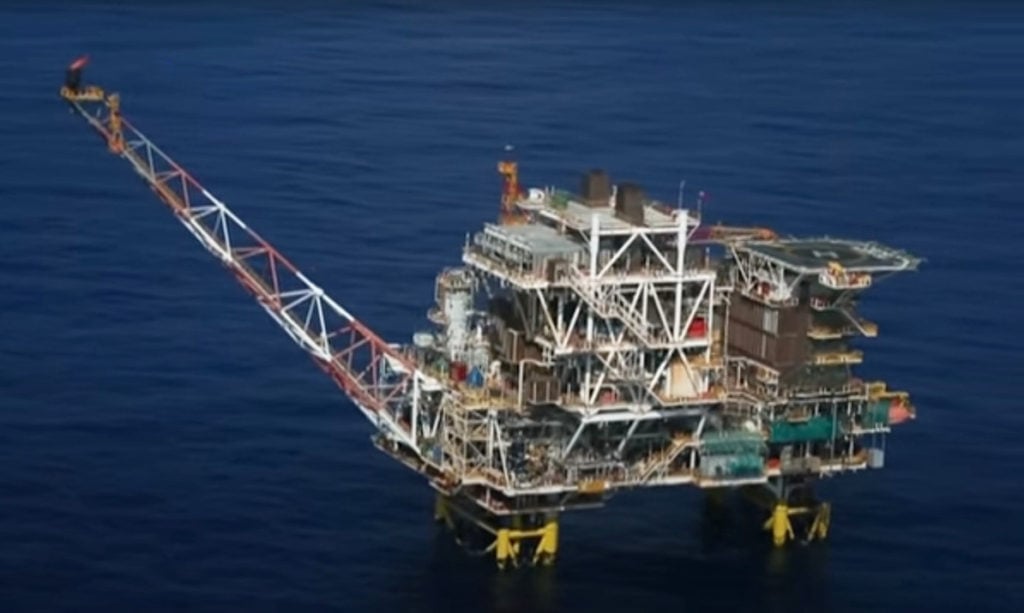
Lan Tay gas field was operated by Rosneft Vietnam in the South China Sea

South China Sea researcher Bill Hayton currently works at BBC World News, used to reside in Vietnam, on the afternoon of July 15, has an article titled “Repsol: Chinese pressure caused Vietnam to lose $1 billion in the South China Sea.”

Accordingly, the Vietnam Oil and Gas Group (PetroVietnam- PVN) has agreed to pay $1 billion to Repsol Spain and Mubadala of the United Arab Emirates to terminate and compensate. Vietnam’s social network nearly one month ago also had a lot of information about this huge amount. However, there are also opposing opinions, saying that this is just a pure business!

A separate source from Thoibao.de in June also revealed that Repsol’s initial request amounted to $1.4 billion, then negotiated reduced to $1.2 billion to compensate for expenses that Repsol has spent but the project has not reached the exploitation stage.

“In 2019, the Politburo wanted to vent this responsibility to PVN, and ask PVN to notify Repsol to stop because of ‘technical reasons.’ But the General Director of PVN that day, Mr. Nguyen Vu Truong Son resolutely disagreed, because this was not PVN’s fault, but it was due to an implicit agreement of the Politburo with China- that means am surrendered to China. Therefore, Nguyen Vu Truong Son was forced to resign.

PVN has absolutely no fault in this because all drilling exploration in the South China Sea is approved by the Politburo … And now the Politburo requests to cancel the contract with Repsol, the PVN must comply, although it knows it will cost a lot of money,” a private source of Thoibao.de said.

Thoibao.de is not conditionally verified because this information is always secretly ordered by the Vietnamese Communist Party’s Politburo, although these huge sums of money are damage to the people and are taken from the national budget.

Bill Hayton wrote that he was told that Vietnam had agreed to pay about $1 billion to two international oil and gas companies after canceling their projects in the South China Sea due to pressure from China.

A source familiar with the oil and gas industry told the BBC that PVN agreed to pay Spain’s Repsol and the United Arab Emirates’s Mubadala for the agreements’ cancelation and “compensation.”

In a statement, the Repsol’s spokesman said he “did not want to confirm or deny the money” but reading an analysis of the company’s financial statements showed a huge amount of money was involved.

This news comes amid a new confrontation in the South China Sea. Rosneft, the Russian energy company, was forced to suspend its offshore drilling plan, apparently also because of Chinese pressure.

Chinese coasters have operated in the area where it was supposed to be.

Earlier this month, the U.S. and Chinese navies simultaneously conducted large-scale exercises in the region, a move that showed greater strategic competition between the two powers in the region.

An experienced Western oil expert in the region told the BBC that he “had never seen so much political intervention in the oil and gas industry off the South China Sea.”

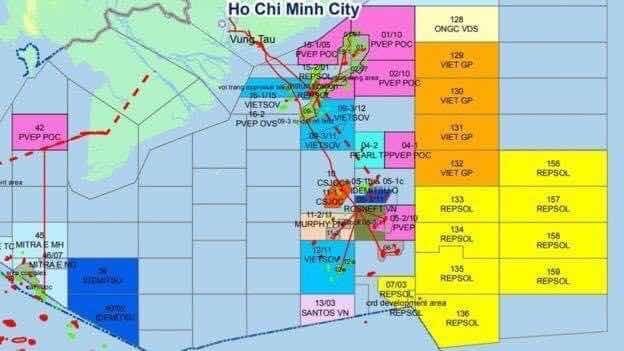
Repsol was once one of the largest corporations involved in offshore exploitation of Vietnam, owning 13 plots on the continental shelf. With minimal interests in China, Repsol seems ready to counter the political pressure from Beijing.

Two of the firm’s particularly daring development projects are located at the far edge of the exclusive economic zone (EEZ) that Vietnam claims and also falls within the 9-dash or U-shaped line drawn by China. on the map since 1948.

However, in July 2017, Repsol’s partner, PetroVietnam, ordered the cancellation of the exploration drilling planned in Block 135-136 / 03. Then, on March 22, 2018, Repsol was ordered to stop drilling separately when it began work on the nearby Lot 07/03 (a project in the area called Red Dragon Fish).

Repsol experts were informed that this was a political decision, at the behest of Vietnam’s top leader, following intense Chinese pressure.

Vietnamese rigs in Truong Sa

China had previously dispatched a fleet of 40 naval vessels off Hainan Island, about two days by boat from the drilling site and China seemed ready to confront.

That [orders of Vietnamese leaders] now seems to be a decision that Hanoi must pay too expensive.

A source in the region’s oil and gas industry that knows very well the deal said that Vietnam paid Repsol and Mubadala $800 million for their rights in the above lots and an additional $200 million in compensation for all investments they have done in the process of exploration and development.

This is $1 billion that PetroVietnam should have transferred to the Vietnamese government’s budget.

In 2019 financial statements, Repsol noted that it had made a provision for combined losses of EUR786 million for projects in Vietnam, Algeria and Papua New Guinea.

However, its losses in Vietnam are not detailed. In the same statement, Repsol also reported a total book value of EUR586 million for three subsidiaries working in the affected plots in Vietnam.

In a statement dated June 12, 2020, announcing the discontinuation of Block 7 March and 135-136 / 03, the company said “Transactions [with PetroVietnam] will not have a significant impact on Repsol’s financial statements.”

This seems to indicate that the company will recover its costs and losses. Although the statement does not include financial details, the total value of those costs and losses can easily amount to hundreds of millions of dollars.

China’s efforts to prevent Vietnamese-based companies from developing oil and gas resources in the South China Sea are continuing.

Lot 07/03 is located next to Lot 136-03, which Vietnam had to stop operating in July 2017

A rig, located in Vung Tau port of Vietnam, has been shut down for two months. The rig owner, Noble Group, said the contract “included an outage payment.” It is likely that this case cost Vietnam many millions of more dollars.

This rig is for drilling exploration for Russian company Rosneft in Lot 06-01, the area just north of Repsol’s old lot is Lot 07/03, and is also located in the U-shaped line of China.

The new well should have been drilled close to where it is right now – but with deeper drilling. This is a field that has been commercially exploited for 18 years as part of the Nam Con Son gas project but China now feels it can stop the development there.

In early July, a Chinese coast guard ship, Hai Duong 5402, appeared “provocative” movement in the proposed area for drilling.

The AIS data tracked by a twitter user named “South China Sea News” shows that the ship moves at a speed of 15 knots only 1.5 miles from the Lan Tay gas field currently operating.

So far most analysts have assumed that China will not want to confront Moscow by blocking Russian activities in Vietnam. Now it seems that Beijing feels comfortable frightening the Russian company to the point of giving up just as it did with companies from Western Europe.

There are also some mysteries about Japan’s activities off Vietnam. Two Japanese companies, Idemitsu and Teikoku / Inpex, in cooperation with PetroVietnam, are operating in two mines: Sao Vang and Dai Nguyet, which lie on the edge of the Nine-segment road at Lot 05-01b and Lot 05-01c.

They have completed development drilling and preparation work but have not installed the main suction pump equipment. Idemitsu said it expected to “start producing light gas and oil in the third quarter of 2020” but it was keeping quiet about the progress they were making.

Another problem is that Teikoku is currently facing a lawsuit from a London listed company, Jadestone. Jadestone said it agreed to buy Teikoku stake in the plot four years ago but Teikoku, a subsidiary of Japanese energy giant Inpex canceled the deal.

Some have speculated that the corporation, under the orders of the Japanese Government, wanted to keep the plot as an all-Japan arrangement to deal with any threat from China that could halt development at This mine in the future.

Incidents like these are a major reason why the US government made a statement about the South China Sea this week. In that statement, Secretary of State Mike Pompeo described China’s “bullying campaign” to control most of the offshore resources in the South China Sea as “completely illegal” behavior.

The statement shows that the US is willing to help countries like Vietnam to protect their offshore oil and gas industry from Chinese intervention. The Chinese embassy in Washington described the allegation as “completely unfounded.” However, it seems that the war on resources of the South China Sea is about to get hotter.

Thoibao.de (Translated)

Hình ảnh này chưa có thuộc tính alt; tên tệp của nó là 2020-07-16_153017-1024x762.jpg
The article “Voters expect the General Secretary to stay in the office again – paving the way for Mr. Trong to stay?” blocked by Facebook. RFA have to repost to the notes section

The article “Voters expect the General Secretary to stay in office again – paving the way for Mr. Trong to stay?” was posted on Radio Free Asia (RFA)’s Facebook page on June 30, but it was blocked by the giant American social network on July 13. Accordingly, Facebook users in Vietnam cannot view the content of this article.

Thus, in only 4 months between April and July this year, Facebook has blocked the access of people in the country for 5 posts on social networks of RFA with the reason given by Facebook: “Because of local legal restrictions, we restrict access to your posts in Vietnam.”

Earlier, the article “Re-calling the overseas Vietnamese community to accompany in the fight against the COVID-19 pandemic when meets troubles!” was blocked on April 21.

In the same May, two other articles, Mr. Trong’s request for Central Committee’s members in the 13th tenure titled The old instructions!” was blocked on the 5th and the article “Supreme Court of Ho Duy Hai case” was blocked. blocked on the 16th.

In early July, on the 2nd, Facebook did not allow domestic users to access the article “13th National Congress: Cannot have worthy political report of Dr. Pham Quy Tho.”

The situation of blocking posts, deleting posts, limiting sharing on Facebook social networks has recently become more and more common when many civil activists and independent journalists have repeatedly said they have lost articles.

Once deleted by many Facebook posts on his personal page, freelance journalist Nguyen Ngoc Gia from Saigon commented on this situation as follows:

“I’m not surprised that posts that contain hate speech and promote violence are deleted or blocked by Facebook or being treated by any other form. But for mild articles, and judgments based on objective science are also blocked by Facebook from sharing or deleting articles or other forms, that expression is clear for people to see the article. Vietnam’s authorities dont want local people not to see them so they force Facebook to stop that post. Since Facebook is a business corporation that puts profits first, in this case Facebook is forced to make concessions and cooperate with the Communist government of Vietnam is understandable.”

Talking to RFA on the evening of July 13, independent journalist Ngo Nhat Dang said that Facebook’s restriction of information at the request of the Hanoi government was not surprising. He posed the question:

“We see a phenomenon that not only Facebook but both Twitter and Google have been blocking posts that they think they are sensitive information. Even Twitter blocks even tweets from President Donald Trump. There has been politicization in the information network, social networks, and this issue raises many questions as to why there is such a problem in information blocking and censoring in this era? Is there any interference from outside political forces? “

The Diplomat page on July 9 also had the article “Facebook: Vietnam’s Fickle Partner-in-Crime” to talk about the situation that the Government of Vietnam agreed to cooperate with Facebook for the country’s own benefit.

Hình ảnh này chưa có thuộc tính alt; tên tệp của nó là 2020-07-16_203508.jpg
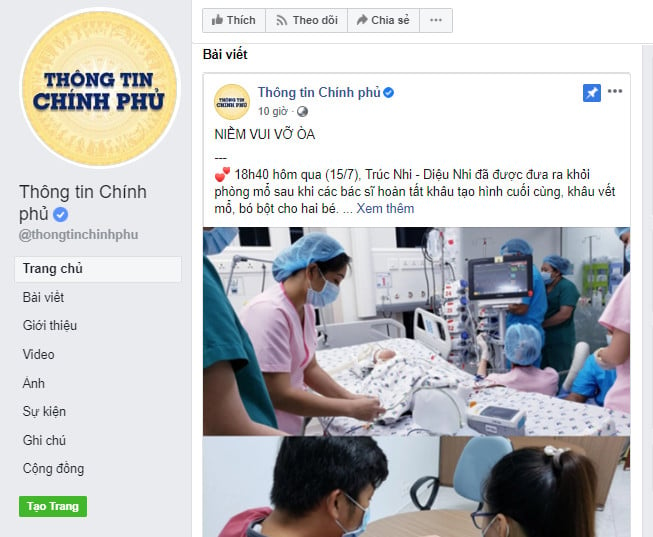
Users access the Vietnamese government information page on Facebook.

The article mentioned a speech by Minister of Information and Communications Nguyen Manh Hung in August 2019, saying that Facebook is limiting access to a significant increase in the amount of content in Vietnam. Mr. Hung added that the social media giant meets 70-75% of the Vietnamese government’s request to restrict posts.

Notably, Facebook confirmed that the content that the company has restricted access to in Vietnam increased by more than 500% in the second half of 2018.

However, Facebook has consistently denied allegations that the removal of user-posted content comes from political pressure, which is implemented based on its social community standards. The author of the post on the Diplomat said that the explanation was to justify the removal actions of Facebook.

On April 21, Reuters posted an article saying that Facebook has begun to significantly increase the censorship of “anti-government” content in Vietnam. The content just mentioned was verified by two sources from the Facebook company.

Specifically, according to Reuters, this measure was taken after pressure from the authorities, including that the group suspected state-owned telecommunications companies restricted access to local servers, making Facebook unable to use for much of the time.

Therefore, from a personal perspective, journalist Nguyen Ngoc Gia said that not only is the social network linking people, but Facebook is also a business company, so it still needs revenue to operate:

“They are caught in the middle of profits for their businesses while protecting the free voice of the Vietnamese people. It is a rather difficult problem with the communist regime in Vietnam, which is the information-hushed regime in the top 20 hostile countries of the Internet’s free speech. That is very difficult for Facebook.”

Therefore, journalist Nguyen Ngoc Gia said that in order to solve this situation, it is necessary to have influential interventions to be able to improve from Facebook.

As Facebook was forced to cooperate with the Hanoi government to survive in Vietnam, journalist Ngo Nhat Dang said that Facebook also made a profit from ads. Therefore, he suggested that Facebook needs to reconsider:

“I think people come to Facebook to go to the platform of freedom of thought, freedom of speech when not shown in other channels. If Facebook prevents some sources of public opinion for some reason, then they first politicize in business. Second, with those, Facebook will suffer losses. People also know last month there was a wave of a boycott of Facebook, in a Facebook transaction lost more than $7 billion. I think this is also a way for Facebook executives to rethink the direction of how to run Facebook back to the right place for people to express their views on it, including political views.”

Recently, Facebook has set up an independent agency to resolve disputes regarding content removal.

According to the author of the Diplomat article, although the effectiveness of this newly created agency is still a big question, Facebook has provided a platform for activists in the digital age, including even people from Vietnam, to listen to the cases raised.

On July 14, we received a reply from Amy Sawitta Lefevre, Facebook’s Communication Policy Manager:

“The Government of Vietnam has instructed us to restrict access to content that is considered illegal in Vietnam; however, people outside Vietnam may still see them. We believe that free speech is a fundamental human right and is working hard to protect these important civil liberties worldwide. We take this approach with a vision that will ensure our services still available to millions of people in Vietnam who rely on Facebook every day.”

Thoibao.de (Translated)

Vietnamese Source: https://www.rfa.org/vietnamese/in_depth/facebook-restricts-access-to-5-rfa-posts-in-just-4-months-07132020152632.html?fbclid=IwAR1fUtGb-OZQvSiSVOQuMNxbVpi9FY6jJZjJqHrBhKuBY9xBu__ekXhgA-A