The shelves were emptyed by people in supermarkets in northern Italy. Especially, medical items such as rubber gloves, disinfectant gels, etc. are severely lacked

General Director of the World Health Organization (WHO) Tedros Adhanom Ghebreyesus warned that the world needs to prepare for the possibility of Covid-19 becoming a global pandemic.

At a press conference at the WHO headquarters in Geneva (Switzerland) on Feb 24, WHO President Tedros Adhanom Ghebreyesus told reporters that new infections in recent days in Iran, Italy and South Korea caused “profound concern.”
But he added: “Right now we don’t see the global uncontrolled spread of this virus and we don’t see serious illnesses or large-scale deaths.”
“Is this virus capable of becoming a pandemic? Absolutely. Are we in the pandemic yet? From our judgment, not yet.”

“The main message that can bring hope, courage, and confidence to every nation is that this virus can be controlled. Indeed, a lot of countries do exactly that,” said Tedros.
“Using the word ‘pandemic’ doesn’t fit into reality right now, but one thing is for sure, it will be frightening.”
But Mike Ryan, the director of the WHO’s emergency health program, says it’s time to “do everything we can to prepare for a pandemic.”
 
The WHO has declared the COVID-19 epidemic a global emergency medical situation, but has not yet called it a global pandemic.

UN Secretary General Antonio Guterres (left) and WHO Director-General Tedros Adhanom Ghebreyesus met in Geneva on Feb 24 to discuss the situation of the Covid-19 epidemic.

Tedros, meanwhile, quoted the WHO-China joint office report on Feb 24 which concluded that the Covid-19 epidemic “peaked” on Jan 23 – Feb 2 in mainland China and that the number of new cases was “declining” since then.

The WHO Director General also said he believed that China’s quarantine measures, including blockade of some cities, helped prevent the spread of the disease on a larger scale.

Is corona virus a pandemic? Currently WHO says no. They argue that the number of countries affected, the severity of the disease, and the impact on society have not yet reached the level of the pandemic.

But some scientists think we are in a pandemic, and others say we are at the peak of the epidemic. An outbreak in South Korea and a number of deaths in Iran and Italy have raised concerns over the past few days.

The deaths show that the actual number of infections in these two countries may be more than the reported cases, and that the corona virus has been there for some time.

What does “pandemic” mean? – A pandemic is a new disease that has spread globally. The pandemic H1N1 swine flu, which caused thousands of deaths, was declared a 2009 pandemic by WHO.

WHO no longer officially calls an outbreak as a “pandemic” but says the term can be used “informally.” WHO advises countries – to control infection while preparing for a widespread pandemic – to maintain the current situation
On the afternoon of Feb 24, the Korean National Assembly decided to temporarily close its headquarters, after authorities discovered a Covid-19-infected patient once attended a discussion held at the building for parliamentarians. The parliament building and the main meeting building will be re-opened on the morning of Feb 26, as recommended by the translator to close the site for a minimum of 24 hours. The plenary session of the National Assembly will not take place on February 25.
A crew member of Korean Air, South Korea, has recently tested positive for the new strain of corona virus. Korean Air on February 25 said the illness caused the airline to close its office near Incheon International Airport, where the crew’s meeting room is located, according to Reuters.
Update on Feb 25: South Korea has 977 people with Covid-19, including 11 died.
 

Iran’s Deputy Minister of Health, Mr. Iraj Harirchi

Another shocking news is that Iran’s Deputy Minister of Health Iraj Harirchi has been tested positive for Covid-19, Iranian state media reported on Feb 25. According to the spokesman, he was infected with the virus and is currently in quarantine.

Harirchi was sweating and coughing at the press conference, then one day he confirmed he had tested it overnight and was positive for the corona virus. In a video posted on Twitter by Fars news agency, Iraj Harirchi confirmed that he was infected with the virus, but “I will definitely defeat Corona,” he said. It is not clear what happen with the people who contacted him at the event.

Qom City, the Shia Muslim mecca, is a place where Iranian patients have no contact with the Chinese. Therefore, IRNA news agency said Iranian officials questioned whether “Chinese workers working in Qom returned to their countries and brought the virus back.”
Minoo Mohraz from the Iranian Ministry of Health said “the source of the disease is most likely a Chinese group of workers in Qom“, but she gave no evidence for this, according to IRNA.
Afternoon Feb 25: Turkish Airlines Flight TK879 on the way from Tehran (Iran) to Istanbul (Turkey), has just landed an emergency landing in Ankara after finding 12 passengers with high fever. Of the 17 passengers suspected of being infected with nCoV, 12 were from the Qom region in Iran, CNN reported, adding that they would be quarantined in Ankara.

Earlier, ILNA quoted a Qom city official as saying that there were 50 deaths from Covid-19 in the city. However, Mr. Harirchi denied this information, in which he vowed to resign if the number of deaths equal to half the number mentioned above.

Iran is one of the countries most affected by the Covid-19 epidemic outside of China. There have been 95 confirmed Covid-19 infections in the past 72 hours, with 15 deaths, according to state news agency IRNA.

Since Feb 23, Iran has closed schools and universities across 14 provinces and set aside 230 hospitals to fight Covid-19. According to RT, five of the seven neighboring countries closed the border with Iran. Croatia and Austria are the latest two EU members to join the list of countries with Covid-19 infected people.
Italy has 38 more new cases, bringing the total number to 283 is the country with the highest number of infected cases in Europe.
The virus situation in Italy has already spread to the south of the country. Seven patients died and one recovered. The biggest carnaval festival of the year was canceled, Milano fashion week was also suspended. Currently 11 cities have been isolated.
100,000 people in the northern regions of Bologna and Veneto are facing blockades. Meanwhile, Italy has not identified “patient zero,” the source of coronavirus outbreak in this country.
 

Ho Chi Minh City Chairman Nguyen Thanh Phong has issued a warning statement implying concern at a meeting on the evening of Feb 25: “If 1,000 people get infected, it will be a battle.”

HCM City Chairman Nguyen Thanh Phong speaks at the meeting on Feb 25

Mr. Phong said the total number of beds for nCoV treatment in Ho Chi Minh City is 900, if the number of infected people beyond this red limit will be “broken.”

According to Mr. Phong, the city currently has 900 beds for isolation and treatment of nCoV-infected patients. With 322 communes and wards in the whole city, it is assumed that about 3 people infected each place, about 1,000 people have to be isolated and treated.
“This number is really overwhelming for the city. Not to mention that each case of infection requires about 20 days of treatment, each day requires 12 doctors and nurses for one patient. So with 1,000 cases it is impossible to find out 12,000 doctors and nurses to treat. This is the red limit, pass the battle immediately,” Phong said.
Agreed, City Party Committee Secretary Nguyen Thien Nhan said that nCoV patients need a strong team of doctors. As the case of the Chinese father and son recently, Cho Ray Hospital has to spend an infection department to treat 3 cases a day, one doctor and 5 nurses for each shift.
“Successful cure for one or two people can not be applied if there are 1,000 people,” Nhan said. Therefore, the city must prevent the spread to prevent the number of people infected from increasing.”

Mr. Nguyen Thien Nhan, Secretary of Ho Chi Minh City Party Committee, said that he still wondered about “whether students go to school to wear masks or not?” “If you can not answer, then go back to school is still embarrassing. When the city asserts no pathogens, you should not wear them, and if there are pathogens, you have to wear them all.” Mr. Nguyen Thien Nhan said.
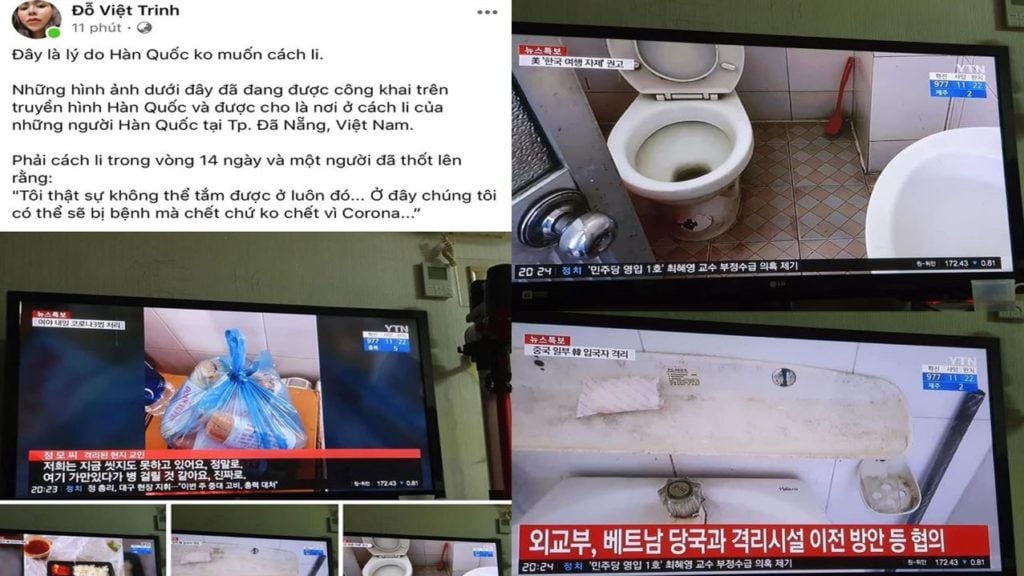
An image that was shown on Korean TV saying that the isolation in Danang is so bad. “I really can’t take a bath…. Here we can get sick and die, but not die from Corona”- this information relates to 20 South Korean tourists who responded when being taken straight from the airport to the special isolation ward of the lung hospital in Da Nang on Feb 24.

HCM City Department Director Nguyen Tan Binh said that the city is the region most likely to spread nCoV because of its high population and high population density.
“Just a subjective case like the number 31 patient of Korea is an immediate outbreak. If detected, quarantine this case early, the situation will not be as complicated as it is now,” Mr. Binh said.
As the most populous place in the city for Koreans (more than 11,000), Ms. Bui Thi Ngoc Hieu, vice chairman of People’s Committee of District 7, said that there are 97 apartments, one Korean school with 54 teachers and more than 1,900 student. Since the outbreak, 146 cases have to be isolated and tracked, so far only 14 cases have to be monitored.

HCM City Chairman Phong requested to strengthen supervision of cases of entry from epidemic areas, and suspected cases must be quarantined and sent to field hospitals as well as to stop issuing foreign work permits from epidemic areas. He said the counties with many Koreans living in must pay special attention and check regularly, and postpone crowded festivals.

Trung Hieu from Hochiminh city – Thoibao.de (Translated)

Lenin statues are dragged down all over the world

Recently, authorities in Nghe An have denied the ‘misinformation’ about Lenin statues in Vinh City, which is about to be being erected

Nghe An Province said that a 3-meter-high Lenin statue will be brought from Russia to Vinh City when the project is completed and the construction is expected to be completed at the end of March this year. According to information published by Vietnam newspaper last weekend, this is a project “with the consent of the Central Government, Nghe An Province” and Vinh City is implementing its construction.

The monument is expected to be located in roundabout intersection No. 5 of the city with a total project area of ​​about 4,300 m2.

“The statue is 3m high, cast in bronze, made in Ulyanovsk province, Russia, then transported Nghe An,” the Vietnamese newspaper quoted from Nghe An provincial party committee.

“This work represents a special friendship between Nghe An province – the hometown of the great Uncle Ho and Ulyanovsk – the hometown of Lenin, the leader of the communist movement and international workers, and also demonstrates friendship between Vietnam and Russia.”
On Vietnamese social networks over the past time, there have been some critical comments about this project.
The first to be raised is the high cost of construction in a poor province.
Thanh Nien newspaper confirmed that the cost of building flower gardens and fountains for this project is more than VND8 billion.
Now, the Vietnamese newspaper said that “the leaders of the provincial Propaganda Department affirmed that the information on social networks in the past few days was incorrect and distorted with malicious intent.”
However, Nghe An provincial party committee did not say what “incorrect information” was.

The second reason, according to critics, is the obsolete character of Lenin, the symbol of the violent communist model in Russia after 1917.

An article in the Vietnamese newspaper in Hungary in 2014, said that worshiping Stalin or Lenin were “blind personality worship.”

In addition, “Lenin was more or less a supporter of the application of revolutionary violence as an essential and necessary means to resolve social and political conflicts.”
“His authoritarian and undemocratic made big figures with the same ideal like Rosa Luxemburg or writer Maxim Gorky felt greatly disappointed.
After the Soviet Union disbanded, many republics once belonged to the federation brought down the Lenin statue, considering it a symbol of oppressive dominance from Moscow
.”

In 2017, photographer Niels Ackermann and writer Sebastien Gober published “Finding Lenin” about thousands of Lenin statues erased in Ukraine.

However, there is also a “retrograde” phenomenon like in 2018 in Tajikistan.
According to Radio Ozodi, a broken Lenin statue in Shahritus, southern Tajikistan, was raised by the local Islamic council to restore it.
 

Monument location near the roundabout intersection between 5 major roads in the center of Vinh City

According to RT.com in September 2017, a public opinion survey in April said that 58% of Russians wanted Lenin to be properly reburied.

This line of opinion suggests that the maintenance of mummified remains of the deceased is inconsistent with Russian Orthodox customs.

In general, the devastating legacy of the period when the communist regime formed in the Soviet Union still divides even among the Russian people and intellectuals.

Most recently, the judge of the Constitutional Court of Russia, Konstantin Aranovsky, said that Russia today should not “take over the evil legacy of communist rule in the Soviet Union.”
The presence of Lenin in statues in Hanoi and in books and pictures of the Vietnamese state has a slightly different meaning.
It is the assertion of the unique, entire leadership role of the Communist Party of Vietnam, which is still Leninist.
Culturally, this phenomenon seems to be more and more indigenous to Vietnam than it is related to post-Soviet historical changes in Europe and the former Soviet Union.

In November, 2019, many Facebookers expressed their disgust when they saw the picture of Mr. Hoang Trung Hai, Secretary of the Hanoi Municipal Party Committee, and the ministry of salons bowed to commemorate and offer flowers at Lenin “communist zombie” on occasion. 102 years anniversary of the event “Russian October Revolution

80 years later, Boris Yeltsin, former communist and the first president of the Russian Federation, determined: “It was an abominable crime. The massacre is one of the most embarrassing things in Russian history. Yeltsin said that organizing burial of innocent victims is a way of redemption. The massacre is the result of extremism, dividing Russian society. According to Yeltsin, it is time to end the era of blood and violence in Russia.”
After recounting one of Lenin’s crimes, Doan Bao Chau asked Nghe An authorities to consider: “Why are many parts of the world such as 14 countries once belong to the Soviet Union, countries of Eastern Europe, Mongolia, China, North Korea, etc. competing to break the monument Lenin? Why does the people of the Russian Federation now constantly offer to remove Lenin from the mausoleum that was built for him? Chau noted, over time, the Lenin judgment will be more drastic and frank. “
Facebooker Nhat Chi Mai said: Lenin is a sadist, a criminal of humanity. Did the Nghe An provincial government erect Lenin statues for advocating for violence and killing? Facebooker AB Bui recalled: Lenin was the one who initiated the Soviet-style socialist state model. It is estimated that in the 20th century, the communist states killed hundreds of millions of people and Lenin was responsible for this crime.

grandmother holding 10k dong

Mr. Chu asked: “Why is the government of Nghe An province going against the trend of both Russia and the world?
Why honor an individual whom his compatriots want to dismiss such as erasing a stain?
Why not erect a statue of your ancestor but honor a person like Lenin and create more difficulties for postpartum when your children and grandchildren must remove?
Why erect Lenin statue without soliciting opinion from Nghe An people whether they want it or not
?”

Ms. Do Thi Hoa commented:”It is unlikely that the government of Nghe An province loves Lenin. The problem is that this implementation plan is approved by the superiors, so the implementation will bring money. Being criticized but having the opportunity to corrupt, the communists would do. A lot of people agree with this comment, such as Hien Ha Ngoc: Having “begged in the past” does not care about people’s expectations, the feelings of others and the trend of the times!”
 

Giving goats to poor households in Trung Do hamlet, Tan Hop commune, Tan Ky district, Nghe An province

When discontented but unable to prevent the government officials from taking their money, people criticize and joke. Some people suggested to build Lenin statue with face of Vietnamese such as Le Duan or Le Dinh Kinh, etc.

Knowing that it is impossible to stop the construction of the Lennin monument because it is an opportunity for officials’ corruption, Pham Thanh Hung hopes that, when the construction is completed, the Lenin statue will turn out … the statue of Le Dinh Kinh!

When Nghe An built a memorial park and erected a statue of Lenin, tens of thousands of social network users exchanged information for each other, in 2018, Nghe An only had revenues of VND12.691 billion while spending up to VND23.780 billion.

The shortfall due to the difference of revenue and expenditure of more than VND11,000 billion, of course, continues to apply as it has been, and the province will continue to ask the government for support.

Trung Tran tried calculating (taking VND11 trillion for 365 days) and reminded everyone: Every day, the whole country had to give Nghe An about VND30 billion to spend and Nghe An eagerly erect Lenin statue.

Hai Yen from Ha Noi – Thoibao.de (Translated)

https://www.youtube.com/watch?v=7G9y_HxBtbk

Tổng giám đốc Tổ chức Y tế Thế giới (WHO) Tedros Adhanom Ghebreyesus cảnh báo thế giới cần chuẩn bị cho khả năng COVID-19 trở thành đại dịch toàn cầu.

Trong buổi họp báo tại trụ sở WHO ở Geneva (Thụy Sĩ) ngày 24.2, người đứng đầu WHO Tedros Adhanom Ghebreyesus nói với các phóng viên hôm thứ Hai rằng số ca nhiễm mới trong những ngày gần đây ở Iran, Ý và Hàn Quốc gây “lo ngại sâu sắc“.
Tuy nhiên ông này nói thêm: “Ngay lúc này chúng ta không thấy sự lây lan toàn cầu không kiểm soát của virus này và chúng ta cũng không thấy các ca bệnh nặng hay tử vong ở quy mô lớn.
“Virus này có khả năng trở thành đại dịch hay không? Hoàn toàn có thể. Chúng ta đã ở trong đại dịch chưa? Từ đánh giá của chúng tôi, chưa.”
“Thông điệp chính có thể mang lại hi vọng, lòng dũng cảm, và sự tự tin cho mọi quốc gia là virus này có thể kiểm soát được. Thật vậy, rất nhiều quốc gia chính xác đã làm được điều đó,” ông Tedros nói.
“Dùng chữ “đại dịch” bây giờ không phù hợp với thực tế nhưng có điều chắc chắn là nó sẽ gây sợ hãi.”
Nhưng Mike Ryan, giám đốc chương trình sức khỏe khẩn cấp của WHO nói bây giờ là thời điểm để “làm mọi thứ có thể để chuẩn bị cho một đại dịch“.

Những kệ hàng bị người dân vét sạch tại các siêu thị miền bắc nước Ý. Đặc biệt, các mặt hàng y tế như găng tay cao su, gel khử trùng.. thiếu hụt trầm trọng.

WHO đã tuyên bố dịch COVID-19 là tình huống y tế khẩn cấp toàn cầu, nhưng chưa gọi đây là đại dịch toàn cầu.

Trong khi đó, ông Tedros dẫn lại báo cáo văn phòng phối hợp giữa WHO với Trung Quốc ngày 24.2 kết luận rằng dịch COVID-19 “đạt đỉnh” ngày 23.1 – 2.2 tại Trung Quốc đại lục và số ca nhiễm mới đã “giảm dần đều kể từ đó”.
Tổng giám đốc WHO đồng thời nói ông tin rằng các biện pháp dập dịch của Trung Quốc, bao gồm phong tỏa một số thành phố, đã giúp ngăn chặn dịch lây lan trên quy mô lớn hơn.
Virus corona có phả là một đại dịch không? Hiện nay WHO nói là không. Họ viện lẽ rằng con số các nước có dịch, mức độ nghiêm trọng của bệnh, và tác động lên xã hội chưa chạm mức đại dịch.
Nhưng một số nhà khoa học – cùng đánh giá chung một bức tranh – cho rằng chúng ta đã ở trong đại dịch, và một số khác nói chúng ta đang ở trong đỉnh dịch. Dịch bệnh bùng phát ở Nam Hàn và số ca chết ở Iran và Ý làm dấy lên lo ngại trong vài ngày qua.
Các ca tử vong cho thấy số ca nhiễm thực tế ở hai nước này có thể nhiều hơn số ca được báo cáo, và rằng virus corona đã hiện diện ở đó một thời gian rồi.
Nhưng về cơ bản, từ ‘đại dịch’ chỉ có vậy – một từ – nó sẽ không rót thêm tiền hay cho WHO thêm các quyền lực mới. WHO đã đưa ra cảnh báo cao nhất có thể, bằng cách công bố virus này là một tình huống khẩn cấp toàn cầu.

‘Đại dịch’ nghĩa là gì? – Một đại dịch là một dịch bệnh mới lan rộng toàn cầu. Dịch cúm heo H1N1, khiến hàng ngàn người chết, được WHO công bố là đại dịch năm 2009
WHO không còn chính thức gọi một dịch bệnh bùng phát là một ‘đại dịch’ nhưng nói rằng thuật ngữ này có thể được sử dụng ‘không chính thức‘. WHO khuyên các nước – để kiểm chế lây nhiễm trong khi chuẩn bị cho tình huống dịch lan rộng – duy trì như hiện nay
Chiều 24/2, Quốc hội Hàn Quốc đã quyết định tạm thời đóng cửa trụ sở, sau khi nhà chức trách phát hiện một bệnh nhân nhiễm COVID-19 từng tới tham dự một buổi thảo luận tổ chức tại tòa nhà dành cho nghị sỹ. Tòa nhà dành cho nghị sỹ và tòa nhà họp chính sẽ mở cửa trở lại vào sáng ngày 26/2, do cơ quan phòng dịch khuyến nghị đóng cửa địa điểm tiến hành phòng dịch tối thiểu 24 giờ. Phiên họp toàn thể Quốc hội sẽ không diễn ra trong ngày 25/2.
Một thành viên phi hành đoàn của hãng hàng không Korean Air, Hàn Quốc, vừa có kết quả xét nghiệm dương tính với virus corona chủng mới. Korean Air hôm 25/2 cho biết ca bệnh nói trên khiến hãng phải đóng cửa văn phòng gần sân bay quốc tế Incheon, nơi có phòng họp của phi hành đoàn này, theo Reuters.
Cập nhật đến 25/2: Hàn Quốc đã có 977 người mắc COVID-19, trong đó có 11 người tử vong.

Mike Ryan, giám đốc chương trình sức khỏe khẩn cấp của WHO (bên trái) và tổng giám đốc WHO Tedros Adhanom Ghebreyesus họp bàn về tình hình dịch Covid-19 tại Genève, Thụy Sĩ ngày 24/02

Một tin gây sốc nữa là Thứ trưởng Bộ Y tế Iran Iraj Harirchi cho kết quả xét nghiệm dương tính với virus Corona mới (COVID-19), truyền thông nhà nước Iran đưa tin ngày 25.2. Theo phát ngôn viên, Thứ trưởng Iraj Harirchi đã nhiễm virus và hiện đang bị cách ly.

Thứ trưởng Y tế Iran, Iraj Harirchi đã toát mồ hôi và ho ngay tại cuộc họp báo, sau đó một hôm ông xác nhận đã thử qua đêm và bị dương tính với virus corona. Trong video đăng trên Twitter, được hãng tin Fars thực hiện, ông Iraj Harirchi xác nhận đã nhiễm virus, nhưng “tôi chắc chắn sẽ đánh bại Corona“, ông nói. Không rõ những người tiếp xúc với ông tại sự kiện được truyền hình trực tiếp ở Iran nay ra sao.
Thành phố Qom, thánh địa của người Hồi giáo Shia, là nơi các bệnh nhân Iran không có tiếp xúc với người Trung Quốc. Vì thế, hãng tin IRNA nói quan chức Iran đặt vấn đề có phải “công nhân Trung Quốc làm việc tại Qom về nước họ và đem virus trở lại“.
Bà Minoo Mohraz từ Bộ Y tế Iran nói “nguồn bệnh rất có khả năng là nhóm công nhân TQ tại Qom“, nhưng bà không nêu ra bằng chứng gì cho việc này, theo IRNA.
Chiều 25/2: Chuyến bay TK879 của hãng hàng không Turkish Airlines trên đường từ Tehran (Iran) đến Istanbul (Thố Nhĩ Kỳ), vừa hạ cánh khẩn cấp xuống thủ đô Ankara sau khi phát hiện 12 hành khách đang sốt cao. Trong số 17 hành khách bị nghi nhiễm nCoV có 12 người tới từ vùng Qom ở Iran, CNN đưa tin, nói thêm rằng họ sẽ bị cách ly ở Ankara.

Trước đó, ILNA dẫn lời một quan chức thành phố Qom cho biết, có 50 ca tử vong do COVID-19 ở thành phố này. Tuy nhiên, ông Harirchi bác bỏ thông tin này, trong đó ông tuyên bố sẽ từ chức nếu có số ca tử vong bằng 1/2 con số nêu trên.

Iran là một trong những quốc gia bị ảnh hưởng nặng nề nhất bởi dịch COVID-19 ngoài Trung Quốc. Có 95 ca nhiễm COVID-19 được xác nhận trong 72 giờ qua, với 15 ca tử vong, thông tin do hãng thông tấn nhà nước IRNA công bố.
Từ ngày 23.2, Iran đã đóng cửa các trường học và các trường đại học trên khắp 14 tỉnh cũng như dành 230 bệnh viện để chống dịch COVID-19. Theo RT, năm trong số bảy nước láng giềng đã đóng cửa biên giới với Iran. * Croatia và Áo là 2 thành viên mới nhất của Liên Âu tham gia vào danh sách các quốc gia có người bị nhiễm COVID-19.
Ý có thêm 38 ca mới, nâng tổng số ca lên 283 là nước có số ca nhiễm nhiều nhất châu Âu.
Tình hình virus ở Ý đã lan xuống miền Nam nước này rồi. 7 bệnh nhân đã chết và một người đã hồi phục. Lễ hội carnaval lớn nhất năm bị hủy, tuần lễ thời trang Milano cũng hủy. Hiện 11 thành phố đã bị cách ly.
100.000 người ở các khu vực phía bắc của Bologna và Veneto đang phải đối mặt với phong tỏa. Trong khi đó, Ý chưa xác định được “bệnh nhân số không“, nguồn gốc của sự bùng phát coronavirus tại quốc gia này

Thứ trưởng Y tế Iran, Iraj Harirchi đã toát mồ hôi và ho ngay tại cuộc họp báo

Mặc dù VN công bố có 16 ca nhiễm bệnh nhưng số lượng người được xét nghiệm là vô cùng nhỏ khi so sánh với hàng trăm ngàn ca xét nghiệm ở Hàn quốc để nhìn thấy con số tăng đột biến lên gần 1000 ca nhiễm bệnh Covid-19 ở Hàn quốc mới đây. Vì thế, rất nhiều người cho rằng ở VN có rất nhiều trường hợp nhiễm Virus mà ẩn dấu chưa phát hiện ra…
Chủ tịch TP HCM Nguyễn Thành Phong vừa có tuyên bố cảnh báo hàm ý lo ngại tại một cuộc họp tối 25/2 rằng: ‘Nếu 1.000 người nhiễm bệnh là vỡ trận‘.

Ông Nguyễn Thành Phong cho biết tổng số giường để điều trị nCoV của TP HCM là 900, nếu số người nhiễm vượt giới hạn đỏ này sẽ bị “vỡ trận“.
Theo ông Phong, hiện thành phố có 900 giường bệnh để cách ly, điều trị bệnh nhân nhiễm nCoV. Với 322 phường xã trên địa bàn toàn Thành phố, giả định mỗi nơi 3 người nhiễm bệnh thì đã có khoảng 1.000 người phải cách ly điều trị.
“Con số này thật sự quá tải đối với thành phố. Chưa kể mỗi ca lây nhiễm cần khoảng 20 ngày điều trị, mỗi ngày cần 12 bác sĩ và điều dưỡng cho một người bệnh. Vậy với 1.000 ca bệnh thì không tìm đâu ra 12.000 bác sĩ, y tá để điều trị. Đây là giới hạn đỏ, vượt qua là vỡ trận ngay“, ông Phong nói.
Đồng tình, Bí thư Thành ủy Nguyễn Thiện Nhân cho biết, bệnh nhân nCoV cần đội ngũ bác sĩ điều trị hùng hậu. Như trường hợp hai cha con Trung Quốc vừa qua, Bệnh viện Chợ Rẫy phải dành cả khoa nhiễm để chữa trị. Mỗi ngày 3 ca, mỗi ca một bác sĩ và 5 điều dưỡng, y tá.
“Thành tích chữa thành công cho một, hai người không thể áp dụng nếu có 1.000 người được đâu“, ông Nhân nói. Do đó, thành phố phải ngăn chặn việc lây lan, không để gia tăng số người nhiễm bệnh.

Chủ tịch UBND TP HCM Nguyễn Thành Phong phát biểu tại cuộc họp tối 25/2

Ông Nguyễn Thiện Nhân, bí thư thành ủy TP.HCM cho biết, vẫn băn khoăn vấn đề “học sinh đi học có cần đeo khẩu trang hay không?”. “Nếu không trả lời được thì cho đi học lại vẫn lúng túng. Lúc nào thành phố khẳng định không có mầm bệnh thì khỏi đeo, còn có mầm bệnh thì phải đeo hết chứ?, người đeo người không đeo sao được?”, ông Nguyễn Thiện Nhân nói.

Giám đốc sở Y tế TP HCM Nguyễn Tấn Bỉnh nói rằng thành phố là địa bàn có nguy cơ lây lan dịch nCoV cao nhất nước vì dân số đông, mật độ dân số cao.
“Chỉ cần một ca chủ quan như bệnh nhân số 31 của Hàn Quốc là thành ổ dịch ngay. Nếu phát hiện, cách ly sớm ca này thì tình hình đã không phức tạp như bây giờ“, ông Bỉnh nói.
Là địa phương đông người Hàn Quốc sinh sống nhất thành phố (hơn 11.000), bà Bùi Thị Ngọc Hiếu, Phó chủ tịch UBND quận 7 cho biết trên địa bàn có 97 chung cư, một trường Hàn Quốc với 54 giáo viên và hơn 1.900 học sinh. Từ khi dịch bùng phát, 146 trường hợp trên địa bàn phải cách ly theo dõi, tính đến nay chỉ còn 14 trường hợp phải theo dõi.

Chủ tịch UBND TP HCM Nguyễn Thành Phong yêu cầu tăng cường giám sát các trường hợp nhập cảnh từ vùng dịch; các trường hợp nghi ngờ phải cách ly và đưa vào các bệnh viện dã chiến; ngừng cấp giấy phép lao động nước ngoài đến từ vùng dịch, các quận có đông người Hàn Quốc sinh sống phải đặc biệt lưu ý, kiểm tra thường xuyên; hoãn các lễ hội đông người…

hình ảnh được chiếu trên truyền hình Hàn quốc chê rằng nơi cách ly ở Đà Nẵng vệ sinh quá tệ. “Tôi thật sự không thể tắm được luôn đó….Ở đây chúng tôi có thể bị bệnh mà chết chứ không chết vì Corona” – thông tin này liên quan đến 20 khách Hàn quốc đã phản ứng khi bị đưa thẳng từ sân bay vào khu cách ly đặc biệt của bệnh viện phổi ở Đà nẵng hôm 24/2

Trung Hiếu từ TpHCM – Thoibao.de (Tổng hợp)

Mới đây, nhà cầm quyền tại Nghệ An đã lên tiếng bác bỏ ‘tin xuyên tạc’ về tượng Lenin ở thành phố Vinh sắp được khởi công xây dựng cho người dân chiêm ngưỡng

Tỉnh Nghệ An cho biết tượng Lenin cao 3 mét đúc ở Nga sẽ được đưa về thành phố Vinh khi dự án hoàn thành dự kiến vào cuối tháng 3 năm nay. Theo thông tin công bố của báo Việt Nam hôm cuối tuần qua, đây là công trình “đã được sự đồng ý của Trung ương, của tỉnh Nghệ An” và thành phố Vinh đang triển khai xây dựng.

Dự kiến tượng đài sẽ đặt ở Ngã 5 của thành phố với tổng diện tích dự án khoảng 4.300 m2.
“Tượng có chiều cao 3m, đúc bằng đồng, được chế tác tại tỉnh Ulyanovsk, Liên bang Nga, sau đó vận chuyển Nghệ An,” báo Việt Nam trích đăng từ tỉnh ủy Nghệ An.
“Công trình này thể hiện mối quan hệ hữu nghị đặc biệt giữa tỉnh Nghệ An – quê hương Bác Hồ vĩ đại và tỉnh Ulyanovsk – quê hương của Lênin, vị lãnh tụ phong trào cộng sản và công nhân quốc tế, đồng thời thể hiện tình hữu nghị giữa hai nước Việt – Nga.”
Trên mạng xã hội Việt Nam thời gian qua đã có một số ý kiến phê phán công trình này.
Việc đầu tiên bị nêu ra là chi phí cao cho công trình ở một tỉnh nghèo.
Báo Thanh Niên xác nhận rằng kinh phí xây dựng vườn hoa, đài phun nước cho công trình này lên đến hơn 8 tỷ VND.
Nay, báo Việt Nam nói “lãnh đạo Ban Tuyên giáo Tỉnh ủy khẳng định thông tin trên mạng xã hội những ngày qua không chính xác, xuyên tạc với dụng ý xấu“.
Tuy nhiên, tỉnh ủy Nghệ An không nói “thông tin không chính xác” đó là gì.

Tượng Lê nin bị kéo đổ khắp nơi trên thế giới

Lý do thứ hai, theo những người chỉ trích, là sự lỗi thời của nhân vật Lenin, biểu tượng của mô hình cộng sản ưa bạo lực ở Nga sau 1917.

Một bài đăng trên báo tiếng Việt ở Hungary hồi 2014, cho rằng tôn thờ Stalin hay Lenin đều là “sùng bái cá nhân mù quáng“.
Ngoài ra, “Lenin trước sau như một ủng hộ sự áp dụng bạo lực cách mạng như một phương tiện cần thiết và tiên quyết để giải quyết những mâu thuẫn trong xã hội và chính trị“.
“Sự độc đoán và phi dân chủ đó của ông đã khiến cả những gương mặt lớn, cùng lý tưởng – như Rosa Luxemburg, hay văn hào Maxim Gorky – phải ‘kêu trời“.
Sau khi Liên Xô giải tán, nhiều nước cộng hòa từng thuộc liên bang đã cho kéo đổ tượng Lenin, coi đó là biểu tượng của nền thống trị áp bức từ Moscow.
Hồi 2017, nhiếp ảnh gia Niels Ackermann và nhà văn Sebastien Gober cho ra cuốn ‘Đi tìm Lenin’ nói về hiện tượng hàng nghìn tượng Lenin bị xóa ở Ukraine.

Tuy thế, cũng có hiện tượng “ngược dòng” như hồi 2018 ở Tajikistan.
Theo Radio Ozodi, một pho tượng Lenin từng bị gãy tay ở Shahritus, miền Nam Tajikistan, được hội đồng Hồi giáo địa phương quyên tiền để trùng tu.

Ngoài khu vực Liên Xô cũ, hiện ở Tampere, Phần Lan, vẫn có một bảo tàng Lenin. Còn tại chính nước Nga, dư luận về Lenin vẫn chia rẽ, và một số tiếp tục ủng hộ để thi hài ông trong lăng tại Moscow, nhưng con số đông đảo hơn muốn đưa đi chôn.

Vị trí xây dựng tượng đài gần vòng xuyến giao nhau giữa 5 con đường lớn ở trung tâm TP Vinh

Theo RT.com hồi tháng 9/2017, điều tra dư luận tháng 4 năm đó nói 58% dân Nga muốn đưa Lenin đi cải táng một cách đúng đắn.
Dòng ý kiến này cho rằng cách duy trì xác ướp của người đã quá cố là không phù hợp với phong tục Chính Thống giáo của Nga.
Nhìn chung, di sản tàn khốc của thời kỳ chế độ cộng sản hình thành ở Liên Xô vẫn gây chia rẽ ngay trong dân chúng và trí thức Nga.

Mới đây nhất, thẩm phán Tòa Hiến pháp Nga, Konstantin Aranovsky nói nước Nga ngày nay không nên “tiếp quản các di sản tội ác của chế độ cộng sản thời Liên Xô“.
Sự hiện diện của Lenin qua tượng tại Hà Nội và trong sách báo, tranh ảnh của nhà nước Việt Nam lại có ỵ́ nghĩa hơi khác.
Đó là việc khẳng định vai trò lãnh đạo duy nhất, toàn bộ của Đảng Cộng sản Việt Nam, tổ chức vẫn theo đường lối Leninist.
Về mặt văn hóa, hiện tượng này có vẻ ngày càng mang tính tín ngưỡng bản địa ở VN hơn là có liên quan đến chuyển biến lịch sử hậu Xô – Viết ở châu Âu và khu vực Liên Xô cũ.

Bên cạnh hàng ngàn ý kiến chỉ trích dự án bị xem là phi lý, quái gở này, có khá nhiều người soạn Thư ngỏ gửi lãnh đạo tỉnh Nghệ An qua mạng xã hội. Một trong số đó là nhà văn Đoàn Bảo Châu. Ông Châu giới thiệu cuộc thảm sát gia đình hoàng đế cuối cùng của nước Nga ngày 18 tháng 7 năm 1918 – 11 thành viên hoàng gia bị bắn chết, rồi bị tưới 176 lít acid để làm thi thể biến dạng trước khi dùng 400 lít xăng để đốt – nhằm khắc họa bản chất Lenin, người chỉ đạo cuộc thảm sát tàn bạo này…

Hồi Tháng Mười Một, 2019, nhiều Facebooker bày tỏ sự ngán ngẩm khi thấy hình ông Hoàng Trung Hải, bí thư Thành Ủy Hà Nội, cùng bộ sậu đến cúi đầu tưởng niệm và dâng hoa tại “thây ma cộng sản” Lênin nhân dịp 102 năm kỷ niệm sự kiện “Cách Mạng Tháng Mười Nga

80 năm sau, Boris Yeltsin – cựu đảng viên cộng sản Liên Xô, Tổng thống đầu tiên của Liên bang Nga – xác định: Đó là tội ác đáng ghê tởm. Vụ thảm sát là một trong những điều đáng xấu hổ nhất của lịch sử nước Nga. Yeltsin cho rằng, tổ chức cải táng các nạn nhân vô tội là một cách chuộc lỗi. Vụ thảm sát vừa kể là kết quả của sự cực đoan, chia rẽ xã hội Nga thành ”chúng ta” và ”họ”. Theo Yeltsin, đã đến lúc phải kết thúc thời đại của máu và bạo lực ở Nga,…
Sau khi thuật lại một trong những tội ác của Lenin, Đoàn Bảo Châu đề nghị chính quyền Nghệ An cân nhắc: Tại sao nhiều nơi trên thế giới như 14 quốc gia từng thuộc Liên bang Xô Viết, các quốc gia khu vực Đông Âu, Mông Cổ, Trung Quốc, Bắc Triều Tiên,… thi nhau đập bỏ tượng đài Lenin? Tại sao dân chúng Liên bang Nga hiện nay liên tục đề nghị đưa Lenin ra khỏi lăng từng xây dựng cho ông ta?.. Châu lưu ý, theo thời gian, sự phán xét Lenin sẽ càng ngày càng quyết liệt và thẳng thắn hơn…
Facebook Nhất Chi Mai nói: Lenin là một kẻ tàn bạo, một tội đồ của nhân loại. Chẳng lẽ chính quyền tỉnh Nghệ An dựng tượng Lenin vì tôn thờ bạo lực, giết chóc? Facebook AB Bùi nhắc lại: Lenin là người khởi xướng mô hình nhà nước XHCN kiểu Xô viết. Người ta ước đoán, trong thế kỷ 20, các nhà nước cộng sản đã giết hàng trăm triệu người và Lenin phải chịu trách nhiệm trước nhân loại về tội ác này.

Giống như Đoàn Bảo Châu, ông Nguyễn Ngọc Chu cũng khuyên chính quyền tỉnh Nghệ An nên cân nhắc. Sở dĩ Putin, Tổng thống Nga hiện nay chưa thực hiện mong muốn của dân chúng Nga – đưa Lenin ra khỏi lăng dành cho ông ta vì vẫn còn những người mà quá khứ liên quan đến Lenin. Nói cách khác, việc đưa Lenin ra khỏi lăng là tất yếu nhưng sẽ do các thế hệ lãnh đạo nước Nga sau Putin thực hiện. Dựng tượng – đề cao Lenin vừa làm khó Putin, vừa làm tổn thương dân chúng Nga.

bà cụ cầm 10k đồng

Ông Chu chất vấn: Tại sao chính quyền tỉnh Nghệ An lại đi ngược chiều với xu hướng chung của cả Nga lẫn thế giới?
Tại sao lại vinh danh một cá nhân mà đồng bào ông ta muốn gạt bỏ như tẩy xóa một vết nhơ?
Tại sao không dựng tượng vinh danh tổ tiên mà vinh danh một người như Lenin và tạo thêm khó khăn cho hậu sinh khi chắc chắn con cháu phải dỡ bỏ?
Tại sao dựng tượng Lenin mà không trưng cầu ý kiến dân chúng Nghệ An xem họ có muốn hay không (3)?..
Bà Đỗ Thị Hòa – nhận xét: Không chắc chính quyền tỉnh Nghệ An yêu mến Lenin. Vấn đề là kế hoạch thực hiện này được thượng cấp phê duyệt thì thực hiện sẽ có tiền. Bị chỉ trích mà có cơ hội “phết, phẩy” thì vẫn hăm hở làm thôi. Rất nhiều người đồng tình với nhận xét này, chẳng hạn như Hien Ha Ngoc: Đã “ăn mày dĩ vãng” thì không quan tâm đến nguyên vọng của nhân dân, cảm xúc của người khác và xu thế của thời đại!

Bất kể thế nào, chắc chắn sẽ có một tượng đài vinh danh Lenin ở trung tâm thành phố Vinh. Sau khi bỏ thời gian tra cứu trang leninstatues.ru, Trần Hậu cho biết, trước 1991, trên toàn thế giới có 14.290 tượng đài Lenin với nhiều kích thước khác nhau nhưng đến nay thì bị đập bỏ, dọn dẹp và chỉ còn chưa tới một nửa (7.194). Tuy tượng đài Lenin ở Nghệ An sẽ khiến con số này tăng thêm một nhưng thêm một là vì đầu cơ chính trị và tham nhũng chứ không phải vì kính trọng lãnh tụ giai cấp vô sản toàn thế giới.

Đây là hình ảnh trao dê giống cho các hộ nghèo xóm Trung Độ, xã Tân Hợp, Tân Kỳ, Nghệ An

Khi bất bình nhưng không thể cản được các công bộc tìm cách cấu xé tiền của mình, bên cạnh chỉ trích, dân chúng Việt Nam thường bỡn cợt. Những bỡn cợt kiểu như Mậu Nguyễn Đức: Nếu tượng mang tên Lenin mà có diện mạo… Lê Duẩn thì .. cũng được! Cũng cùng họ… Lê và cũng cùng… đảng cộng sản. Tự biết không thể cản được việc xây dựng tượng đài Lennin vì đó là cơ hội cả hệ thống chấm mút, Phạm Thành Hưng mong rằng, xây dựng xong, tượng Lenin hóa ra… tượng cụ Lê Đình Kình!
Sự kiện Nghệ An xây công viên tưởng niệm và dựng tượng Lenin khiến hàng chục ngàn người sử dụng mạng xã hội chuyển cho nhau xem lại thông tin, năm 2018, Nghệ An chỉ thu được 12.691 tỉ trong khi chi tới 23.780 tỉ.

Khoản thiếu hụt do chênh lệch thu – chi hơn 11.000 tỉ đồng ấy tất nhiên là tiếp tục đi xin như đã, đang và sẽ còn xin hỗ trợ.

Trung Tran đã thử tính (lấy 11 ngàn tỷ chia cho 365 ngày) và nhắc nhở mọi người: Mỗi ngày, toàn quốc đang phải cấp cho Nghệ An khoảng 30 tỉ đồng để chi tiêu và Nghệ An hăm hở… dựng tượng Lenin.

Hải Yến từ Hà nội – Thoibao.de (Tổng hợp)

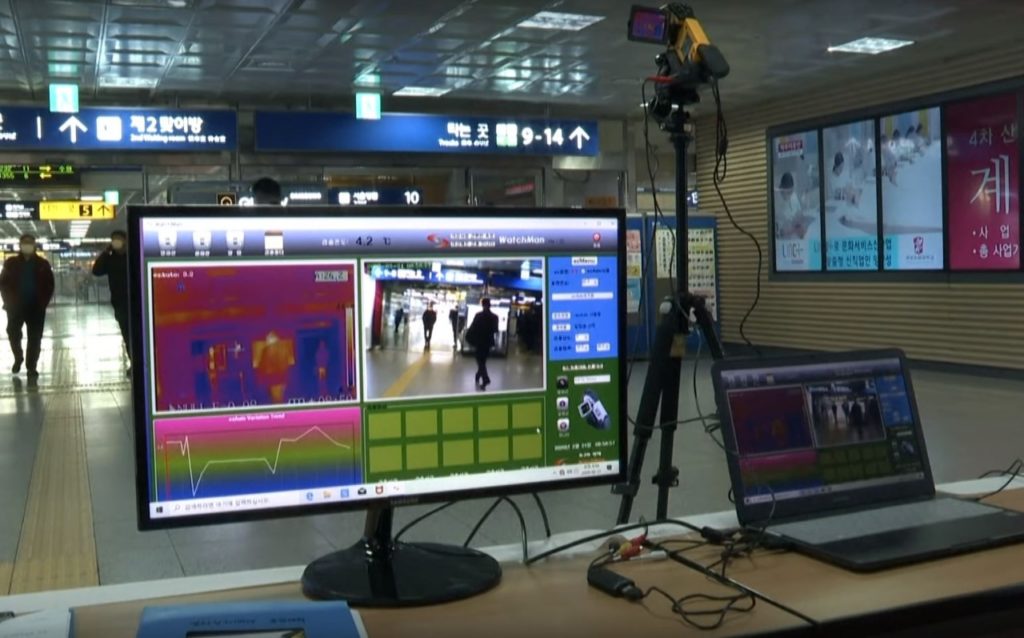
Disease control desk at Korean airport

Daegu – Korea’s fourth largest city with 2.5 million people is in an unprecedented crisis due to corona virus. A Vietnamese in the epidemic region of South Korea talked about the situation and anxiety about the risk of infection.

“I’m trembling now. I’m still optimistic today, but when I heard the news this morning on television, the number of people infected with corona virus in Korea reached 346, which means only in one the night rises to more than 100 people, I feel so scared,” said Hoai Thanh, a Vietnamese in Daegu in the morning of Feb 22.

Not only in the Korean epidemic of Daegu – one of the two “special care areas” in Korea for infectious diseases, Ms. Thanh’s residence is right in the district where the Shincheonji church is located, with dozens of infections originating from a worshiper here, which the media still refer to as “patient No. 31.”

“Right next to this district is the district with the Eastern Hospital, where “Patient No. 31” had been treated, her grandmother was there. So my area these days is very empty, the other districts of Daego far away will be less crisis,” Thanh said.

Ms. Thanh was very worried about the situation, but said she still decided to stay in the city, instead of evacuation options to Vietnam or going to her relatives’ homes in other cities in Korea.

Health workers spray disinfection in front of the Shincheonji church branch in Daegu, where a 61-year-old female devotee, the 31st Covid-19 patient, was said to be “super infectious” when 80 people attended church with her also positive for nCoV. More than 1,000 other believers are being isolated at home.

However, in recent days, the number of infections has increased dramatically, the fear has risen. “My husband’s family is Korean, everyone is worried these days. My husband works in Changwon, about an hour and a half from driving, coming home weekends but this weekend, the company recommends to stay. I have considered two options, one for Vietnam and the other for Changwon.”
“However, when I think about getting on a plane to Vietnam with a high risk of infection, while my child does not have Vietnamese nationality, he can only return home for a short time, then when he comes back, he will be affected or not, so I gave up on the first option, and the second, my family packed our suitcases, looking to go to a relative’s house in another city to stay in. But when I heard the news that the virus was spreading to other cities, it seemed that evacuation seemed like no, so I hesitated, so if I could stay with the epidemic, I wouldn’t be able to infect community, at least,” says Thanh.
Currently, Ms. Thanh and her children are only in the house, her mother-in-law is also allowed to work online by the company, only her father-in-law works, but instead of traveling by public transport, he chose to move by personal car.
 

Seoul, South Korea at 12pm on Febr 22: Thousands of protesters oppose the government and boycott China.

Ms. Thanh said: “People are very worried, the atmosphere is becoming very heavy, many people start to store food for about two weeks or more because everyone is worried that with the current appearance, it will be time. Some city may be blocked. “
According to Ms. Thanh, one or two days after the story of ‘patient No. 31’ broke out, some large supermarkets in Daegu ran out of food, online shopping also collapsed, and had to stop working for a few hours due to lack of stock, out of stock, and slow delivery. However, by the end of Feb 21, there was no longer that phenomenon.
“Information on television shows that the government directs food supplies such as water, rice, and noodles to fill supermarkets in Daegu with an increase of more than 50% compared to normal, so there is no fear of shortage of supplies. The online system also works normally again,” Thanh said.
The kindergarten system has also been announced to close, Thanh’s children have to stay home; And the high schools are in winter break and this will be a long time. Some companies also actively shut down or let employees work online, the military facilities are tightening control over soldiers after one was found possitive with Covid-19.

Latest update until Feb 24, Korea announced an additional 231 new cases, bringing the total number of cases in the country to 833, with 2 more deaths, bringing the total to 8 deaths.

The statistics show an outbreak of the disease in South Korea, from one person that infected 800 others and 8 deaths made Korea the second largest epidemic region after China.

The total number of global infections as of Feb 24 was 79,742, with 2,628 deaths.
South Korea declared the southern cities of Daegu and Cheongdo to be declared “special care areas.”
In a different development, according to news agency Yonhap, from the first case of infection, 11 Korean soldiers were infected with Covid-19. And 7,700 soldiers have been quarantined to reduce the risk of spread.
In Korea, there is a large number of American soldiers, so not only the Korean army but the US army must be careful.
The Consular Department of the Ministry of Foreign Affairs of Vietnam has also advised Vietnamese citizens in Korea to not go to the affected areas (Covid-19) and to regularly monitor and follow the instructions of the local authorities to prevent disease.
According to the Department of International Cooperation (Ministry of Education and Training), the number of Vietnamese international students in Korea is 14,000, especially in the epidemic area of ​​Daegu and Gyeongbuk is 1,900. In particular, the number of students studying in Daegu City is about 500, in Gyeongbuk Province (including county / Cheongdo district) over 1,400. The statistics only count the number of undergraduate, masters and doctoral students, excluding those who are learning languages.
 
At least 15 countries and territories have banned or restricted entry for Korean nationals in the context of a new outbreak of coronary pneumonia virus (Covid-19) in this country.

According to Yonhap, Israel was one of the first countries to ban Korean nationals from entering. 5 other countries including Bahrain, Jordan, Kiribati, Samoa and American Samoa, also banned entry with Koreans.
Accordingly, starting today Feb 24, Israel banned entry for Korean citizens and those who have been to Korea within the past 2 weeks. Even before the announcement, Israel forced a Korean Air plane to carry 180 people, including 130 South Koreans, to turn around when the plane landed in Tel Aviv on Feb 22.
Israel expressed concern after reports that a group of Koreans after their pilgrimage to Israel had been diagnosed with Covid-19. In addition, Israel also prohibits entry to people recently to Japan, China, Hong Kong, Macao, Thailand and Singapore.
Bahrain also bans entry for South Korean nationals and those who have been to countries and territories that are considered a “hot spot” for the Covid-19 epidemic. Korean citizens with a valid residence permit are still allowed to enter, but must undergo more thorough inspection and isolation.

Anxiety is covering Daegu city, about 240 km from the South Korean capital, Seoul, where 2.5 million people are. The roads are empty, shops and shopping centers are closed.
Meanwhile, Samoa requires people from South Korea, China, Japan and Singapore to enter the country to have documents proving they have isolated themselves for at least 2 weeks. American Samoa also applies the same measure, requiring visitors from these countries to isolate themselves 14 days in Hawaii.
Brunei, Britain, Turkmenistan, Kazakhstan, Ethiopia and Uganda also tighten controls on travelers from South Korea and countries with high numbers of Covid-19 infections, requiring them to report to local health authorities if has any suspicious symptoms.
Travelers from South Korea, China, Iran and Singapore are required to quarantine 14 days in advance to Oman.
Macao also applies a health check and isolation policy for travelers from South Korea. Qatar also requires travelers from South Korea to quarantine or quarantine themselves at a designated location for about 14 days.
The island nation of Mauritius in East Africa has not officially announced a ban on entry for Korean nationals, but it is thought to have delayed entry for some South Koreans with fever and moved them to a hospital yesterday Feb 23, Yonhap quoted a foreign official as saying.

Thu Thuy from Hochiminh City – Thoibao.de (Translated)

Two patients (middle) were discharged on the morning of January 18 at the National Hospital of Tropical Diseases, Hanoi

Covid-19 disaster is raging all over the world, but Vietnam says it has been able to control the epidemic, what about the reality?

While international media is covering increasing outbreak in countries outside of China such as Japan, South Korea, Italy and especially Iran with 50 deaths from Covid-19, Vietnam’s state-controlled media reported that the country has been able to control the epidemic.

As of Feb 21, 15 out of 16 patients infected with Covid-19 reportedly had recovered and were discharged from the hospital, only the 16th patient in Vinh Phuc province may also be sent home soon. Thus, if there is no new case detected in Vietnam in the coming days, is it possible that Vietnam has succeeded in controlling the epidemic?
Right from Feb 1, Prime Minister Nguyen Xuan Phuc decided to announce the establishment of a National Steering Committee for epidemic prevention and control, and at the same time continued to exhort “fighting against epidemics like fighting against the enemy.”

Citing Deputy Minister of Health Nguyen Thanh Long, Tuoi Tre newspaper wrote on Feb 22 that Vietnam has used the “unprecedented” measures to prevent the Covid-19 epidemic: 14 days of adequate isolation with suspected people and those who came or went through an epidemic area, even considering all people from Hubei (China) to Vietnam as patients, must be isolated.
Although not closing the entire border with China, but Vietnam has suspended flights between Vietnam and China, suspending visa for Chinese tourists. Vietnam has also been the first country outside of China to isolate an entire commune of more than 10,000 people in Vinh Phuc province since Feb 14, with an expected isolation time of 20 days. Concerned about the spread of disease, Vietnam has also prepared many field hospitals in a number of provinces and cities.
 

So far, although the country has a long border with China, receives a lot of Chinese tourists and does a lot of business with its northern neighbor, Vietnam has only announced four affected provinces named Vinh Phuc, Khanh Hoa, Thanh Hoa and Ho Chi Minh City.

The Hanoi-Nanning international train is still operated until Feb 5, although the air route from China was temporarily stopped

According to current regulations in Vietnam, local authorities can announce the epidemic control after 28 days since the health sector has managed to control the source of infection, since the last patient was isolated at the hospital. As such, Khanh Hoa, Thanh Hoa and HCM City are the three localities considered to be eligible for announcing the end of an epidemic. In the immediate future, Thanh Hoa province, where a case was discovered on Jan 24 and recovered from Feb 3, is seeking permission from the government to announce the end of the epidemic.
First of all, let’s see how patients in Vietnam are treated, Dr. Truong Huu Khanh, Head of Infection Department of Children’s Hospital I, Saigon, explained:
“In fact, the treatment of viral pneumonia is a very classic one, because the corona virus is a virus without a genuine cure. In Vietnam, for light patients, medic workers treat symptoms and for severe patients, they support breathing and antibiotics to fight superinfection. Third, they have to treat underlying medical conditions such as diabetes, cardiovascular disease, and chronic lung disease, to keep those underlying conditions from getting worse during the time they were infected with Covid-19. The treatment regimen in Vietnam is currently like that, but there has not been any special use of antiviral drugs.”  

Dr. Truong Huu Khanh, Head of Infection Department – Internal Neurology, Children Hospital 1

Dr. Truong Huu Khanh said “Actually testing by RT-PCR (Realtime Polymerase chain reaction) is not a new method, because the general principle of that test method is that we only need Using a virus-specific bait, we can test for equivalent diseases. Important is the bait, but the testing machines are available everywhere. Testing by PCR method, the true positive and negative are very high, while the rate of “false” or “false” negative is very low.

Regarding the hospital discharge standard of Vietnam, this is a new virus, Vietnam also could not study how long after I can spread it on the negative throat, then after how long it is positive but still not contagious. Vietnam has studied other diseases such as flu, measles, although it is positive, but still can not be transmitted, because the concentration is too low.

And this is a new virus, so Vietnam decided that in order for patients to be discharged from the hospital, there must be two conditions: Firstly, it is the safety of the patient, that is, the patient is really cured, the results of the review If the test has to return to normal, even if there are underlying diseases, it must be cured. The second is that the patient has to return to the community safely

So in Vietnam, people use the PCR method: testing twice in two days and the patient should not do anything that could falsify the results, for example, before the sample takin, gargling with an antiseptic solution will give incorrect results. So you have to be strict about that. If the smears are tested twice a day and the result is negative, then the patient is not likely to be infected. If either of these two times is positive, it is mandatory to start again.”

In the afternoon of Feb 19, at the meeting with Chinese Foreign Minister Wang Yi in Vientiane (Laos), Deputy PM cum Foreign Minister Pham Binh Minh expressed his sympathy and sharing he damage caused by the Covid-19 epidemic for China

But in the context that the Covid-19 epidemic is still raging in China and increasingly spreading to the world, it is still too early to confirm that Vietnam has contained this disease. Doctor Truong Huu Khanh also proved cautious:
“In Vietnam, it has been quite a long time since the last patient had been sick while there are no new infections and we continue to isolate the suspicious objects so that no new case can be invaded from outside, the ability to control the disease is good.
If Vietnam is the first country to control the epidemic, then it can be said that until now, but the flow of imports continues to come in, it is sure to continue to prevent those from abroad still contagious. Vietnam today is under control.
In my opinion, it is still necessary to continue to prevent the epidemic until China and other countries that have trade with Vietnam have stopped the epidemic, until the whole world declares no more cases. This may be the case for any country, not just for Vietnam
.”

Congested trucks waiting for shipment at Huu Nghi border gate on Feb 20

The second pressure made Vietnam unable to completely close the border with China like some other countries, but had to clear the border gates in Lang Son and Lao Cai provinces to clear hundreds of agricultural goods stuck at the border.
Apart from China, Vietnam has another concern, that is, South Korea, which has just been put on high alert after more than 833 people were infected with Covid-19, and a total of 8 people died from the disease (ranked second in the number of patients and deaths after China), and South Korea is also home to 48,000 Vietnamese workers, including 4,000 in Deagu and Gyeongbuk, two outbreaks of Covid-19 in Korea.
The National Steering Committee for the Prevention of Epidemic Covid-19 has not considered Korea as an epidemic area like China, and the Hanoi city government has asked to isolate Koreans from the affected areas, as well as to isolate the Vietnamese from the Korean epidemic region returning to Hanoi.

Currently, the Vietnamese Ministry of Transport has not decided to suspend flights between Vietnam and South Korea, according to Deputy Minister Le Anh Tuan, but probably could not eliminate this possibility if the situation of Covid -19 epidemic in South Korea get worse. Currently, air traffic between the two countries has been reduced by about 65% and now flights from Vietnam are only returning passengers to Korea.

However, many people are skeptical about the figures published by the Vietnamese press on the number of Covid-19 cases in the country. At least 3 news reports of deaths from the Hospital have symptoms very similar to Wuhan Corona Flu but are driven in the direction of the cause of death due to other pathologies such as brain pathologies or even the death record is due to the Corona virus but the old strain, not the new one from Wuhan.
  

Deputy PM Vu Duc Dam as Head of the National Steering Committee for prevention and control of respiratory diseases caused by new strains of corona virus

Facebooker Loc An Ha wrote a compliment to DPM Vu Duc Dam – in an ironic style with the title: ALL OF VIETNAMESE PEOPLE SHOULD THANK HIM.

Since being the head of the Steering Committee for the Prevention of Acute Inflammatory Acute Diseases due to the new strain of Corona virus (nCoV), the results:
Singapore has no borders with China, infected 75 cases. Thailand has no borders with China, infected 35 cases. Japan is an archipelago, infected with 97 cases and 2 people killed.
South Korea has no borders with China, infected more than 833 cases and the number is rising, 8 people died.
Iran latest news shows that 50 people have died from Covid-19 flu. Italy has 4 deaths and 193 infections.

While Vietnam has a border with China and has close relationships, 16 cases and 16 cases have recovered.
We see him on television always in a hurry, hustle, more gray hair, more wrinkles skin; but we always see comrades decisively in words and actions.
It is very proud of our country and there are close, talented leaders: DPM Vu Duc Dam.

In Vietnam there is no independent media, the entire propaganda system is under the direction of posting or deleting information from the Communist Party, which leads to the information that people receive is very limited or misleading, in contrast to the What is going on in reality.
It was only when the aftermath spread, which here was a dangerous disease caused by the Covid-19 virus, that a series of people died, that the reality would gradually be revealed late and those suffering. The most disadvantaged is the people

Hai Yen from Ha Noi – Thoibao.de (Translated)

https://www.youtube.com/watch?v=kMcpSTwZaCE&t=1s

Daegu – thành phố lớn thứ tư của Hàn Quốc với 2,5 triệu dân đang lâm vào cuộc khủng hoảng chưa từng có do dịch virus corona. Một người Việt ở ngay vùng dịch của Hàn quốc kể về tình hình và nỗi lo lắng trước nguy cơ lây nhiễm.

“Giờ thì tôi run lắm rồi. Hôm nay, tôi vẫn còn lạc quan, nhưng khi nghe bản tin thời sự sáng nay trên truyền hình, số người lây nhiễm virus corona ở Hàn Quốc đã lên đến 346 người, tức chỉ trong có một đêm tăng đến hơn 100 người thì cảm thấy sợ quá“- chị Hoài Thanh, một người Việt ở Daegu sáng 22/2 nói như vậy.

Không chỉ ở tâm dịch Daegu của Hàn Quốc – một trong hai “khu vực chăm sóc đặc biệt” tại Hàn Quốc về bệnh truyền nhiễm – khu nhà chị Thanh đang ở lại đúng ngay quận có nhà thờ của giáo phái Shincheonji (Tân Thiên Địa) với hàng chục ca lây nhiễm, bắt nguồn từ một tín đồ đi lễ ở đây, mà truyền thông vẫn gọi là ‘bệnh nhân số 31’.
“Ngay bên cạnh quận này là quận có bệnh viện đông y, nơi ‘bệnh nhân số 31’ từng điều trị, nhà bà cũng ở đó. Vậy nên khu vực em ở những ngày này rất vắng, mấy quận khác của Daego ở xa sẽ đỡ khủng hoảng hơn“, chị Thanh nói.
Chị Thanh tuy rất lo lắng trước tình hình lây nhiễm, nhưng vẫn cho biết chị vẫn quyết định ở lại thành phố, thay vì những phương án sơ tán về Việt Nam hay đi đến ở nhà nhà bà con ở các thành phố khác tại Hàn Quốc.

Nói về tâm trạng trong những ngày sống ở vùng cần được quan tâm đặc biệt về virus, chị Hoài Thanh nói rằng, khi những trường hợp đầu tiên xuất hiện, mọi người thấy lo, nhưng sau vài ngày, khi thấy số ca không tăng nhiều, cuộc sống dần trở lại bình thường.

Bàn kiểm soát dịch bệnh ở sân bay Hàn quốc.

Vậy nhưng, những ngày gần đây, số trường hợp nhiễm bệnh gia tăng đột biến, nỗi sợ hãi lại dâng cao. “Gia đình chồng tôi là người Hàn Quốc, mấy ngày nay ai cũng lo lắng. Chồng tôi làm việc ở Changwon, cách đây khoảng hơn một tiếng rưỡi đồng hồ lái xe, cuối tuần vẫn về nhà nhưng cuối tuần này, công ty khuyến cáo ở lại tập thể. Tôi đã tính đến hai phương án, một là về Việt Nam, hai là đến Changwon.
“Tuy nhiên, khi nghĩ đến việc lên máy bay về Việt Nam với nguy cơ lây nhiễm không thấp, trong khi con tôi chưa có quốc tịch Việt Nam nên cũng chỉ có thể về trong một thời gian ngắn, rồi khi về liệu có bị xa lánh hay không, nên tôi bỏ phương án thứ nhất. Còn phương án thứ hai, tôi và gia đình đã xếp đồ vào va li, tính tìm đến nhà bà con ở thành phố khác tá túc. Tôi vừa xếp mà tay chân run cả lên. Nhưng khi nghe thông tin virus lây nhiễm đến nhiều thành phố khác, xem ra việc sơ tán xem ra cũng như không, vậy là lại chần chừ. Thôi ở lại chống dịch, không chống được dịch thì cũng đỡ lây dịch cho cộng đồng“, chị Thanh nói.
Hiện nay, chị Thanh và con chỉ ở trong nhà, mẹ chồng chị cũng được công ty cho làm việc online, chỉ bố chồng chị còn đi làm, nhưng thay vì đi bằng phương tiện giao thông công cộng, ông đã chọn cách di chuyển bằng xe hơi cá nhân.

Các nhân viên y tế phun khử trùng trước chi nhánh nhà thờ Shincheonji ở Daegu, nơi một nữ tín đồ 61 tuổi là bệnh nhân Covid-19 thứ 31 được cho là “siêu lây nhiễm” khi 80 người dự lễ nhà thờ với bà cũng dương tính với nCoV. Hơn 1.000 tín đồ khác đang được cách ly tại nhà.)

Chị Thanh cho biết là Hàn Quốc chủ động cung cấp thông tin cho người dân, không chỉ bằng các phương tiện truyền thông đại chúng mà còn qua các tin nhắn cá nhân, mỗi ngày hai lần.

Chị Thanh kể: “Mọi người đang rất lo lắng, không khí trở nên rất nặng nề, nhiều người bắt đầu tích trữ thực phẩm cho khoảng hai tuần trở lên vì ai cũng lo là với tính hình như hiện tại, sẽ đến thời điểm nào đó thành phố có thể sẽ bị phong tỏa“.
Cũng theo chị Thanh, một, hai ngày sau khi chuyện về ‘bệnh nhân số 31’ làm bùng dịch, một số siêu thị lớn ở Daegu hết đồ ăn, việc mua hàng online cũng sập kênh, phải ngừng hoạt động trong vài giờ, do thiếu hàng, hết hàng, và giao hàng chậm. Tuy nhiên, đến cuối ngày 21/2 thì không còn hiện tượng đó nữa.
“Thông tin trên truyền hình cho thấy, chính phủ chỉ đạo cung cấp lương thực như nước, gạo, mỳ tôm lấp đầy các siêu thị ở Daegu với số lượng tăng hơn 50% so với bình thường, nên ko sợ có chuyện thiếu đồ ăn nữa. Hệ thống online cũng hoạt động bình thường trở lại”, chị Thanh cho hay.
Hệ thống trường học mẫu giáo cũng đã thông báo đóng cửa, con chị Thanh phải ở nhà; còn các trường phổ thông đang trong nghỉ đông và sẽ kép dài thời gian này. Một số công ty cũng chủ động tạm đóng cửa hay cho nhân viên làm việc onlie, các doanh trại thì yêu cầu binh sĩ nội bất xuất, ngoại bất nhập sau trường hợp một quân nhân bị xác nhận dương tính với covid-19.

tại Seoul, Hàn Quốc lúc 12h ngày 22/02/2020: Hàng ngàn người biểu tình phản đối chính phủ và tẩy chay Trung Quốc

Cập nhật mới nhất đến 24/2, Hàn Quốc thông báo có thêm 231 ca nhiễm mới, nâng tổng số ca nhiễm ở nước này lên đến 833, có thêm 2 ca tử vong nâng lên tổng số 8 ca tử vong.

Tổng số ca nhiễm trên toàn cầu tính đến sáng 24/2 là 79.742, với 2.628 trường hợp tử vong.
Hàn Quốc tuyên bố hai thành phố miền nam Daegu và Cheongdo bị tuyên bố là “vùng chăm sóc đặc biệt“.
Trong một diễn biến khác theo tin từ hãng tin Yonhap, từ 1 ca nhiễm đầu tiên nay đã có tới 11 quân nhân Hàn Quốc nhiễm COVID-19. Và 7.700 quân nhân đã bị cách ly để giảm nguy cơ lây lan.
Tại Hàn quốc có cả 1 cơ số lính Mỹ rất lớn nên không chỉ quân đội Hàn mà quân đội Mỹ cũng phải cẩn trọng.
Cục Lãnh sự Bộ Ngoại giao Việt Nam cũng đã khuyến cáo công dân Việt Nam tại Hàn Quốc không nên đến các khu vực đang có dịch (Covid-19) và thường xuyên theo dõi và tuân thủ hướng dẫn của cơ quan chức năng sở tại để phòng tránh dịch bệnh.
Theo Cục Hợp tác quốc tế (Bộ Giáo dục và Đào tạo), số du học sinh Việt Nam tại Hàn Quốc là 14.000, riêng ở vùng dịch Daegu và Gyeongbuk là 1.900. Trong đó, số đang học tại thành phố Daegu khoảng 500, ở tỉnh Gyeongbuk (bao gồm cả hạt/huyện Cheongdo) trên 1.400. Thống kê chỉ tính số người học đại học, thạc sĩ, tiến sĩ, chưa bao gồm người đang học tiếng.

Bảng thống kê tình hình lây nhiễm bộc phát ở Hàn quốc, từ một người đã lây nhiễm cho 800 người khác và 8 ca tử vong khiến Hà quốc trở thành vùng dịch lớn thứ hai sau TQ

Ít nhất 15 quốc gia, vùng lãnh thổ đã cấm hoặc hạn chế nhập cảnh đối với công dân Hàn Quốc trong bối cảnh dịch viêm phổi do virus corona chủng mới (Covid-19) bùng phát mạnh tại quốc gia này.

Theo Yonhap, Israel là một trong những quốc gia đầu tiên cấm công dân Hàn Quốc nhập cảnh. 5 quốc gia khác gồm Bahrain, Jordan, Kiribati, Samoa và Samoa thuộc Mỹ, cũng cấm nhập cảnh với người Hàn Quốc.
Theo đó, bắt đầu từ hôm nay 24/2, Israel cấm nhập cảnh đối với công dân Hàn Quốc và những người từng đến Hàn Quốc trong vòng 2 tuần qua. Thậm chí trước khi đưa ra thông báo này, Israel đã buộc một máy bay của hãng hàng không Hàn Quốc Korean Air chở 180 người, trong đó có 130 người Hàn Quốc, phải quay đầu khi máy bay này hạ cánh ở Tel Aviv hôm 22/2.
Israel bày tỏ lo ngại sau các thông tin nói rằng một nhóm người Hàn Quốc sau khi hành hương đến Israel đã được chẩn đoán nhiễm Covid-19. ra, Israel Ngoài cũng cấm nhập cảnh đối với những người gần đây đến Nhật Bản, Trung Quốc, Hong Kong, Macao, Thái Lan và Singapore.
Bahrain cũng cấm nhập cảnh đối với công dân Hàn Quốc và những người từng đến các quốc gia, vùng lãnh thổ đang bị coi là “điểm nóng” về dịch Covid-19. Các công dân Hàn Quốc có giấy phép cư trú hợp lệ vẫn được phép nhập cảnh, song phải trải qua các khâu kiểm tra, cách ly kỹ lưỡng hơn.

Một số quốc gia, vùng lãnh thổ, trong đó có Mỹ, Anh, Singapore đã cảnh báo công dân tránh đến Daegu và Bắc Gyeongsang thời điểm này.

Người Hàn quốc đi ra đường giờ luôn đeo khẩu trang

Trong khi đó, Samoa yêu cầu những người từ Hàn Quốc, Trung Quốc, Nhật Bản và Singapore nhập cảnh cần có giấy tờ chứng minh họ đã tự cách ly ít nhất 2 tuần. Samoa thuộc Mỹ cũng áp dụng biện pháp tương tự, yêu cầu các du khách đến từ các quốc gia này phải tự cách ly 14 ngày tại Hawaii.
Brunei, Britain, Turkmenistan, Kazakhstan, Ethiopia và Uganda cũng siết kiểm soát đối với du khách đến từ Hàn Quốc và quốc gia có số ca nhiễm Covid-19 cao, yêu cầu họ phải tự khai báo với giới chức y tế sở tại nếu có bất cứ triệu chứng khả nghi nào.
Du khách từ Hàn Quốc, Trung Quốc, Iran và Singapore khi tới Oman buộc phải cách ly trước 14 ngày.
Macao cũng áp dụng chính sách kiểm tra sức khỏe và cách ly đối với du khách đến từ Hàn Quốc. Qatar cũng yêu cầu các du khách từ Hàn Quốc tự cách ly hoặc cách ly tại một địa điểm theo chỉ định khoảng 14 ngày.
Quốc đảo Mauritius ở Đông Phi hiện chưa chính thức công bố cấm nhập cảnh đối với công dân Hàn Quốc, nhưng được cho là đã hoãn nhập cảnh đối với một số người Hàn Quốc có triệu chứng sốt và chuyển họ đến một bệnh viện hôm qua 23/2, Yonhap dẫn lời một quan chức ngoại giao cho biết.

Tàu điện ngầm ở Hàn quốc vắng hoe khách vì lo sợ dịch bệnh

Thu Thủy từ TpHCM – Thoibao.de (Tổng hợp)

https://www.youtube.com/watch?v=NZe1xlXGUUI

Đại họa Covid-19 đang hoành hành khắp nơi trên thế giới, nhưng Việt Nam nói đã khống chế được dịch, thực tế thì sao?
Trong khi tin tức về dịch bùng phát ở các nước ngoài Trung quốc như Nhật bản, Hàn quốc, Italy và đặc biệt Iran mới có tin đã có 50 người chết vì cúm Covid-19, thì tin tức theo báo chí trong nước cho thấy dường như VN đã khống chế được dịch.

Tính đến ngày 21/02/2020, trên tổng số 16 bệnh nhân lây nhiễm virus corona mới Covid-19, 15 người đã khỏi bệnh và được xuất viện, chỉ còn một bệnh nhân ở tỉnh Vĩnh Phúc và bệnh nhân thứ 16 này cũng có thể sẽ xuất viện. Như vậy, nếu trong những ngày tới ở Việt Nam không phát hiện một trường hợp lây nhiễm nào mới, phải chăng là Việt Nam đã thành công trong việc khống chế dịch?
Ngay từ ngày 01/02, thủ tướng Nguyễn Xuân Phúc đã quyết công bố thành lập Ban Chỉ đạo Quốc gia phòng, chống dịch, đồng thời tiếp tục hô hào « chống dịch như chống giặc ».
Theo lời thứ trưởng bộ Y Tế Nguyễn Thanh Long, được tờ Tuổi Trẻ trích dẫn ngày 22/02, Việt Nam đã sử dụng những biện pháp « chưa có tiền lệ » để phòng chống dịch Covid-19 : Cách ly đủ 14 ngày với những người nghi nhiễm, những người đến hoặc đi qua vùng dịch, thậm chí xem toàn bộ những người từ Hồ Bắc (Trung Quốc) đến Việt Nam là những người bệnh, phải bị cách ly.
Tuy không đóng cửa toàn biên giới với Trung Quốc, nhưng Việt Nam đã tạm ngưng các chuyến bay giữa Việt Nam với Trung Quốc, tạm ngưng cấp visa cho du khách Trung Quốc. Việt Nam cũng đã là quốc gia đầu tiên ngoài Trung Quốc cách ly cả một xã hơn 10 ngàn dân tại tỉnh Vĩnh Phúc kể từ ngày 14/02, với thời gian cách ly dự kiến là 20 ngày. Lo ngại dịch bệnh lan rộng, Việt Nam cũng đã chuẩn bị nhiều bệnh viện dã chiến ở nhiều nơi.

Hai bệnh nhân (giữa) ra viện sáng 18/1 tại Bệnh viện Bệnh Nhiệt đới Trung ương, Hà Nội.

Cho tới nay, tuy là quốc gia có đường biên giới dài với Trung Quốc, tiếp nhận rất nhiều du khách Trung Quốc và làm ăn buôn bán rất nhiều với láng giềng phương Bắc này, Việt Nam chỉ thông báo có 4 tỉnh thành có bệnh nhân là Vĩnh Phúc, Khánh Hòa, Thanh Hóa và Sài Gòn.

Theo quy định hiện hành ở Việt Nam, địa phương có thể công bố khống chế dịch sau 28 ngày kể từ khi ngành y tế quản lý được nguồn lây nhiễm, tính từ khi bệnh nhân cuối cùng được cách ly tại bệnh viện. Như thế, Khánh Hòa, Thanh Hóa và Sài Gòn là ba nơi được xem là hội đủ điều kiện để công bố hết dịch. Trước mắt, tỉnh Thanh Hóa, nơi có một ca bệnh được phát hiện ngày 24/01 và đã khỏi bệnh ngày 03/02, đang xin phép chính phủ cho công bố hết dịch.
Trước hết, chúng ta hãy xem các bệnh nhân ở Việt Nam được điều trị như thế nào, bác sĩ Trương Hữu Khanh, trưởng khoa Nhiễm bệnh viện Nhi đồng I, Sài Gòn, giải thích:
« Thật ra phương pháp điều trị viêm phỗi do virus là phương pháp rất là kinh điển, bởi vì virus corona là virus chưa có thuốc đặc trị chính thống. Ở Việt Nam, bệnh nhân nhẹ thì mình điều trị triệu chứng và bệnh nhân nặng thì mình hỗ trợ hô hấp và dùng thuốc kháng sinh để chống bội nhiễm. Thứ ba là mình phải điều trị các bệnh nền như tiểu đường, bệnh tim mạch, bệnh lý về phổi mãn tính, để giữ cho những bệnh nền đó không bị nặng thêm trong thời gian trong thời gian họ bị nhiễm virus Covid-19. Phác đồ điều trị ở Việt Nam hiện là như vậy, chứ chưa có sử dụng loại thuốc kháng virus nào đặc biệt cả ».

Đây là hình ảnh tàu khách liên vận Hà nội Nam Ninh Trung quốc vẫn hoạt động đến ngày 5-2 mặc dù đường hàng không từ Trung quốc đã tạm ngưng đón khách từ Trung Quốc

Như vậy, Việt Nam dùng những phương pháp xét nghiệm nào để có thể khẳng định là các bệnh nhân Covid-19 đã được chữa khỏi ?

Bác sĩ Trương Hữu Khanh cho biết : « Thật ra xét nghiệm bằng phương pháp RT-PCR (Realtime Polymerase chain reaction) không phải là phương pháp gì mới lạ, bởi vì nguyên tắc chung của phương pháp xét nghiệm đó là chúng ra chỉ cần sử dụng một cái mồi đặc hiệu cho con virus, thì chúng ta có thể xét nghiệm được các bệnh tương đương. Quan trọng là cái mồi, chứ còn các máy xét nghiệm thì nơi nào cũng có hết. Xét nghiệm bằng phương pháp PCR thì độ dương tính thật và âm tính thật của nó rất cao, còn tỷ lệ dương tính « giả » hay âm tính « giả » thì rất thấp.

Về tiêu chuẩn xuất viện của Việt Nam thì đây là một loại virus mới, mình cũng không nghiên cứu được là sau bao lâu mình có thể phết vào cái họng âm tính, rồi sau bao lâu dù là dương tính nhưng vẫn không lây. Những bệnh khác thì mình đã nghiên cứu rồi, ví dụ như cúm, sởi, dù là phết dương, nhưng vẫn không lây được, tại vì nồng độ quá thấp.

Còn đây là virus mới, thành ra Việt Nam quyết định là muốn cho bệnh nhân xuất viện thì phải có hai điều kiện : Thứ nhất là sự an toàn cho bệnh nhân, tức là bệnh nhân đó thật sự khỏi bệnh, kết quả các xét nghiệm phải trở lại chỉ số bình thường, dù là có các bệnh nền thì cũng phải chữa cho xong. Thứ hai là bệnh nhân đó phải trở lại cộng đồng một cách an toàn

Cho nên ở Việt Nam, người ta dùng phương pháp PCR : phết hai lần cách nhau một ngày và khi phết thì bệnh nhân không được làm cái gì có thể làm sai lệch các kết quả, ví dụ như trước khi phết thì lại súc miệng bằng dung dịch sát trùng thì sẽ cho kết quả không đúng. Thành ra phải nghiêm ngặt về điều đó. Nếu phết hai lần cách nhau một ngày mà đều cho kết quả âm tính thì mới có thể xem là bệnh nhân này không có khả năng lây bệnh. Nếu một trong hai lần đó mà dương tính thì bắt buộc phải làm lại từ đầu. »

Bác sĩ Trương Hữu Khanh, Trưởng khoa Nhiễm – Nội Thần Kinh, Bệnh viện Nhi Đồng 1

Nhưng trong bối cảnh mà dịch Covid-19 vẫn tiếp tục hoành hành ở Trung Quốc và ngày càng lan rộng ra thế giới, hãy còn quá sớm để khẳng định là Việt Nam đã khống chế được dịch bệnh này. Bác sĩ Trương Hữu Khanh cũng tỏ ra thận trọng:
« Ở Việt Nam kể từ khi bệnh nhân cuối cùng mắc bệnh tới bây giờ đã khá là lâu rồi, mà bệnh nhân mới thì không có và mình vẫn tiếp tục cách ly những đối tượng nghi ngờ để làm sao không có ca mới xâm nhập ra ngoài, thì khả năng khống chế bệnh là tốt.
Còn nói Việt Nam là nước đầu tiên khống chế dịch, thì có thể nói là cho tới lúc này thôi, chứ còn luồng du nhập vẫn tiếp tục đi vào thì chắc chắn là phải tiếp tục ngăn ngừa đối với những người từ nước ngoài trở về, chứ còn lây trong nội tại Việt Nam hiện nay khống chế được rồi.
Theo tôi, vẫn phải tiếp tục phòng chống dịch cho tới khi nào Trung Quốc và các nước khác có giao thương với Việt Nam cùng hết dịch bệnh, cho tới khi nào toàn thế giới tuyên bố không còn ca bệnh nữa. Điều này có lẽ bất cứ nước nào cũng phải làm như vậy thôi, chứ không riêng gì Việt Nam
».

Có thể nói Việt Nam hiện đang chịu hai áp lực cùng một lúc, một mặt phải thi hành các biện pháp chặt chẽ để phòng chống dịch, nhưng mặt khác phải làm sao giảm thiểu tác hại của dịch bệnh đối với thương mại và kinh tế, nhất là kinh tế Việt Nam vẫn phụ thuộc rất nhiều vào Trung Quốc.

Chiều ngày 19-2, tại cuộc gặp với Bộ trưởng Ngoại giao Trung Quốc Vương Nghị tại Vientiane (Lào), Phó Thủ tướng Phạm Bình Minh bày tỏ cảm thông, chia sẻ trước những thiệt hại do dịch bệnh Covid-19 gây ra cho Trung Quốc

Chính áp lực thứ hai khiến Việt Nam không thể nào đóng cửa hoàn toàn biên giới với Trung Quốc như một số nước khác, mà phải cho thông quan các cửa khẩu ở các tỉnh Lạng Sơn, Lào Cai để giải tỏa hàng trăm xe nông sản, hàng hóa đang kẹt ở biên giới.
Ngoài Trung Quốc, Việt Nam lại có thêm một mối quan ngại khác, đó là Hàn Quốc, quốc gia vừa được đặt trong tình trạng báo động tối đa cao, sau khi có hơn 833 người bị lây nhiễm Covid-19, và tổng cộng 8 người chết vì dịch bệnh này (đứng hàng thứ hai về số bệnh nhân và số tử vong chỉ sau Trung Quốc), mà Hàn Quốc cũng là nơi có 48 ngàn lao động Việt Nam đang làm việc, trong đó có 4.000 người ở Deagu và Gyeongbuk, hai ổ dịch Covid-19 ở Hàn Quốc.
Ban chỉ đạo quốc gia phòng chống dịch Covid-19 chưa xem Hàn Quốc là vùng dịch giống như Trung Quốc, chính quyền thành phố Hà Nội đề nghị phải cách ly những người Hàn Quốc đến từ những vùng có dịch, cũng như cách ly tập trung 14 ngày đối với những người Việt Nam từ vùng dịch của Hàn Quốc trở về Hà Nội.

Hiện giờ, bộ Giao Thông Việt Nam chưa quyết định tạm ngưng các chuyến bay giữa Việt Nam với Hàn Quốc, theo lời thứ trưởng Lê Anh Tuấn, nhưng có lẽ không thể loại khả năng này nếu tình hình dịch Covid -19 ở Hàn Quốc trở nên trầm trọng hơn. Hiện tại giao thông hàng không giữa hai nước đã bị giảm chung khoảng 65% và hiện giờ các chuyến bay từ Việt Nam chỉ chở khách trả về Hàn Quốc.

Hàng hóa chờ xuất khẩu tại cửa khẩu Kim Thành, Lào Cai

Tuy nhiên mạng xã hội hiện nay rất nhiều người tỏ thái độ nghi ngờ những con số mà báo chí Việt nam công bố về số lượng ca nhiễm Covid-19 trong nước. Ít nhất đã có 3 bản tin về người tử vong từ Bệnh viện có triệu chứng rất giống với bệnh Cúm Corona Vũ Hán nhưng được lái đi theo hướng nguyên nhân tử vong là do bệnh lý khác như do bệnh lý não hay thậm chí Giấy chứng tử ghi là do virus Corona nhưng chủng cũ chứ không phải chủng mới từ Vũ Hán.

Facebooker Lộc An Hà viết lời khen ngợi Phó Thủ tướng Vũ Đức Đam – trong một văn phong có ý châm biếm với tựa đề: TOÀN THỂ NGƯỜI DÂN VIỆT NAM NỢ ÔNG 1 LỜI CẢM ƠN.
Từ khi người đàn ông này được phân công làm Trưởng ban Ban chỉ đạo Phòng chống dịch bệnh viêm đường hô hấp cấp do chủng mới của virus Corona (nCoV), kết quả:
Singapore không có biên giới với TQ, nhiễm 75 ca.
Thái Lan không có biên giới với TQ, nhiễm 35 ca.
Nhật bản là quần đảo, nhiễm 97 ca, chết 2 người.
Hàn Quốc không biên giới với TQ, nhiễm hơn 833 ca và đang tăng cao, chết 8 người.
Iran tin mới nhất cho thấy đã có 50 người tử vong vì cúm Covid-19.
Italy có 4 ca tử vong và 193 ca nhiễm.
Trong khi Việt Nam có đường biên giới với TQ và có quan hệ gần gũi, nhiễm 16 ca, 16 ca đều đã bình phục.
Chúng ta thấy đồng chí ấy trên truyền hình lúc nào cũng vội vã, hối hả, tóc bạc nhiều hơn, da nhiều nếp nhăn hơn; nhưng chúng ta luôn thấy đồng chí dứt khoát trong lời nói và hành động.
Thật tự hào về Tổ quốc ta và có những người lãnh đạo kế cận, tài giỏi: Phó Thủ tướng Vũ Đức Đam.

Phó Thủ tướng Chính phủ Vũ Đức Đam làm Trưởng Ban Chỉ đạo Quốc gia phòng, chống dịch bệnh viêm đường hô hấp do chủng mới của virus corona gây ra.

Tại Việt nam không có truyền thông độc lập, toàn bộ hệ thống tuyên truyền đều nằm dưới sự chỉ đạo đăng hay xóa tin từ Đảng Cộng sản, điều đó dẫn đến thông tin mà người dân nhận được rất hạn chế hoặc sai lệch , ngược lại với những gì đang diễn ra trong thực tế.
Chỉ đến lúc hậu quả lan rộng, mà ở đây là dịch bệnh nguy hiểm do virus Covid-19 gây ra, làm hàng loạt người dân mất mạng, thì khi đó thực tế mới dần bị hé lộ một cách muộn màng và người chịu thiệt thòi nhiều nhất lại chính là nhân dân.

Hải Yến từ Hà nội – Thoibao.de (Tổng hợp)

Deputy Prime Minister cum Foreign Minister Pham Binh Minh having a bilateral meeting with Chinese Foreign Minister Wang Yi in Laos on Feb 19, 2020

Vietnam is facing many serious problems in coping with and dealing with pneumonia caused by the Covid-19 outbreak, including the acceptance of resumption of free movement with China and whether or not to bring students back to school.

Regarding the first problem related to Vietnam-China relations, on Feb 20, Chinese Foreign Minister Wang Yi, at a regional forum on cooperation in disease response in Vientiane, Laos, urged countries in Asean, including Vietnam, remove entry restrictions for Chinese people through border gates or borders with China.
Medical doctor Tran Tuan, an independent reviewer on social and health policy, health, comment:
“On the side of the Chinese proposal, we see that it is China’s effort trying to reduce the surrounding countries’ concern about the epidemic in China, because if we continue to take measures, they would harm China’s trade and economy and cause more serious consequences. There is also a good reason.”
“As for whether Vietnam accepts it or not, this case is indeed a problem that requires a very flexible consideration between the issue called epidemiology and Vietnam’s resistance to epidemics. Realistic picture
.”
 

“We currently lack information, it is not clear how the number of Chinese people come here. The second is Vietnam’s capacity to deal with outbreaks.”

Seoul, South Korea at 12pm on February 22: Thousands of protesters demand boycotts of China. As of Feb 23, the total number of infections in South Korea is over 600 and 5 deaths

“Thirdly, we all know that the disease in China is currently not under control and the spread of this disease is contagious even in a period without clinical manifestations, that is, in time of incubation. So how does Vietnam organize surveillance at the border gates, and the process then monitors the individuals after that.”

“If no clinical symptoms are included, then the monitoring process is to report to the health care provider about the self-monitoring of clinical symptoms to detect further dangerous cases. I think the Government of Vietnam need to consider carefully.”

“If your system is really good and tightly controls all the people in, then you can put the problem in what is called a relationship with China, a neighboring country which I think still affects many other issues.”
“And if our epidemic prevention system does not ensure these factors, then I think that becomes a threat. Why? Because at that time the people’s worries from within Vietnam itself, that is, social anxiety and can lead to another disadvantage
.”
 

The trade between the two countries is also getting better. For example, a week ago, Vietnam was still rescuing dragon fruits at the price of VND5,000-VND10,000/kg, within the last few days, the price of the fruit had been bounced back at some border gates that China and Vietnam have traded.

Passengers waiting for their turn to declare medical declarations upon entry into Vietnam via Lao Cai border gate

From Hanoi National University, Dr. Nghiem Thuy Hang, researcher on China and Vietnam-China relations, commented:
“In the context of 80 countries closed their bordergates to Chinese, Russia and North Korea all have to close the border, China is in a position of isolation, ambush, ambiguity, it is not strange when Foreign Minister Wang Yi pressured and asked Minister Pham Binh Minh to restore or expand freedom of travel of Chinese citizens.
“However, the risk of a false negative test, the risk of a virus present in urine or wastes, sewage pollution or roads that is currently unknown to health.
“The fact that Chinese doctors are also infected and the mortality rate is not small poses far more serious global problems than the SARS epidemic or even the Ebola epidemic, every cautious move in the policy is not redundant and will receive great attention from both domestic and international community, the countries involved depend on each other very much
.”

“China also cannot blame Vietnam if Vietnam has the same choice like the other 80 countries, the safety of the people and the economy is first and foremost.”
 

Expanding the problem further, the researcher said: “Accompanying with this proposal is a proposal to discharge hydroelectric water to save the drought-stricken Mekong River downstream, showing the image of” responsible nation.”

Isolation check pin in the Son Tra Binh and Vinh Phuc outbreak areas

“However, the discharge of this hydroelectricity, according to experts, has no effect in saving the drought-prone Mekong Delta, while the risk of loosening travel for Chinese citizens is too danger.”

“China’s pressure on the Vietnamese government will be enormous, but in my opinion should only be relaxed about trade in goods and still need to strictly apply isolation and restrictive measures against Chinese citizens. Because Vietnam’s health infrastructure is still very limited compared to China, Korea and Japan.

Last time, the good disease control was mainly due to the government’s policies and the efforts of the whole people, millions of families had to keep their children at home.”

Regarding the second problem is whether Vietnam should send students back to school, Dr. Nghiem Thuy Hang, said:

“In my opinion, in March 2020, universities and high schools can only reopen while applying strict restrictions and isolating 14 days to 24 days for the citizens coming from epidemic centers in China and South Korea, Japan and other countries.”
 

“If the state wants to loosen moves to restore production, stimulate aviation and tourism industries or make” friendly “moves with China, it is recommended for primary school pupils and junior high school take a leave of March according to the proposal in Ho Chi Minh City to keep children safe and healthy and ensure peace of mind for families.”

A female student’s test with symptoms of cough, fever, shortness of breath, very similar to that of Covid-19, but news reports claim to be due to brain pathology make netizens very suspicious

“Grade 9, high school (high school) and college students may consider enrolling in March to catch up with the program.”
“I think policies that prevent the spread of infection to the community and the policy of reopening schools are closely related.”

“Experience in Korea, Japan shows that if only one or two children are infected, there will be a great risk for the disease outbreak again, should not be risky at this time, can only choose one of two , opening schools or relaxing free movement for Chinese citizens.
“In my opinion, you should not put all your eggs in one basket.
“Many public opinion polls still show that about 65% of parents are still hesitant to send their children to school in early March.
“To demonstrate Vietnam’s friendship, it is possible to continue to provide masks, medicines, medical supplies, experience and treatment protocols, but the health of the children and their trust, the unanimous support of the people should outweigh the economic benefits and international friendship
,” said Dr. Nghiem Thuy Hang.
 

Japanese health workers who interacted with Covid-19 infected patients on the Diamond Princess cruise ship in Yokohama port now have 691 people infected with 2 deaths, this ship has called Vietnam 5 times during the outbreak and every time hundreds of people went on land.

Mr. Tran Tuan’s remarks were made when the Ministry of Health of Vietnam and the People’s Committee of Khanh Hoa Province began to work to prepare to announce the end of the Covid-19 epidemic in this province.
The ministry said that up to now, there has been no new case reported for more than 30 infected patients in Khanh Hoa, which means that this province is eligible for Khanh Hoa to declare an end of the epidemic.
Meanwhile, according to information from the Ministry of Health, if in less than a week, Thanh Hoa province, if no new patients are registered, it will also be recognized as free of epidemics.
The question is that Covid-19 epidemic is a new disease, it is still complicated, so the announcement of the end of the epidemic in Khanh Hoa, if any, will be too early and will create subjective psychology, neglect in disease prevention with people and the local or not?
Mr. Tran Tuan said that this is the right thing to do in the current situation, especially when there are things in society that he thinks are a bit too much worry about the Covid-19 epidemic:

“For localities with low numbers of infections, past the time limit for new infections, it is time for us to declare the end of the epidemic there, as a reassuring and relieving factor necessary, at the same time, increase the confidence of the government in the prevention of epidemics, “Mr. Tuan said.

 This is a high-speed construction field hospital, Wuhan City is now planning to build 19 more hospitals, the local government said on February 21

Mr. Tuan said that the source of infection in Vietnam is not only equal, but may be higher than other countries in the region. Therefore, the risk and number of people infected with Vietnam is certainly much.

“16 cases are only a part, the actual number will be higher. Because Covid-19 is also a flu virus, the symptoms are somewhat similar to the regular flu pandemic, so there are many cases that have not shown clinical ready, or light and go through, so people did not notice.”

“Initially, the reaction of Vietnam was slow and passive. When countries, such as Thailand and South Korea blocked the source of entry, immediately ended the flights originating directly from Wuhan, at that time, Vietnam did not supervise and quarantine people from the epidemic area or supervise at the border gate.”

“Next, after the New Year, festivals are still held; it is only until the social network has the opinion that the festival should be stopped.

But after that, the situation turned to worry too much, only to make decisions that lack scientific basis, such as leaving students out of the country, people flocking to buy reserve masks … it is outrageous worry, causing unnecessary and unpredictable losses in terms of health, economy – society and politics.”

Currently, there are many Chinese citizens living and entering Vietnam right now when the corona virus outbreak causes a deadly mass in Wuhan, plus a campaign to conceal information from the authorities in Hanoi will make for things to be unpredictable.

When hiding the people, the Communist Party brought human life into the political chess game, in order to extend the lifetime of the dictatorship.

Hoang Lan from Ha Noi – Thoibao.de (Translated)

Trains waiting at Saigon Station – Nationwide train operation is expected to be halted because there is no salary for employees

Senior economist Le Dang Doanh said that “Covid-19 is an opportunity to reform and restructure the economy of Vietnam”

A leading Vietnamese economic expert, Dr. Le Dang Doanh, commented to VOA that Vietnam’s economy is suffering from the negative impacts on many aspects of Covid-19 epidemic, but this is also a time to accelerate the country’s economic reform and restructuring to “be less dependent on a single market.”

Earlier, on Feb 12, the Ministry of Planning and Investment published a report assessing the impact of the Covid-19 epidemic on Vietnam’s socio-economy. In its latest report, the ministry reduced its GDP forecast to just 5.96% if the epidemic persisted until the second quarter, compared with the year’s target of 6.8%.

“One is the aviation and railway industries have suspended. Secondly, tourists from China account for about 37%, in Quang Ninh can account for up to 60%, then now greatly reduced, almost no longer. Third, Vietnamese enterprises need Chinese spare parts.”
In addition, according to Mr. Doanh, the fact that thousands of Chinese workers returning home for Tet yet have not been allowed to return to Vietnam to work also has a significant impact on factories and constructions in Vietnam, besides farm produce congestion due to decreasing trade activities caused by the epidemics.

According to statistics from the General Department of Vietnam Customs, Vietnam’s export turnover to China in 2019 reached $75.45 billion, accounting for nearly 30% of Vietnam’s total export turnover, while imports only reached $41,4 billion.
 

With such a nearly one-third dependent economy imported from China, the disruption of raw material sources from factories in neighboring countries because of the Covid-19 epidemic poses big challenges for Vietnamese businesses.

Saigon Center is considered to be one of the largest shopping malls in Ho Chi Minh City which attracts a large number of people for shopping and entertainment on weekends. However, on Sunday night, this center is unoccupied

Dr. Doanh added: “Textile enterprises order for yarn, fabric, and buttons from Chinese factories. By the end of February, their reserves will run out, so if they cannot solve, it will be difficult.”
Vietnam’s economical dependence on China, apart from policy mechanisms, is also due to what he called a “natural dependency.”

“China is right next to Vietnam, with 1,400 km of borders and the Gulf of Tonkin so very close. Second, Chinese materials and goods are cheap and they respond very quickly to Vietnamese requirements. For example, for textiles, if Vietnam receives contracts that require changing the type of fabric, buttons … it is difficult for companies in Italy or other countries, but no problems for Chinese firms as they adapt very quickly.”
Therefore, it is inevitable for Vietnamese enterprises to import many goods and raw materials from neighboring country.

Tan Son Nhat is an international airport which always suffered from the most serious overload situation in the country. In recent days, it became nearly empty

There is no basis to conclude that the whole Vietnamese economy is affected by the Covid-19 epidemic. However, with an economy where small and medium-sized enterprises account for 98% and depend heavily on raw materials from China, the impact of temporarily interrupting trade with “world factories” is a nightmare for them.

As for the GDP of the country – it will certainly be reduced, let the ministries calculate and make an assessment. Personally, I will look at how the World Health Organization (WHO) information about the outbreak is positive or more dangerous to diagnose the economic situation. Rather, it is to directly assess the health of our business, and the relevant category is footwear.

Certainly, the number of Vietnamese industries and businesses dependent on raw materials from China is not less than 50%. These are industries such as textiles, footwear, construction materials, agricultural production, auxiliary materials …
And the most vulnerable is the businesses producing agricultural products. They depend almost 100% on the Chinese market, and are crying, crying out loud.

Unoccupied Vincom Center on Go Vap in Ho Chi Minh City on Feb 23. The mall is used to be busy before Covid-19 outbreak

By the end of February, small and medium-sized businesses will surely die.

What about finding alternative sources of raw materials from other countries and new markets to replace the Chinese market?

It’s easy to say, but with more than 30 years of struggling in the marketplace, I can’t keep riddling or imagining those two things like moving from right hand to left hand easily.
Almost every business owner shares my thoughts. All are “stuck” in the flow of production chains, business chains.

The thing is like this: Where is the place to provide materials that are both fast, cheap, and improvable to the most flexible customers? That is China. Where is the market like Vietnam that allows payment of payments, exchanges, compensation, order each piece to every ton, and the creative adaptations are very quick to meet the needs of consumers? That is China.

The border area near Tan Thanh border gate, Van Lang district, Lang Son province have hundreds of people carrying illegal goods from China to Vietnam every day

That’s not to mention another fact: when Japanese or Korean investors order Vietnamese enterprises to process production, raw materials are also supplied by China.

Of course, even with the need to buy materials from other countries to replace China, it takes time, at least six months. It is a time to scour, search and exchange for them to supply the right materials according to the requirements of the business.

Certainly, once found, businesses will have to recalculate the price, so that the price is not too expensive compared to Chinese goods, but the quality is equivalent to ensure competitiveness.

In case, the price is increased, it will mean that it can not be sold to the market, or it must spend a lot of time, effort in marketing and persuading customers. Not so easy.

One fact: no matter how dynamic a business is, change the whole plan. They also have to reduce targets, reduce labor, reduce working hours of the indirect block; balance material inventory, etc.

And it will also promote online sales, launching employees to find customers at home. Now due to the outbreak, customers can not be gathered, so will actively seek customers to offer.

At the meeting on Covid-19 prevention and control, Prime Minister Nguyen Xuan Phuc affirmed: The government accepts economic damages to protect people’s lives and health

In a “high” perspective, the Government needs to pay more attention and act more aggressively to support businesses, even after the epidemic is overcome. Obviously, the consequences will last until the end of 2020 at least.

By cutting interest rates sharply, not dripping. And temporarily do not inspect businesses according to annual targets anymore. Stop the imposition of some new laws and regulations that do not support businesses.

As far as I know, Singapore and Taiwan have publicly helped the affected businesses of Covid-19. The mode of support is to reduce interest rates, continue to extend loans. Their lending rates have been low, now even lower; loan conditions are not difficult. For Taiwan, from 2.5% / year to 1.2-1.5% / year. Singapore also dropped from 1.5% to 0.8-1% / year.

In Vietnam, banks also said they would lower interest rates, but with that, businesses had to prove the damage; and annual interest rates also fluctuate around 7%-9.5%. So Vietnamese businesses are very disadvantaged.

Containers imported and exported through Cat Lai port in Ho Chi Minh City

“Escape from China’s influence” is a topic that many Vietnamese economists have discussed, lobbied, and made recommendations to the government, especially after the economic dependence on a Chinese market began to show negative impacts on the socio-economic situation of Vietnam.

According to Dr. Doanh, in order to do this, requires Vietnam to make a great effort and even accept the initial disadvantages.

“The Chinese are very good at business and they can enlist Vietnamese customers with many tricks. Therefore, in the coming time, when Vietnam wants to diversify and multilateralize, it may have to adjust some products and some customers, and perhaps the prices of some products are inevitably increase.”

“Vietnam has a saying “Something Good Always Seems To Come From Something Bad.” In this situation, the Vietnamese economy will have to restructure, renew production, find new markets, new components and channels.”

Dr. Doanh hopes the authorities can turn “risk” into “opportunity” to accelerate the reform and restructuring of Vietnam’s economy, based on the opportunities that are opening from cooperation with the EU, the US and other Asian countries.

China is a country that has thoroughly applied communism to rule over 1.4 billion people. The moderate voices of criticism in the mainland were suppressed, persecuted and imprisoned.

Vietnam still sends high-level delegations to China to learn this totalitarian model, to apply it in the country, the Party has eliminated talented people to replace individuals who only know their interests and the interests of their party.

Now, the consequences of the ignorance of the Vietnamese party and government leaders are pouring on millions of Vietnamese people and businesses. They will continue to have to die and go bankrupt in the near future, because the dangerous virus comes from China.

Trung Hieu from Hochiminh city – Thoibao.de (Translated)