
Mr. Vuong Dinh Hue has just been appointed as the Secretary of the Hanoi Party Committee, replacing Mr. Hoang Trung Hai who has stopped his post because of wrongdoing at Thai Nguyen Iron and Steel Company.

There is an opinion that Hue’s promotion is good, because he is considered to be one of the most prominent technocrats with the title of professor among Vietnam’s leaders.

The appointment meeting of Mr. Hue in which Mr. Hai with distressed face

According to observers, whether this is only a temporary position for Hue to become one of the highest four positions of the regime in the 13th National Congress of the party in Jan 2020, or he will remain in this position for one more term to solve the painful issues facing the capital city, the road of the “poor student from Nghe An’s native town to become a deputy prime minister” is obviously very favorable.
Author David Hutt in The Diplomat (January 16) even stated: Mr. Hue is likely to be the prime minister backed by General Secretary cum President Nguyen Phu Trong before leaving for retirement, in the case that Mr. Nguyen Xuan Phuc will take the seat of General Secretary, in order to maintain the balance of power of the factions.
Mr. Hue also holds a PhD in finance in Slovakia and taught at the Academy of Finance.
It must be said that in previous times, many similar expectations were placed on the shoulders of Nguyen Thien Nhan, Nguyen Van Binh, Vu Duc Dam, Nguyen Manh Hung … and also the characters who unfortunately “fell” such as Dinh La Thang, Hoang Trung Hai (master of University of Dublin, Ireland) …

Many people have hoped that there will be a new generation of leaders, younger, technocratic, dare to think and do less.

 PM Nguyen Xuan Phuc and 5 DPMs, two with master degree and 3 with PhD

Technocracy is a “trendy” phrase in Vietnam in recent years, consistent with the policy of building a state of development, a model that has made economic miracles of nations in East Asian countries (Japan, Korea, Taiwan, Singapore).
President of Singapore Halimah Jacob has a doctorate in law, National University of Singapore, and has management experience in labor, trade union, social affairs, women and served as chair of the National Assembly. Singapore is famous for its “technocratic” official model.

This is because technocracy is often defined as a governance system, in which planners will be recruited based on their expertise, especially scientific knowledge in the fields, not have to ask for partisan, faction, relationship or ideology.
This system is quite in contrast with the notion that elected representatives should make government decisions (the democratic model).

The Vietnamese Communist Party often clings to this concept and learn Singapore’s experience to assert that only the Party is capable of leading the country to the ultimate victory, but recently a series of high-ranking officials the Communist Party of Vietnam in turn is prosecuted and has to face many lengthy sentences in prison for corruption and poor management

It must be confirmed to the people that in 2010-2011, there were full of people who did not recognize the true face of the communists. At that time, millions of people, covered by the state’s one-way media, went crazy with Nguyen Ba Thanh, Dinh La Thang and Vuong Dinh Hue, even the PM because of their demonic speech.

Hue answered the question of National Assembly as minister of finance

That year, during a meeting, Mr. Hue threatened: “If any petrol-selling enterprise sees that the loss is too high, it can stop working. Even Petrolimex, if you cannot, we are ready for dissolution to set up another corporation. As the Minister of Finance, I would like to announce that I will not allow businesses to abandon the circulation of petrol and oil, any difficulties can be solved. Not because of 11 major petroleum importers, but for the economy and more than 80 million gasoline consumers on this territory.” After that statement, many people believed that gasoline prices will no longer be a burden for workers. But in fact, after this statement, the price of gasoline has increased continuously until today, there is no stopping point.
The Communist Party is like an old, worn-out machine. Hanoi Secretary Vuong Dinh Hue may be a modern device. Is there any hope that it will pull the whole machine forward?

Either it will have to adapt or it will be knocked out by the Party’s machine because it is not suitable as the example of Nguyen Ba Thanh or Dinh La Thang

Because if you only rely on some “noticeable” statements or statements to arbitrarily assign to the contemporary Vietnamese leadership, the word “technocratic” is a little hasty, it is necessary to look at their specific actions.
Taiwanese President Tsai Ing-wen served as a law professor at Dong Wu University (Soochow) and National University of Politics (Chengchi), and She also holds a doctorate in law from University of Economics (LSE).

Or if they have a ‘technocratic’ qualification, it must be also behind the ethical criteria of Party members, and especially indispensable certificate of “political theory” by the Nguyen Ai Quoc Party School, to advance.
For example, Mr. Dinh La Thang, who studied accounting, went up from the Youth Union movement at Song Da Corporation, and also had a PhD with the topic: “Organizing accounting work in construction enterprises with informatics application “(1996).
This is a degree that obviously does not have much application value, but in the end, he was still elevated to the high position in the Communist Party, taking birth and right of Saigon – the biggest economic hubof the country.

This shows more and more about the mind and reach of the leaders who bring the technocrat in Vietnam.

In comparison, late Japanese Prime Minister Ikeda Hayato (1899 – 1965), when he was Minister of Finance, worked hard to research and collaborate with intellectuals to propose strategies to increase national income – in order to bring GDP per capita doubled after 10 years – for the 1960 election platform.
Thanks to his vision and clever steering, Japan actually achieved its goal earlier than expected (it took only 7 years), while Ikeda was not lucky enough to witness that achievement. because he died in 1965.

Or former Taiwanese President Lee Teng-hui
(b. 1923), thanks to his profound knowledge base – trained by both Japan and the United States, graduated with a PhD at Cornell and received the award for the best dissertation of American Agricultural Economic Association (1968).
Mr. Lee Teng-hui contributed greatly to the sustainable development of Taiwan’s agriculture during his time as Minister and after leading Taiwan to transition to democracy.
Despite being a small island with little resources, natural disasters and low starting point with millions of people living in poverty in the 1950s, but after only 30 years, Taiwan took off and turned dragons and democratize successfully.
He led Taiwan and built a constructive government, effectively mobilizing resources into promoting strong economic growth.
 

Politburo of the 12th Party Congress headed by Mr. Nguyen Phu Trong

In the same way, he should not support the policy of establishing a State Capital Management Committee to control the state-owned firms, the committee he is monitoring and directing.
This is a measure of “hiding dust under the carpet,” but it is impossible to completely solve the bad debt and the loss situation by “dinosaurs of the juvenile economy,” the name for the state-owned corporations that should have been equitized or dissolved.
He once stated that the criteria for recruiting this Super Committee’s staff must be clear, self-respect (this standard is quite vague) instead of requiring skilled and experienced people.
Therefore, Mr. Nguyen Hoang Anh, former Secretary of Cao Bang Provincial Party Committee, which has not escaped from poverty and regularly receives central budget aid, was chosen to chair the committee which controls the property up to over $215 billion.

In a system that emphasizes perspectives more than professionalism, tenure thinking, and the spread of illness so badly, there is hardly room for talented technocrats.

Or as commented by researcher Ha Hoang Hop from Singapore, the aftermath of the Dong Tam incident right before the Lunar New Year festival will probably be a difficult test for Hue.

Cat Linh – Ha Dong urban railway is meandering as a poor symbol of governance, showing signs of corruption inside Hanoi capital.

In the case of not being able to become one of the four highest positions of the regime and stay in Hanoi for a whole term, will Mr. Vuong Dinh Hue resolve the urgent problems in Hanoi?
What he will do with the Cat Linh – Ha Dong urban railway project that is constantly behind schedule, causing Vietnamese people to fall into China’s debt trap?
How to improve traffic congestion, air pollution, rivers and lakes, lack of green space, and mess city planning in Hanoi?
Next, with Vietnam’s current policy of mobilizing and rotating high-level personnel, source leaders in the planned area often have less time to engage with the facilities and focus on doing specific long-term things because they are busy in “fighting” to continue climbing higher.

Therefore, the problem of the country probably lies more in the system error when people are not free to choose really talented people to lead themselves.

Hai Yen from Ha Noi – Thoibao.de (Translated)
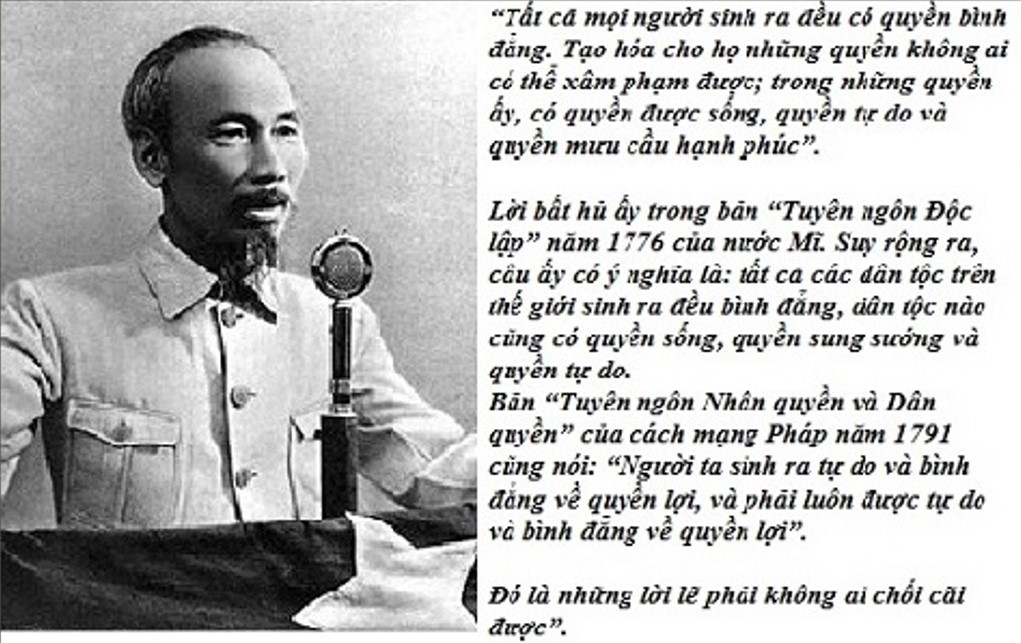
President Ho Chi Minh reading the declaration of independence for the Right to Life

It has been a month since Vietnam’s police raided Hoanh hamlet, Dong Tam commune, My Duc district, Hanoi city.
Vietnam’s legal protection system has probed and detained 26 people identified as suspects in the case of “murder, possession – illegal use of weapons and resisting law enforcement” in Hoanh village in early hours of Jan 9.

However, based on the Constitution and current legal provisions, there has been another case not yet probed to investigate – determining whether anyone committed a crime or not when Mr. Le Dinh Kinh, 84, was killed.

President Ho Chi Minh reading the declaration of independence which affirms the right to life is a natural right which is a basic proposition from which other laws arise for the purpose Protection of Right to Life, Right to Freedom and Right to happiness

Article 19 of the Constitution of the Socialist Republic of Vietnam states: Everyone has the right to life. Human life is protected by law. No one will be deprived of their life illegally.
Article 40 of the 2015 Penal Code states that those for whom do not apply the death penalty when committing crimes or judging include:

  • Persons under 18 years of age,
  • Pregnant women,
  • Women raising children under 36 months age and
  • Persons who are 75 years of age or older.

Therefore, Mr. Le Dinh Kinh is 84 years old, and even if he had committed any crime, he cannot be executed.

5 Vietnamese constitutional forms over the periods: 1946, 1959, 1980, 1992, 2013

In order to ensure that this Constitution has been enshrined, a series of provisions not only in the Criminal Procedure Code, according to which, when depriving the life of a citizen, must be taken into account in various branches (police, police, court), many levels (including the State President) carefully review, even review and review several times in a few decades.
On Dec 17, 2013, the Government issued Decree 208/2013/ND-CP Stipulating measures to prevent, stop and handle acts against officials on duty.

Because the human right to life and other fundamental rights are paramount even when he/she opposes the person on duty, Decree 208/2013 emphasizes a number of strict principles that protect citizens’ right to life.

  • Respect for the rights and legitimate interests of agencies, organizations and individuals.
    Specifically: Taking precaution is main, proactively detecting, stopping in time, strictly handling all acts against officials on duty.
    Being cautious and flexible in preventing and handling acts of opposing officials on duty to ensure the safety and health of officials on duty;
    minimize the damage to life, health, honor, dignity and property caused by anti-law enforcement acts (Article 4).
  • Officials on duty are banned:
    Violating the order, procedures and competence.
    Corruption, bossy, improper conduct while on duty.
    Prohibition Violation of regulations on management and use of weapons, explosives and combat gears.
    Prohibited Violation of regulations on shooting or beyond the limits of legitimate defense.
    Prohibit infringing upon the life, health, honor, dignity and property of others and the normal activities of agencies and organizations while on duty … (Clause 1, Article 5).
Bullet cartridges and explosives from the Ministry of Public Security collected in Mr. Le Dinh Kinh’s house and kept by his family

Officials shall only use force, support tools and professional technical devices or equipment or open fire in case of emergency, or persons who use weapons to commit acts against public service executors or law enforcement officials.
Firearms firing while on duty must comply with the Ordinance on the Management and Use of Weapons, Explosives, Supporting Tools and other relevant law provisions.

The use of weapons, explosives, explosives precursors and combat gears must ensure proper purposes, regulations, and limit damage to people, properties and the environment.

Only use military weapons when there is no other way to prevent the acts of the subjects and after warning, the subjects do not obey.

It is prohibited to use military weapons when knowing that the object is women, people with disabilities, children, the elderly, with exception when they use weapons, explosive materials to attack, fight back, threaten the life, health of law enforcement officials or others.

However, based on the Constitution and a number of legal provisions as mentioned, it is clear that it cannot be ignored investigation on Mr. Kinh’s “execution” to determine whether this behavior is correct with the laws or not.

There are many questions that cannot be answered if Vietnam’s authorities fail to probe his death. The case would be legal miscarriage and make people angry.

How an 84-year-old disabled person can attack, resist, threaten the life, health of law enforcement officials or others to the point of “destroying” on the spot?

Without probing the case, how can we determine the answer about the marks on Mr. Kinh’s body (dislocated knee joint, bullet wounds in the heart and head)?

Who dislocated the knee joint, who shot Kinh’s heart and head?
Kinh’s knee joint was dislocated first and then the individuals on duty would shoot at the heart, head or vice versa?

No prosecution of a case, no investigation, no determination of respect for the law of the people involved in the performance of official duties
(in all cases, users of military weapons must limit the damage caused by the use of military weapons).

If not, who is responsible for the acts of assassination, for fabricating evidence, stories, and finding all ways to cover the violation of current laws and regulations?
If you use Google, you can find tens of thousands of websites explaining why civilized nations, rule of law, put all police who have shot someone with a gun to “suspend work” – including when there are sufficient witnesses, the evidence shows that the shooting is necessary and justified. “Suspension of work” for a policeman after shooting a person is a natural thing to organize an investigation, determine true – false.

“Suspension of work” is chance for the police officers having fired to have time to report and answer questions. The investigators were commissioned to investigate more easily in collecting testimony, evidence of all the individuals involved, assessing and concluding whether shooting people violated the law (?).
“Suspending the work” of the police shooting people also to prove to the public, the right to life that was determined by the Constitution as inviolable always respected.

 “Suspension of work” to conduct investigations of police officers who have shot people, even if there is sufficient evidence, the witness indicates that the shooting is necessary and justified as a form of reminding the whole police to Be careful, consider when shooting someone.
In recent years, on Vietnamese-language social networks, some people often use the story of European-American police heavily in preventing criminals to justify the behavior of Vietnamese police. This comparison is a crude fallacy because both the Vietnamese police and the Vietnamese public authority system refuse to exercise due diligence, such as the Euro-US police and organize investigations and transparency of examination results, accusations and complaints about public service forces such as the public system in Europe and the US.

The prosecution to investigate the killing of Mr. Kinh is not merely a meeting of the desires of many people of different sexes – it will be evidence that the Vietnamese political system and public authority system “works” according to the Constitution and the law ”or not?
Whether socialist democracy, socialist legislation in the Socialist Republic of Vietnam creates a truly civilized society, all citizens are equal, or the Constitution and laws are only tools to deceive people in foreign affairs and suppress citizens?

The case that the Party and its government have committed crimes against people in Dong Tam has revealed the true face of the communist regime, when they have used foreign savage communism to bring disaster to the nation.

This crime cannot be washed away, it has been etched into the dark history of the nation and the hearts of millions of Vietnamese people.

Hoang Lan from Ha Noi – Thoibao.de (Translated)

Ông Vương Đình Huệ vừa được bổ nhiệm làm Bí thư Thành ủy Hà Nội, thay thế ông Hoàng Trung Hải thôi giữ chức vì bị kỷ luật do những sai phạm tại Công ty gang thép Thái Nguyên.
Có ý kiến cho rằng sự thăng tiến của Vương Đình Huệ là tốt, bởi ông này được xem là một trong những nhà kỹ trị nổi trội hàng đầu trong nhóm đảng viên Đảng cộng sản ở Việt Nam, có học hàm giáo sư.

Theo bình luận của giới quan sát, dù việc này chỉ là biện pháp tạm thời (tức bước đệm) để ông Vương Đình Huệ tiến vào Tứ Trụ trong Đại hội 13 (tháng Giêng 2021), hay ông sẽ tiếp tục lãnh đạo Hà Nội thêm một nhiệm kỳ để giải quyết các vấn đề nhức nhối mà Thủ đô đang phải đối mặt, thì đường quan lộ của “cậu học trò nghèo quê gốc Nghệ An trở thành Phó Thủ tướng” rõ ràng là hết sức thuận lợi.
Tác giả David Hutt trên tờ The Diplomat (ngày 16/01) thậm chí còn nêu nhận định: ông Huệ có khả năng sẽ được Tổng chủ Nguyễn Phú Trọng hậu thuẫn làm Thủ tướng trước khi về nghỉ, trong trường hợp ông Nguyễn Xuân Phúc nắm ghế Tổng bí thư, nhằm duy trì sự cân bằng quyền lực các phe phái.
Ông Huệ cũng có bằng tiến sỹ tài chính tại Slovakia và từng giảng dạy tại Học viện Tài chính.
Phải nói rằng bên trước ông Huệ, nhiều kỳ vọng tương tự cũng được gửi gắm lên vai các công Nguyễn Thiện Nhân, Nguyễn Văn Bình, Vũ Đức Đam, Nguyễn Mạnh Hùng…và cả những nhân vật đã không may “ngã ngựa” như Đinh La Thăng, Hoàng Trung Hải (thạc sỹ ĐH Dublin, Ireland)…

Hình ảnh trong Hội nghị bổ nhiệm ông Vương Đình Huệ cho thấy ông Hoàng Trung Hải với nét mặt đau khổ

Nhiều người đã hy vọng rằng, sẽ có một thế hệ lãnh đạo mới, trẻ trung hơn, mang phong cách kỹ trị, dám nghĩ dám làm và ít giáo điều.

Kỹ trị (technocracy) là một cụm từ “thời thượng” ở Việt Nam những năm qua, phù hợp với chủ trương xây dựng nhà nước kiến tạo phát triển (developmental state), mô hình đã làm nên kỳ tích kinh tế của các quốc gia Đông Á (Nhật Bản, Hàn Quốc, Đài Loan, Singapore).
Tổng thống Singapore Halimah Jacob là tiến sĩ luật, ĐH Quốc gia Singapore, và có kinh nghiệm quản trị trong ngành lao động, nghiệp đoàn, các vấn đề xã hội, phụ nữ và từng làm chủ tịch Quốc hội. Singapore nổi tiếng với mô hình quan chức ‘kỹ trị’
Sở dĩ có chủ trương này bởi kỹ trị thường được định nghĩa như một hệ thống quản trị, trong đó các nhà hoạch định sẽ được tuyển chọn dựa trên chuyên môn của họ, nhất là kiến thức khoa học trong các lĩnh vực, chứ không phải nhờ đảng phái, phe nhóm, quan hệ hay ý thức hệ.
Hệ thống này khá tương phản với quan niệm cho rằng nên để các đại diện do dân bầu nên ra quyết định trong chính phủ (tức mô hình dân chủ).
Đảng Cộng sản Việt Nam thường bám vào khái niệm này cùng với kinh nghiệm của Singapore để khẳng định chỉ duy nhất Đảng mới đủ năng lực lãnh đạo đất nước đi đến thắng lợi cuối cùng, tuy nhiên gần đây hàng loạt các quan chức cấp cao của ĐCS lần lượt bị truy tố và phải lĩnh các bản án với nhiều chục năm tù vì tham nhũng và quản lý yếu kém

Nhà hoạt động Hoàng Dũng đưa ra bình luận bằng cách kể câu chuyện rằng:
Hồi tháng 9/2011, anh Huệ mới lên Bộ trưởng Bộ Tài chính, đã có những chấn chỉnh hệ thống xăng dầu, làm hàng triệu dân lúc bấy giờ cảm thấy dễ thở hơn.

Hình ảnh Thủ tướng Nguyễn Xuân Phúc cùng 5 Phó thủ tướng với 2 Thạc sỹ, 3 Tiến sỹ

Phải khẳng định với bà con rằng những năm ấy, 2010, 2011… còn đầy người chưa nhận ra bộ mặt thật của những người cộng sản. Khi ấy hàng triệu người dân, bị truyền thông 1 chiều của nhà nước che phủ đã phát cuồng với Nguyễn Bá Thanh, Đinh La Thăng rồi Vương Đình Huệ, thậm chí cả Thủ tướng vì những phát ngôn mị dân của họ.
Năm ấy, trong cuộc họp, anh Huệ doạ: “Nếu doanh nghiệp nào thấy lỗ quá không làm được thì rút lui. Kể cả Petrolimex, nếu không làm được chúng tôi sẵn sàng cho giải tán để lập tổng công ty khác. Với tư cách là Bộ trưởng Bộ Tài chính, tôi xin tuyên bố sẽ không cho phép doanh nghiệp nào bỏ việc lưu thông xăng dầu, khó khăn nào cũng có thể giải quyết. Không phải vì 11 doanh nghiệp đầu mối nhập khẩu xăng dầu, mà vì cả nền kinh tế và hơn 80 triệu người tiêu dùng xăng dầu trên lãnh thổ này”. Sau lời phát biểu đó biết bao người tin rằng giá xăng dầu sẽ không còn là gánh nặng của người lao động nữa. Nhưng thực chất là cũng sau phát biểu này, thì giá xăng dầu thì cứ tăng liên tục cho đến nay vẫn chưa có điểm dừng.
Đảng cộng sản như một cỗ máy quá cũ, rệu rã. Bí thư Thành phố Hà nội Vương Đình Huệ có thể là một chi tiết máy hiện đại. Liệu có hy vọng là nó sẽ kéo cả cỗ máy lao về phía trước được không?
Hoặc là nó sẽ phải thích nghi hoặc nó sẽ bị cỗ của Đảng đánh bật ra vì không phù hợp như tấm gương của Nguyễn Bá Thanh hay Đinh La Thăng mà thôi.

ông Vương Đình Huệ trả lời chất vấn của Đại biểu quốc hội với cương vị bộ trưởng Tài chính

Khác với các nhà hoạch định chính sách của những nền kỹ trị lừng danh tại châu Á thường trải qua đào tạo bài bản, điển hình như Singapore, Đài Loan, Nhật Bản… phần lớn lãnh đạo Việt Nam đều có bằng cấp cao nhưng ít giá trị, do tiêu chuẩn học thuật trong nước quá thấp, không có hệ thống dám sát độc lập, nên dẫn tới thiếu “thực học”.

Bởi nếu chỉ dựa vào một số tuyên bố hoặc phát ngôn “gây chú ý” để tùy tiện gán cho hàng ngũ lãnh đạo Việt Nam đương đại hai chữ “kỹ trị” thì e có phần hơi vội vàng, nhất thiết phải nhìn vào quá trình hoạt động và những việc làm cụ thể của họ.
Tổng thống Đài Loan Thái Anh Văn Từng là giáo sư luật tại các trường Đại học Đông Ngô (Soochow) và Đại học Quốc gia Chính trị (Chengchi), bà Thái Anh Văn còn có bằng tiến sỹ luật từ trường Đại học Kinh tế Chính trị London (LSE) danh tiếng.
Hoặc nếu họ có bằng cấp ‘kỹ trị’ thì bằng đó cũng phải xếp sau các tiêu chí đạo đức Đảng viên, bản lĩnh chính trị, và nhất là không thể thiếu chứng chỉ “lý luận chính trị”, do trường Đảng Nguyễn Ái Quốc cấp, để thăng tiến.
Xin lấy ví dụ, ông Đinh La Thăng vốn học kế toán, nhưng lại đi lên từ phong trào văn nghệ Đoàn tại Tổng công ty Sông Đà, và cũng có tấm bằng tiến sỹ với đề tài: “Tổ chức công tác kế toán ở các doanh nghiệp xây dựng trong điều kiện ứng dụng tin học” (năm 1996).
Đây là một tấm bằng rõ ràng là không có nhiều giá trị ứng dụng, nhưng cuối cùng thì ông vẫn được Đảng cộng sản đưa lên vị trí cao, nắm quyền sinh, quyền sát của Sài Gòn – một trung tâm kinh tế hàng đầu của cả nước.
Điều này càng cho thấy tâm và tầm của các lãnh đạo mang danh kỹ trị ở Việt Nam đến đâu.

Hình ảnh ông Đinh La Thăng, tiến sĩ kinh tế, từng làm Bộ trưởng Bộ GTVT rồi Bí thư Thành ủy Thành phố Hồ Chí Minh (2016-2017)

Cố Thủ tướng Nhật Hayato Ikeda (1899-1965) là một nhà kỹ trị từng thiết kế ra ‘tầm nhìn Nhật Bản’ với tham vọng đưa GDP đầu người tăng gấp đôi sau 10 năm và ông đã hoàn thành mục tiêu sớm hơn cả kỳ vọng (chỉ mất 7 năm)

Để so sánh, cố Thủ tướng Nhật Bản Ikeda Hayato (1899 – 1965) từ khi còn làm Bộ trưởng Tài chính đã dày công nghiên cứu và cộng tác với các trí thức để đề xuất chiến lược bội tăng thu nhập quốc dân – nhằm đưa GDP đầu người tăng gấp đôi sau 10 năm – cho cương lĩnh tranh cử năm 1960.
Nhờ tầm nhìn cùng sự lèo lái tài tình của ông, nước Nhật trên thực tế đã hoàn thành mục tiêu sớm hơn cả kỳ vọng (chỉ mất 7 năm), trong khi Ikeda còn không được may mắn để chứng kiến thành quả đó của mình vì qua đời năm 1965.
Hay cựu Tổng thống Đài Loan Lý Đăng Huy (sinh năm 1923), nhờ vào nền tảng tri thức uyên thâm – được cả Nhật và Mỹ đào tạo, đã tốt nghiệp tiến sỹ tại Cornell và nhận giải thưởng cho luận văn xuất sắc nhất của Hiệp hội Kinh tế Nông nghiệp Mỹ (năm 1968).
Ông Lý Đăng Huy đã góp công rất lớn vào sự phát triển bền vững của nông nghiệp Đài Loan trong giai đoạn làm Bộ trưởng và sau dẫn dắt Đài Loan chuyển đổi sang dân chủ.
Dù chỉ là một hòn đảo nhỏ, ít tài nguyên, lại hay bị thiên tai và có xuất phát điểm thấp với hàng triệu người sống trong cảnh nghèo đói trong thập niên 1950, nhưng chỉ sau 30 năm, Đài Loan đã cất cánh, hóa rồng và dân chủ hóa thành công.
Ông lãnh đạo Đài Loan và xây dựng được một chính phủ kiến tạo, giúp huy động hiệu quả các nguồn lực vào việc thúc đẩy kinh tế tăng trưởng mạnh mẽ.

19 nhân vật trong Bộ chính trị khóa 12 đứng đầu là ông Nguyễn Phú Trọng

Đối với trường hợp tân bí thư Hà Nội Vương Đình Huệ, mặc dù hay được gọi là chuyên gia kinh tế nhưng ông hay dừng lại ở việc không làm mếch lòng ai và những câu nói thoạt nghe tưởng rằng thâm thúy nhưng nghĩ lại chỉ là “vô thưởng vô phạt”.

Cũng theo cách tư duy đó, đáng ra ông phải không ủng hộ chủ trương thành lập siêu Ủy ban Quản lý vốn nhà nước tại doanh nghiệp do chính ông theo dõi, chỉ đạo.
Đây là một biện pháp “dấu bụi dưới thảm”, chứ chẳng thể nào giải quyết triệt để khối nợ xấu và tình trạng thua lỗ bởi “đàn khủng long của nền kinh tế vị thành niên”, các tập đoàn, tổng công ty nhà nước mà lẽ ra cần được cổ phần hóa hoặc cho giải thể, phá sản từ lâu.
Có lần ông còn nêu tiêu chí tuyển dụng cán bộ của siêu Ủy ban này là phải trong sáng, tự trọng (tiêu chuẩn này khá mơ hồ) thay vì yêu cầu người giỏi chuyên môn và giàu kinh nghiệm.
Vì thế mà ông Nguyễn Hoàng Anh, cựu Bí thư tỉnh ủy Cao Bằng, tỉnh chưa thoát nghèo và thường xuyên nhận cứu trợ ngân sách từ Trung ương, lại được chọn ngồi vào ghế chủ tịch của cái Ủy ban đang nắm giữ khối tài sản khổng lồ lên đến hơn 5 triệu tỷ VND.
Trong một hệ thống coi trọng hồng hơn chuyên, tư duy nhiệm kỳ và căn bệnh thành tích lây lan quá nặng, sẽ rất khó có chỗ cho những nhà kỹ trị tài giỏi.
Hay như bình luận của nhà nghiên cứu Hà Hoàng Hợp từ Singapore, dư âm của biến cố Đồng Tâm ngay trước Tết có lẽ sẽ là một phép thử đầy khó khăn cho ông Tân bí thư Vương Đình Huệ .

Nếu là một nhà kỹ trị đúng nghĩa, thì ông Huệ hẳn phải hiểu rõ nguyên nhân khiến khối Xã hội chủ nghĩa tại Đông Âu sụp đổ là do sai lầm từ mô hình kinh tế chỉ huy, tập trung thay vì vận hành theo nguyên tắc của thị trường tự do.

Hình ảnh Đường sắt đô thị Cát Linh – Hà Đông uốn lượn mấp mô như một biểu tượng kém cỏi của việc quản trị đất nước, có dấu hiệu tham nhũng giữa thủ đô Hà nội

Trong trường hợp chưa kịp vào Tứ Trụ và ở lại Hà Nội hết một nhiệm kỳ, liệu ông Vương Đình Huệ sẽ giải quyết những bức xúc ngay trước mắt của Thủ đô như thế nào?
Cần làm gì với công trình đường sắt đô thị Cát Linh – Hà Đông liên tục chậm tiến độ, khiến người dân Việt Nam lâm vào bẫy nợ nần của Trung Quốc?
Làm sao cải thiện tình trạng tắc nghẽn giao thông, ô nhiễm không khí, sông hồ, thiếu khoảng không xanh, quy hoạch “hổ lốn” tại Hà Nội?
Tiếp theo, với chính sách điều động và luân chuyển nhân sự cấp cao như hiện nay của Việt Nam, các lãnh đạo nguồn trong diện được quy hoạch thường ít có thời gian để gắn bó với cơ sở và chuyên tâm làm những việc cụ thể, “ích nước lợi dân”, bởi họ còn bận “đấu đá” để tiếp tục leo cao hơn nữa.
Vì thế, vấn đề của đất nước có lẽ nằm ở lỗi hệ thống nhiều hơn khi người dân chưa được quyền tự do lựa chọn người thực sự tài giỏi ra lãnh đạo mình.
Ở trong một mô hình “không giống ai” và lạc hậu như vậy, bên cạnh tham nhũng, sai phạm là tất yếu, nhân tài sẽ rất khó xuất hiện, hoặc nếu có thì cũng chẳng làm được gì, chưa kể nguy cơ bị cho vào “lò đốt” nếu muốn làm khác.

Bản thân ông Bí thư thành ủy Vương Đình Huệ, từ những năm 1990 đã từng du học tại Tiệp Khắc, nay là Slovakia, ông cũng chứng kiến hệ thống các nước tại Đông Âu theo Chủ nghĩa cộng sản với chế độ Xã hội chủ nghĩa đã bị sụp đổ hoàn toàn, nên con đường ngắn nhất để đưa đất nước phát triển, đó là vứt bỏ kinh tế thị trường định hướng Xã hội chủ nghĩa mà ông Tổng bí thư Nguyễn Phú Trọng đang cố ép buộc người dân và doanh nghiệp trong nước phải đi theo.

Chỉ có nền kinh tế thị trường đầy đủ với nhà nước pháp quyền, thực hiện công bằng xã hội mới là điều mà gần 100 triệu người dân Việt Nam đang cần, và họ có quyền được hưởng điều tốt đẹp đó.

Hải Yến từ Hà nội – Thoibao.de (Tổng hợp)

Đã tròn một tháng kể từ khi công an Việt Nam tổ chức đột kích vào thôn Hoành, xã Đồng Tâm, huyện Mỹ Đức, thành phố Hà Nội.
Hệ thống bảo vệ pháp luật của Việt Nam đã khởi tố, tạm giam 26 người được xác định là bị can trong vụ án “giết người, tàng trữ – sử dụng trái phép vũ khí và chống người thi hành công vụ” xảy ra tại thôn Hoành vào lúc rạng sáng 9 tháng 1. 2020

Tuy nhiên căn cứ vào Hiến pháp và các qui định pháp luật hiện hành, còn một vụ án khác chưa được khởi tố để điều tra – xác định xem có ai phạm tội hay không khi ông Lê Đình Kình, 84 tuổi thiệt mạng và phạm những tội gì.

Điều 19 của Hiến pháp Cộng hòa Xã hội chủ nghĩa Việt Nam minh định: Mọi người có quyền sống. Tính mạng con người được pháp luật bảo hộ. Không ai bị tước đoạt tính mạng trái luật.

Điều 40 Bộ luật Hình sự 2015 nêu rõ, các đối tượng không áp dụng hình phạt tử hình khi phạm tội hay xét xử bao gồm: – Người dưới 18 tuổi, – Phụ nữ có thai, – Phụ nữ đang nuôi con dưới 36 tháng tuổi và – Người đủ 75 tuổi trở lên.
Như vậy ông Lê Đình Kình đã 84 tuổi, thì dù có phạm bất cứ tội gì cũng không thể bị tử hình.

Để bảo đảm yếu tố đã được Hiến định này, hàng loạt qui định không chỉ trong Luật Tố tụng hình sự mà theo đó, khi tước đoạt sinh mạng một công dân phải được nhiều ngành (công an, kiểm sát, tòa án), nhiều cấp (kể cả Chủ tịch Nhà nước) xem xét một cách cẩn trọng, thậm chí xét đi, xét lại nhiều lần trong một vài thập niên.
Ngày 17/12/2013, Chính phủ đã ban hành Nghị định 208/2013/NĐ-CP Quy định các biện pháp phòng ngừa, ngăn chặn và xử lý hành vi chống người thi hành công vụ.

Đây là hình ảnh ông Chủ tịch Hồ Chí Minh đọc bản tuyên ngôn độc lập trong đó khẳng định QUYỀN ĐƯỢC SỐNG là một quyền tự nhiên là một định đề cơ bản để từ đó phát sinh những quy định Pháp luật khác đều nhằm mục đích bảo vệ cho Quyền Được Sống, Quyền được Tự do và Quyền mưu cầu hạnh phúc

Bởi quyền sống và các quyền căn bản khác của con người là tối thượng kể cả khi người đó chống người thi hành công vụ, Nghị định 208/2013 nhấn mạnh một số nguyên tắc nghiêm ngặt bảo vệ quyền được sống của công dân.

  • Tôn trọng quyền và lợi ích hợp pháp của cơ quan, tổ chức, cá nhân.
    Cụ thể: Lấy phòng ngừa là chính, chủ động phát hiện, ngăn chặn kịp thời, xử lý nghiêm minh mọi hành vi chống người thi hành công vụ.
    Thận trọng, linh hoạt trong ngăn chặn, xử lý hành vi chống người thi hành công vụ bảo đảm an toàn tính mạng, sức khỏe của người thi hành công vụ; hạn chế đến mức thấp nhất thiệt hại về tính mạng, sức khỏe, danh dự, nhân phẩm và tài sản do hành vi chống người thi hành công vụ gây ra (Điều 4).
  • Người thi hành công vụ bị cấm: Vi phạm trình tự, thủ tục, thẩm quyền. Tham nhũng, hách dịch, ứng xử không đúng mực trong khi thi hành công vụ. Vi phạm các quy định về quản lý, sử dụng vũ khí, vật liệu nổ, công cụ hỗ trợ. Vi phạm các quy định về nổ súng hoặc vượt quá giới hạn phòng vệ chính đáng. Xâm phạm tính mạng, sức khỏe, danh dự, nhân phẩm và tài sản của người khác và hoạt động bình thường của các cơ quan, tổ chức trong khi thi hành công vụ… (Khoản 1, Điều 5).

Người có quyền ra lệnh thực thi công vụ thì bị cấm: Giao nhiệm vụ trái thẩm quyền. Đưa ra yêu cầu trái quy định của pháp luật. Không xử lý hoặc xử lý không nghiêm minh vi phạm của người thi hành công vụ (Khoản 2, Điều 5).

Đây là hình ảnh 5 bản hiến pháp Việt nam qua các thời kỳ: 1946, 1959, 1980, 1992, 2013

Những người thi hành công vụ chỉ sử dụng vũ lực, công cụ hỗ trợ và các phương tiện, thiết bị kỹ thuật nghiệp vụ hoặc nổ súng trong trường hợp cấp bách,
hoặc người có hành vi chống người thi hành công vụ sử dụng vũ khí tấn công người thi hành công vụ.
Nổ súng trong khi thi hành công vụ phải thực hiện theo quy định của Pháp lệnh Quản lý, sử dụng vũ khí, vật liệu nổ, công cụ hỗ trợ và các quy định pháp luật khác có liên quan.
Việc sử dụng vũ khí, vật liệu nổ, tiền chất thuốc nổ, công cụ hỗ trợ phải bảo đảm đúng mục đích, đúng quy định, hạn chế thiệt hại đối với người, tài sản và môi trường.
Chỉ sử dụng vũ khí quân dụng khi không còn biện pháp nào khác để ngăn chặn hành vi của đối tượng và sau khi đã cảnh báo mà đối tượng không tuân theo.
Cấm dùng vũ khí quân dụng khi biết rõ đối tượng là phụ nữ, người khuyết tật, trẻ em, người cao tuổi,
trừ trường hợp họ sử dụng vũ khí, vật liệu nổ tấn công, chống trả, đe dọa tính mạng, sức khỏe người thi hành công vụ hoặc người khác.

Không phải tự nhiên mà Bộ Công an loan báo cụ Kình chết nhưng tay vẫn còn nắm chặt một trái lựu đạn. Trái lựu đạn này đã được tổ chức trưng bày cùng các “tang vật” khác và rõ ràng nó đã bị rút chốt, cần bẩy có thể bật ra bất kỳ lúc nào …

Tuy nhiên căn cứ vào Hiến pháp và một số qui định pháp luật như đã dẫn, rõ ràng không thể nào bỏ qua, không khởi tố vụ án để điều tra về việc “tiêu diệt” cụ Kình để xác định hành vi này có đúng với các qui định pháp luật hay không?
Có nhiều câu hỏi mà không khởi tố vụ án, không thể có câu trả lời chính xác, làm diện mạo của công lý méo mó và công chúng bất phục, phẫn nộ.
Một người tàn tật đã 84 tuổi có thể tấn công, chống trả, đe dọa tính mạng, sức khỏe người thi hành công vụ hoặc người khác đến mức cần “tiêu diệt” ngay tại chỗ hay không?
Không khởi tố vụ án làm sao có thể xác định câu trả lời về các dấu vết trên thi thể cụ Kình (khớp gối bị trật, các vết đạn ở tim và đầu).
Ai đánh trật khớp gối, ai hoặc những ai bắn vào tim và đầu cụ Kình?
Khớp gối của cụ Kình bị đánh trật trước rồi những cá nhân thi hành công vụ mới bắn vào tim, vào đầu hay ngược lại?
Không khởi tố vụ án, không điều tra, không thể xác định cả về mức độ tôn trọng luật pháp của những người có liên quan trong khi thi hành công vụ (trong mọi trường hợp, người sử dụng vũ khí quân dụng phải hạn chế thiệt hại do việc sử dụng vũ khí quân dụng gây ra).

Hình ảnh vỏ đạn đầu đạn và quả nổ của Bộ Công an thu gom được trong nhà ông Lê Đình Kình được gia đình lưu giữ

Khởi tố để điều tra về việc “tiêu diệt” cụ Kình cũng là dịp trưng cầu giám định, xác định mức độ hợp lý của câu chuyện mà Bộ Công an kể: Một người có thể nắm chặt trái lựu đạn đã bị rút chốt, giữ cho nó không vuột khỏi tay nên không phát nổ khi nhận cùng lúc nhiều lực tác động rất mạnh đến nhiều phần khác nhau trên cơ thể (chân, tim, đầu)?

Nếu không những ai phải chịu trách nhiệm về hành vi lạm sát, về ngụy tạo chứng cứ, câu chuyện, tìm đủ mọi cách bao che cho việc vi phạm các qui định pháp luật hiện hành?
Nếu dùng Google có thể tìm thấy hàng chục ngàn trang web giải thích tại sao các quốc gia văn minh, thượng tôn luật pháp, đặt tất cả cảnh sát đã dùng súng bắn ai đó vào tình trạng “tạm ngưng công tác” – kể cả khi có đầy đủ nhân chứng, bằng chứng cho thấy việc nổ súng là cần thiết và chính đáng. “Tạm ngưng công tác” đối với một cảnh sát do đã nổ súng bắn người là điều có tính đương nhiên để tổ chức điều tra, xác định đúng – sai.

“Tạm ngưng công tác”dành thời gian cho cảnh sát đã nổ súng bắn người viết báo cáo, trả lời thẩm vấn. Các Điều tra viên được ủy nhiệm điều tra dễ dàng hơn trong thu thập lời khai, bằng chứng của tất cả những cá nhân có liên quan, đánh giá và kết luận xem việc bắn người có vi phạm pháp luật hay không (?).
“Tạm ngưng công tác” những cảnh sát đã nổ súng bắn người còn nhằm chứng minh với công chúng, quyền được sống vốn đã được Hiến pháp minh định là bất khả xâm phạm luôn được thượng tôn .

Ngoài ra, “tạm ngưng công tác” còn là cách giúp những cảnh sát đã nổ súng bắn người có khoảng thời gian nghỉ ngơi cần thiết để hồi phục tâm lý, vì dù cần thiết và chính đáng, tước đoạt sinh mạng của một con người vẫn có thể gây ra chấn thương tâm lý, hơn nữa trường hợp rạng sáng xông vào nhà dân để giết chết đảng viên lão thành cách mạng 54 năm tuổi đảng, 84 năm tuổi đời, cụ Lê Đình Kình là một việc làm dã man, mất nhân tính mà công an VN đã thực hiện

Hình ảnh nhiều vết đạn bắn trong nhà ông Lê Đình Kình được chụp bởi TS Nguyễn Quang A

“Tạm ngưng công tác” để tiến hành điều tra những cảnh sát đã bắn người, kể cả khi có đầy đủ bằng chứng, nhân chứng cho thấy nổ súng là cần thiết và chính đáng chính là hình thức nhắc nhở toàn bộ cảnh sát phải thận trọng, cân nhắc khi bắn ai đó.
Trong vài năm gần đây, trên mạng xã hội Việt ngữ, một số người thường sử dụng chuyện cảnh sát Âu – Mỹ nặng tay trong ngăn chặn tội phạm để biện minh cho cách hành xử của công an Việt Nam. So sánh này là một lối ngụy biện thô thiển vì cả công an Việt Nam lẫn hệ thống công quyền Việt Nam đều từ chối thực thi nghĩa vụ giải trình như cảnh sát Âu – Mỹ và tổ chức điều tra, minh bạch kết quả thẩm xét những tố giác, phàn nàn về lực lượng thi hành công vụ như hệ thống công quyền ở Âu – Mỹ.
Khởi tố để điều tra việc “tiêu diệt” cụ Kình không đơn thuần là đáp ứng mong muốn của nhiều người thuộc nhiều giới – mà sẽ là bằng chứng cho thấy hệ thống chính trị, hệ thống công quyền Việt Nam có “sống, làm việc theo Hiến pháp và pháp luật” hay không?
Liệu dân chủ Xã hội chủ nghĩa, pháp chế Xã hội chủ nghĩa tại Cộng hòa Xã hội chủ nghĩa Việt Nam có tạo ra một xã hội thật sự văn minh, tất cả các công dân đều bình đẳng, hay Hiến pháp và pháp luật chỉ là công cụ để lừa gạt thiên hạ trong đối ngoại và thống trị công dân trong đối nội?

Tổng bí Thư Nguyễn Phú Trọng và người đảng viên 58 năm tuổi đảng Lê Đình Kình

Vụ việc mà Đảng và Chính phủ Việt nam đã gây ra tội ác đối với người dân tại Đồng Tâm đã làm lộ ra bộ mặt thật của nhà cầm quyền Hà nội, khi họ đã dùng thứ chủ nghĩa cộng sản ngoại lai đầy man rợ để đem đến tai họa cho trăm họ.
Tội ác này không thể gột rửa, nó đã khắc sâu vào trang sử đen tối của dân tộc và tâm khảm của hàng triệu người dân Việt Nam.

Hoàng Lan từ Hà nội – Thoibao.de (Tổng hợp)

A meeting in which the party announced the promotion of Mr. Hue. Replaced Hai was with distressed face

Hanoi has just had a new secretary of the Party Committee, when Deputy Prime Minister Vuong Dinh Hue was transfered by the Politburo to head the party organization in the capital city. Hue replace Hoang Trung Hai.

The decision to change senior personnel in the capital of Vietnam coincided with the one-month timeline of the violent and bloodshed raid in Dong Tam commune, My Duc district which killed many people, including three police officers and an 84-year-old revolutionary Le Dinh Kinh, who had 58-year party membership.

On this occasion, a Vietnamese researcher and political analyst commented on the question, whether dealing with the consequences of the assault in Dong Tam on Jan 9 was a challenge for the city party chief.

“Dong Tam is a very unfortunate case and is an awkward problem,” Dr. Ha Hoang Hop, a senior research fellow at the Institute of Southeast Asia Research (Iseas, Singapore), told BBC News from Hanoi on Feb 7.

“But Mr. Hue’s mission is not in such a specific place.”

“Mr. Vuong Dinh Hue’s task is that he must continue to implement the Resolution of the 16th Congress of the Hanoi Party Committee and implement the issues that belong to the Resolution of the 12th Party Congress.

“There are about 16 specific tasks that have been done over the past four years, and when people summarized and found that all 16 tasks, Mr. Hoang Trung Hai performed well.”

According to this researcher, from now until the 13th Congress of the Communist Party of Vietnam, the new Hanoi Party Committee Secretary will have to ‘do well’ all that.”

Dr. Ha Hoang Hop said regarding the Dong Tam case on Jan 9 and after this event from then on, in the context of Hanoi having the new Party Secretary, the National Assembly needs “to investigate.”

 National Assembly representatives Duong Trung Quoc and Luu Binh Nhuong once coming to the village to hear a story from the people of Dong Tam, on the far right is Mr. Bui Viet Hieu, who is currently imprisoned on charges of murder and resisting on-duty public officials from Jan 9

“The Dong Tam is a specific thing that certainly Mr. Hue has to deal with because Hue also replaced Hai as the head of the National Assembly’s delegation in Hanoi.

“So people would raise questions about Dong Tam in the National Assembly.”

According to Dr. Ha Hoang Hop, Vietnam’s highest legislative body should do for Dong Tam case as follow.

“As far as the National Assembly is concerned, the National Assembly has a supervisory role in law enforcement, so action must be taken. Firstly, it should hold meetings to review the Dong Tam case, why it happened like and why police killed Le Dinh Kinh?

I also reiterated that Hanoi’s authorities launched probing the deaths of three police officers, so the National Assembly should investigate and launch probing the murder of Mr. Kinh.”

National Assembly Representative Duong Duong’s remarks about Dong Tam case

Dr. Ha Hoang Hop, from Southeast Asia Research Institute – Singapore

“Here, the National Assembly, in accordance with the law of the National Assembly, the Law on Organization of the National Assembly, assigns the National Assembly Standing Committee to explain constitutional or unconstitutional in specific actions such as what happens in Dong Tam, see if it’s constitutional or not.”

“On the basis of these two incidents, it must also lead to the investigation of the murder case of Mr. Le Dinh Kinh.”

With the question of who will be the investigator, Dr. Ha Hoang Hop said: According to Vietnam’s laws, foreigners cannot participate in the investigation. However, because denunciation of murder is a citizen’s rights and obligations, the people only ask for an honest and independent investigation.
The question here is whether such investigation procedures can be honest and independent.
By the authority given to the current investigating authority, the higher level could only be: the Police or Security Investigation or Procuracy.
However, the National Assembly can also supervise and either the Party Central Inspection Committee may also have opinions.

Dr. Ha Hoang Hop said that it is necessary to clarify many details:

  • Who was the one shot Le Dinh Kinh directly?
  • In what case did such a deadly shot occur?
  • Did he receive an order to kill him from his supervisors?

Need to apply criminal technical measures to determine based on the factors of the scene with how many wounds, how many bullets and other traces occurred at the crime scene.

In summary, the investigation conclusion must determine who was the killer with what motives and purposes.

Multiple bullet holes in Mr. Le Dinh Kinh’s house filmed by Dr. Nguyen Quang A

With the question of whether there is a will of unity in the process of killing Le Dinh Kinh in the view of action – Between the government and the security side and between the government and the Party Central Committee and the Politburo?
Dr. Ha Hoang Hop could not answer specifically, but he recounted the history and context of the story from April 2017 until the incident on Jan 9, 2020.  

Bullet cartridges and explosives used by police in Mr. Le Dinh Kinh’s house

The incident led to the fact that both the Police and the Army participated in the broken hip fracture and broke Mr. Le Dinh Kinh’s leg. This brutal acts made Dong Tam people angry so they took 38 police officers and the local government officials in hostage.

Then Mr. Le Dinh Kinh was taken to the hospital on April 21. At the same time, at the request of the Hanoi Police, the Hanoi People’s Procuracy decided to cancel his detention. After that, Dong Tam people also released kidnapped police officers.

From a criminal perspective, on the part of Dong Tam villagers, there was a violation against the person on duty and the police had probed the case in 2017.

The incident led to different views on the 59 hectare of Dong Senh land.

On Aug 27, 2019, the government inspectors and representatives of Hanoi People’s Committee came to Dong Tam and said that 59 Ha was land allocated to the army. However, the people said that the documents presented by the government were insufficient.

The people demand a decision of the Council of Ministers.

The dispute should have been a civil dispute and absolutely must not be used force to resolve like the way they did in early hours of Jan 9.

People from many places came to burn incense for Mr. Le Dinh Kinh after 1 month of his death

People never and could never cover a murder. There will be a day when the incident needs to come to light.

Back to the question of whether people have expectations of Mr. Vuong Dinh Hue to vindicate the murder in Dong Tam village or not?

Dr. Hà Hoàng Hợp still answered “yes” – and further explained that: The Dong Tam incident on Jan 9 happened, causing a huge division in public opinion with two opposing sides. On the one hand, defending the deaths of 3 police officers and claiming that Mr. Kinh and his related parties caused the deaths of 3 policemen and caused hatred towards Mr. Le Dinh Kinh.
However, according to Dr. Hop, ordinary people do not think so, because Mr. Le Dinh Kinh is a person with knowledge of the Law in general and the Land Law in particular. Mr. Kinh had time to participate in political activities and never advocated violence. Dr. Hop said that Mr. Le Dinh Kinh was a righteous person.
And also because of that split, the need for public opinion led to the need for an honest and independent investigation as mentioned above.

The CPV, headed by General Secretary Nguyen Phu Trong and Prime Minister Nguyen Xuan Phuc, always praised as “The state of the people, by the people and for the people“, but the reality is completely the opposite when the State is controlled by a minority of party members, governed exclusively by the CPV’s senior leaders, and for party’s ruling.
That has led to social conflicts, increasing confrontation between a number of privileged party members and the rest of over 90 million people in Vietnam.

When the rights party is placed on the rule of law, the massacres like Dong Tam will hapen, Mr. Vuong Dinh Hue is also an individual in the party, unable to correct the errors of a whole system of deadly mistakes.
 
The only way, is the whole people unite to erase the chains of communist dictatorship, to build a prosperous, fair, democratic and liberal Vietnam.

Trung Hieu from Hochiminh city – Thoibao.de (Translated)

EVFTA signing ceremony in Hanoi on June 30, 2019

On Feb 11, the European Parliament (EP) will vote on the Free Trade Agreement with Vietnam (EVFTA). This is an important vote to determine whether the agreement will go into effect. There have been many voices from international human rights organizations to urge the EP to vote on delaying the implementation of EVFTA until Vietnam has truly improved its human rights record.

What do international human rights organizations hope for the incoming vote?

Claudio Francavilla, representative of the Human Rights Watch (HRW) in Europe on the campaign, said:
This is not the first time we are sending a joint letter like this. We sent a letter about a year and a half ago, and in January 2019 we also sent a letter urging European MPs to pressure, demanding that Vietnam make concessions on human rights. The hope and purpose remain unchanged, so that the European parliamentarians see this as an unprecedented opportunity to use their influence to make sure human rights improvements from Ha Noi.

If they do not do so, they still agree with the Agreement without significant improvements on human rights, which means they wasted this opportunity.

With the question: What will the campaign results look like when the previous vote of the European Parliamentary Committee of Trade has only 6 votes say No and 29 votes agree.
Mr. Claudio Francavilla said:
“The result of voting on the International Trade Commission is not something we did not anticipate. Of course, Trade Representatives mostly pay attention to trade issues and do not pay much attention to other issues such as human rights.
 

Many European parliamentarians have tried to persuade other MPs to postpone the vote.

At the same time, we also got an opinion from the Parliament’s Foreign Affairs Committee demanding that the voting be postponed. However, these appeals were ignored by Trade Representatives. However, the MPs knew more about the situation in Vietnam. There are many Representatives and groups who are constantly trying to persuade their colleagues to postpone the implementation of the EVFTA in the next vote. Non-governmental organizations do the same and we expect these efforts to bear fruit.
With the question: There has been a lot of pressure from the EU to Vietnam on human rights issues, including a resolution from the European Parliament in 2018. However, according to HRW, the human rights situation of Vietnam still bad?

OClaudio Francavilla replied:
The resolutions are not binding instruments from the EU when these repressions are occurring while Europe is trying to finalize the agreement. Many MPs have sent a message to Hanoi that everything is fine, and Parliament will agree. So the Hanoi authorities continue to persecute human rights and they think that the repression has no consequences and is not punished when criticized in the international arena.
That’s why international human rights organizations have made great efforts in recent years. This is an opportunity MPs should not miss to influence.

Vietnamese prisoners of conscience

Music teacher Nguyen Nang Tinh was sentenced to 11 years in prison and 5 years of probation on charges of “conducting propaganda against the state.”
Claudio Francavilla: It is the adoption of one of the three important ILO conventions, although there are two more conventions that Vietnam still has to ratify.
In addition, the revised Labor Code was passed last year.
However, the ILO says there are still shortcomings. For example, the Labor Code allows the creation of independent unions, but the name of the independent union is not officially mentioned in the law. When reading carefully, you will see that if they do, they can only operate at the factory and local level. They still have to be approved by the government if they want to form. There is also a law in the law when the government grants or disallows such unions. So the process is entirely up to the Vietnamese government.

What has not happened yet is the release of political prisoners. As you all know, it was a case of arresting journalist Pham Chi Dung, who contacted the European Parliament. I saw a response from the Vietnamese Ambassador to this case, saying that Mr. Pham Chi Dung was arrested for violating Vietnamese laws but he did not say anything. The Ambassador also compared the freedom to express opinions in Vietnam with other cases in the West or in the EU.

Independent Journalist Association of Vietnam (IJAVN)’s President Pham Chi Dung was arrested by Vietnamese authorities on November 21, 2019 for writing many articles condemning the persecution of human rights in Vietnam

They were jailed for the harsh laws in the Criminal Code. These laws criminalized any expression or dissent, any criticism directed at the government. Vietnam can pass conventions or pass any law you want but these are almost meaningless unless the provisions of the Penal Code are changed.
Will passage of EVFTA lead to improvements in human rights in Vietnam?
“This is an empty law, like a slogan that we hear over and over from those who support the ratification of the agreement.
Supporters argue that as the economy grows, the middle class will grow and become stronger, and they will demand more civil and political rights, which is the driving force for domestic change.
But if you look at the Chinese example, this is different. There is no evidence to suggest that further economic development will result in more political rights. On the other hand, Vietnam has had very good economic development over the years, but the repression has increased.

Teacher Nguyen Nang Tinh teaching students the song “Return Power to the People”

Journalist Pham Chi Dung urges EU to postpone ratification of EVFTA

We have read the chapter on sustainable development and we do not see the terms required, no sanctions, no deadlines.
It simply proposes through ILO conventions. If you read the Agreement you will find that Vietnam will consider proceeding with conventions. The agreement did not say when Vietnam should do it, when should it do it, if Vietnam keeps delaying its approval. So the effect of this chapter is almost nonexistent.
The third argument of supporters of the agreement is the human rights clause in the Vietnam-EU Cooperation and Partnership Agreement (PCA).
They said that if Vietnam violated human rights, the Agreement would be stopped. Some reasons for this are paranoia.
First, this has never happened in the past when a trade agreement was suspended because of human rights.
Secondly, if it is stopped, it will be harmful to the European business community that has invested in Vietnam. The situation of human rights suppression in Vietnam is still high, it is said that when the agreement comes into effect, the human rights clause will work but it is not.

“It is true that the agreement has a chapter on sustainable development but no provision can be made. About the mechanism that we are talking about. If you look at the recent Dong Tam case, land enforcement is quite common in Vietnam. Vietnam will produce more and export more. Therefore more land is needed. The Vietnamese judicial system is not independent so it will affect people a lot. You can reopen the treaty negotiations, or you can apply an optional procedure to establish this mechanism. ”
February 11 will vote for the last time and, if approved, only about a month after the agreement will go into effect. If most of them still agree like the last vote, what is the campaigner’s next plan?
We have seen a lot of effort from many MPs and NGOs, persuading the European Parliament to postpone the agreement. If we are unsuccessful in doing this then of course our work will continue.

But if the MPs agree with the Agreement without a sign of improvement in human rights, the message they send to Hanoi is that all the appeals made no sense, because they had the opportunity to create effect that they did not use it.

The road of exporting goods to China is seriously congested due to the coronavirus epidemic, Vietnamese agricultural products have been dumped piled up right at the border. The EVFTA would be a single lifesaver to make Vietnam’s economy less dependent on China.

If the agreement is not approved – it will put an end to the political life of Prime Minister Nguyen Xuan Phuc, as he is responsible for this disruption.

On the contrary, when approved, this agreement will be a plus point for Mr. Phuc to have more opportunities to continue to climb up to the new position at the 13th Congress of the party.
Either way, Phuc and the dictatorial regime of the CPV will continue to be criticized by domestic and foreign public opinion as well as internationally condemned for persecuting and detaining innocent citizens just for their sake. voice a peaceful voice to build the country.

Hoang Lan from Ha Noi – Thoibao.de (Translated)

Thành phố Hà Nội vừa có tân Bí thư Thành ủy, khi ông Vương Đình Huệ, đang là Phó Thủ tướng, nhận quyết định của Bộ Chính trị đảng Cộng sản Việt Nam, về thành ủy Hà Nội, thay thế cho ông Hoàng Trung Hải.

Quyết định thay đổi nhân sự cao cấp ở thủ đô của Việt Nam diễn ra trùng với mốc thời gian tròn một tháng xảy ra vụ bố ráp, tập kích đầy bạo lực, gây đổ máu ở xã Đồng Tâm, huyện Mỹ Đức, Thành phố Hà Nội làm cho nhiều người, trong đó ngoài ba sỹ quan Công an, một đảng viên lão thành cách mạng 84 tuổi đời, 58 năm tuổi đảng là cụ Lê Đình Kình, thiệt mạng.

Nhân dịp này, một nhà nghiên cứu và phân tích chính trị Việt Nam nêu bình luận của mình trước câu hỏi, liệu giải quyết hậu quả vụ tập kích ở Đồng Tâm hôm 01/09/2020 có phải là một thách thức đối với ông Vương Đình Huệ.
“Đồng Tâm là một vụ mà rất là không hay và đang là vấn đề khó xử,” Tiến sỹ Hà Hoàng Hợp, nhà nghiên cứu cao cấp khách mời của Viện Nghiên cứu Đông Nam Á (Iseas, Singapore), nói với BBC News Tiếng Việt hôm 07/02 từ Hà Nội.
“Thế nhưng nhiệm vụ của ông Huệ lại không nằm ở một chỗ cụ thể như thế.
“Nhiệm vụ của ông Vương Đình Huệ là ông phải tiếp tục thực hiện được Nghị quyết của Đại hội lần thứ 16 của Đảng bộ Hà Nội và thực hiện các vấn đề thuộc về Nghị quyết của Đại hội đảng (toàn quốc) lần thứ 12.
“Có khoảng 16 nhiệm vụ cụ thể mà vừa rồi trong vòng bốn năm vừa rồi, khi mà người ta tổng kết, người ta thấy rằng là cả 16 nhiệm vụ ấy, thì ông Hoàng Trung Hải thực hiện tốt.”
Theo nhà nghiên cứu này, từ nay đến Đại hội lần thứ 13 của đảng Cộng sản Việt Nam, tân Bí thư Thành ủy Hà Nội sẽ phải ‘làm tốt’ tất cả những việc đó.

Hình ảnh trong Hội nghị bổ nhiệm ông Vương Đình Huệ cho thấy ông Hoàng Trung Hải với nét mặt đau khổ

Liên quan vụ việc Đồng Tâm hôm 09/01 và hậu sự kiện này từ đó về sau, trong bối cảnh Hà Nội có tân Bí thư thành ủy, Tiến sỹ Hà Hoàng Hợp bình luận tiếp và lý giải : Vì sao Quốc hội Việt Nam cần “vào cuộc điều tra”?

“Việc Đồng Tâm là một việc cụ thể mà chắc chắn trong quá trình mà làm Bí thư Hà Nội, thì sẽ có lúc ông ấy phải đụng đến nó. “Bởi vì bây giờ ông ấy thay ông Hoàng Trung Hải làm Trưởng đoàn Đại biểu Quốc hội của Hà Nội. “Cho nên việc Đồng Tâm thì thế nào người ta cũng phải nêu ra ở Quốc hội.
Nhân nhắc đến Quốc hội Việt Nam liên quan vụ tập kích ‘đẫm máu’ ở Đồng Tâm xảy ra tròn một tháng trước, Tiến sỹ Hà Hoàng Hợp nêu quan điểm của mình về việc cơ quan lập pháp này cần phải làm gì và vì sao.
“Xét về mặt Quốc hội, thì Quốc hội có vai trò giám sát việc thực thi pháp luật, nên phải có những hành động. Trước hết là những cuộc họp để mà giám sát lại vụ việc Đồng Tâm, vì sao nó xảy ra như thế? Và vì sao lại xảy ra việc giết ông Lê Đình Kình như thế?
Tôi cũng nhắc lại là người ta đã khởi tố vụ án giết người, tức là giết ba người sỹ quan cảnh sát.
Vậy thì cũng rất nên, Quốc hội rất cần thiết phải điều tra và khởi tố vụ án giết ông Lê Đình Kình

Hình ảnh đại biểu QH Dương Trung Quốc và Lưu Bình Nhưỡng một lần đến làng nghe câu chuyện từ người dân Đồng Tâm, ngoài cùng bên phải là ông Bùi Viết Hiểu hiện bị bắt giam với cáo buộc giết người và chống người thi hành công vụ từ ngày 9/1/2020

Tiếp đến “Vai trò thứ hai là vai trò giám sát thực hiện Hiến pháp, hành vi, hành động nào của chính quyền có thể dính đến việc vi hiến, thì Quốc hội cũng có vai trò như thế.” TS Hà Hoàng Hợp nói tiếp.

“Ở đây, Quốc hội, theo luật của Quốc hội, luật Tổ chức Quốc hội, giao cho Ủy Ban thường vụ Quốc hội giải thích việc hợp hiến hay là vi hiến trong hành động cụ thể như là việc xảy ra ở Đồng Tâm, xem nó có hợp hiến hay không.
“Trên cơ sở hai việc này, cũng phải dẫn đến việc điều tra và khởi tố vụ án giết ông Lê Đình Kình
,”
Với câu hỏi rằng ai sẽ là người điều tra, ông TS Hà Hoàng Hợp cho rằng:
Đối chiếu theo tất cả các qui định hiện hành của Pháp Luật Việt Nam thì không thể có người nước ngoài tham gia vào cuộc điều tra được. Tuy nhiên bởi vì Tố cáo tội ác giết người là quyền và nghĩa vụ của công dân và theo ông được biết thì Người dân chỉ yêu cầu có cuộc điều tra trung thực và độc lập mà thôi.
Vấn đề được đặt ra ở đây là các thủ tục điều tra như vậy có thể trung thực và độc lập hay không ?
Bởi thẩm quyền trao cho cơ quan điều tra hiện nay thì cấp cao hơn cũng chỉ có thể là: bên Cảnh sát hoặc An ninh điều tra hoặc Viện kiểm sát.
Tuy nhiên Quốc hội cũng có thể giám sát và hoặc là bên Ủy ban kiểm tra Trung ương Đảng cũng có thể có ý kiến.

TS Hà Hoàng Hợp, từ viện Nghiên cứu Đông Nam Á – Singapore

Nội dung điều tra sẽ gồm những vấn đề gì?

Tiến sỹ Hà Hoàng Hợp cho rằng, cần phải làm rõ nhiều tình tiết:

  • Ai là người đã trực tiếp bắn chết ông Lê Đình Kình?
  • Việc bắn chết người như vậy đã xảy ra trong trường hợp như thế nào?
  • Người hạ sát ấy liệu có phải vì bị kích động mà dẫn đến giết người?
  • Hay người đó được cấp trên ra lệnh hạ sát mà bắn vào ông Lê Đình Kình?

Cần phải áp dụng những biện pháp kỹ thuật hình sự để xác định dựa trên các yếu tố hiện trường với bao nhiêu vết thương, bao nhiêu phát đạn và những dấu vết khác xảy ra tại hiện trường vụ án.
Tóm lại, thì kết luận điều tra phải xác định rõ ai là kẻ giết người với động cơ mục đích như thế nào.
Với câu hỏi rằng liệu có sự thống nhất ý chí hay không trong quá trình giết chết ông Lê Đình Kình trong quan điểm hành động giữa chính quyền với bên an ninh và giữa chính quyền với bên Ủy ban TW Đảng và Bộ chính trị ?
TS Hà Hoàng Hợp không thể trả lời cụ thể, tuy nhiên ông kể lại lịch sử và bối cảnh xảy câu chuyện từ tháng 4/2017 cho đến khi xảy ra vụ việc ngày 9/1/2020.

Trước đó, hồi tháng 4/2017 đã xảy ra sự việc cả đơn vị điều tra của quân đội đã dẫn dụ cụ Lê Đình Kình ra ngoài cánh đồng Sênh – với mục đích là để ông Kình chỉ ranh giới 59 Ha đất nông nghiệp, và sau đó họ đã cưỡng chế đánh ông gẫy chân và bắt nhốt

Hình ảnh nhiều vết đạn bắn trong nhà ông Lê Đình Kình được chụp bởi TS Nguyễn Quang A

Sự việc dẫn đến là cả Công an và Quân đội cùng tham gia đánh gãy xương hông làm gẫy chân ông Lê Đình Kình. Khiến dân làng Đồng Tâm buộc lòng bắt giữ 38 Cảnh sát cơ động và cán bộ chính quyền.
Sau đó ông Lê Đình Kình được đưa đi chữa bệnh đồng thời ngày 21/04, theo đề nghị của Công an Hà Nội thì “Viện Kiểm sát Nhân dân Hà Nội ra quyết định huỷ bỏ quyết định tạm giữ ông Lê Đình Kình“. Và người dân Đồng Tâm cũng thả mấy chục người Cảnh sát cơ động kia ra.
Theo góc độ hình sự thì về phía dân làng Đồng Tâm là có việc vi phạm chống người thi hành công vụ và phía Công an đã khởi tố vụ án hồi năm 2017.

Sự việc dẫn đến quan điểm khác nhau về cái 59 Hecta đất Đồng Sênh.

Ngày 27/8/2019 Thanh tra CP và UBND Hà nội có đến Đồng tâm và nói rằng 59 Ha ấy là đất giao cho quân đội. Tuy nhiên phía người dân nói tài liệu mà phía nhà nước đưa ra là chưa đủ căn cứ.
Dân đòi phải có quyết định của Hội đồng bộ trưởng – thì dân Đồng Tâm sẽ chấp hành.
Lẽ ra tranh chấp vấn đề ấy chỉ là tranh chấp dân sự và tuyệt đối không được được dùng bạo lực để giải quyết như cái nửa đêm và rạng sáng ngày 9/1/2020 ấy.

Nay đã vừa tròn 1 tháng ngày mà ông Lê Đình Kình bị giết, yêu cầu của TS Hà Hoàng Hợp cũng như hàng triệu người dân Việt Nam trong và ngoài nước đòi hỏi công lý phải được thực thi.

Hình ảnh vỏ đạn đầu đạn và quả nổ của Bộ Công an thu gom được trong nhà ông Lê Đình Kình được gia đình lưu giữ

Người ta không bao giờ và không thể nào lấp liếm được một vụ giết người. Sẽ có một ngày sự việc cần phải đưa ra ánh sáng.
Quay lại câu hỏi rằng liệu người ta có kỳ vọng vào ông Vương Đình Huệ để giải oan cho sự việc giết người ở làng Đồng Tâm hay không?

Ts Hà Hoàng Hợp vẫn trả lời rằng “có” – và giải thích thêm rằng:
Sự việc Đồng Tâm ngày 9/1 xảy ra đã gây ra một sự chia rẽ rất lớn trong dư luận với hai phe đối nghịch nhau. Một phía bênh vực cho 3 Cảnh sát cơ động bị chết và cho rằng phía ông Kình và những người liên quan gây ra cái chết của 3 Cảnh sát cơ động và tạo nên sự căm thù đối với ông Lê Đình Kình.
Tuy nhiên theo TS Hợp thì người bình thường không nghĩ như thế, bởi lẽ Ông Lê Đình Kình là người có hiểu biết về Pháp luật nói chung Pháp luật đất đai nói riêng. Ông Kình có thời gian tham gia hoạt động chính trị và không bao giờ có chủ trương bạo động. Ts Hợp cho rằng ông Lê Đình Kình là một con người chính trực.
Và cũng chính vì sự chia rẽ ấy mà nhu cầu của công luận dẫn đến như cầu phải có cuộc điều tra trung thực và độc lập như đã nêu trên.

Đảng cộng sản Việt Nam mà người đứng đầu là ông Tổng bí thư Nguyễn Phú Trọng, thủ tướng Nguyễn Xuân Phúc luôn hô hào là “Nhà nước của dân, do dân và vì dân”, nhưng thực tế thì hoàn toàn ngược lại khi câu khẩu hiệu đó đã biến thành thành Nhà nước của một thiểu số đảng viên, do Đảng cộng sản Việt Nam độc quyền lãnh đạo và vì sự cai trị của đảng.
Điều đó đã dẫn đến mâu thuẫn xã hội, đối đầu ngày càng gia tăng giữa một số đảng viên có đặc quyền với phần còn lại là trên 90 triệu người dân Việt Nam.

Khi đảng quyền bị đặt trên pháp quyền, thì những vụ thảm sát như Đồng Tâm sẽ còn tiếp diễn, ông Vương Đình Huệ cũng chỉ là một cá nhân trong đảng, không thể chỉnh lỗi của cả một hệ thống theo Chủ nghĩa Cộng sản chết chóc và đầy sai lầm.

Chỉ còn cách duy nhất, là toàn dân đồng lòng xóa đi xiềng xích độc tài cộng sản, để xây dựng một Việt Nam thịnh vượng, công bằng, Dân chủ và Tự do.

Trung Hiếu từ TpHCM – Thoibao.de (Tổng hợp)

Vào ngày 11/2 tới đây, Nghị viện Châu Âu sẽ bỏ phiếu đối với Hiệp định tự do thương mại với Việt Nam (EVFTA). Đây là lần bỏ phiếu quan trọng quyết định việc hiệp định có đi vào hiệu lực hay không. Đã có nhiều tiếng nói từ các tổ chức nhân quyền quốc tế, thúc giục các Dân biểu Châu Âu bỏ phiếu hoãn việc thực hiện EVFTA cho đến khi Việt Nam thực sự có cải thiện về nhân quyền.
Các tổ chức nhân quyền quốc tế hy vọng gì vào lần bỏ phiếu tới?

Ông Claudio Francavilla, đại diện của Tổ chức Theo dõi nhân quyền quốc tế (HRW) tại Châu Âu về chiến dịch vận động này, cho biết:
Đây không phải là lần đầu tiên chúng tôi gửi thư thế này. Khoảng 1 năm rưỡi trước đây chúng tôi cũng đã gửi thư rồi và cả hồi tháng 1 năm 2019 chúng tôi cũng gửi thư thúc giục các Dân biểu Châu Âu gây sức ép, yêu cầu Việt Nam phải có những nhượng bộ trong vấn đề nhân quyền. Hy vọng và mục đích vẫn không thay đổi, đó là để các dân biểu Châu Âu nhận thấy đây là cơ hội chưa từng có trước đây để có thể sử dụng ảnh hưởng của mình để có được những cải thiện nhân quyền chắc chắn từ Hà Nội.
Nếu không làm vậy mà vẫn đồng ý với Hiệp định trong khi chưa có những cải thiện có ý nghĩa về vấn đề nhân quyền, có nghĩa là họ đã phí phạm mất cơ hội này.
Với câu hỏi: Liệu kết quả vận động lần này sẽ ra sao khi mà lần bỏ phiếu trước của Ủy ban thương mại Nghị viện Châu âu chỉ có 6 phiếu bầu không và 29 phiếu bầu đồng ý.
Ông Claudio Francavilla nói:
“Kết quả bỏ phiếu ở Ủy ban Thương mại Quốc tế không phải là điều chúng tôi không dự đoán trước. Tất nhiên, các Dân biểu về thương mại chủ yếu chú ý vào các vấn đề thương mại và không quan tâm lắm đến các vấn đề khác như nhân quyền chẳng hạn.

Lễ ký kết hiệp định EVFTA tại Hà Nội ngày 30/06/2019

Nhiều dân biểu nghị viện châu Âu đã cố gắng thuyết phục các Dân biểu khác hoãn lại việc bỏ phiếu này.

Cùng lúc, chúng tôi cũng có được ý kiến từ Ủy ban Đối ngoại của Nghị viện đòi hoãn bỏ phiếu. Tuy nhiên những lời kêu gọi này đã bị các Dân biểu thương mại bỏ qua. Tuy nhiên, các Dân biểu đã biết nhiều hơn về tình hình ở Việt Nam. Có nhiều các Dân biểu và các nhóm liên tục tìm cách thuyết phục các đồng nghiệp của họ để hoãn lại việc thực hiện Hiệp định trong cuộc bỏ phiếu tới. Các tổ chức phi chính phủ cũng làm tương tự và chúng tôi hy vọng những nỗ lực này sẽ đạt được kết quả.
Với câu hỏi: Đã có nhiều sức ép từ phía EU lên Việt Nam về vấn đề nhân quyền, bao gồm cả nghị quyết từ Nghị viện Châu Âu hồi năm 2018. Tuy nhiên, theo nhận định của HRW thì tình hình nhân quyền của Việt Nam vẫn xuống dốc?
Ông Claudio Francavilla trả lời:
Các nghị quyết không phải là các công cụ có tính ràng buộc từ phía EU khi những đàn áp này đang xảy ra trong khi Châu Âu đang cố gắng hoàn tất thỏa thuận. Nhiều Dân biểu đã gửi thông điệp đến Hà Nội là mọi chuyện đều ổn thỏa, và Nghị viện sẽ đồng ý. Vì thế chính quyền Hà Nội vẫn tiếp tục đàn áp nhân quyền và họ cho rằng việc đàn áp cũng không mang lại hậu quả gì và không bị trừng phạt gì khi có những chỉ trích trên trường quốc tế.
Chính vì thế mà các tổ chức nhân quyền quốc tế đã nỗ lực rất nhiều trong thời gian qua. Đây là cơ hội mà các Dân biểu không nên bỏ lỡ để gây ảnh hưởng.

Đã có những nhượng bộ từ phía Việt Nam về vấn đề nhân quyền trong quá trình đàm phán EVFTA. Và sau đây chúng ta cùng xem đánh giá thì những nhượng bộ nào là có ý nghĩa và những nhượng bộ nào cần phải rõ ràng và chắc chắn hơn?

hình ảnh các tù nhân lương tâm Việt nam

Claudio Francavilla: Đó là việc thông qua một trong 3 công ước quan trọng của ILO, mặc dù còn 2 công ước nữa Việt Nam vẫn còn phải thông qua.
Thêm nữa là Bộ Luật Lao động sửa đổi vừa được thông qua hồi năm ngoái.
Tuy nhiên, ILO nói rằng vẫn còn những thiếu sót. Ví dụ, Bộ Luật Lao động cho phép thành lập công đoàn độc lập, tuy nhiên tên gọi công đoàn độc lập không được nói đến chính thức trong luật. Khi đọc kỹ bạn sẽ thấy là nếu có thì họ chỉ được hoạt động ở mức độ nhà máy và địa phương. Họ vẫn phải được chính phủ chấp thuận nếu muốn thành lập. Trong luật cũng có các điều kiện khi nào thì chính phủ cho hoặc không cho phép thành lập các công đoàn như vậy. Cho nên quá trình này là hoàn toàn tùy tiện lệ thuộc vào chính phủ VN.

Còn những gì chưa xảy ra là việc trả tự do cho các tù chính trị. Như các bạn biết, đó là trường hơp bắt giữ nhà báo Phạm Chí Dũng, người đã liên lạc với Nghị viện Châu Âu. Tôi thấy có phản hồi của Đại sứ Việt Nam về trường hợp này, nói rằng ông Phạm Chí Dũng bị bắt vì vi phạm pháp luật Việt Nam nhưng là tội gì thì không nói. Đại sứ còn so sánh quyền tự do bày tỏ ý kiến ở Việt Nam với các trường hợp khác ở phương Tây hay ở EU.

Kêu gọi quan trọng nhất từ các Dân biểu là kêu gọi Việt Nam thay đổi Bộ Luật Hình sự. Trên thực tế, theo những số liệu thống kê thì có khoảng từ 140 đến 300 nhà hoạt động xã hội đang bị ĐCS VN bắt nhốt, bỏ tù.

Thầy giáo dạy nhạc Nguyễn Năng Tĩnh – người đã bị kết án 11 năm tù và 5 năm quản chế với cáo buộc “tuyên truyền chống nhà nước”

Họ bị bỏ tù vì các điều luật hà khắc trong Bộ Luật Hình sự. Các điều luật này đã hình sự hóa bất cứ việc bày tỏ ý kiến hoặc bất đồng chính kiến, bất cứ những chỉ trích nào nhắm vào chính phủ. Việt Nam có thể thông qua các công ước hay thông qua bất cứ điều luật nào mà bạn muốn nhưng những điều này gần như là vô nghĩa trừ khi các điều luật trong Bộ Luật Hình sự được thay đổi.
Phải chăng việc thông qua EVFTA sẽ dẫn đến những cải thiện về nhân quyền ở Việt Nam?
Đây là một lập luật trống rỗng, giống như một khẩu hiệu mà chúng tôi cứ nghe đi nghe lại từ những những người ủng hộ việc thông qua hiệp định.
Những người ủng hộ cho rằng khi kinh tế phát triển thì tầng lơp trung lưu cũng phát triển và mạnh hơn, và họ sẽ đòi hỏi thêm các quyền về dân sự và chính trị, đó là động lực dẫn đến thay đổi trong nước.
Nhưng nếu nhìn vào ví dụ Trung Quốc thì điều này khác hẳn. Không có bằng chứng nào cho thấy là kinh tế phát triển thêm thì sẽ có thêm quyền chính trị. Mặt khác, Việt Nam đã có sự phát triển kinh tế rất tốt trong những năm qua, nhưng việc đàn áp lại gia tăng.

Cũng tại lập luận thứ hai, là thỏa thuận thương mại có chương về phát triển bền vững và điều khoản về nhân quyền, cho nên khi hiệp định đi vào hiệu lực nó sẽ mang lại thay đổi trong nước.

Chủ tịch Hội nhà báo độc lập Phạm Chí Dũng, người vừa bị nhà cầm quyền Việt nam bắt hôm 21/11/2019 vì đã viết nhiều bài báo lên án việc đàn áp nhân quyền ở VN

Chúng tôi đã đọc chương về phát triển bền vững và chúng tôi không thấy các điều khoản bắt buộc, không có chế tài, không có thời hạn.
Nó đơn giản chỉ đề nghị thông qua các công ước của ILO. Nếu bạn đọc Hiệp định bạn sẽ thấy là Việt Nam sẽ xem xét việc tiến hành thông qua các công ước. Hiệp định không nói là Việt Nam phải làm, nên làm trong thời gian nào, nếu Việt Nam cứ trì hoãn việc thông qua. Cho nên ảnh hưởng của chương này là gần như không có.
Lập luận thứ 3 của những người ủng hộ việc thông qua hiệp định là điều khoản nhân quyền trong Thỏa thuận Hợp tác và Đối tác giữa Việt Nam và EU (PCA).
Họ nói là nếu Việt Nam vi phạm nhân quyền thì Hiệp định sẽ bị ngưng lại. Một số lý do cho thấy điều này là hoang tưởng.
Thứ nhất điều này chưa từng bao giờ xẩy ra trong quá khứ khi một thỏa thuận thương mại bị ngưng lại vì vấn đề nhân quyền.
Thứ hai là nếu nó bị ngưng thì sẽ có hại cho cộng đồng các doanh nghiệp Châu Âu đã đầu tư vào Việt Nam. Tình hình đàn áp nhân quyền ở Việt Nam vẫn lên cao, người ta nói là khi thỏa thuận đi vào hiệu lực thì điều khoản nhân quyền sẽ có tác dụng nhưng thực tế không phải vậy.

Một trong các điều kiện trong thư của các tổ chức phi chính phủ đưa ra đối với Việt Nam là thiết lập một cơ chế giám sát độc lập để giúp người dân bị ảnh hưởng bởi hiệp định, và sau đây là giải thích thêm về điều kiện này? Phải chăng hiệp định cũng đã có những điều khoản về vấn đề môi trường và nhân quyền rồi?

Một phiên họp của Nghị viện châu Âu, nơi dự định bỏ phiếu thông qua Hiệp định thương mại tự do với Việt Nam vào ngày 11/2 sắp tới

“Đúng là thỏa thuận có chương về phát triển bền vững nhưng không có điều khoản nào có thể thực hiện. Về cơ chế mà chúng ta nói đến. Nếu nhìn vào vụ Đồng Tâm mới đây thì cưỡng chế đất đai vốn là điều khá phổ biến ở Việt Nam. Việt Nam sẽ sản xuất nhiều hơn và xuất khẩu nhiều hơn. Do đó sẽ cần nhiều đất đai hơn. Hệ thống tư pháp VN hiện không độc lập nên sẽ ảnh hưởng rất nhiều đến người dân. Bạn có thể mở lại đàm phán về hiệp định, hoặc có thể áp dụng một thủ tục tùy chọn để thiết lập cơ chế này.”
Ngày 11/2 sẽ bỏ phiếu lần cuối và nếu được thông qua thì chỉ khoảng 1 tháng sau hiệp định sẽ đi vào hiệu lực. Nếu phần đông họ vẫn đồng ý như lần bỏ phiếu trước thì kế hoạch tiếp theo của bên vận động là gì?
Chúng tôi đã thấy nhiều nỗ lực từ nhiều Dân biểu và các tổ chức phi chính phủ, thuyết phục Nghị viện Châu Âu hoãn lại hiệp định. Nếu chúng tôi không thành công trong việc này thì tất nhiên công việc của chúng tôi sẽ vẫn tiếp tục.

Nhưng nếu các Dân biểu đồng ý với Hiệp định mà không có một dấu hiệu cải thiện về nhân quyền thì thông điệp mà họ gửi cho Hà Nội là tất cả những lời kêu gọi không có ý nghĩa gì, vì họ đã có cơ hội tạo ảnh hưởng mà họ đã không sử dụng nó.

người biểu tình với dòng chữ không có Nhân quyền, không có Nghiệp đoàn Độc lập thì không có EVFTA bên ngoài toà nhà của Quốc hội Châu Âu

Con đường xuất khẩu hàng hóa sang Trung quốc bị ách tắc nghiêm trọng do bệnh dịch cúm gây ra, hàng hóa nông thổ sản của Việt nam bị đổ bỏ chất đống ngay nơi biên giới. Hiệp định thương mại tự do Việt nam và châu Âu như một chiếc phao cứu sinh duy nhất để nền kinh tế của Việt nam bớt phụ thuộc vào Trung quốc.
Nếu hiệp định không được thông qua – thì nó sẽ đặt dấu chấm hết cho sinh mạng chính trị của Thủ tướng Nguyễn Xuân Phúc, vì ông là người đứng đầu Chính phủ và phải chịu trách nhiệm cho sự đổ vỡ này.
Ngược lại, khi được thông qua, thì hiệp định này sẽ là điểm cộng để ông Nguyễn Xuân Phúc có thêm cơ hội tiếp tục leo lên vị trí mới tại đại hội lần thứ 13 của Đảng Cộng sản Việt nam.
Dù bằng cách nào, thì ông Thủ tướng Nguyễn Xuân Phúc cùng thể chế độc tài của Đảng Cộng sản Việt nam sẽ tiếp tục bị công luận trong và ngoài nước, cũng như quốc tế lên án vì hành vi đàn áp, bắt giam những công dân vô tội chỉ vì họ cất lên tiếng nói ôn hòa để xây dựng một đất nước Việt Nam giàu mạnh và văn minh.

Hoàng Lan từ Hà nội – Thoibao.de (Tổng hợp)

General Nguyen Phu Trong on Feb 2 meeting to prepare documentation for the 13th party Congress

Vietnam is experiencing big events since the beginning of 2020, which make the Communist Party of Vietnam (CPV)’s Politburo, headed by General Secretary Nguyen Phu Trong confused.

Big Criminal case, Great anniversary and Epidemic

What is the common denominator from the three big events? The answer is the negative reaction of the people. From resentment, distrust to indignation, even hatred for the regime, a part of the population has adopted various means to express dissatisfaction with anti-progressive, non-democratic and full-fledged policies as well as the lies of the government. No one else, the CPV is the author cum director (bad) while playing some of the main roles in the aforementioned tragedies.

The Dong Tam massacre, the party’s 90th anniversary and Wuhan nCov are probably the three topics that cover most websites of all kinds: dissident, pro-government, and the middle. Vietnamese society has never been fragmented from all sides, from the uncultured comments of those who are thought to be Communist Party public opinion shappers, to the posts on FB of intellectuals from civil society groups.

The most gruesome incident, causing a concussion at home and abroad, was the fact that the Ministry of Public Security of Vietnam, under the direction of General Secretary Nguyen Phu Trong and Prime Minister Nguyen Xuan Phuc and under the direct implementation of Minister of Public Security To Lam, thousands of armed policement were deployed to attack Dong Tam commune in early hours of Jan 9, killing elderly party member Le Dinh Kinh in his house.

Revolutionary Le Dinh Kinh, 84, who was attacked and killed at his home by his comrades

Dong Tam Massacre: Vietnamese people are still paying attentions to Dong Tam before and after the Lunar New Year festival is reflected in civil society groups. Most of them are leading professors and doctors – but there are also many elderly from party committees, such as a deputy chief of the Central Committee of Organization. They did not go shopping for Tet. No one told anyone but the old people acknowledged and thought of such a way to mourn Le Dinh Kinh – a former district commissioner with 58 years of party’s membership- was killed by the “heroic” armed forces on Jan 9.  

In a separate development, on Feb 2, appearing on the Internet and a number of independent websites, the open letter related to the case was sent to the Secretary-General of the United Nations. The letter dated Jan 31 by a group of intellectuals from Saigon, including Huynh Tan Mam, Huynh Kim Bau, Le Cong Giau and Tuong Lai, included: “A fraction of Vietnam’s leadership ordered the massacre… “.

“We hope that Mr. Secretary General will have a timely voice to prevent a brutal solution of a state that has just been accepted as a non-permanent member of the UN Security Council / tenure 2020-2021. We request that he immediately send a UN investigation mission to Vietnam as soon as possible to investigate in details, in order to make an objective and honest assessment of the bloody event we have just denounced…“

The CPV is ninety years old:

On Feb 3, the “right margin” press was ordered to report and praise the 90th anniversary of the CPV’s establishment. However, the speech of Nguyen Phu Trong shows that it is unclear because of age or congenital confusion, he started to talk about words. “Our party has unrivaled power, no stopping power,” was a title snatched from Tuoi Tre newspaper. However, the title was later ‘replaced’ with a more ‘neutral’ title: “No force could stop the Party from leading the nation up.”  

Four intellectuals writing letters about the Dong Tam massacre to UN Secretary General António Guterres.

An article in Investment newspaper by Dr. Nhi Le, or Pham Dinh Bang, former deputy editor-in-chief of the Communist Review

The lack of confidence in the press was expressed in VnExpress. The headline was originally “General Secretary: Only the Vietnamese Communist Party is competent to lead the country.” Then it was too much, the title was changed to: “General Secretary: The Communist Party of Vietnam is strong enough to lead the country.” Professor Tran Ngoc Vuong from Vietnam National University Hanoi did not hesitate to publicize on his Facebook: “Unreasonable, ridiculous and immoral, even a child who has just learned to speak is not so naive!” His status was responded by many students and friends with a series of likes and comments.

On this occasion, Dr. Nhi Le, or Pham Dinh Bang, a former deputy editor-in-chief of the Communist Review, also had a stormy article online. The article posted in the Investment review newspaper of the Ministry of Planning and Investment, titled, “The Party itself is becoming more and more worthy of becoming a nation.” Many people read the title but did not understand what the author meant. Writer Nguyen Quang Lap was surprised: “The title is not of Quang short (chief of the public opinion shappers on social networks), but it is of associate professor PhD Nhi Le … Nhi Le Oh Nhi Le Please go to mountain to take care for goats!”
It is unclear if the Investment Review has removed the article. Because “loving the party” like that is ten times to criticize the party!

 Prime Minister Nguyen Xuan Phuc conducted field visit of corona virus infection in the central region on Feb 7.

Wuhan Pneumonia pandemic So far there are no truly reliable figures how many people have been infected with Wuhan pneumonia in Vietnam. According to media reports, on the morning of Feb, the official statistics on the number of people infected with nCoV worldwide are over 37,000. The number of deaths caused by this virus was over 800.
In such a situation, Vietnam has only officially confirmed more than a dozen cases of nCoV infection. Many people believe that this is an odd number. Although most “marginalized” newspapers try to reassure public opinion, there are still reports that acknowledge the risk of this plague and note another scary number.
Before that, Hanoi planned to set up the quarantine areas and build field hospitals. Despite efforts to strive for no cases of nCoV, but Hanoi Mayor Nguyen Duc Chung asked the Capital Military Command to develop a plan to establish isolation areas and field hospitals, ready to respond. During an outbreak, hospital spending in the emergency situation exceeded the capacity of the health sector.  

The information of PM Phuc to build many major field hospitals in the country to prevent and treat coronavirus makes many people worried because if there are really only more than a dozen cases of Corona virus, why the government has a plan to build a field hospital? It is a temporary hospital built in case there are suddenly a large number of people infected, similar to the two field hospitals that China built in Wuhan: Fire God and Thunder God, with a capacity of between 1,000 and 1600 beds.

Certainly insiders realized that the scooped news about nCoV in Vietnam could not be kept for long, so the “party” newspapers began to “gradually reveal.”

In order to prevent epidemics properly, the goverment needs to be honest with the people so that they know the risk. Hiding and concealing information will make the situation worse.

After a period of “burning the furnace” and bragging about trying several judges to the high-ranking Party officials in the corrupt apparatus, and then the Great 90th Anniversary of the Communist Party’s existence, General Secretary Trong and PM Phuc received a dangerous pandemic, which not only threatened people’s lives but also shook the authoritarian and cruel political system in Hanoi.

The time of change is very near, it is time for the Communist Party to leave.

Hoang Trung from Ha Noi – Thoibao.de (Translated)

Currently, there are 28 countries, 2 territories and 1 yacht are suffering from infection of the nCoV virus, not to mention 6,000 people in critical condition and certainly hundreds of them will die before sunrise tomorrow morning.

Statistics of situation of Coronavirus infection in the world as of Feb 9

A total of 37,600 people were diagnosed with corona virus infection, including 6,196 critical cases.
The number of people dying of the corona virus reaches 814, surpassing the number of deaths from the SARS epidemic (the final death toll is 774 in 2003) and surpressed the MERS epidemic (the final death toll is 858 in 2012) .
In China’s Hubei province alone, the epicenter of the virus outbreak, the number of deaths has reached 780, according to regional health officials. Only two were outside China with one in Hong Kong and one in the Philippines.
From the first day that China confessed to the world about the nCoV pandemic (Jan 16) with the reported number of 45 infected people.
23 days have passed and the world has 37,600 people infected with 814 deaths.
In China, from 45 patients increased to 1,000 in just 7 days. Two days later, it doubled to 2,000 people. Five days later, it reached 10,000. From 10,000 to 20,000, it only takes 4 days. After another 5 days … we are about to witness the figure of 40,000 infected people …
No one has ever been able to predict the peak of the epidemic in about a week or a month … as the number of infections continues to rise and the mortality rate appears to stabilize at 2.1%.
 
No scientific organization has identified the peak of the epidemic: The World Health Organization (WHO) representative in China said that it is necessary to be alert, because the disease is far from over.

 “All the predictions right now are impossible. We have only had less than a month to learn about this virus. We are learning more and more about it. But it is still not possible to predict what the situation will be. The epidemic may be far from over and we cannot be subjective,” said Dr. Gauden Galea, WHO representative in China.
Corona virus can be transmitted through air dust

Shanghai Bureau of Internal Affairs confirms information from scientific reports in China, announcing that nCoV is transmitted by air in the form of tiny liquid particles and is likely to spread far.
Speaking at a press conference in Shanghai (China) on Feb 8, Mr. Zeng Qun, deputy director of the Shanghai Municipal Administration of Civil Affairs, said medical and epidemic prevention experts identified nCoV that can be transmitted via aerosol, Tuoi Tre newspaper quoted Xinhua news agency.
Infection via aerosol means only droplets of virus-containing water are dissolved in the air to form aerosols, suspended in the air. Ordinary people can become infected if they breathe in aerosols containing viruses. According to the Tai Tan news site, this information means that a normal person can get nCoV by breathing in a mixture of air and droplets containing the patient’s virus.
 
Many studies have shown that viruses like the H5N1 and SARS avian viruses can be transmitted through aerosols, which can stay in the air for a long time. The main routes of transmission of nCoV were formerly known as “contact spread”, and “direct transmission” (including transmission through saliva droplets emitted by patients).

Twitter by World Health Organization refutes rumors of ncoV not surviving in hot and humid weather

The term “aerosol” in English and the word used by Zeng Qunhas prompted a debate among Vietnamese Ministry of Health’s officials and public opinion on Jan 9. The Ministry of Health explained that “aerosol delivery” means that the virus can only spread through a steam pipe, not through air dust. The purpose of the Ministry of Health was deliberately interpreted in the direction of reducing the risk of viruses, but the experts concluded that:
Aerosol – i.e. aerosol spray or droplets emitted during daily conversation, laughing, singing, etc. Particle size is generally 0.1 mm or less. After exhaling, the body rapidly evaporates (within 1 second or even tens of milliseconds) to form the core (particle). A few microns in diameter and dripping nuclei stay in the air for a long time and travel with the air, and its propagation distance can reach hundreds of meters or even longer. It increases non-contact transmission risk.

In summary, it is very dangerous, not as the Ministry of Health explained and nCoV may also be able to live in the environment outside the human body for some time. And that environment is a drop of water, air dust, or surface … it depends, where it clings to and where it lives.

The Philippines representative office of the World Health Organization issued a warning and dismissed rumors that nCoV could not survive the hot and humid weather. WHO Philippines says:
“nCoV has spread to countries with hot and humid climates and countries with cold and dry climate“. The hypothesis that nCoV does not grow under hot and humid conditions is just inference. This information is extremely important for South Vietnam, where people and authorities are mistakenly thinking that the virus is not dangerous because the temperature is almost higher than 25 degrees Celsius.
50% of secondary infections occur during the incubation period of nCoV
At least 50% of human-to-human transmission of 2019-nCoV virus infection occur when the first person has no symptoms.
The results of the study were presented by a group of Japanese scientists. According to a research team at Hokkaido University, by analyzing 26 cases of 2019-nCoV virus infection from person to person in 6 countries, including China, Thailand and the United States, the duration of secondary infection was shorter than the previous estimates.
The team called for strengthening preventive measures as well as improving the health care system to prevent the spread of the disease, instead of focusing solely on isolation measures from the community.

Diamond Princess Cruise with 70 people infected with Corona virus – recently visited Vietnam 5 times in all 3 regions of North, Central and South

The latest news says Diamond Princess Cruise has just confirmed 6 more new infections. The number of cases detected so far has been 70, pushing the total number of people infected in Japan to 96.
Before being isolated on Yokohama Sea in Japan for detecting many cases of positive for corona virus, Diamond Princess cruise ship had visited Vietnam 5 times in all three regions of North, Central and South including: Ha Long Bay , Da Nang, Hue (Chan May port), Ho Chi Minh City.
Sharing with the press, Mr. Nguyen Trung Hieu (Cau Giay) – one of the tour guides in the delegation worried: “When I first came to the delegation, I did not know that there were people infected with the flu, so when I got home I was still exposed with relatives without a mask or isolation.
It was only when the press reported on board that there were people infected with the flu that I limited contact with family members and isolated . Currently, I’m still normal, have no signs, but tomorrow I will go to the nearest hospital to check. I hope everything is fine
.”

Some Vietnamese tourist guides on the Diamond Princess continue to lead other tours, work normally, do not fully implement the isolation measures as prescribed.

According to the report, Vinh Phuc accounts for 9/14 cases of nCoV virus infection. Of which, 3 cases were transmitted to relatives during Lunar New Year festival or Tet holiday by people returning from Wuhan.

The latest 14th patient is a 55-year-old female who works as a freelance worker in Son Loi commune, Binh Xuyen district.

The two previous female patients found were, P.T.T., 49 years old, in Son Loi commune, Binh Xuyen district, the mother of patient N.T.D. who had been tested positive for nCoV.
Previously these patients had been exposed from the community since Jan 17.
It is known that both newly discovered patients have a history of epidemiology, being relatives of patients N.T.D. – one of 7 people sent to train in Wuhan city by Nihon Plast Co., Ltd. of Japan. These workers returned to Vietnam on Jan 17.
According to the report of the Vinh Phuc Department of Health, the total number of suspected cases being monitored since the disease outbreak was 25, of which 17 cases had test results (15 cases were negative, 2 cases were positive), and there are currently 8 cases awaiting test results.

A special isolation area in Vinh Phuc province

The total number of closely related cases close to the nCoV-positive cases were tracked as 134. Of these 4 cases were negative, 130 were being followed.

WHO Director General Tedros Adhanom Ghebreyesus, meets with Xi Jinping

A petition by a man named Osuka Yip has now been signed by nearly 350,000 people, writing that on Jan 23, “Mr. Ghebreyesus refused to declare the corona virus outbreak in China as a global emergency.”
Since then, the number of people infected has risen sharply and partly due to “Tedros Adhanom Ghebreyesus’s underestimation of the corona virus.”
“We strongly think that Tedros Adhanom Ghebreyesus is not suitable for WHO chief. We call for an immediate resignation of Tedros Adhanom Ghebreyesus.”
The petition also said that Mr. Ghebreyesus had full confidence in the number of deaths and infections provided by the Chinese government.
A lot of us are really disappointed, we believe that WHO is considered politically neutral. Without any investigation, Tedros Adhanom Ghebreyesus only believes in the deaths and infected numbers provided by the Chinese government.
On the other hand, Taiwan should not be excluded from WHO for any political reasons. Their technologies are much more advanced than some selected WHO list countries.
Please help the world gain confidence in the United Nations and WHO again.
 

Dr Li Wenliang was the first doctor to raise a warning about the risk of corona virus, and thus was summoned to the Public Security Bureau and charged with “making false comments” that seriously disrupted social order. “Under the great pressure of public opinion, the Supreme Court of China on Jan29 made an unprecedented move ever before issuing a statement condemning Wuhan police for punishing eight people who were supposedly spreading “rumors” online.
The death of the Chinese doctor who sought to warn of an outbreak of corona virus without success, caused public outrage and grief across China.
Accompanying grief and anger is the loss of confidence in the government, the seed of dissent. Chinese censorship is now working to counter opposition.
In a rare solidarity, nearly every element of Chinese society questions: “Freedom of speech – why there is no freedom of speech for people, why no right to question and the right to know, and why all media is the mouthpiece of the government !!!”
No such collective reaction has ever been witnessed, at least since 1989 when the Tiananmen massacre occurred.

The number of people infected and dying from Coronavirus is constantly increasing, which is particularly serious in China and has recently spread to Vietnam, but the horror caused by this pandemic is being covered up by state media in both countries. The two countries, under the rule of communism, deliberately concealed the truth, despite its dangers.

The Vietnamese people have only a way to prepare themselves in advance for the means and materials, to take care of their own lives and their families in the face of the coming disaster from China.

Thu Thuy from Hochiminh city – Thoibao.de (Translated)