While the Vietnamese state’s propaganda machine continues to tout the so-called “era of resurgence”—full of promise—under the leadership of General Secretary and President Tô Lâm, But the reality unfolding in cyberspace and domestic social life is exposing a stark paradox.
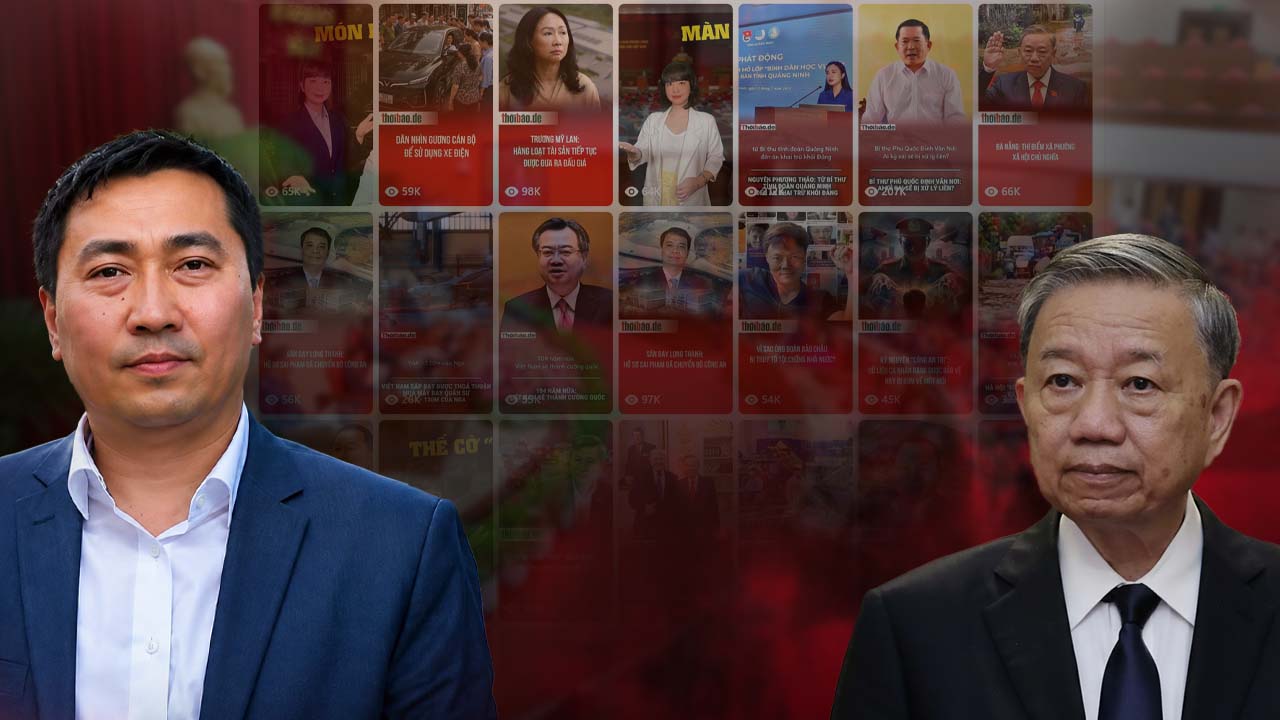
According to international media reports, on August 2, 2026, the *Nhân Dân* newspaper sounded an alarm regarding the shrinking space for freedom of speech in Vietnamese society.
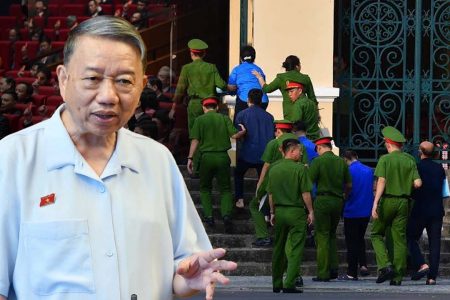
According to the report, cyber security forces and relevant authorities imposed administrative fines totaling 639.5 million dong on 86 individuals, accusing them of “aiding the spread of harmful and false information.” Notably, 56 of those penalized were Party members.
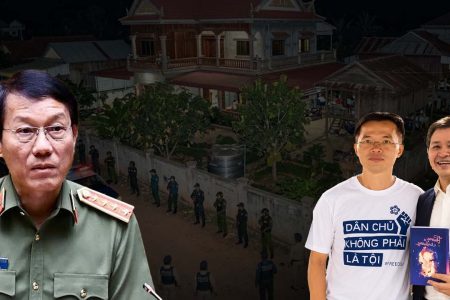
A typical example is the case of a resident of Gia Lai who was temporarily detained by police after being repeatedly warned but continued to share articles and videos from thoibao.de by journalist Lê Trung Khoa in Germany, along with comments expressing encouragement and support.
According to a report from A05—the Department of Cybersecurity and Prevention and Combating High-Tech Crime under the Ministry of Public Security—in addition to violators acting out of ignorance or naivety, a significant proportion are Party members who appear to be sharing such content intentionally.
It is reported that, according to A05, in 2025 this agency monitored a massive volume of 15 million Facebook accounts, over 270,000 websites and blogs, 55,000 YouTube channels, and more than 100,000 TikTok channels.
This clearly demonstrates that Vietnam’s comprehensive state surveillance system is stifling all independent thought and dissenting opinions among the general public.
From May to July 2026 alone, the government summoned and penalized more than 350 people for daring to comment on or share content from the pages of Mr. Lê Trung Khoa, a Vietnamese-German national residing in the Federal Republic of Germany.
In the face of this rapid escalation of punitive measures, the public in Vietnam has raised some fundamental questions. Namely: What are the transparent criteria for defining a website as “reactionary”?
And is the fine line between legitimate critical opinion—as guaranteed by the Constitution—and so-called “distortive behavior” being blurred to serve the purpose of labeling and suppression?
This is precisely why observers and international human rights experts have warned of a bleak picture regarding freedom of expression and freedom of speech in Vietnam in this new era.
Accordingly, in Vietnam today, the slogans of “renewal” and “reform” championed by General Secretary and President To Lam serve only to mask a trend toward the concentration of power and the tightening of social control through a command-economy mindset, albeit in a more sophisticated form. Similarly, while the private sector continues to struggle under countless administrative barriers, the dominant role of the state-owned sector has been significantly strengthened—contrary to the principles of a true market economy.Notably, international experts have bluntly assessed that Mr. To Lam needs to seriously reflect on and re-examine himself, while asking: Why has the situation reached a point where even many members of the Communist Party of Vietnam (CPV) have expressed their disagreement? This runs counter to Mr. To Lam’s initial commitments to usher Vietnam into a new era, aligning with the civilized and progressive trends of the West; however, these commitments appear to have been completely abandoned, giving way to a management model that is more tightly controlled and rigid than ever before.
When the people’s freedoms are stifled, all power is concentrated in the Ministry of Public Security, and a paternalistic mindset returns, the so-called “era of advancement” ultimately proves to be nothing more than a pipe dream designed to mask Vietnam’s regression.
Trà My – Thoibao.de