On January 16, 2026, the Dai Doan Ket newspaper reported that the Ministry of Health and SOS Children’s Villages International had agreed on a roadmap to transfer the entire SOS Vietnam system to state management. Accordingly, the handover includes 17 children’s villages, dozens of schools at all levels, as well as all children, youth, staff, and associated assets.
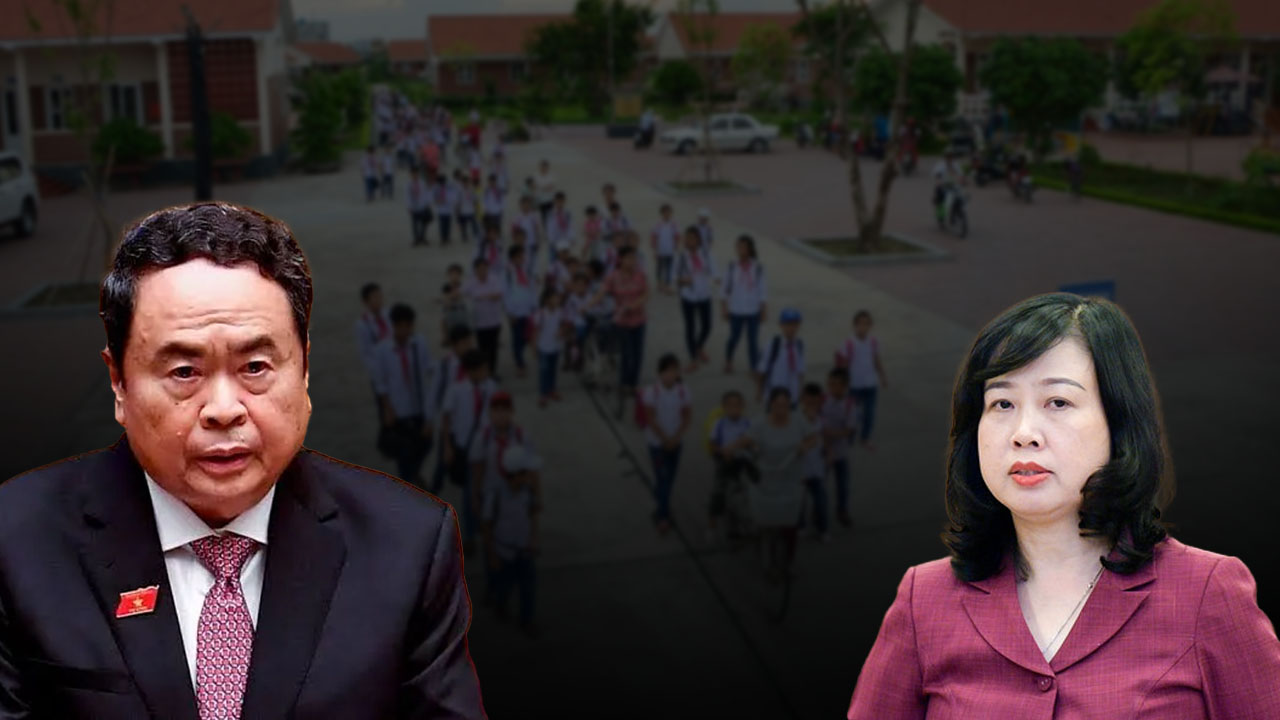
According to observers, at the time of the announcement, this handover was viewed as a step demonstrating the Vietnamese government’s commitment to social welfare.
However, when placing this handover event within the context of a flurry of health and legislative policies unfolding in 2026, public opinion has begun to connect the dots and raise the question: Could these orphanages—supposedly places for raising orphaned children—be venues where people arrange adoptions to receive money?
The public’s concerns are not unfounded when considering the policy process being implemented by the Ministry of Health at an unusual pace. In early May 2026, a directive on nationwide health examinations integrated with VNeID data was issued, creating a centralized national health database.
Prior to that, in June 2025, the Ministry of Health completed the direct takeover of management of the entire SOS Children’s Villages system, which houses vulnerable children lacking direct family protection.
In September and October 2025, the Standing Committee of the National Assembly reviewed the draft amendment to the Law on Organ and Tissue Donation, which included a proposal to expand the donor pool to include individuals under the age of 18.
Furthermore, at the same time, proposals for large-scale healthcare infrastructure investments have emerged, notably the $1.35 billion International Hospital Ship mega-project in Phu Quoc, accompanied by proposals to expand medical tourism to attract international visitors and the distribution of organ donation surveys in select schools.
According to international analysts, the succession of these events has inadvertently created the impression of a complete ecosystem balancing supply and demand in the organ sector.
On one hand, there is the centralization of health data, the management of vulnerable groups, and the lowering of the age requirement for organ donation registration; on the other hand, there is high-end healthcare infrastructure catering to the wealthy who can afford it.
Against a backdrop where public trust in the transparency of the regulatory apparatus remains fragile, this convergence immediately sparked outrage and fears of a potential underground organ trade.
Lessons from several countries in the region show that when legal boundaries are loosened against a backdrop of extreme wealth inequality, regulations prohibiting the buying and selling of organs on paper are unlikely to deter the allure of massive profits—thereby exposing vulnerable groups to the risk of having their bodies commodified.
It was precisely this deep-seated concern that sparked a strong backlash from legal experts, educators, and the broader community, forcing the legislature to remove the provision allowing individuals under 18 to register as organ donors from the draft bill under discussion in the National Assembly.
The government’s step back demonstrates that critical pressure from society and the media has served as an effective safety brake. However, the incident at the SOS Children’s Village and the series of policies surrounding the amended Organ Donation Law have left a deep “scar” on public trust.
The core challenge now facing regulatory agencies is not merely issuing administrative documents, but proving their commitment through concrete actions.
Specifically, all health and social welfare policies must be grounded in respect for human rights, provide absolute protection for vulnerable groups to maintain a strict legal framework, and remain non-profit in the face of any risk of profiteering.
Trà My – Thoibao.de
=======
From the Ministry of Health’s Takeover of SOS Children’s Villages to Suspicions of an Organ Trafficking Network?
“… The Ministry of Health’s takeover of SOS Children’s Villages, combined with the draft proposal to lower the age for organ donation, has raised deep suspicions about the risk of child organ trafficking in Vietnam.”
#Vietnam #VietnamPolitics #Thoibao