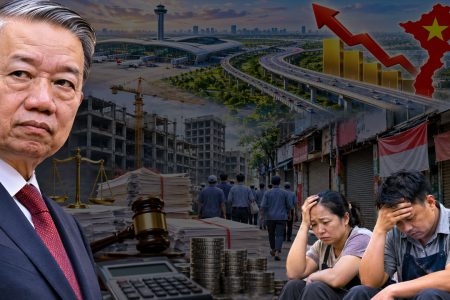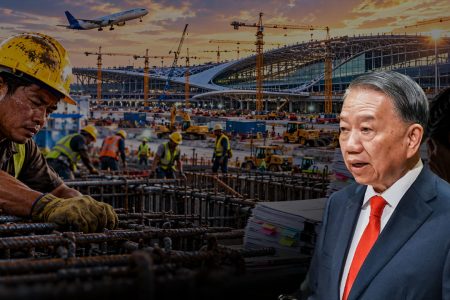
The fact that the Le Minh Hung administration recently tasked relevant agencies with studying a plan to operate Gia Binh Airport (Bac Ninh)—amid efforts to accelerate construction of the project—along with reports about the possibility of separating domestic and international flight operations between Noi Bai and Gia Binh, has sparked much debate.
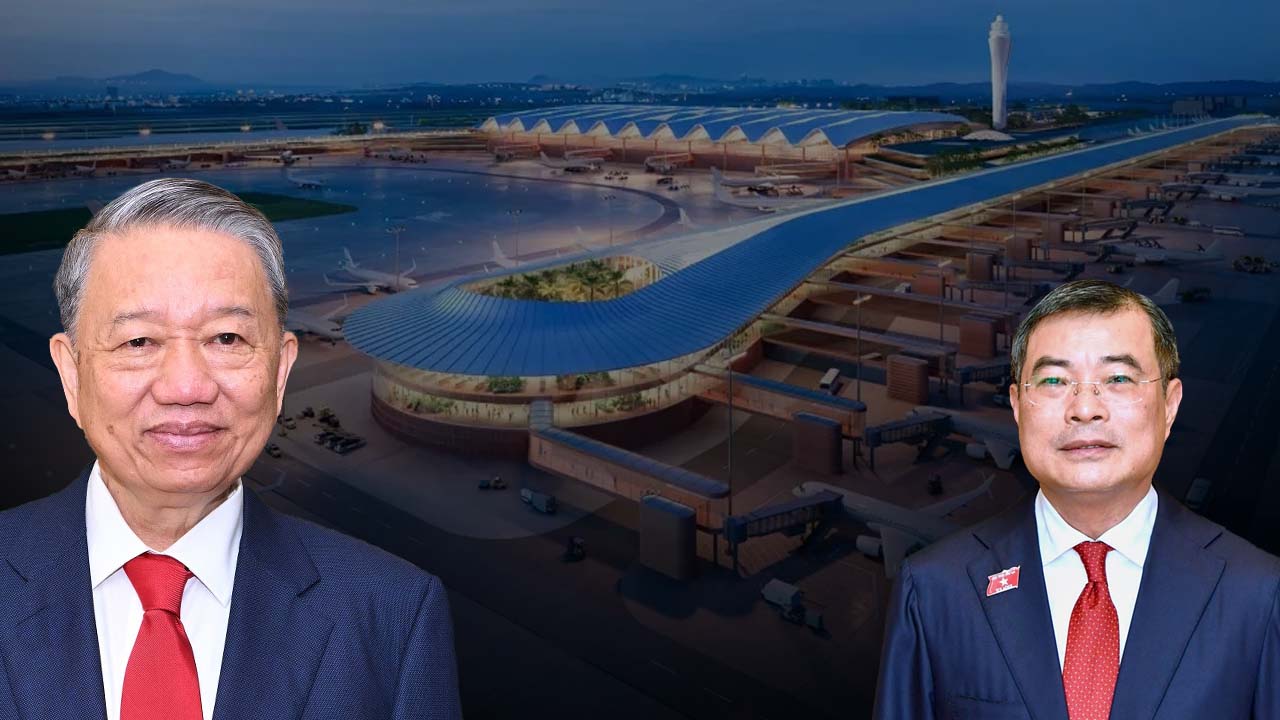
According to observers, what has the public concerned is the sequence of implementation for such a large-scale project. Typically, any major infrastructure project must undergo a thorough review of its investment plan, operational efficiency, and profitability before construction begins.
This is precisely the principle that General Secretary To Lam has consistently emphasized when discussing the progress and effectiveness of the Long Thanh Airport project.
However, in the case of Gia Binh Airport—a project originally conceived as a military airport to serve the public security sector—it now faces a shift toward commercial operations by private investors, even as most of its infrastructure has already been established.
According to aviation planning experts, this change in function poses significant challenges regarding economic efficiency. Located just 40 kilometers from Noi Bai International Airport, these two airports are essentially competing for the same passenger market in the northern region.
According to global aviation planning principles, independent commercial airports typically require a minimum distance of 100 kilometers or more to establish distinct passenger catchment areas.
Therefore, if Noi Bai and Gia Binh airports continue to operate in parallel at such close proximity, total passenger volume will be fragmented, while the government budget and state-owned enterprises will have to shoulder the burden of a second set of management, flight operations, technical, and commercial services.
The inevitable consequence is that operating costs would nearly double while revenue becomes fragmented. Meanwhile, in Vietnam to date, Noi Bai and Tan Son Nhat have served as the two main financial pillars to offset losses for the other 11 regional airports in the Vietnamese aviation network.
If Noi Bai’s financial resources are weakened due to sharing market share with Gia Binh, the burden of subsidizing the entire system risks falling back on the state budget.
According to information from Ministry of Construction officials, Noi Bai Airport is projected to reach a capacity of 50 million passengers per year by 2030 and reach the 100-million mark by 2050.
On a broader scale, observers believe that Vietnam’s aviation challenges over the next two decades cannot be separated from the development of various modes of ground transportation.
As the highway network expands in a coordinated manner and the high-speed rail system becomes operational, travel distances ranging from 100 to several hundred kilometers will see a significant shift of passengers toward road and rail transportation due to their convenience, reasonable costs, and reduced dependence on weather conditions.
The fact that Phu Bai Airport in Hue has struggled to attract passengers—as travelers prefer to fly to Da Nang and then travel by road—is a clear example of this direct competition.
Meanwhile, the global trend is to concentrate resources on modernizing a single hub airport to create an “airport city” model that optimizes profits and facilitates international connections.
Mr. To Lam’s plan to develop two large airports in close proximity in the North runs counter to the principle of centralization.
Public opinion suggests that the priority given to the Gia Binh Airport project strongly reflects the influence of a police-led management mindset, given that the current leadership includes many police officials in key positions.
Tra My – Thoibao.de