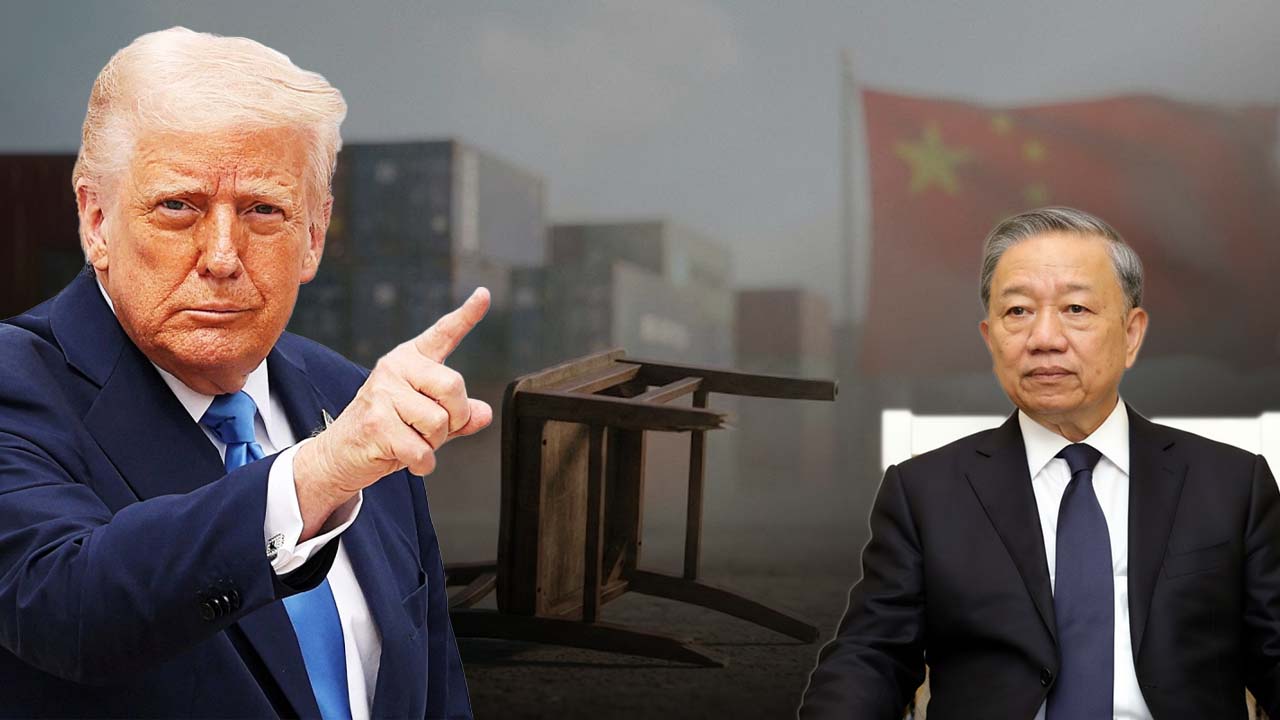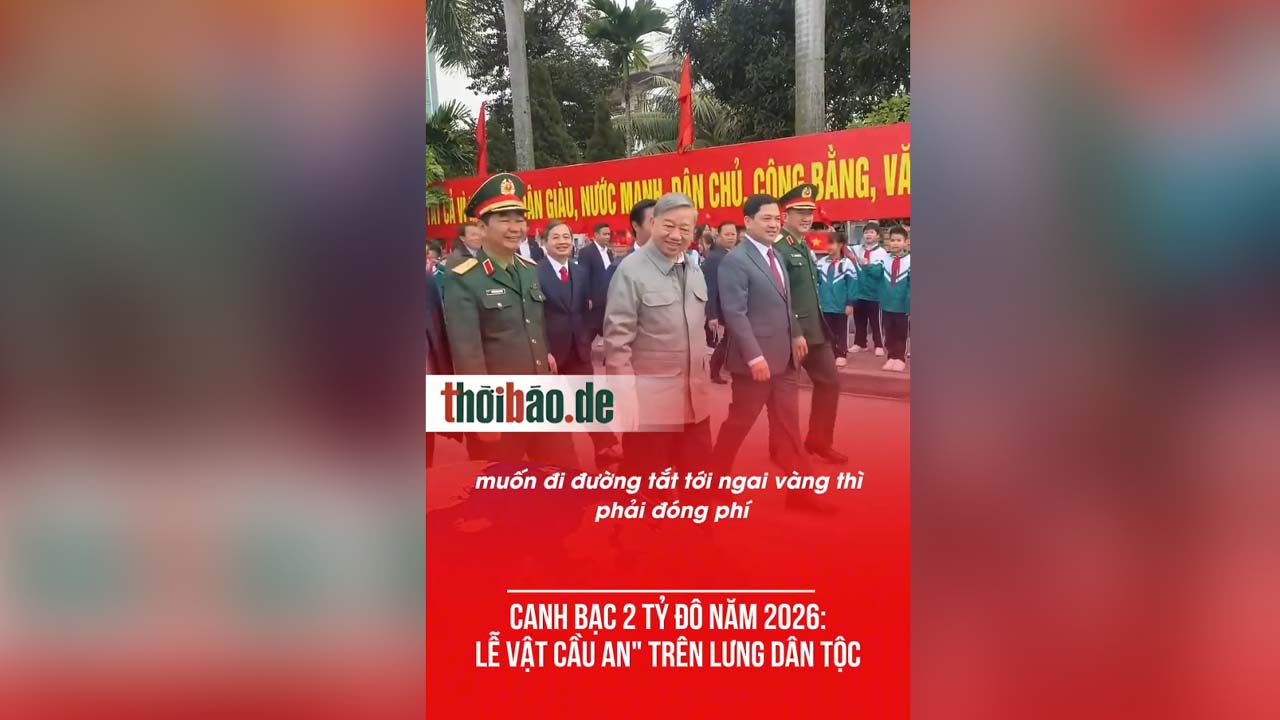
General Secretary Tô Lâm’s upcoming visit to the United States in February 2026 to meet President Donald Trump is taking place in a deeply paradoxical context—one in which Washington’s highest diplomatic courtesies are being overshadowed by suspicion from within Hanoi itself.
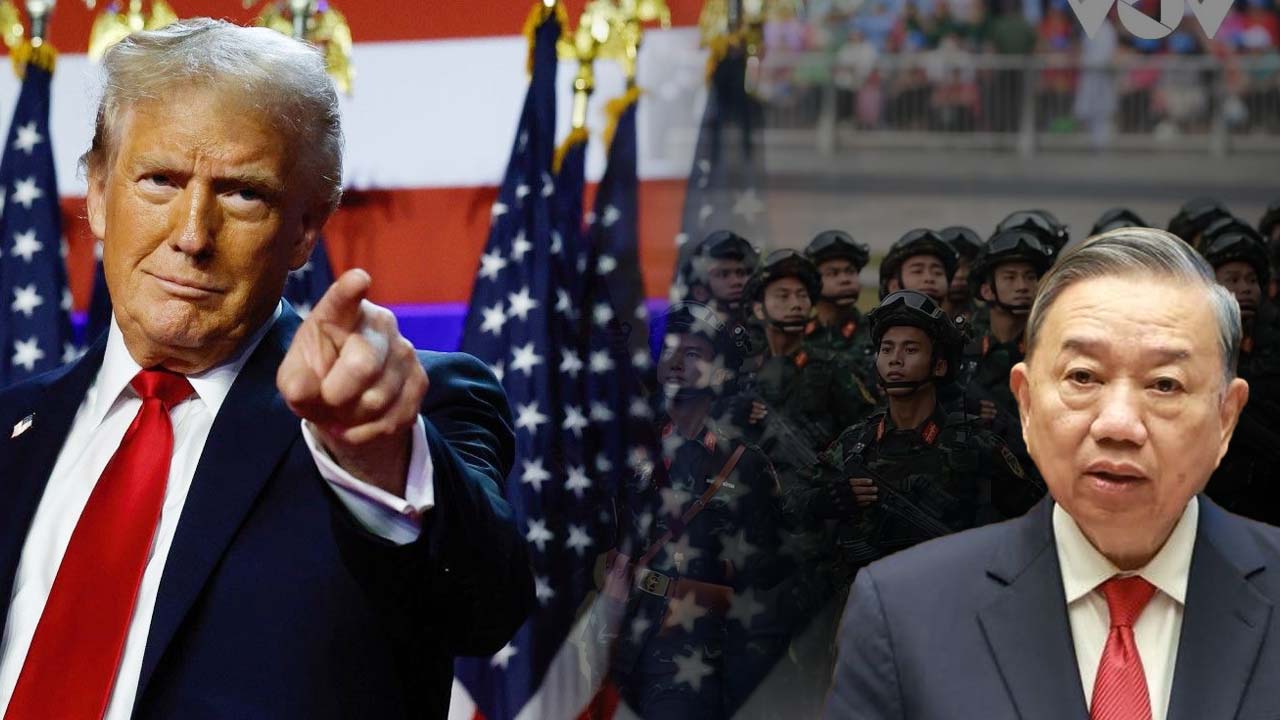
While Vietnam’s state media is working hard to portray Tô Lâm as a confident leader, ready to negotiate with President Trump to defend national economic interests—especially on the issue of tariffs—international observers are focusing their attention on a leaked confidential document from Vietnam’s Ministry of National Defense, reportedly emerging in January 2026.

Notably, according to international sources, this document was completed around the same time Tô Lâm officially assumed supreme power in August 2024, and it has exposed a serious dilemma for the trip.

How will General Secretary Tô Lâm and his entourage deal with Donald Trump when, just over a year after the “comprehensive strategic partnership” with the United States was established, Vietnam’s own security and defense apparatus is said to regard America as a potential invading enemy?

The leaked document—titled “America’s Second Invasion Plan of Vietnam”—has poured cold water on the reform and diplomatic efforts for a “new era” that Tô Lâm is trying to build.

According to the leaked content, Vietnam’s defense leadership still maintains an “extreme” view of the United States, seeing it as an aggressive great power allegedly plotting to use non-traditional tactics to overthrow the regime in Hanoi.

Specifically, a “color revolution” or “peaceful evolution” carried out through civil society organizations appears to have become a core ideological framework within the military faction’s strategic planning institutions.

This creates a deep rift between, on one side, General Secretary Tô Lâm’s pragmatic, reform-oriented, West-leaning tendency, and on the other, the military faction’s intense defensive instinct against the United States.

Political analysts say the dilemma becomes even more serious as Tô Lâm faces uncertainty from the Trump 2.0 administration.

While Hanoi is struggling to find ways to respond to a 40% tariff rate on exports—after the Trump administration accused Vietnam of serving as a transshipment point for Chinese goods relabeled as Vietnamese—anti-U.S. documents from the “Beijing-leaning” military faction become extremely disadvantageous evidence at the negotiating table.

For Trump, a president who values blunt fairness and pragmatism, a Vietnam that on the one hand demands trade preferences while on the other quietly prepares scenarios for military confrontation sends a signal of strategic unreliability.

This is why Tô Lâm is seen as being trapped in a “no-win” situation: if he moves too close to the United States to rescue the economy, conservative forces within the Party and the military faction may accuse him of deliberately “deviating from the socialist trajectory.”

But conversely, if Tô Lâm is forced to accommodate the military faction’s anti-U.S. mindset, Vietnam will almost certainly pay the price in the form of a severe economic crisis caused by U.S. tariff sanctions.

The attack on Fulbright University—a symbol of Vietnam–U.S. relations—during the early period after Tô Lâm became General Secretary was, in essence, warning shots from conservative forces.

They want to demonstrate that all of Tô Lâm’s efforts to open up the country carry risks tied to the regime’s survival. This contradiction has turned his U.S. trip into a life-or-death gamble for consolidating internal power.

Tô Lâm’s “total victory” after the 14th Party Congress will only truly matter if he can resolve this core contradiction.

Tra My – Thoibao.de
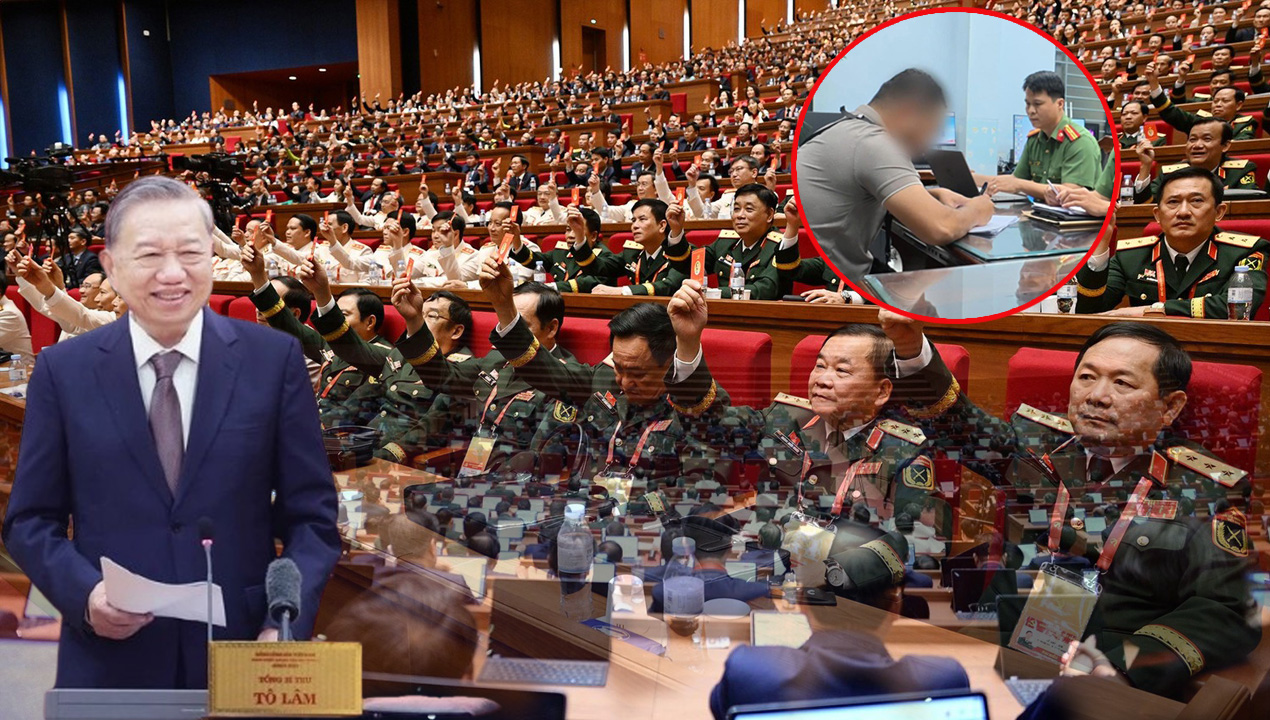
비서국의 새 규정이 당원증을 담보로 잡거나 전당·질권 설정(저당·전당)을 하는 행위를 금지한 것은 겉으로는 “기율 강화”처럼 보인다. 그러나 실상은 하나의 자백에 가깝다. 체제 내부에, 오직 “정치적 자산”만을 대상으로 하는 암시장식 사금융이 이미 자라났다는 사실을 스스로 인정한 셈이기 때문이다. 당원증이 그저 신분을 증명하는 플라스틱 카드에 불과하다면, 누가 그것을 일부러 맡기려 하겠는가? 또 누가 선뜻 받아주겠는가?

여기서 당원증은 통행증이 아니라 권력의 주식이다. 카드를 맡긴다는 것은 물건을 맡기는 게 아니라, 그 뒤에 붙어 있는 조직의 신뢰와 인맥 네트워크를 담보로 내거는 행위다. 채권자가 이를 받는 이유는 “칼자루”를 쥘 수 있기 때문이다. 이름을 공개적으로 망신주겠다고 협박하거나, 상부에 보고하겠다고 압박하거나, 스캔들을 조작해 세우겠다고 위협하는 것만으로도 관로(출세의 길)를 틀어막을 수 있다. 담보는 금고 안에 있는 것이 아니라, 정치적 생명 그 자체에 놓여 있다.

그렇다면 거품이 터질 때 누가 대가를 치르는가? 법정에서 판결이 내려질 일도 없다. 남는 것은 두 가지 시나리오뿐이다. 하나는 체면 손상을 피하기 위해 조직이 조용히 “받쳐” 주며 집단적 망신을 막는 경우다. 다른 하나는 당원증이 협박의 도구로 변해, 명예를 되찾기 위한 ‘몸값’을 마련하려고 불법 승인이나 비리를 강요당하는 경우다. 이런 점에서 이번 금지령은 정치적 ‘차환(갈아타기)’에 가깝다. 보이지 않는 채권자들의 손에서 인사·통제 권한을 다시 회수하려는 시도인 셈이다. 소셜미디어에 올리지 말라는 조치 역시 “이미지 관리”라기보다, 상품을 과시하고 인맥을 매물로 내놓는 행위를 차단하려는 뜻에 더 가깝다. 신뢰가 담보로 넘어간 순간 잃는 것은 돈만이 아니다. 체제가 살아가는 기반, 곧 ‘충성’까지 함께 잃게 된다.

このほど、キューバ駐在ロシア大使館は、すべてのロシア国民に対し、カリブ海の島国キューバから「一刻も早く」退避するよう求める通知を出した。

さらに注目すべきは、キューバとトランプ政権の間で外交的緊張がますます深刻化している状況下で、ロシアがこのような行動を取ったことである。これを見れば、人は思わずこう自問せざるを得ない――社会主義の「兄弟関係」とは、こんなものなのか?

思い返せば、わずか一か月前、米国の軍事作戦でマドゥロが拘束された際、人々を驚かせたのはロシアがほとんど「知らん顔」だったことだ。形だけの発言をして、その後は沈黙。中国もまた同じだった。社会主義の「兄弟関係」とはそういうものだ。利害が一致し、取り分を分け合えるうちは「兄さん弟よ」と言い合うが、いざ困難に直面すれば「お前はお前、俺は俺」、それぞれ別の道を行く。

一方で、ベトナム外交は「竹外交」戦略の中で、中国やロシアとの「プロレタリア的兄弟愛」と称される空虚な関係にいまだ強い信頼を置いている。しかし、得られるのは「幻想の利益」ばかりで、民族の運命は竹の先のように揺れ動く。

越南公安部近日颁布规定,允许基层安全保卫力量只需完成小学学历,目标是动员全国范围内组织街区、村、组等基层社区体系的逾276,000人参与。官方称该规定旨在“加强地方维护秩序的力量”。

据越南公安部数据,目前全国约有86,000个居民小组(街区组织),并计划进一步扩展,使其成为监控社区的“耳目”。然而,观察人士强调:当受教育程度有限时,其法律素养与处理复杂情境的能力也会受到限制,从而潜藏滥用权力或对民众施加行政压力的风险。

一个有效的基层安全体系必须与培训、透明监督以及明确问责相配套。动员大规模力量但缺乏规范,不仅难以保障秩序,还可能对住户权益造成风险,尤其是在地方出现纠纷或冲突等情境时。

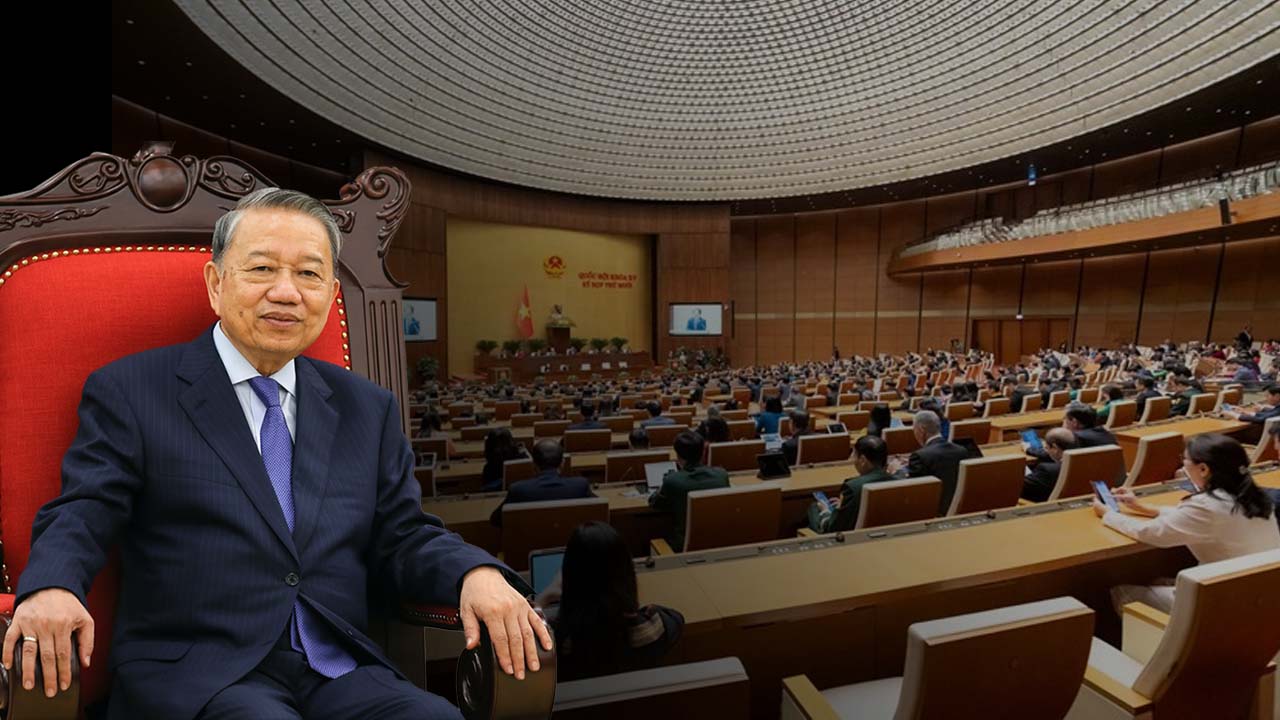
On February 15, 2026, the National Election Council officially announced a list of 864 candidates for the 500 seats of the 16th National Assembly. Notably, the full slate includes all 19 members of the 14th Politburo.

Accordingly, the election will take place on March 15, in preparation for the first session in April, during which key positions in the state leadership apparatus will be approved.

According to observers, placing the entire Politburo on the list of National Assembly candidates is not merely to satisfy the requirement that “state leaders must be members of the National Assembly,” but also serves as evidence of tightened, absolute control in the new era.

For a long time, Vietnam’s National Assembly has been accused of functioning only as an “extended arm” that simply “rubber-stamps” the resolutions and directives of the Communist Party of Vietnam.

Therefore, the overwhelming presence of all members of the 14th Politburo on the candidate list further reinforces the assessment that the National Assembly is no longer a body representing voters’ voices and providing policy scrutiny, but rather an instrument fully subordinate to the Communist Party.

Experts say this policy is increasingly eliminating democratic space and undermining the objectivity of the legislative body, turning mechanisms of power oversight into a “farce.”

When those who hold life-and-death power within the Party are also the very people who directly pass laws and approve themselves into important positions within the government apparatus, it further shows that in Mr. Tô Lâm’s “new era,” the legislature remains essentially unchanged—featuring a closed power structure and an even more imposing, top-down character.

A major question being raised in public opinion is this: In a system where personnel outcomes have been decided in advance of election day, does the voter’s ballot truly carry representative value for the people, or is it merely a procedure to maintain the monopoly of a one-party authoritarian state?

Hong Linh – Thoibao.de

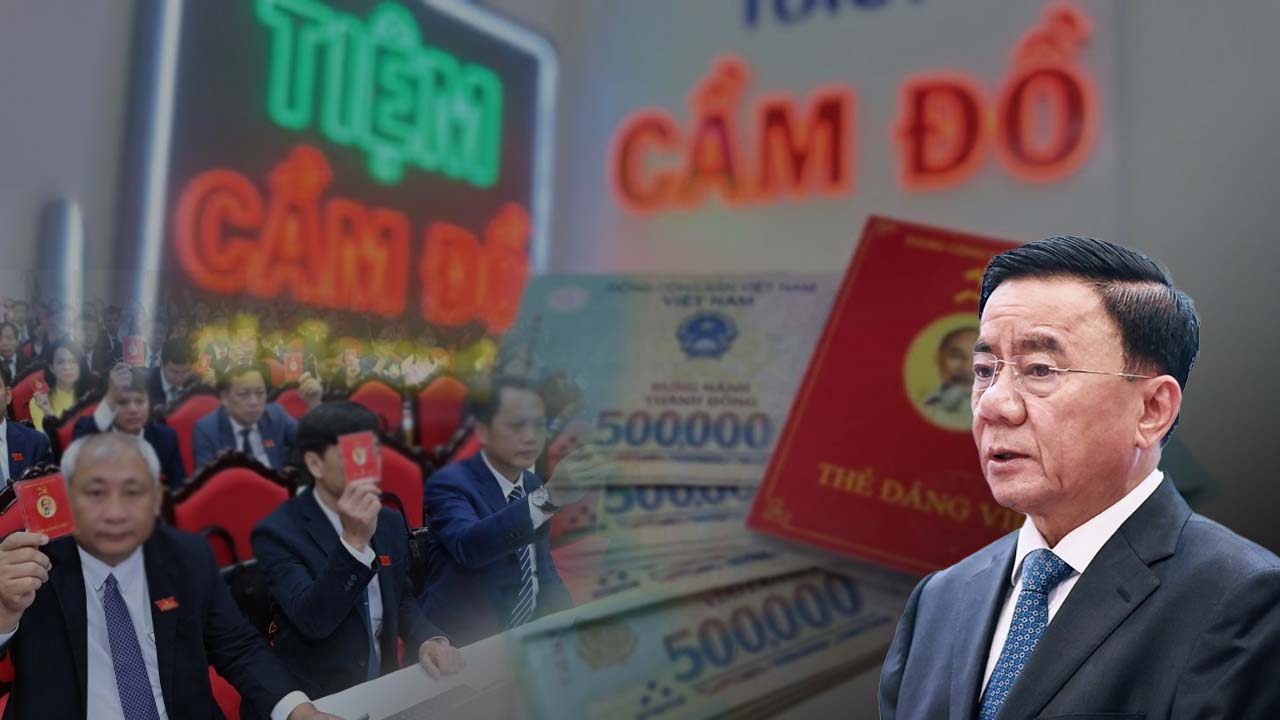
Am 9. Februar 2026 unterzeichnete Herr Trần Cẩm Tú, Ständiger Sekretär des Zentralkomitees, die Verordnung Nr. 06, die Parteimitgliedern offiziell untersagt, ihre Parteikarte als Pfand zu hinterlegen oder zu verpfänden, um Geld zu leihen.

Dies hat in den sozialen Netzwerken heftige Debatten über den Zustand von Moral und Finanzen innerhalb der Kommunistischen Partei Vietnams (KPV) ausgelöst.

Ein Verwaltungsdokument, das die Partei schützen soll, legt unbeabsichtigt eine schonungslose Realität offen: Karten, die einst dazu dienten, über Resolutionen abzustimmen, die das Schicksal der Nation betreffen, werden nun zu Sicherheiten in Pfandleihhäusern.

Wie staatliche Medien berichten, handelt es sich nicht um ein neues Phänomen, doch die Schwere nimmt innerhalb der bewaffneten Kräfte zu – jener Institutionen, die als „Schwert und Schild“ des Regimes gelten.

So wurde etwa 2016 ein Polizeioberleutnant bekannt, der seine Parteikarte verpfändete, um 200 Millionen Đồng zu leihen; 2019 „hinterlegte“ ein Leutnant in Trà Vinh seine Parteikarte, um 50 Millionen Đồng zu erhalten; und zuletzt wurde 2021 ein Verkehrspolizist disziplinarisch bestraft, weil er in ähnlicher Weise gehandelt hatte.

In der Öffentlichkeit stellt sich die Frage: Warum besitzt eine Parteikarte, die eine so wichtige politische Bedeutung hat, überhaupt einen derart hohen Wert, dass sie gegen große Bargeldsummen „eingetauscht“ werden kann?

Beobachter meinen, dass die Parteikarte in einem System mit Führungsmonopol nicht nur ein Mitgliedsausweis ist, sondern zugleich eine Art „Passierschein“, der Privilegien, Ämter und Möglichkeiten zum Geldverdienen eröffnet.

Gläubiger sind bereit, Parteikarten als Pfand anzunehmen, weil sie wissen: Um Dienststatus und berufliche Position zu schützen, wird der Schuldner um jeden Preis versuchen, das zurückzukaufen, was als seine „politische Lebenslinie“ gilt.

Dies ist ein besorgniserregendes Zeichen für das Erschöpfen von Idealen – und zugleich der deutlichste Ausdruck dafür, dass politische Macht marktförmig gemacht und zur Ware wird.

Eine Ära des Aufbruchs einer Nation kann nicht auf Parteikarten beruhen, die „versetzt“ werden, um persönliche Schulden jener zu begleichen, die den Staatsapparat steuern.

Hong Linh – Thoibao.de

Right after the 14th National Party Congress has just concluded, General Secretary To Lam’s plan to pay an official visit to the United States in February 2026 has become the focus of international observers.

Behind the images portrayed by domestic media—describing To Lam as receiving “expectations” from President Donald Trump—lies a pressure-filled picture of personal power calculations by the top leader and the economic lifeline of Vietnam.

According to assessments by international news agencies, this trip is not merely a diplomatic formality. In reality, it is an economic “rescue mission” of vital significance for To Lam as he seeks to consolidate absolute power within the Party.

While domestic media praise Vietnam’s becoming a founding member of the “Peace Council” as proof of national standing, observers see it instead as the most prudent, low-risk diplomatic tactic to please the Trump 2.0 administration.

With a seat on the Peace Council, this becomes a “pass” for To Lam to gain an opportunity to sit down directly with Donald Trump to negotiate the issue of the trade surplus.

The figure of $133.9 billion in trade surplus has become a “fatal weakness” for Vietnam’s economy and has put Hanoi in Washington’s crosshairs.

Accordingly, a 40% tariff is hanging over goods accused of being “transshipped” from China to Vietnam and then falsely relabeled. If this issue is not resolved, Vietnam’s export economy could be paralyzed.

Observers have raised the question: why did To Lam choose this moment to step in personally instead of delegating to lower-level officials?

According to informed sources, the answer lies in a previous failure: former Minister of Industry and Trade Nguyen Hong Dien lost his position after failing to secure tariff compromises with the United States as required.

A tariff victory in the U.S. would be a major move—and evidence—demonstrating To Lam’s superior governing capacity. From there, it would bolster the legitimacy of his move to seize both of the Party’s two highest seats of power.

If he succeeds in resolving tariff pressure, To Lam would gain enormous political leverage to push for a “unification” scenario—merging the positions of General Secretary and State President—in a formally legitimate way.

Observers note that in September 2024, when he first visited the United States as both General Secretary and State President, public opinion witnessed a rare confidence in him.

This return to the U.S., as the holder of absolute power within the Party after the 14th Congress, would strengthen his position in bargaining with President Trump. It would thereby confirm his status and role as the only leader capable of handling issues of life-and-death importance for the country.

However, this gambit is far from easy, given that the counterpart is President Donald Trump—well known for a “pragmatic,” unpredictable negotiating style.

Washington is also watching Vietnam closely and suspects it may be a “link” that could be punished if it continues to help China manipulate labels of goods’ “origin” to circumvent trade rules.

Therefore, in this chess match, To Lam is not only negotiating for Vietnam’s economy, but also negotiating for his own political future within Vietnam’s new power structure.

In a context where the military faction and conservative groups are always waiting and criticizing the Party leader’s “pro-U.S.” inclination, a negotiation outcome favorable to the economy would be the safest shield for To Lam to protect his seat.

Tra My – Thoibao.de 

2026년에 접어들며, 예산은 약속처럼 얇아지고 경제는 ‘개혁’처럼 굼뜬 가운데, 여론은 다시 한 번 20억 달러짜리 ‘블랙홀’ 시나리오를 마주하게 됐다. 이를 단순한 ‘불가피한 객관적 위험’으로 부르는 건 독자들의 판단력을 모욕하는 일이다. 이것은 특정 권력자(이하 ‘해당 인물’)가 권력 게임에서 벌인 도박의 후불 청구서에 가깝다. 왕좌로 가는 지름길을 택하면 통행료를 내야 하는데, 그 비용이야말로 당연히 도박을 한 사람의 주머니가 아니라 국민의 몫이 된다.

첫 번째 10억 달러는 미국에서 ‘John Doe’ 소송에 패소하면서 발생한 비용이다. 국내에서 통하던 이른바 ‘힘의 논리’가 심판이 있는 경기장에 나오자, 결국 값싼 협박에 불과했음이 드러난 셈이다. 불투명한 강제 조치, 국제적 약속을 휴지처럼 여기던 태도, 그리고 마침내… 국민의 세금으로 비공개 합의를 하는 결말. 이 10억 달러는 단순한 배상금이 아니라, 무엇이든 마음대로 할 수 있다고 믿었던 체제의 오만과 법적 무능에 대한 수업료다.

두 번째 10억 달러는 더 씁쓸하다. 트럼프의 호소에 따라 **가자(Gaza) 재건에 ‘출자’**한다는 이야기—겉으로는 선행처럼 들리지만, 실제로는 **외교적 ‘통행권’**에 가깝다. 자국민은 허리띠를 졸라매고 있는데, 멀리 떨어진 ‘불의 가마’에 돈을 붓는 이유가 고작 악수 한 번, 사진 한 장, ‘치하’ 연출 한 번을 얻어내기 위해서라면. 그럴듯한 장면을 국내에 가져와 여론을 현혹하고, 내부를 압박하려는 계산이라는 의심을 피하기 어렵다.

결국 2026년, 베트남 국민은 개인의 야망을 위해 세금으로 대가를 치르게 될 위험에 놓인다. 세금이 명예와 위신을 사는 도구로 바뀌는 순간, 민족이 ‘도약’하는 것이 아니라 오로지 한 사람의 독점적 왕좌를 떠받치기 위해 빚을 짊어진 채 허리가 휘게 된다.

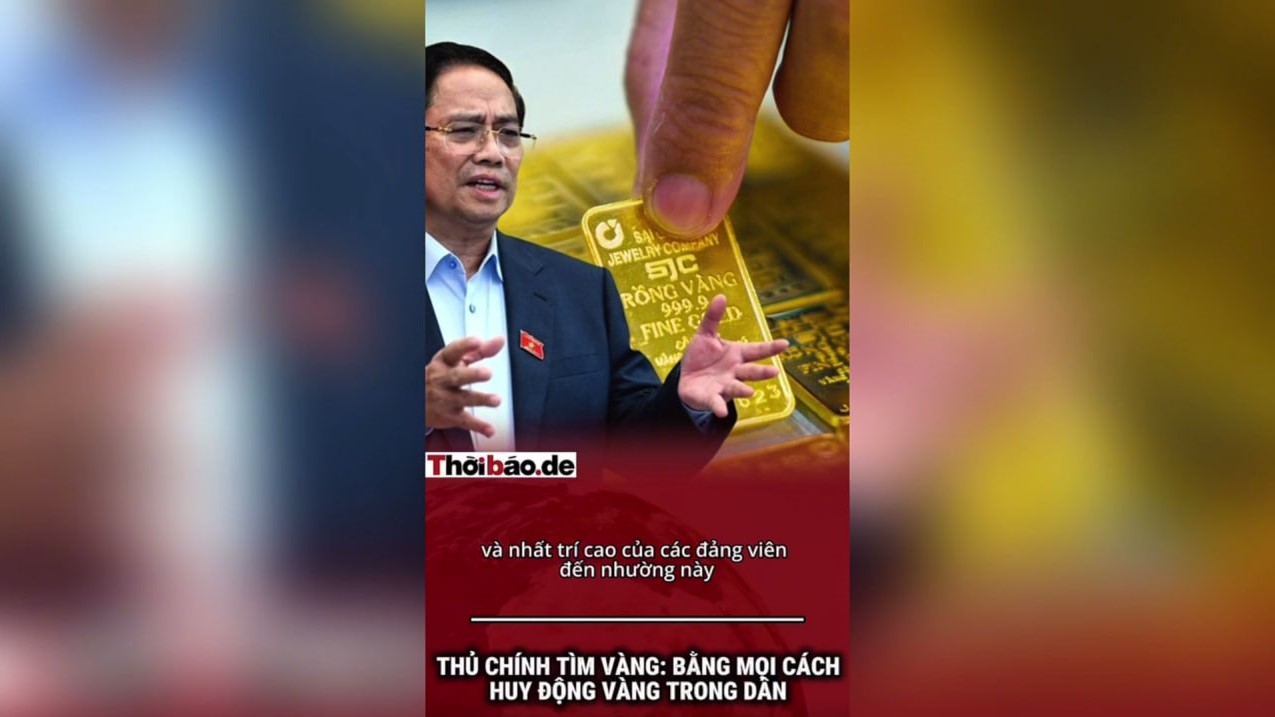
金(ゴールド)に沸くさなか、首相のチン(正)は、各省庁に対し国民の手元にある金をかき集めるため「迅速に手を打て」、遅れは許されないと求めた。国民の間にはまだ大量の金が残っている――これは国会議員たちが釘を打つように断言しており、中には百トン単位で数え上げられると言う者までいる。

ここ数日、金相場が頂点に達したその瞬間を見計らい、「世慣れた目」と「共産主義的弁証法」という思考によって、各省庁、そして党全体が一斉に動き出し、国民の金を「動員」するために断固たる措置を取るという。スローガンは「公のものは結局あの人の手に」。幹部たちは一軒一軒を訪ね、各世帯を検査し、金をどこに置いているのか、どれほどの量があるのかを確認することになる。

方針はすでに明確だ。国会議員は金を数え、首相のチン(正)が方針を出し、あとは「戦士」たちが路地という路地を回り、家々の扉を蹴破ってでも、党のために金を「動員」しに行く――という筋書きである。党員たちの結束と一致がこれほど高く見えるのは珍しい。橋一本、公共事業ひとつ作るのに、数十年の遅れなど日常茶飯事だというのに、この金探しの“事業”だけは、数か月で終わらせねばならないのだ。