Hình minh họa. Người dân đi lễ chùa ở Hà Nội hôm 17/5/2011
People were so eager to go to the temple ceremony at the beginning of the year, the road around Phu Tay Ho was packed

Vietnam’s religious law violates Article 18 of the Universal Declaration of Human Rights (UDHR), said a member of the US Commission on International Religious Freedom USCIRF at the Conference on “Freedom religion and rights of indigenous people in Vietnam”- online webinar took place on July 31 coordinated by Boat People SOS (BPSOS).

Lawyer Anurima Bhargava, USCIRF Vice President, said that the Law on Religion – Beliefs that Vietnam enacted 2018, with provisions requiring religious organizations to register, are unnecessary requirements and restricting religious rights.

Commissioner Bhargava shared that and she reaffirmed USCIRF’s position on asking the US Department of State to bring Vietnam back to the list of countries that need special attention on religious freedom (Country of Particular Concern – CPC).

“Before the COVID-19 pandemic, my job as a commissioner was to visit the countries we follow to assess the situation of religious freedom. Last September, I joined the USCIRF delegation to Vietnam. This trip was essential because it gives us the opportunity to meet representatives of the Catholic Church, the Unified Vietnamese Buddhists Church (UVBC), Hoa Hao Buddhism, Cao Dai and Protestants. I first heard about the difficulties religious organizations experienced under the new Law of Religions and Beliefs. There are organizations that refuse to register because of concerns about independence. Even religious organizations that have chosen to register have encountered bureaucratic obstacles, and they are forced to provide the privacy of their members.

Commissioner Bhargava said that many times, the delegation heard reports of local officials refusing to carry out the registration process for the congregations within the prescribed time limit. Vietnam has signed and ratified the International Covenant on Civil and Political Rights. By doing so, they promised the world that they would respect and obey Article 18 to protect freedom of belief.

USCIRF recognizes that the registration requirements of the Law on Religions and Beliefs are too heavy and violate Article 18 according to UN interpretation.

USCIRF has called on Vietnam to change this law and abolish registration requirements.

Commissioner Bhargava stated:

“At least we hope that Vietnam will remove bureaucracy and allow any organization to register if it wants to.”

The statement of commissioner Bhargava commenced a series of activities called Advocacy Day for Vietnam, a BPSOS annual program since 2012, bringing together hundreds of human rights activists in Washington DC, aiming to lobbying the US legislative branch. BPSOS Campaign Day for Vietnam this year is different from every year, organized online due to the Covid-19 pandemic.

In addition to Bhargava commissioner, there was online participation from within the country of Bishop Nguyen Thai Hop, the main bishop of the Diocese of Ha Tinh; former prisoner of conscience Thich Thien Minh, and Mr. Tran Ngoc Suong, a senior staff of Cao Dai Church.

The three speakers from Vietnam also shared the remarks of Commissioner Bhargava, with specific evidence they experienced.

Bishop Nguyen Thai Hop told nearly 150 online followers that the 2018 Law on Belief and Religion is “a bit positive,” but the law has many concerns:

“The law more clearly defines the duties and powers of a state management agency in charge of religion. At the same time, it recognizes the non-commercial legal status of religious organizations. The Government Religious  Department recently opened an online public service system to simplify and publicize religious-level government administrative procedures. However, there are many concerns in the law, especially between the text and reality, between urban and rural areas, between central and local levels.”

Bishop Hop gave a typical example of the issue of land purchase by religious organizations. According to him, while the law recognizes the legal status of a religious organization, but so far no religious organization has been able to freely buy and sell the land because it is still ruled by the constitution and land laws. Under modern land law, religious organizations are not allowed to buy, sell, convert, inherit, or receive gifts … The only way is to ask the state for land. This is a knot that suffocates the right to expand facilities and religious activities. ”

Hoa Thuong Thich Thien Minh said that Vietnam has been implementing a policy of religious persecution. In addition to not allowing religious organizations to buy land, there are other pressures:

With the policy of tightening religions and putting religions under the control of the Fatherland Front, the Vietnamese government has implemented a policy of detrimental to Buddhism in particular and religions in general, in the following forms:

Do not accept true or independent religions.

Force religions to participate in state-controlled organizations

Appropriating the pagoda and occupying the property land of an independent pagoda belong to UVBC.

Do not allow the construction or expansion of facilities of independent temples or pagodas of UVBC.

No household registration for monks and nuns or the UVBC.

Isolating independent temples by discouraging Buddhists from attending Buddhist festivals at non-state-owned temples.”

Tran Ngoc Suong, a senior staff of Cao Dai religion in Go Cong Town, said that the nature of the government has not changed.

In April 2020, the Cao Dai branch established by the Communist Party of Vietnam in 1997 instructed to take away the role of Political Advisor, elected by fellow believers, and expel Mr. Suong from the Cao Dai religion.

“I entered the Caodaism 1926 in 1974. The branch of 1997 was born 23 years later, but in April 2020, the branch of 1997 associated with the Religious Committee of Tien Gia province issued an order to deport me from religion. Their spear is ridiculous. On June 18, 2020, I sued the court of Hoa Thanh district, Tay Ninh province. To date, the court has not responded.”

Mr. Suong urged the US Congress to regularly send delegations to Vietnam, especially to places that are “restricted to religious freedom so that Vietnam can truly have the policy to respect religion.”

This was even more difficult during the Covid-19 pandemic. Commissioner Bhargava called the attendees of the conference with USCIRF to report violations of religious freedom so that the committee had a chance to respond.

According to her, the Vietnamese government has imprisoned more than 100 individuals who have demanded peaceful freedom of expression, including religious freedom. USCIRF recognizes that human rights advocates continue to be tortured in prison, and Commissioner Bhargava said, which is why USCIRF asked the US Department of State to put Vietnam back on the CPC list.

Mr. Sam Brownback, Ambassador at Large for International Religious Freedom.

In the second part of the Conference on the afternoon of July 31, Mr. Sam Brownback, Ambassador at Large for International Religious Freedom, shared:

“It seems that Vietnam pursues a proper asymptotic approach to avoid being a state of particular concern for religious freedom. We warn them when telling them that they cannot mistreat, especially the ethnic minorities in the Central Highlands in this way. The problem is that you cannot arrest indigenous people. You need to be good to the Hmong, Montagnards, Cao Dai followers, Buddhists, etc. The Vietnamese government really wants to push to the national boundary of special interest, not to be listed as CPC.”

Ambassador Brownback said the International Religious Freedom Report, released in October, is currently under review by US Secretary of State Mike Pompeo to determine which countries need to be included in the CPC list.

The Conference on Advocacy for Human Rights and Religious Freedom will continue with live discussions leading up to August 22, the International Day of Memorial for Violence for Religion or Belief.

Thoibao.de (Translated)

Source: https://www.rfa.org/vietnamese/in_depth/vietnam-law-on-belief-and-religion-violates-article-18-of-udhr-07312020183605.html

US President Donald Trump points to map of reported coronavirus cases as he speaks about reopening schools during a coronavirus news briefing at the White House in Washington
US President Donald Trump speaks about reopening schools during a coronavirus news briefing at the White House in Washington

The COVID-19 pandemic has turned upside down the political, economic and social situation of the world. Particularly how changes have occurred and continue to occur in the US and affect Vietnam will be the subject of this article. First of all, we would like to present the situation in the US.

It is quite surprising that after two months May and June, the number of infected patients has increased sharply since July, causing many states to re-set social distance, but still allow the economy to be opened.

Trump has been blamed for the delay in the pandemic prevention, but it must be fair to say that Trump’s Government has tried to encourage pharmaceutical companies to quickly find vaccines before the election.

In the meantime, it is unable to close all long-term social activities, but have to learn to “live with the floods.”

Social situation in the US

Signs that the US economy will recover slower than expected in the third quarter with two effects: (i) unemployment may remain in double digits; and (ii) export orders for Vietnam and other Asian countries will remain very slow.

Experiencing a pandemic the US government learned the lesson of life and bitterness. President Trump inherited the worst inheritance he has inherited from previous presidents, including Republicans and Democrats, that is: to let US companies profit, to flee the US to China because of cheap labor. At the top of the list are pharmaceutical and medical equipment companies, more than 95% of US drugs and medical devices manufactured in China. Next are electronics companies, from sophisticated “chips” to computers, and iPhone phones, all assembled in China.

This mistake will be boldly changed by the Trump administration: trying to reduce dependence on China and give up globalization.

The newly enacted policy requires US companies to return to the US if they do not want to be subject to very high taxes because their products are manufactured in China. The Senate also introduced detailed laws that required materials to be made in the US, in case the company avoided the law (importing materials from China, assembling them in the US, and bearing labels “Made In USA” brand). Both Republicans and Democrats agree on this.

Two examples to lessen China’s influence: (i) Taiwan’s largest manufacturer of electronic “chips” for computers, phones, and cars, “Taiwan Semiconductor Manufacturing Co.” invests $12 billion dollars to build a factory in Arizona; and (ii) the US Department of Health has signed a $354 million contract with the “Phlow” company in Virginia to produce pharmaceutical products in the US.

The wave of repatriation of American companies from China will be even faster than the past three and a half years, a positive sign for a new US economy will also be a blow to China’s economy and unemployment.

But most important is the wave of technological change. We believe that the pandemic will accelerate US technology to come online and digitize within the next 6-12 months instead of the expected 3-5 years.

The news about brick & mortar buildings closing in the US as well as branches around the world closed due to losses and no customers after during and after the epidemic (Zara, Microsoft, …) is just a sign opening a technology revolution, replacing traditional store trade with online commerce:

It is reducing the need for future shopping malls and offices due to home working facilities and video communication such as ZOOM.

The second is the role of online firms such as Amazon, Shopify, etc. which have been confirmed by stock prices rising sharply before the level of the epidemic.

Thirdly, companies like Apple and Shopify have dominated the music sector, and even emerging taxi companies from a few years like Uber and Grab will be replaced by autonomous car technology, and cars. transportation, will severely affect employment.

The US will strengthen the invention and application of artificial intelligence, and strongly apply robots in production and consumption.

We realize that the digital technology revolution will be overwhelming; the most special is the role of blockchains. This is a platform or information system that collects all the data, which can be applied in all industries of manufacturing, services, commerce, health, banking credit, real estate, and currency. The simple example of blockchain in healthcare, collecting data on patient information, medical history and treatment, and future therapies, is fully maintained and completely confidential.

In addition, digital currencies will appear strong.

America is strong in international politics

The US will continue to pursue a comprehensive “containing” China.

The administration of President Donald Trump wants to put China on the edge, from diplomacy, politics, economy, to military in the East Sea (South China Sea), through the latest series of events we would like to take a look at:

On July 22, the US Department of State officially ordered to close the Chinese Consulate in Houston, condemning diplomats to “disguise spies” and deport within 72 hours from the US.

And the US is considering the ban on more than 90 million Chinese communist members and their relatives not getting visas to the US. The signal is extremely strong, unmatched in the diplomatic history of the two countries.

At the same time, the US Secretary of State called for the establishment of a “Global Alliance” to deal with China as a new definition of diplomatic and geopolitical stance.

Economically, the trade war continued to intensify with the imposition of import tariffs, when the US unilaterally declared no second round of negotiation until after the November election.

Xét nghiệm ở Hà Nội hôm 31/7
On July 22, the US Department of State formally ordered the closure of the Chinese Consulate in Houston, condemning diplomats to “disguise spies” and deport within 72 hours from the United States.

The US added to the Chinese economy and technology grave when it decided to halt the development of China’s semiconductor industry.

Since May 2020, all US firms and firms in the world with US technology platforms (such as chips) have been banned from providing chips to Chinese firms of any size, large and small. This will make it impossible for China to domestically produce 40% of demand for chips by the end of 2020 and 70% by 2025 as the expansion dream of “Made in China 2025” has become ubiquitous, which is the reason why American warns of “wanting to block China.”

In the South China Sea, aircraft carriers and other powerful warships have been rehearsed with regional countries, said to ensure freedom of navigation in the South China Sea and the Taiwan Strait. This will have a profound effect on securing Vietnam’s territory.

In addition, we believe that another advantage for Vietnam is that some US firms will move to Vietnam.

However, Vietnam should be realistic, not to have a dream to host giant economic groups but should take care of many medium-sized firms to help develop necessary auxiliary industries or even semiconductor products instead of China.

In addition, it is necessary to strengthen diplomatic and trade relations with the US, to be ready for new supply chains, such as anti-pandemic essential products for the US, a relatively reputable Vietnamese territory, and in the context the pandemic continuing in the US for the entire year 2021.

Thoibao.de (Translated)

Source: https://www.bbc.com/vietnamese/forum-53621773

Vietnam’s Ministry of Health on the morning of July 31 recorded an additional 45 cases of nCoV in Danang who were patients, caretakers, and visitors at the hospitals. In the afternoon of July 31, there were 37 more cases of nCoV infection, of which 26 cases were immediately quarantined, 3 cases in Ho Chi Minh City, and 8 cases in Quang Nam.

Thus, the total number of cases nationwide has been 546, of which 373 have been recovered, two have died, and 171 are under treatment.

Covid-19 is spreading from the epicenter of Danang to many other provinces and cities, with the number of cases increasing every day; measures to spread the infection to the highest level and many believe that the American patient (the patient No. 449) is F0.

Hoan My Hospital was officially blockade late at night 29/7/2000

Hoan My Danang Hospital has applied strict control measures, with security forces on duty since the night of July 29. To prevent the spread, this hospital limits the number of people entering and leaving and will test all staff.

Epidemiological investigation reports show that there are seven hospitals in Danang to date frequented by people infected with Covid-19.

Controversy about F0

The patient No. 449 is a 57-year-old male, an American martial artist who is one of only two newly discovered cases in Ho Chi Minh City.

Epidemiological investigation shows that, since June 26, this patient had been in 6 hospitals in Danang and HCM City, including Hoan My Danang, Danang Hospital, moved to HCM City’s hospitals named Cho Ray, Trieu An, and International City. On July 29, the patient  was confirmed to be infected with Covid-19 and transferred to HCM City Hospital for Tropical Diseases.

At least one person associated with this patient has been found positive. That person is patient No. 450, who has been taking care of the patient No. 449 for the past time.

It is worth noting that, from the time of starting the hospital in late June, the patient No. 449 had “the same symptoms as Covid-19” so many people suspected that he is a F0 patient, the first source of infection in the community. In addition, this patient was exposed to a lot of people before being confirmed positive, so the speculation gets the chance to bloom.

Talking to BBC Vietnamese on July 30, Ms. T.M, a close student of the patient No. 449, said: “He had a history of lung disease for over 10 years, was admitted on June 26 at Hoan My Danang Hospital for pneumonia. On July 1, I visited him at Hoan My Hospital and flew back to Saigon. Gon on July 3 to compete in a sport event.

During that visit, I wore protective clothing and a full face mask because the teacher was pneumonia, completely sterilized. When he arrived at Danang Hospital, he was also in a very special department with very limited visits.“

“After that, I knew he went to Danang Hospital, he was transferred to many departments but not progressed so he was transferred to Cho Ray. On July 19, I returned to Danang but I did not have time to visit. When he was still in Danang Hospital, he had a Covid-19 test but the result was negative. Until he was admitted to City International Hospital, he had a positive test.”

Nguyen Duc Anh, a student of the patient’s class, added: “I myself am also susceptible to respiratory diseases, but up to now, there are no symptoms for 20 days, plus that he had a negative test result during the time I was in contact, it is impossible for him to be a source of infection.”

However, the information that the patient No. 449 tested with Covid had a negative result at Danang General Hospital was contrary to the officially published information.

Accordingly, Vnexpress reported that within a month of being admitted to Hoan My Hospital, the patient had not been tested for Covid-19. Until July 27, the patient was tested and one day later had a positive result.

Patient No. 449 was treated in 6 hospitals, both Danang and HCM City, including Hoan My Danang, Danang Hospital, moved to HCM City to Cho Ray, Trieu An, International City, before being moved to HCM City Hospital for Tropical Diseases.

The most asked question in recent days is why there have been 6 care hospitals that the patient No. 449 did not get tested earlier.

All Ho Chi Minh City people leaving Danang from 1-7 must have a COVID-19 test. People declare and test COVID-19 at the health station of ward 25, Binh Thanh district (HCMC)

Explaining this, Dr. Nguyen Tri Dung, director of the HCM City Disease Control Center (HCDC), told Vnexpress:

“On July 20, the new patient was present in HCM City. Before that, he was treated at hospitals in Danang. By the time he arrived in HCM City, Danang and the whole country had not detected the Covid-19 patient infected in the community after 99 days. At the same time, the epidemiological factors related to the patient, have not been determined unknown.”

According to Ms. T.M and some other sources, since the begining of this year, the patient No. 449 has not yet left Vietnam.

“Outraged by rumors”

At the press conference in the afternoon of July 29, Doctor Tang Chi Thuong, deputy director of the HCM City Department of Health, said that the patients No. 449 and No. 450 have been in 3 hospitals in HCM City named Cho Ray Hospital, Trieu An Hospital and City International Hospital, had close contact with 121 people.

All 121 people were isolated and have negative results.

The number of people exposed to these two patients in Danang may be more and more complicated, especially for members of martial arts classes trained by the patient No. 449.

Tien Son Sports Palace is urgently prepared to become a field hospital in Danang during the Covid-19 pandemic. The sport palace has a capacity of 6,500 seats, including 2 basements and 4 floating floors, an area of ​​over 10,000 square meters.

Ms. T.M shared:

“Although being closed aide to him, over the past few years, my contact with him has been small because I have to prepare for the tournament. I am very worried about his health because he has a lung problem. So far, I am still healthy. I talked with the police in Danang because the F1 here is so crowded that I don’t have direct contact so I can isolate myself at home. I notify situation and schedule on personal page for everyone to know and not be panicked.”

Ms. TM also said that due to the confusion about the source of the disease, many people made unwarranted rumors about the patient No. 449. She and many other people involved in this case suffered from high pressure from public opinion.

“Until yesterday evening, July 29, he had a third result positive for COVID. However, before that, there was a lot of false information on the fact that my teacher was a disease carrier because of his American citizenship. Although his previous schedule was confirmed that he did not leave Vietnam during the last time, his lover and caregiver (the patient No. 450), who was isolated at the HCM City Tropical Diseases Hospital, was rumored to be hiding. We are very upset because this affects not only the individual teachers but also the people involved,” Ms. TM shared.

Regarding the rumor that the patient No. 450 fled the hospital, the HCM City’s Centers for Disease Control also denied on July 30.

Street 10, Hiep Binh Chanh Ward, Thu Duc District, Ho Chi Minh City was blockaded on the evening of July 30 because of a Covid-19 infected patient

According to T.M, the patient No. 449 officially came to live in Vietnam in early 2017:

“I met him in 2016, he was one of the few people with a black belt in Jujitsu in Vietnam. He used to be a police officer and he was injured on duty so he retired early and brought this Jujitsu to teach in Vietnam. He taught me, I tutored him, since 2017, he only went back to the US once, last time he didn’t leave Vietnam, even when his mother died, he didn’t go back to the US. So it is not possible to say that he is a new virus carrier in Vietnam.”

Ms. T.M also added that she worked with the police on July 29. After that, the police called and confirmed all the information she provided, and the notice would clarify further to correct the false information about the patient No. 449.

Mr. Nguyen Duc Anh also shared with BBC News Vietnamese:

“I contacted him about four or five times July 6-10, visiting him one or two times a day. I wore a full face mask and full protective gear each time. Each visit lasted only about 15 – 30 minutes because the time for family members to visit is not much because the teacher lies in the isolation department.”

“When I found out that he was positive for Covid-19, I had made a full medical report and was instructed by the health department to quarantine at home. I was not worried about being infected because the last time I had contact with him until now almost 20 days without any sign of the virus.”

Talking about the information that the patient No. 449 is F0 of a new outbreak, Mr. Duc Anh shared:

“Many people confuse F0 and the source of illness, plus the headline writing that made people misunderstand and rushed to curse him. Regarding that information, I would like to provide from my side that he was initially tested. and had a negative result when he was in Danang Hospital, but during that time he was transferred to departments such as emergency room, ICU, thoracic surgery, and internal respiratory medicine. Other Covid-19 infected patients have recently been detected, so it is possible that my teacher has been infected from other infections in this hospital.”

Thoibao.de (Translated)

Tạp chí Nhân quyền Việt Nam.
State-controlled Human Rights Magazine’s editions

The standing office of the Government Steering Committee for Human Rights on July 30 celebrated the 10th anniversary of the first issue of Vietnam Human Rights Magazine.

According to the VOV news, Vietnam Human Rights Magazine is considered as the leading journal on human rights in Vietnam with many articles reflecting the achievements of ensuring human rights in Vietnam in all fields. Since then, it has contributed to creating consensus in public opinion, making international friends better understand the situation of human rights in Vietnam.

In addition, the articles published in Vietnam Human Rights Magazine are also researching and refuting the allegations of slander and misrepresentation by hostile forces or combined to provide information on the human rights situation in the world, the views of the international community on human rights issues to guide public opinion, etc.

Talking to RFA on July 30, activist Tran Bang from Saigon expressed his surprise about this incident:

“The first time I heard about Human Rights Magazine, this was very surprising. It must be like all things the communist regime is using to cheat the world, such as the civil society for example. There are also many civil society organizations led by the party, under the direction of the Communist Party of Vietnam. So opposing voices or government critics have no place in the state-controlled civil society organizations. All Vietnamese newspapers and magazines are under the supervision of the party’s Central Commission on Education and Propaganda, the Ministry of Information – Communications and the Ministry of Culture – Sports – Tourism, all under the ruling party. It is funny that there is Human Rights Magazine but people don’t have the right to freedom of expression and assembly.”

Sharing the same point, Dr. Nguyen Quang A, a civil society activist in Hanoi, also said that he had never read the Human Rights Magazine and probably most Vietnamese have never. He stated:

“I think their job is that they keep propaganda for the party. It is true that human rights in Vietnam are seriously violated now, but they always say that their human rights record is very good because they have eliminated poverty to millions of people … then they said Vietnamese people have all the rights. It is regular propaganda of a dictatorial regime for a long time.”

With his own experience of being imprisoned for his blog posts, independent journalist Nguyen Ngoc Gia, a former human rights prisoner, now in Saigon thinks that this is a new step of the Hanoi government to cover reverse reality:

“They celebrated 10 years in the current context when they mentioned the issue to show that Vietnam is improving human rights, but I think that can not fool anyone. Because this human rights magazine was born 10 years ago but I have never seen it with my eyes and hold it. That is to say, it is not attractive because it does not reflect the serious issues that occur on human rights in Vietnam. In fact, in the past 10 years, human rights issues have been falling down dramatically in all fields: freedom of religion, freedom of speech, freedom of movement … The anniversary of the journal is formal while human rights violations are still rampant in Vietnam.”

On March 11, US Secretary of State Mike Pompeo published a comprehensive annual report on human rights worldwide. In particular, the US continues to criticize Vietnam’s bad human rights record in 2019 in a range of areas.

On June 23, in its 2019 Report on political prisoners and at-risk activists in Vietnam, a human rights non-governmental organization called Project 88 said that the Hanoi government in 2019 increased its repression and imprisoned many people just because they expressed their peaceful opinions online on economic and social issues.

Specifically, 41 people in Vietnam were arrested in 2019 for their peaceful activities. The Project 88 report assessed that this number was lower than the number of 148 people arrested in 2018 when massive protests erupted in many parts of Vietnam to protest against the bills on Special Economic Zone and Cyber ​​Security.

Most recently, on July 13, 10 international civil society organizations issued a joint letter calling on the Vietnamese government to stop the persecution of dissidents, release prisoners of conscience and respect its international commitments on human rights that Hanoi has signed.

The open letter was signed by representatives of 10 organizations including Amnesty International, Defend the Defenders, PEN America’s Expression of Freedom Programs, International Publishers’ Association, Vietnam Human Rights Network, VOICE, Safeguards Defenders, People In Need, Project 88, and democracy activist William Nguyen.

Signed representatives of 10 organizations have expressed concerns about the escalating repression of the Vietnamese government to the independent media and dissidents before the 13th National Congress of the ruling Communist Party of Vietnam slated for January 2021.

As Vietnam’s human rights situation is worsening and the regime is criticized worldwide, Dr. Nguyen Quang A said that the purpose of the Human Rights Magazine is for the regime to cheat the international community.

According to journalist Nguyen Ngoc Gia, Vietnam’s Human Rights Magazine is similar to the People’s newspapers, the People’s Army, the Communist Magazine which are distributed to senior state officials but it is unclear whether they have read it.

In addition, journalist Nguyen Ngoc Ga also expressed doubts about whether the content of Human Rights Magazine published whether it reflected the reality of the situation in the country or as the press praised:

“I remember Mr. Nguyen Van Huong was the first person to write in the first issue of Human Rights Magazine in 2010 as Deputy Minister of Public Security. An article titled ‘Understanding Vietnamese Human Rights,’ Mr. Huong’s way of questioning is wrong because human rights have universal values, not human rights in Vietnam. At the same time, in this article, Mr. Nguyen Van Huong equates the issue of human rights with the right to eat. That is te right for animal, not human rights.”

Dr. Nguyen Quang A also said that the head of the Human Rights Magazine was police general Nguyen Van Huong, who trampled on human rights and wrote about human rights.

Within just over a month from May 21 to June 24, the Hanoi government arrested many independent journalists and civil activists posting information on social networks. Specifically, writer Pham Chi Thanh with penname Pham Thanh, journalist Nguyen Tuong Thuy who is vice chairman of the Independent Journalists Association of Vietnam, Mr. Le Huu Minh Tuan- member of Independent Journalists Association of Vietnam, land petitioner and former prisoner of conscience Can Thi Theu and her two sons Trinh Ba Phuong and Trinh Ba Tu, and land petitioner Nguyen Thi Tam.

Therefore, Nguyen Ngoc Gia said that human rights in Vietnam cannot be improved if the one-party totalitarian regime in Vietnam still exists.

“The pleadings and excuses of the Vietnamese communist authorities have no value in the international arena and even within Vietnam.”

Source: https://www.rfa.org/vietnamese/in_depth/who-reads-vietnam-human-rights-magazine-07302020152420.html

US Deputy Secretary of State Stephen Biegun recently stated that the US and Vietnam “have a frank look into the past, resolving remnants responsibly and turning disagreements into areas that the two sides can cooperate.”

Mr. Biegun added that the two countries’ cooperation in dealing with dioxin contamination, unexploded ordnance clearance, and assisting people with disabilities in Vietnam “has helped strengthen our partnership.”

US Deputy Secretary of State Stephen Biegun

“Another testament to the cooperative relationship between the two countries is that we have organized 23 [annual] dialogues on human rights,” the senior diplomat said on July 28 in an online event organized by the Vietnamese Embassy in the US to mark the 25th anniversary of the normalization of relations between the two countries.

Talking about one of the issues that the two countries are said to be still different, Mr. Biegun said that “these dialogues have facilitated a frank exchange” and expressed hope that the two sides will hold talks the 24th human rights dialogue later this year.”

Concerning military relations, the second-highest US diplomat said that the two former enemy states “had built up trust between the two militaries.”

Mr. Biegun cited the example of USS Theodore Roosevelt’s visit to Vietnam, the second US aircraft carrier to Vietnam, since the two countries established diplomatic relations.

“We are extremely proud to support the capacity building of the Vietnam Coast Guard and support the deployment of Vietnam’s first peacekeeping force to South Sudan,” he added.

“Today our shared vision of the region, reflected in our vision of the Indo-Pacific and the ASEAN Vision of Indo-Pacific, is strengthening each other. We are also working closely to address a range of challenges in the Mekong region and the Indo-Pacific region.”

According to the Vietnamese Embassy in Washington DC, speaking at the ceremony, Ambassador Ha Kim Ngoc said that “the two countries have healed the wounds of war, built trust and established comprehensive partnerships on the basis of mutual interests, respect for each other’s independence, sovereignty, territorial integrity and political institutions.”

On August 27, 2019, US Ambassador Daniel Kritenbrink visited Truong Son martyrs cemetery (Quang Tri). He was the first US Ambassador to burn incense in a military cemetery for Vietnamese martyrs.

Ngoc added that the Vietnam-US partnership “has developed strongly and deeply in all fields, including mutual assistance in coping with COVID-19 pandemic and economic recovery” as well as “expanding cooperation to address regional and global issues, including the East Sea (South China Sea), the Mekong and the Korean Peninsula, etc.”

On July 15, US Secretary of State Mike Pompeo made a statement on China’s “completely illegal” claims and China’s “intimidation campaign” in the South China Sea.

Pompeo added that the statement expressing the US’s views on the South China Sea two days earlier “was very important, not only defining the US view but also clarifying that we will support other countries in the region to enhance their ability to maintain territorial seas under their sovereignty.”

Recently US Ambassador Daniel Kritenbrink visited the Ho Chi Minh Martyrs Cemetery and the South Vietnam Military Cemetery on the same day.

In August 2019, Mr. D. Kritenbrink visited Truong Son martyrs cemetery (Quang Tri). He was the first US ambassador to burn incense at a Vietnamese martyr’s cemetery.

In reply to Tuoi Tre Online, Ambassador Daniel Kritenbrink said that the main message of this visit is that the two countries Vietnam and the US have healed the wounds of war, especially the joint cooperation in overcoming the consequences of the war. These results not only help improve the lives of the people of Quang Tri but also serve as a bridge for the people as well as the governments of the two countries.

“The visit to Truong Son cemetery is to pay respect to those who have died for patriotism,” said Ambassador Daniel Kritenbrink.

Mr. Hoang Nam, a vice chairman of Quang Tri People’s Committee, said that the US ambassador’s first visit to burn incense at Truong Son National Martyrs Cemetery is a very significant act, a symbol of the past closure and respect the truth. “This is a very meaningful action for the two sides to close the past, towards the future of cooperation,” Mr. Hoang Nam said.

Vietnam continues to cooperate to deepen its relationship with the US

USS Theodore Roosevelt aircraft carrier docked in Danang Bay during a visit to Vietnam on March 5-9, 2020

Vietnam’s Ministry of Foreign Affairs has just spoken about the possibility of upgrading the relationship with the US to a strategic partner, after 25 years of normalizing relations and 6 years of establishing a comprehensive partnership.

Affirming “ready to be a friend and reliable partner of all countries in the world,” Spokeswoman Le Thi Thu Hang said that “Vietnam-US relations witnessed positive and real developments on all fields and on the bilateral and multilateral level on the basis of the principles of respect for each other’s independence, sovereignty, territorial integrity, and political institutions.”

“The two sides maintain regular bilateral meetings and exchange of delegations at all levels, maintain dialogue mechanisms, enhance the promotion of relations in the fields of economy and trade, and overcome the consequences of war, security, and defense, science and technology, education and training, cooperation on regional and international issues,” Ms. Hang said at the regular press conference on July 2.

“In the coming time, the two sides will continue to cooperate in order to deepen the Vietnam-US relations, contributing to maintaining peace, stability, cooperation, and development of the region and the world.”

The report said that 2020 marks 25 years of Vietnam and the US normalizing diplomatic relations and 6 years of establishing a comprehensive partnership.

Regarding the COVID-19 pandemic, the spokeswoman said it was “complicated and widespread worldwide” but “impacted” the milestones in the Vietnam-US relationship.

US Ambassador to Vietnam Daniel Kritenbrink, quoted by the Thanh Nien newspaper, told the press that he “had no specific information about when the diplomatic relations between the two countries would have a new name” but emphasized that the relationship really does not depend on the name.”

The Facebook page of the US Embassy on July 6 said that Kritenbrink “met nearly 30 journalists to discuss the strong bilateral partnership between the two countries.”

The diplomat was quoted as saying: “When the two countries mark 25 years of friendship this year, it’s clear that our two great nations have so much to celebrate!”

The US provided Vietnam with more than $160 million in military security assistance.

The US provided Vietnam with more than $160 million in military security assistance, including two coastguard ships worth $58 million, and Washington sold more than $182 million in military equipment to Hanoi, according to a statement of Department of State.

The US State Department’s July 27 statement said in recent years, “US-Vietnam defense and security cooperation has increased rapidly,” especially in the period 2017-2020, after the US President Donald Trump and Vietnamese President Tran Dai Quang established a shared vision of a free and open Indo-Pacific region. Specifically, the Action Plan on Defense Cooperation lasted for 3 years for the period of 2018-2020.

The US State Department said that during 2016-2019, Vietnam received more than $150 million in security assistance from the Foreign Military Assistance Program (FMF). Of this amount, more than $58 million was spent to support the transfer of two large Hamilton-class patrol ships to the Vietnam Coast Guard: the USCGC Morgenthau, delivered in late 2017, and the USCGC John. Midgett, expected to be transferred by the end of 2020.

FMF also supports Vietnam with 24 Metal Shark high-speed patrol boats, of which the last 6 were delivered in May 2020.

Also in the FMF program, Vietnam also received $5 million in fiscal 2018 through the Indo-Pacific Strategy (IPS) program, to support the development of sea aircraft patrol training, and training on managing drone systems and coastal radar.

During 2016 – 2020, Vietnam has received $20 million from FMF program through the Southeast Asia Maritime Security Initiative of the US Department of State (SAMSI), and $10 million through the Maritime Security Initiative Indian – Pacific ocean of the US Department of Defense.

In addition, the US sold Vietnam more than $182 in defense and security equipment in the fiscal years 2015-2019, including $52.86 million of defense equipment sold through the Direct Trade Sale (DCS) and $130 million of military equipment through the Foreign Military Sales Program (FMS).

The State Department’s announcement stated that the three main weapons and equipment items that Vietnam purchased from the US through the DCS program were: power control, laser, imaging and navigation equipment (USML Category XII); military electronics (Category XI); gas turbine engine and related equipment (Category XIX).

Thoibao.de (Translated)

Đức đã đình chỉ Hiệp định Dẫn độ với Hồng Kông. Đại sứ quán Trung Quốc tại Berlin cáo buộc Đức phá  luật. Chủ tịch Ủy ban Nhân quyền của Quốc hội Đức cho rằng đường lối của Chính phủ  Đức chưa đủ cứng rắn và kêu gọi Đức và EU có biện pháp trừng phạt cá nhân đối với các quan chức của đảng cộng sản Trung Quốc.

Tối thứ Sáu hôm qua 31/7 Ngoại trưởng Maas đã thông báo đình chỉ hiệp định dẫn độ với Hồng Kông. Đức đã nhiều lần nêu rõ kỳ vọng “rằng Trung Quốc sẽ tuân thủ các cam kết theo công pháp quốc tế“, ông nói. Ngoại trưởng Đức nhấn mạnh rằng, nó bao gồm quyền bầu cử tự do và công bằng mà người dân Hồng Kông được hưởng.

Ngay sau đó cùng ngày 31/7, Đại sứ quán Trung Quốc tại Berlin lập tức ra một tuyên bố đăng trên trang web của mình. Tuyên bố mở đầu như sau:
“Đại sứ quán Trung Quốc tại Đức bày tỏ sự phẫn nộ và phản đối mạnh mẽ trước những tuyên bố sai lầm của Ngoại trưởng Đức Heiko Maas về các vấn đề Hồng Kông vào ngày 31 tháng 7“.

Phần lớn Tuyên bố dành cho việc giải thích lý do tại sao hoãn cuộc bầu cử vào Hội đồng Lập pháp Hồng Kông và loại bỏ 12 ứng cử viên đối lập dân chủ của cuộc bầu cử. Cuối Tuyên bố là những lời cáo buộc, lên án Đức, nhưng đặc biệt khác thường là không có lời đe dọa sẽ trả đũa nước Đức, mà chỉ ẩn ý nhẹ nhàng qua dòng chữ “bảo lưu quyền tiếp tục có phản ứng“:

“Các vấn đề Hồng Kông là các vấn đề nội bộ của Trung Quốc. Những tuyên bố sai lầm của phía Đức về Hồng Kông và đình chỉ hiệp định dẫn độ với Hồng Kông thể hiện một sự vi phạm nghiêm trọng công pháp quốc tế và các tiêu chuẩn cơ bản của quan hệ quốc tế, cũng như can thiệp thô bạo vào các vấn đề nội bộ của Trung Quốc. Chúng tôi cực lực phản đối và bảo lưu quyền tiếp tục có phản ứng”.

Như vậy, phản ứng của Đại sứ quán Trung Quốc tại Đức là “rất hiền“, không hung hăng, hiếu chiến theo đường lối “ngoại giao chiến lang” thường thấy gần đây.

Ngoài ra, Đặc khu trưởng Hồng Kông, bà Carrie Lam, cũng chỉ trích Đức: Đây là một sự can thiệp vào nội bộ nước khác. 

Tuyên bố của Đại sứ quán Trung Quốc tại Đức ngày 31-7-2020

Đức là nước đầu tiên trong Liên minh châu Âu (EU) đình chỉ hiệp định dẫn độ với Hồng Kông. Tuy nhiên, theo ý kiến ​​của Chủ tịch ủy ban nhân quyền của Quốc hội Đức, bà Gyde Jensen (thuộc đảng FDP), đó là một “bước đáng lẽ phải làm từ lâu“. Nhưng bây giờ Ngoại trưởng Heiko Maas (thuộc đảng SPD) không nên  dừng ở đó, nữ chính trị gia đảng FDP phát biểu. “Phải có các biện pháp tiếp theo để tăng thêm áp lực đối với Bắc Kinh.”

Hồi đầu tuần ngày 28/7, các nước EU cũng đồng ý với nhau về một gói các biện pháp đối với Hồng Kông. Tuy nhiên, các gói biện pháp này của EU không có tính chất bắt buộc mà tùy thuộc vào mỗi quốc gia thành viên EU sẽ quyết định làm gì với nó.

Riêng nước Đức đã bắt đầu tiến hành thực hiện gói biện pháp của EU. Đức đã ban hành lệnh cấm xuất khẩu đối với một số sản phẩm vũ trang (vũ khí, trang bị v.v.) có thể được sử dụng để giám sát theo dõi người dân hoặc có thể được sử dụng bởi quân đội hoặc cảnh sát để chống lại quần chúng trong các cuộc biểu tình.

Ngoài ra, những bước đầu tiên cũng đã được thực hiện để mở rộng việc cấp học bổng du học Đức cho các nhà nghiên cứu hoặc sinh viên Hồng Kông. Việc cấp visa cho người Hồng Kông cũng được nới lỏng, dễ dàng hơn.

Bà Jansen, Chủ tịch ủy ban nhân quyền của Quốc hội Đức, kêu gọi chính phủ Đức và EU nổ lực cho phong trào dân chủ Hồng Kông. “Áp lực đối với Trung Quốc phải được tăng lên đáng kể nếu muốn tình hình thay đổi gì đó“, bà nói.

Bà Jansen kêu gọi chính phủ Đức hãy sử dụng tư thế Chủ tịch Hội đồng EU của Đức trong nửa cuối năm 2020 để đề xuất trên bình diện EU xem xét các biện pháp trừng phạt cá nhân đối với các quan chức của đảng cộng sản Trung Quốc.

Mặt khác, Ngoại trưởng Maas phải hủy bỏ hoàn toàn hội nghị thượng đỉnh EU-Trung Quốc dự trù tổ chức ở Đức mà hiện đang bị hoãn lại vì dịch bệnh Covid-19. “Đừng tiếp tục cung cấp cho Bắc Kinh một diễn đàn ở đây“, bà Jansen nhấn mạnh.

Hiếu Bá Linh – Thoibao.de (Tổng hợp)

Nguồn: https://www.tagesschau.de/ausland/hongkong-bundesregierung-auslieferungsabkommen-103.html?fbclid=IwAR1XtBM8BSkAfHonWVoIUeos6t4fcndrMhMDrRrWDvkuShWcvAcajLnCO_M

http://de.china-embassy.org/det/dszl/

On the afternoon of July 30, the Ministry of Health announced 5 new cases of Covid-19 infection in Quang Nam. These patients used to take care of their sick relatives at Danang Hospital.

All 5 cases were tested on July 28 and on July 30, their results were positive for SARS-CoV-2.

Thus, up to 6 pm on July 30, Vietnam has a total of 464 cases of Covid-19 infection, of which 276 cases coming from foreign countries and taken to isolated areas immediately.

Danang street is empty because of social isolation order from the morning of July 28

Since July 25, the number of Covid-19 infected cases in the community has been recorded as 48 cases in 6 provinces including: Danang, Quang Ngai, Quang Nam, Dak Lak, HCM City and Hanoi. With these 5 new cases, Quang Nam recorded 8 cases of Covid-19 infection.

Vietnam is on high alert and preparing for a rapid increase in new cases of coronavirus after Hanoi and HCM City detected the first cases of infection in the community on July 29 after more than 3 months of free infection.

Prime Minister Nguyen Xuan Phuc on July 29 warned people not to “neglect and subjective in the context of the complicated situation” and demanded that the party secretaries and chairmen of localities “must take action while the political system has to get involved as well as people have to be vigilant about some popular measures.”

Vietnam, praised by the international community for its rapid and effective response to the COVID-19 pandemic originating in neighboring China, last weekend recorded its first case in the community after nearly 100 days when a man in Danang showed signs of disease and tested positive for the corona virus. On July 27, Acting Health Minister Nguyen Thanh Long said that the results of analyzing the gene source of the virus from new patients showed that this is a new virus strain emerging in Vietnam from the outside.

Hanoi and HCM City on July 29 recorded the first positive case of COVID-19 in a new outbreak, in which a 23-year-old male patient in Hanoi traveled with his relatives to Danang in mid-July.

Street No. 10, Quarter 6, Hiep Binh Chanh Ward, Thu Duc district, HCM City, with 40 households living, was blocked by functional forces from the evening of the evening July 30

 “The epidemic this time is different from before because it has spread to the community for many days, unable to find cases of F0 (the source of infection), so the situation is complicated, happening quickly in a short time, and many risks of infection in localities and big cities,” Prime Minister Phuc was quoted as saying by the Government’s web portal when he chaired a meeting of the Government Standing Committee on COVID-19 Prevention and Control in Hanoi on July 29.

The entire city of Da Nang began quarantined within 15 days from July 28 on the order of P Phuc. All flights to and from Danang have been stopped since 0 AM of July 28 while the government is evacuating 80,000 visitors after the coastal city of Central Vietnam became the new “hot spot” of the pandemic in Vietnam.

Vietnam stopped social isolation on April 23 and reopened in early May, accepting both anti-pandemic measures and economic development. A number of routes with Asian countries, including China, have been resumed recently and are expected to open to tourists in the near future. Life in Vietnam seems to return to normal in the past few months when people travel back.

However, the fact that tens of thousands of people have just returned to Danang is putting Vietnam back to a state of social isolation.

Tourists leave Danang airport before the night isolation on July 27

VnExpress said nearly 20,000 people from Danang returned to Hanoi and People’s Committee Chairman Nguyen Duc Chung on July 27 urged people to voluntarily comply with the anti-epidemic measures and at the same time “need to remain calm because the city was without new cases of infection for over 105 days before the first positive case on July 29.

According to VnExpress, more than 18,000 people from Danang, where the first case of the new outbreak occurs, returned to HCM City over the weekend.

Although the source of the new infections has not been determined, the Vietnamese government has carried out a series of arrests, including a Chinese man who is believed to be leading the ring smuggling Chinese citizens to and from Danang and Quang Nam in recent years.

PM Phuc, at a meeting of the Government Standing Committee on July 29, asked the Ministry of Defense and the Ministry of Public Security to well manage the border and launch investigation of violations in border management. Vietnam closed its border with China, where the COVID-19 pandemic originated, since February when there were no cases of infection in the community in Vietnam.

HCM City blocked three points related to COVID-19 cases

On July 29, authorities in HCM City blocked a hotel on Nguyen Chi Thanh Street, District 11 and an alley on Hoang Ngan Street, District 8.

These are the two places where COVID-19 patients in HCM City rent and live.

Road No. 10, in Hiep Binh Chanh residential area, Quarter 6, Hiep Binh Chanh ward (Thu Duc district), with 40 households, was blocked by the competent forces from the evening of July 30.

According to a source, the blockade was because the suspected of being infected with COVID-19 lives there. This person has now been taken to the hospital and is awaiting final results.

According to records, from 17 pm, health workers wearing protective clothing have come to every household to check.

“We are meeting to agree on the implementation plan, in the immediate future, we will block the Street 10 with about 40 households,” said the representative of Hiep Binh Chanh ward People’s Committee.

By more than 19 hours, all the blockade was strictly implemented on the Street 10, people who wanted to go in and out were controlled and prevented by functional forces.

Of the total 22 new infections in the community so far, at least two have been described as “in severe condition” and requiring mechanical ventilation.

A number of medical teams in Hanoi and HCM City are sent to Danang to support “background illness” cases and to alleviate the city’s medical burden.

Many people believe that the actual number of people infected with coronavirus may be much higher when people who have been exposed to new patients have not been detected and tested yet, and the source of the original infection has not yet been found. .

New cases of Covid-19 are causing concern about the second wave of outbreaks in Vietnam, where there have been no known cases in the community for 99 days before July 25. Social and economic activities are gradually returning to normal and Vietnam has begun to resume flights to neighboring countries, including China.

After the first case was detected, Vietnam quickly evacuated tens of thousands of tourists out of Danang, sealed off the city, stopping all transportation activities in the city as well as entering and leaving the city.

Provinces and cities many people returning from Danang such as Hanoi, HCM City, Quang Nam, Thua Thien Hue … also call for people to test and conduct their own isolation to avoid infecting the community.

The return of Covid-19 is also raising concerns about Vietnam’s economic recovery.

In the immediate future, Danang City with an average of about 25,000 visitors per day will have to stop all service activities for 2 weeks, causing the city’s economy with the current decline of 3.61% over the same period last year was more precarious.

Danang aims to attract 9 million visitors in 2020, including 3 million foreign visitors, but this goal is facing obstacles due to Covid-19 pandemic.

Tuoi Tre Newspaper reported that in the immediate future, about 10,000 people will be tested for health workers, patients in hospitals will be found to have cases of infection, people in risk areas and foreigners.

Secretary of HCM City Party Committee Nguyen Thien Nhan emphasized the special need to pay attention to the situation of “foreigners illegally entering Vietnam.”

Nhan was quoted as saying during the meeting on July 28 that “this is a high risk, thereby requiring every citizen and every family to actively detect and promptly notify the local authorities and health services ways to avoid spreading the disease to the community.”

“Determining the risk and the source of the disease will help to find the effective solutions,” Mr. Nhan added.

Meanwhile, the Hanoi city government has requested a review of “cases of going to Danang and returning to Hanoi from July 8.”

Chairman of the City People’s Committee Nguyen Duc Chung was quoted as identifying Hanoi as a high-risk area and therefore, it is necessary to immediately review cases at risk of infection from the “Danang outbreak.”

“The initial review of the districts shows that between 15,000 and 20,000 people return from Danang to the capital,” said Chairman Chung. “People voluntarily obey, because the government can not go to check.”

Thoibao.de (Translated)

Tổng bí thư, Chủ tịch nước Nguyễn Phú Trọng
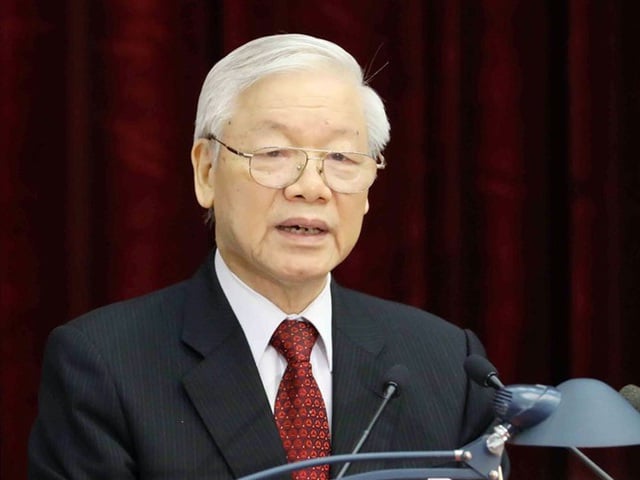
General Secretary cum President Nguyen Phu Trong

At least for the past eight years, the fight against corruption in Vietnam has hardly been much solved, according to economist Bui Kien Thanh from Vietnam.

The economic and financial expert, who was also an adviser of the Vietnamese government during the pre-renewal period, told the BBC that he believed the party and the state had not done much in an anti-corruption affairs.

He also said that if the regime’s corruption cannot be solved, the costs of corruption will be “crushed” so that the Dragon of Vietnam cannot take off “flying.”

Talking to BBC News Vietnamese from Hoi An on July 23, during a talk show on Thursday, Bui Kien Thanh said:

“What is a serious issue of Vietnam today is the issue of corruption and theft in state agencies.”

“If it cannot be solved, it will affect the survival of the regime and the survival of the Communist Party, which is the Resolution of the 4th plenum of the Central Committee of the 8th term that we have failed to solve … From 2012, what have we done to solve this problem?”

“At present, the Communist Party led by General Secretary Nguyen Phu Trong has proposed solutions for this and that furnace, but it will not solve the problem. It has not burned much corruption of the regime.”

How was the dragon crushed?

Associating this issue with public investment, economist Bui Kien Thanh continued:

“This is not a private issue of public investment, but public investment shows how the corrupt regime in the regime results in economic results.”

“So, apart from public investment, how much is Vietnam’s economy affected, according to the Vietnamese press, according to the World Bank, the unofficial costs of Vietnam in economic activities account for 5% -10% of the product cost.”

“So how can we compete with the world, while we have 5-10% of unofficial fees on the Vietnamese dragon, how can it fly?

“Therefore, it is a key issue for Vietnam to develop its economy, and must be resolute and fiercely resolving the problem of corruption from top to bottom, from central to village levels.”

“Right now from the commune to the central level, people are opposed to the issue of party officials and the government oppressing people in the fight against corruption, we cannot afford to have such a problem.”

“This is the state’s duty to deal with, these are the issues that lie in the core, it is not a problem we consider simple,” Bui Kien Thanh told the online meeting on Thursday on BBC News Vietnam’s Facebook channel.

Một số ủy viên Bộ Chính trị hiện thời: Trần Quốc Vượng, Nguyễn Xuân Phúc, Phạm Minh Chính
Prime Minister Nguyen Xuan Phuc

People to supervise?

Commenting on this issue at the above discussion, public policy analyst from the Ministry of Planning and Investment, Associate Professor, Dr. Pham Quy Tho said:

“In general, anti-corruption is right, but behind it there must be a radical reform and there is my opinion that it is necessary to bring people in not only to supervise but also to have a sound voice, then they can monitor power.”

“Not only does it monitor power in a way that it supervises itself, as the Communist Party says, we recently saw that the Government Inspectorate proposes to issue a decree or legal document on supervision close to the assets of officials.”

“However, for a very long time, from 2019 until now there has been no such document, the director of the agency explained that this delay is due to” having to consult with the Party “many times because Party agencies and then the Government are very different in terms of staff management.

“Some people belong to the ruling party, others belong to the government and so on, so many different overlapping agencies, asking for ideas many times without it and people end up with an intermediary plan, which is a document of coordination between agencies, a convention, or a commitment to agree among themselves that when there is corruption, what do these agencies do, how to fight against corruption property can do.”

“If assets are not monitored, then speaking of fighting against corruption is equal to redundancy, that is, it is impossible to fight against corruption and people see it very clearly.”

“Because why was he so poor before he becomes a leader, or just normal. After became a leader, he got everything including mansions.. and the disciplines have not really convinced people.”

“For example, in the case of Yen Bai, the director of the Department of Natural Resources & Environment had such a splendid villa and explained that he was selling brooms, and then doing this and that, I think that any would believe in his explanation.”

Then it is very important, I think that there must be institutional reform here, the first must be very clear that between the party and the government and the government agencies must agree on resolving this issue.

“Secondly, the people must be one of the necessary counterbalances, not only to monitor but also to have critical opinions and the state, the party must have mechanisms to absorb the opinions of the people. The most sincere and constructive way is that it is possible to reduce corruption, but I did not say that it can eliminate corruption in this country in the process of economic transition to the market,” said the former chairman of the Department of Public Policy, Institute of Policy and Development, Ministry of Planning and Investment told BBC.

Một đầm sen ở Hà Nội
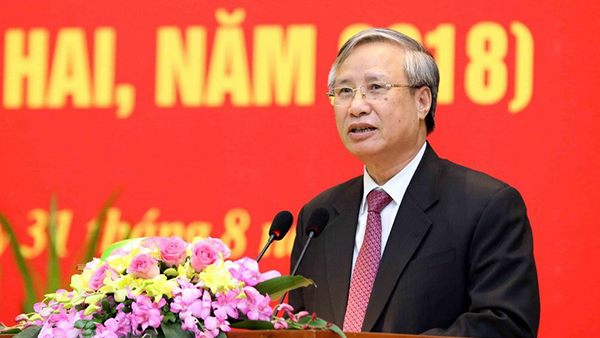
Standing Secretariat Tran Quoc Vuong

What is taxation of corruption?

Commenting further on this issue, in order to effectively and specifically address the anti-corruption that has long been thought to be “roundabout, going nowhere,” economist Bui Kien Thanh said:

“We have to see how the advanced countries deal with corruption. For example, in France, all civil servants declare their income for the year.”

“Any income derived from which you pay taxes does not matter, but if any income does not have original sources, then you must prove the source, you cannot prove the source, the state has the right to punish you and confiscate all sources of income without clear sources.”

“Those having incomes without the clear original will face administrative fines and criminal offenses unless they can prove their incomes were legal, and if they fail to prove, they will face imprisonment.”

“But some legislators proposed Vietnam’s National Assembly to impose taxation on without-origin assets. What is such taxation?”

“What is taxation on corruption? How can people steal taxes and corrupt profits be called a tax?

“So that problem, the policy is not clear and the state has not been drastic to deal with corruption in particular …, from top to bottom … the regime still has no drastic determination to deal with corruption.

“This is something that the coming party’s National Congress has to deal with so drastically, to find solutions to deal with corruption. The party must try to research to apply.

“Corruption cannot reduce since state agencies have no strict punishment against corrupted officials. All people should be equal before the laws and if you cannot prove your assets, you have to face assets being confiscated while you face imprisonments.”

“As of now, no one is afraid. One is still a secretary while his brother is holding another post and continues to corrupt without being punished. So both of them are not afraid of nothing.

“Recently, corruption cases have affected the national interests, so the ruling party needs to work seriously to deal with the systemic corruption,” said Mr. Bui Kien Thanh.

Thoibao.de (Translated)

Vietnamese Source: https://www.bbc.com/vietnamese/vietnam-53537856

In Vietnam history, there have been many wars and often heroes are honored as generals to fight invaders.

So in peacetime right now there is a hero and can a lawyer be considered hero?

Bravery

Recently, I and my fellow lawyers have been copying copies of Dong Tam case files after getting the court’s permission. At this point, the lawyers will print out to research and make defenses for the defendants at the trial.

When being invited to participating in this case, the lawyers always keep in mind the law to protect the accused and consider it as a way to preserve the interests of the community, because we understand that justice cannot be enforced by violating the law.

Through cases of public interest, our lawyers strive to promote the establishment of a legal working attitude at state agencies and departments, and promote the rule of law in a legal sunken area with many violations.

At present, lawyers are still prevented from meeting and working with the accused.

In a case of public concern and a clear violation of the law, it shows that there are state officials who no longer care about people’s thoughts.

Tư pháp VN
A trial in Vietnam

It is true that Vietnam’s state agencies tend to abuse their powere and violate laws so people and lawyers have to work to fight in order to force them to respect the laws built by the regime.

There have been a number of sensitive cases for a long time now that the judicial authorities seem to allow themselves to violate the laws and allow themselves to not to respect the laws.

I remembered the story in the movie “The Negotiator” in which a lawyer pleaded for an accused of a Soviet agent and arrested by the US. US security personnel found the lawyer and asked the lawyer to provide information that the accused told the lawyer.

The security guards said, “I know that you- lawyers have the principle of keeping clients confidential and such, but this is a national security issue so there is no rule here.”

The lawyer asked the agent “Are you from the German origin, right? And I’m of Iceland descent. So what makes the two of us Americans? Because we have a set of laws called the Constitution, and we have laws called Human Rights. So don’t tell me there’s no rule here.”

This shows that the psychology of wanting to go beyond the legal framework has been a cognitive inertia of law enforcement people. And a safe legal life, fair treatment, rule of law, is an effort to promote the construction of all people, including defense lawyers and even filmmakers.

In Vietnam today, there are not many people who want to participate in defense of sensitive cases.

In the future, the next generations, when they have benefited from a legal framework to ensure personal safety, when the community is entitled to a rule of law society, it is partly motivated by those courageous lawyers who involve in sensitive criminal cases today.

Making merits

Heroes, or to be exact, those who set up great merits, nowadays are the lawyers who promote success in establishing a state-of-the-art scientific state.

In a narrow range, it will help improve the living environment for tens of thousands of people, and broader, create a safe and friendly legal environment for millions of people in pursuit of happiness. Doing that is up to the great merits.

Tòa nhà Bộ Tư pháp Việt Nam
Ministry of Justice Building

The lawyers often apply the legal documents and witness the actual implementation of the regulations, which makes them see the proper reasoning that the law should follow.

Laws that affect the entire people, an inadequate legal regulation will cause great harm to people and businesses, so lawyers have the advantage in bringing vast benefits to the public through his daily affairs with legal policy documents.

Recently, lawyers have just sent a petition to state leaders asking for investment in installing electric fans to cool cells. The petition comes from the hot weather conditions during summer in Vietnam and through the reflection of detained clients.

When the petition is accepted, it will help improve the lives of hundreds of thousands of people in detention each year. That is the merit that lawyers can bring to the community.

Talent

Many people see the actions of lawyers as recommendations that are random in nature, thereby failing to properly appreciate the contributions and the role of lawyers.

To write a proposal needs a bit of knowledge, gives some valid reasons, takes a little enthusiasm to take time to make, needs a bit of confidence to invite colleagues to join.

The petitioner also needs to be aware of his / her rights, have faith in the correctness and efficiency of the job, and calmly answer questions, a little bit of organization and facilities to synthesize. Print list and mail.

In fact, not many people meet those conditions. Some don’t have time, other cannot due to their jobs, the third are not enthusiastic enough. So in fact, we rarely see the recommendations even though the social life is abundant and there are many problems.

On the other hand, petitioning means pointing out the right things to do, that is, saying words of ethics, requiring the speaker to be competent, ethically and professionally competent.

So the petition is not like a random thing done by anyone, but it needs to realize behind there are specific elements. Jobs can only be done by the right people, for example in petitioning to improve the detention environment by installing electric fans to cool the cells.

So it should be seen that, today, the great public builders worthy of the ancient hero, may simply be the lawyers who promote judicial reform, promote the adjustment of the state apparatus and promoting the rule of law. They are deserved to be honored by the society.

Thoibao.de (Translated)

Vietnamese Source: https://www.bbc.com/vietnamese/forum-53518172

Ngoại trưởng Đức Heiko Maas

Trung Quốc ngày càng hung hăng, Đức không còn có thể mềm dẻo với Trung Quốc được nữa.

Tối hôm nay 31/7/2020 (giờ ở Đức) tại thủ đô Belin, Bộ trưởng Ngoại giao Liên bang Đức Heiko Maas thông báo:

“Quyết định của chính phủ Hồng Kông về việc loại bỏ 12 ứng cử viên đối lập dân chủ của cuộc bầu cử và hoãn cuộc bầu cử vào Hội đồng Lập pháp là một sự cắt giảm thêm các quyền của công dân Hồng Kông. Trước đó xảy ra vụ bắt giữ 4 nhà hoạt động (3 nam và 1 nữ) bởi Cục An ninh Quốc gia mới thành lập, điều này làm chúng tôi rất quan ngại“.

“Trước những diễn biến mới nhất đó, Chính phủ Liên bang Đức đã quyết định đình chỉ Hiệp định Dẫn độ với Hồng Kông“.

“Chúng tôi đã nhiều lần nêu rõ kỳ vọng của chúng tôi rằng Trung Quốc sẽ tuân thủ các cam kết theo Công pháp quốc tế. Nó bao gồm việc bảo đảm các quyền và quyền tự được quy định trong Luật cơ bản của Hồng Kông, và trong đó cũng bao gồm quyền bầu cử tự do và công bằng. Người dân Hồng Kông có những quyền đó“.

Bộ Ngoại giao Liên bang Đức thông báo trên twitter

Cách đây đúng 1 tuần, hôm thứ Sáu 24/7, Ngoại trưởng Heiko Maas đã trực tiếp đe dọa Trung Quốc với những hậu quả đối với luật an ninh cho Hồng Kông. “Nếu nguyên tắc ‘một quốc gia, hai hệ thống’ bị hủy hoại bởi luật an ninh, thì nó cũng gây hậu quả cho mối quan hệ của chúng tôi với Hồng Kông và Trung Quốc“, ông Maas nói sau cuộc hội đàm qua video với Ngoại trưởng Trung Quốc Vương Nghị.

Trước đó, ông Maas đã tuyên bố hôm thứ Tư 22/7 rằng trong trường hợp cần thiết (các nước EU không thống nhất được ý kiến với nhau) Đức sẽ phản ứng đối với luật an ninh một cách độc lập với các nước EU khác.

Và Đức đã làm thật.

Ngoài ra trên bình diện EU, Ngoại trưởng Đức Heiko cũng thông báo, Đức đã thực hiện bước đầu tiên của những biện pháp do Liên minh châu Âu (EU) quyết định hôm 28/7 vừa qua. Ngay lập tức, Đức ngừng xuất khẩu sang Hồng Kông vũ khí và các sản phẩm vũ trang, kể cả các sản phẩm có thể sử dụng cho mục đích quân sự cũng như dân sự.

Đọc thêm bài này: https://thoibao3.de/blog/2020/07/22/nguoi-dan-duc-ngay-cang-muon-xa-lanh-trung-quoc/?fbclid=IwAR1WA6ufFeau8Wah7A_AdsA4vEXqa6b6T7NDXrhv-SQRN5psdup_F8J8Oxs

Hiếu Bá Linh – Thoibao.de

Nguồn: https://www.zdf.de/nachrichten/heute-sendungen/videos/hongkong-auslieferung-ausgesetzt-100.html?fbclid=IwAR1c-ymyJLmRE8DJ8PoBQxh2ELQ8ULqcLd21jWPIG9GSr6gd86T4cbauTQ4