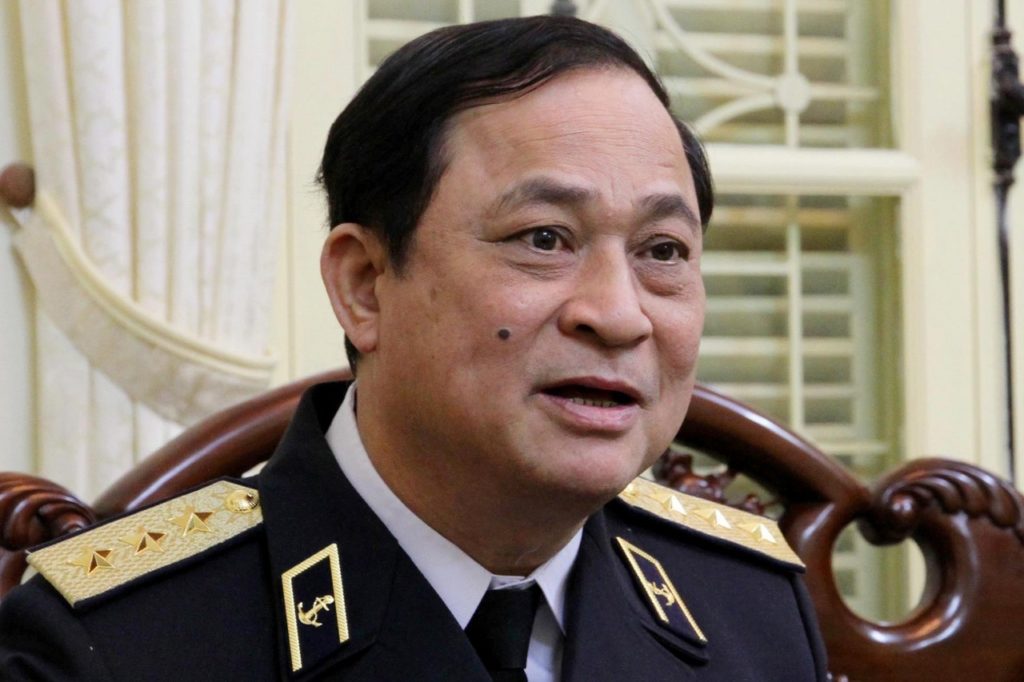
Mr. Vuong Dinh Hue receiving the decision to be appointed the party secretary of Hanoi on Feb 7

On Feb 13, Assoc. professor Dr. Nguyen Hoang Anh, who introduced himrself as being acquainted with Vuong Dinh Hue when he was an international student in a former Eastern European country and had a common activity in a friendship meeting, said:

“I have checked Hue’s resume, then I found out that although his road of view seemed very brilliant, but he never stayed in any place longer than two years.”

“I am a little concerned about Mr. Vuong Dinh Hue, because Mr. Hue studied in Bratislava and I used to study in the Czech Republic. We were in the same association called the Friendship Association of Former Students and Alumni in Czechoslovakia back then.
“I had a few occasions to meet Mr. Hue’s wife there and I also heard many stories about him. I learned that Mr. Hue was actually a good learner, but it was a pity too, because of my experience I have seen many times that those who are good at studying but go on the road of state officials are sometimes not so lucky.”

“So I am also inclined to the opinion that as everyone says here, it is here that this is a preparatory step to hope that Mr. Hue will be able to become one of the country’s four highest positions. If the hope becomes real, perhaps also good news because this is also one of the rare cases where a person with a good education, that is, a Ph.D. at the University of Economics of Bratislava, can hold an important position in the regime.”
 

The position of the Secretary of the city Party Committee in this case seems to be like the thorny chair that we often see in caricatures of great officials, new entrant, Mr. Anh commented.

Mr. Nguyen Thien Nhan, the secretary of Ho Chi Minh City Party Committee, actively cleaning up the trash with a large number of photojournalists working together to take pictures

“However, we also know that as looking at Hue’s CV, we also find that this story is not entirely certain and if Mr. Hue stays in Hanoi, I see no hope for Hanoi’s innovation.

“Because we also know that people used to expect Comrade Nguyen Thien Nhan, who also has a great academic background, but in fact when he was Minister (Education & Training) as well as the current Secretary of Ho Chi Minh City Party Committee, you all seem to have nothing outstanding at all.”

“The situation now, if Mr. Hue stays for a long time, there will be more problems than those of Mr. Nguyen Thien Nhan in HCM City. We also know that the most recent Dong Tam case is still an open question.
“And then long-term outstanding issues that irritated people, such as the Cat Linh – Ha Dong railway which has no solution at all.”
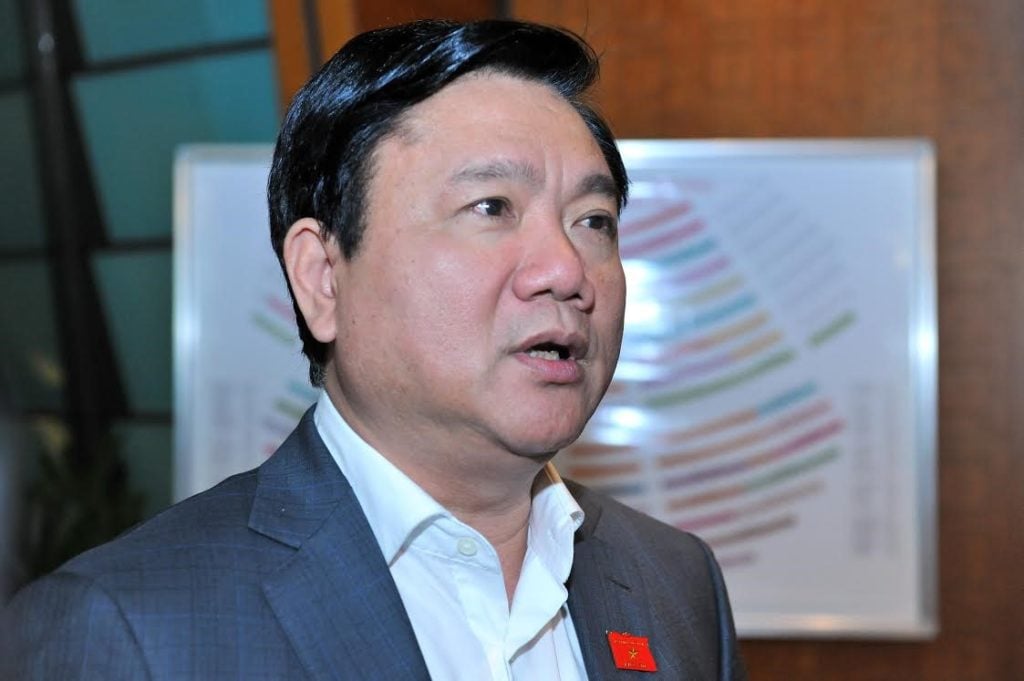
Mr. Dinh La Thang, PhD of Economics, former Minister of Transport and then Secretary of Ho Chi Minh City Party Committee (2016-2017)

“Although on the party’s side, about 200 personnel have been planned, called strategic officials, but if you have been planned, the list is public and transparent to the people,” How good it would be.

“Because from the people’s perspective, knowing which personnel are specifically planned is a strategy, then surely people will have assessments – so that on the part of the party can choose the right people with worth criteria as the General Secretary desires to be without a desire for power, devotion to the people and exemplary party members.

“If that were done, the cadre of the planning party would be screened. Because the people would know which individuals wereincluded in the plan, would he be corrupt, would his property be there? ? People will have ideas.

“Because corruption is human, if the party continues to do the old way, it is closed personnel, it is difficult to solve the story of anti-corruption in a definitive way, as well as improve the capacity of the Party and government officials,” said Hoang Ngoc Giao.

Doctor of Science Nguyen Quang A, former director of the Independent Policy Research Institute (IDS has dissolved itself), commented:

“I think there are many challenges, but the most outstanding thing within Hanoi is Dong Tam, not sure if the new Secretary of the Hanoi Party Committee can solve it?
And of course, other things that are very prominent, I would say the Cat Linh – Ha Dong elevated railway in Hanoi.

“Will he be able to solve it? Those are painful problems in public opinion.”

“I think his term is only a year away, really short, replacing Mr. Hoang Trung Hai and most likely this is just an medium step, to make him eligible for many posts before being promoted to higher positions.”

Mr. Hue answered the question of National Assembly deputies as Minister of Finance

It must be confirmed to the people that those years, 2010 and 2011 … were full of people who did not recognize the true face of the Communists. At that time, millions of people, covered by the state’s one-way media, went crazy with Nguyen Ba Thanh, Dinh La Thang and Vuong Dinh Hue, even the prime minister because of their demonic speech.

That year, during the meeting, Mr. Hue threatened: “If any petrol enterprise, including Petrolimex, sees that the loss is too high, it can stop working. We are ready for dissolution to set up another corporation. As the Minister of Finance, I would like to announce that I will not allow businesses to abandon the circulation of petrol and oil, any difficulties can be solved. Not because of 11 major petroleum importers, but for the economy and more than 80 million gasoline consumers in this territory.” After that statement, many people believe that gasoline prices will no longer be a burden for workers. But in fact, after this statement, the price of gasoline has increased continuously so far, there is no stopping point.

The Communist Party is like an old, worn-out machine. Vuong Dinh Hue can be a modern machine part. Is there any hope that it will pull the whole machine forward?

Either it will have to adapt or it will be knocked out by the Party’s party because it is not suitable as the example of Nguyen Ba Thanh or Dinh La Thang.

How to improve traffic congestion, air pollution, rivers and lakes, lack of green space, and “busy” planning in Hanoi?

Next, with Vietnam’s current policy of mobilizing and rotating high-level personnel, source leaders in the planned area often have less time to engage with the facilities and focus on doing specific things beneficial for the local residents because they are busy “fighting” to continue climbing higher.

Therefore, the problem of the country probably lies more in the system error when people are not free to choose really talented people to lead themselves.

In such an outdated model, besides corruption and mistakes are inevitable, talented people will be very difficult to realize their potentials, or if they do, they can do nothing, not to mention the risk of being put into “incinerator” if you want to do otherwise.

Hoang Trung from Ha Noi – Thoibao.de (Translated)

An image of the successful revolt of the Viet Minh on Aug 19, 1945, when hunger was everywhere, the people’s hatred and loss of faith in the government

Great scholar Le Quy Don made the judgment of the Second Le Dynasty before it collapsed: “All mandarins, from small to big ones, built their luxury houses from precious stones, furnitures and bronze and porcelain items, wooden tables and chairs herd, rosewood, porcelain teapots, saddles – bridle are encrusted with gold, studded with silver, clothes are turns, flowerbeds, rattan mats, rich and rich to show off to each other … .”

Nguyen Trai also wrote in Quan Hai’s poem: “Disater or happiness does not come from a single day, but from a deep root.

Dynasties, when rotten, rotten from its heart like a serious disease that no medicine can cure.

Moments of change can sometimes come from seemingly ordinary, simple, but igniting events.

The revolutions in the world in recent years are the same.

The event that triggered the Jasmine Revolution in Tunisia in December 2010, was the police’s confiscation of goods of student Mohamed Bouazizi who set himself on fire later due to the great diastisfaction after being robbed.

The tragedy happened in Tunisia as for lengthy period, the totalitarian rule by President Zine el-Abidine Ben Ali has made the society with too many inadequacies: unemployment, rising food prices, greed corruption and freedom of speech are constrained.

The death of student Mohamed Bouazizi served as an ignition for a big fire as millions of people rallied on streets to demand liberty. The mass demonstrations were so big to President Ben Ali was forced to step down after 23 years holding power. Finally, free general elections were held in the African country.

The Tunisian Revolution – The Jasmine Revolution overthrew President Ben Ali in 2011

The revolution in Tunisia has become a “fire” that created a wave of democracy that brought down a series of other dictatorships such as Egypt, Libya, Yemen … thereby creating a Spring Arabic.

In 2014, in Ukraine, the Euromaidan democratic revolution broke out and overthrew Victor Yanukovych’s regime from the “ignition” of his refusal to integrate in the EU but join the Asian-Europe Union which is headed by Russia.

But the former cause was that President Yanukovych kept his pro-Russian ideology and relied too much on Russia, and had policies that went against the people’s will.

At the same time, Ukraine has rampant corruption, which causes tensions and dissatisfaction in society to become fierce.
After that revolution there was a series of changes in the Ukrainian government system, along with the restoration of the previous democratic constitution and a free election.

39 Vietnamese citizens, mostly from Nghe An and Ha Tinh provinces, died from suffocating in refrigerated container trucks in the UK.

Forecasts in the hearts of Vietnamese society: Social injustice becomes fierce, corrupt, and the group interests are widespread from the central to local levels as a national disaster that the Communist Party of Vietnam (CPV) is helpless and unable to prevent.

Against this backdrop, the number of migrants seeking better living environment is increasing.

According to the International Organization for Migration (IMO), every year Vietnam has about 100,000 migrants abroad, not to mention the number of illegal migrants.

In 2019, there was a tragedy that resulted in 39 Vietnamese suffocating in container trucks while seeking to smuggle into England.

Many officials have also secretly transferred money and possessions and sent their families abroad to settle, because they themselves no longer believed that the party’s power would last for long, and that kind of rule can be kept for forever by propaganda and guns.

In order to retain power, the government implemented a “police” regime to stifle freedom of speech and imprison dissidents.

Thousands of terrifying pandemics have appeared in the world history for thousands of years, such as the prelude song that heralded a change in dynasties or warned about moral ruin in contemporary society.

The outbreak of the Covid-19 virus is still becoming increasingly complicated in China and Vietnam, but no expert has yet been able to fully evaluate the human and economic consequences it will affect.

Ignoring warnings from the beginning of the epidemic, the state remained open to the border so that people from the Wuhan epidemic would rush into Vietnam. It was a big mistake.

It is thought that if Vietnam becomes the second outbreak after China, then the authorities will face not only strong pressure and criticism from the people, but also a great challenge of the political system.

And once China wants to overcome those crises by implementing comprehensive reforms, to become a democratic, economically functioning society based on market rules, is it a fire for change in Vietnam?

Blockage to isolate Son Loi commune, Vinh Phuc province. However, hundreds out of over 10,000 local residents have escaped from the isolated areas and the disease transmision is likely high.

Vietnam’s thousands of years of history have witnessed the prosperity and decline of many dynasties.

Whether that happens quickly or slowly depends very much on the human nature, the norm of law or the brutality of each dynasty. Which Vietnam today with a totalitarian one-party regime is certainly inevitable.

Of course, it is difficult to predict in advance what event or moment is the “ignition” sparking social change.

As in other countries, for example, there was a student who set himself on fire, or a policy that went against the public’s back and made the public angry.

There are so many different events and sparks that are difficult to predict, but in general with a corrupt society like Vietnam today, any situation is easy to become a milestone to end the regime which many of the communists themselves and their conscience are waiting for day and night.
If that happens, it is an inevitable law of history.

Recently, Xi Jinping has been criticized by a number of Chinese political and business members for dealing with the economic downturn, the trade war with the United States and Hongkong pro-democracy protests.

On February 3, 2020, Xi publicly announced the “people’s war” with Corona virus from Wuhan.
But observers say that Xi Jinping is facing not only the plague, but also the domestic political situation, saying that Xi Jinping is facing the biggest challenge in his career.

When the flu epidemic became a pandemic, long-standing rivals who are silently protesting against the acquisition of all of Xi’s power, will take action against him.

“The rapid end of this epidemic will limit political collapse. But the continued spread of Corona virus is threatening Xi’s plan to rule China for other terms and could lead the Communist Party of China to face serious loss of public support.”

Xu Zhiyong, a former lecturer at Beijing Posts and Telecommunications University, published an online essay with the content: “Medicine will not save China: Democracy will save China.”

Xi Jinping meeting Vietnamese leaders

Beijing is now aware that the Corona epidemic is at risk of worsening the party image, and it is likely that local officials will become scapegoats. Yet it was Xi Jinping’s dictatorship that played an important role in the disaster.

Deeper, despite its economic success, China is powerless to reform its food supply chain and health system – clearly pathetic.

Numerous scandals, from melamine-containing milk, phony vaccines to the swine flu epidemic, kill a quarter of the global swine population, and threaten thousands of wildlife markets.

These are endless reserves of viruses that jump from one animal to another and end up mutating to make people sick.

Chinese leaders have always emphasized the one-party regime is vital for stability and development.

But the crisis clearly shows a country that talks a lot about solidarity and great things, but is easily divided and now beliefs are finally dying.

It is truly a fatal and collapsing disease that the Chinese Communist regime certainly has no cure for.

Trung Nam from Da Nang – Thoibao.de (Translated)

Hôm 13/02/2020, PGS. TS. Nguyễn Hoàng Ánh, người tự giới thiệu là quen biết ông Vương Đình Huệ khi còn là du học sinh ở một quốc gia tại Đông Âu trước đây và có sinh hoạt chung trong một hội hữu nghị, nói:

“Tôi có kiểm tra lại sơ yếu lý lịch của anh Huệ, thì tôi phát hiện ra là mặc dù con đường quan lộ của anh có vẻ rất rực rỡ, nhưng mà anh không bao giờ ở một chỗ nào đó lâu được hơn hai năm.“

“Tôi cũng có một chút quan tâm đến ông Vương Đình Huệ, vì ông Huệ từng học ở Bratislava và tôi trước đây thì học ở Czech. Chúng tôi sinh hoạt chung một hội gọi là Hội hữu nghị của những sinh viên, cựu sinh viên đi Tiệp Khắc ngày xưa về.
“Tôi có một vài dịp gặp vợ anh Huệ ở đó và cũng có nghe nhiều chuyện về anh Huệ. Tôi được biết anh Huệ thực tế là một người học giỏi, tuy nhiên đấy cũng là một điều đáng tiếc nữa, vì kinh nghiệm của tôi đã nhìn thấy nhiều lần là những người học giỏi mà đi vào con đường quan trường thì nhiều khi cũng không được may mắn, thông đồng bén giọt lắm.

“Cho nên tôi cũng nghiêng về ý kiến như là mọi người nói ở đây, đó là có đây là một bước chuẩn bị để hy vọng là anh Huệ có thể vào được tứ trụ. Trong trường hợp anh Huệ vào được tứ trụ, thì có lẽ cũng là một tin tốt vì đây cũng là một trong số hiếm hoi những trường hợp một người được học hành tử tế, tức là anh làm Tiến sỹ ở Đại học Kinh tế của Bratislava, có thể nắm được một chức vụ quan trọng trong chính quyền.”

ông Vương Đình Huệ nhận quyết định bổ nhiệm làm bí thư thành ủy Hà nội hôm 07/02/2020

Cái ghế của Bí thư Thành ủy trong trường hợp này có vẻ giống như cái ghế có gai mà chúng ta vẫn thường nhìn thấy trong các tranh biếm họa về những quan lớn, người mới nhậm chức, PGS. TS. Nguyễn Hoàng Ánh bình luận.

“Tuy nhiên, chúng ta cũng biết rằng là như nhìn vào (CV) Sơ yếu lý lịch của anh Huệ, chúng ta cũng thấy câu chuyện này cũng chưa có gì là chắc chắn và nếu trong trường hợp anh Huệ ở lại Hà Nội, thì cá nhân tôi cũng chưa nhìn thấy một hy vọng nào cho đổi mới của Hà Nội cả.

“Tại vì chúng ta cũng biết rằng dân chúng từng rất kỳ vọng vào đồng chí Nguyễn Thiện Nhân, một người cũng có một lý lịch học hành cũng rất hoành tráng, nhưng thực tế thì ở cương vị Bộ trưởng (Giáo dục & Đào tạo), cũng như ở cương vị Bí thư Thành ủy TP. Hồ Chí Minh hiện tại, đồng chí đều có vẻ chưa có gì nổi bật cả.
“Tình hình bây giờ, nếu anh Huệ ở lại lâu dài, thì sẽ có nhiều vấn đề rắc rối hơn nữa so với của bên (TPHCM của) ông Nguyễn Thiện Nhân. Chúng ta cũng biết rằng gần đây nhất vụ Đồng Tâm vẫn là một câu hỏi để ngỏ.
“Rồi những vấn đề tồn đọng lâu dài làm dân chúng bức xúc, như là đường sắt Cát Linh – Hà Đông, thì cũng chưa có một giải pháp nào cả.

“Liên quan câu chuyện về nhân sự này thì hiện nay, tất cả tình hình nhân sự của Đại hội đảng chưa được rõ ràng cho lắm”, Phó Giáo sư, TS. Hoàng Ngọc Giao bình luận.

ông Nguyễn Thiện Nhân bí thư thành ủy TpHCM tích cực dọn rác với một lượng đông đảo phóng viên ảnh cùng lăn xả để chụp hình

“Mặc dù về phía đảng thì, đã quy hoạch được khoảng 200 nhân sự, gọi là cán bộ chiến lược, thế nhưng giá như các vị đã được quy hoạch, mà danh sách được công khai, minh bạch cho người dân biết, thì sẽ tốt biết bao.
“Bởi lẽ từ góc nhìn của người dân, biết cụ thể nhân sự nào được quy hoạch là chiến lược, thì chắc chắn người ta sẽ có những đánh giá – để cho về phía đảng (CSVN) có thể lựa chọn được những người xứng đáng theo những tiêu chí như là Tổng Bí thư mong muốn là không có ham muốn quyền lực, tận tâm với người dân và gương mẫu đảng viên.
“nếu như việc đó làm được, thì lực lượng cán bộ mà đảng quy hoạch sẽ được sàng lọc. Bởi vì người dân sẽ biết là anh nào được nằm trong quy hoạch, anh ấy có tham nhũng không, tài sản của anh có không? Người dân sẽ có ý kiến.
“Bởi vì tham nhũng là con người, nếu như đảng vẫn cứ làm theo cách xưa, là làm nhân sự khép kín, thì khó có thể giải quyết một cách rốt ráo câu chuyện chống tham nhũng, cũng như nâng cao năng lực của đội ngũ cán bộ lãnh đạo đảng và chính quyền,” ông Hoàng Ngọc Giao nói.

Vụ việc ở Đồng Tâm liệu liệu có được đề cập và giải quyết thỏa đáng, có thể là một câu hỏi đặt ra với ban lãnh đạo đảng Cộng sản và chính quyền thành phố Hà Nội, trong giai đoạn mới hay không?

ông Đinh La Thăng, tiến sĩ kinh tế, từng làm Bộ trưởng Bộ GTVT rồi Bí thư Thành ủy Thành phố Hồ Chí Minh (2016-2017)

Tiến sỹ Khoa học Nguyễn Quang A, nguyên Viện trưởng Viện nghiên cứu, phản biện chính sách độc lập (IDS đã tự giải thể), đưa ra bình luận:

“Tôi nghĩ có nhiều thách thức lắm, nhưng mà việc nổi cộm nhất ở trong phạm vi Hà Nội, đấy là việc Đồng Tâm, không biết là ông Bí thư mới của Thành ủy Hà Nội có giải quyết được hay không?
Và tất nhiên là những việc khác mà rất nổi cộm, tôi nói thí dụ như chuyện đường sắt trên cao Cát Linh – Hà Đông ở Hà Nội.
“Liệu ông có giải quyết được không? Đấy là những vấn đề nhức nhối trong dư luận xã hội.
“Tôi nghĩ là nhiệm kỳ của ông chỉ còn độ một năm nữa, thực sự là rất là ngắn, thay thế ông Hoàng Trung Hải và rất có nhiều khả năng đây cũng chỉ là một bước đệm, để cho nó đủ tiêu chuẩn là đã kinh qua những bước này, bước kia, để có thể ông bước sang một vị trí mới có thể là cao hơn.”

Nhà hoạt động Hoàng Dũng đưa ra bình luận bằng cách kể câu chuyện: Rằng – Hồi tháng 9/2011, anh Huệ mới lên Bộ trưởng Bộ Tài chính, đã có những chấn chỉnh hệ thống xăng dầu, làm hàng triệu dân lúc bấy giờ cảm thấy dễ thở hơn

ông Vương Đình Huệ trả lời chất vấn của Đại biểu quốc hội với cương vị bộ trưởng Tài chính

Phải khẳng định với bà con rằng những năm ấy, 2010, 2011… còn đầy người chưa nhận ra bộ mặt thật của những người cộng sản. Khi ấy hàng triệu người dân, bị truyền thông 1 chiều của nhà nước che phủ đã phát cuồng với Nguyễn Bá Thanh, Đinh La Thăng rồi Vương Đình Huệ, thậm chí cả Thủ tướng vì những phát ngôn mị dân của họ.
Năm ấy, trong cuộc họp, anh Huệ doạ: “Nếu doanh nghiệp nào thấy lỗ quá không làm được thì rút lui. Kể cả Petrolimex, nếu không làm được chúng tôi sẵn sàng cho giải tán để lập tổng công ty khác. Với tư cách là Bộ trưởng Bộ Tài chính, tôi xin tuyên bố sẽ không cho phép doanh nghiệp nào bỏ việc lưu thông xăng dầu, khó khăn nào cũng có thể giải quyết. Không phải vì 11 doanh nghiệp đầu mối nhập khẩu xăng dầu, mà vì cả nền kinh tế và hơn 80 triệu người tiêu dùng xăng dầu trên lãnh thổ này”. Sau lời phát biểu đó biết bao người tin rằng giá xăng dầu sẽ không còn là gánh nặng của người lao động nữa. Nhưng thực chất là cũng sau phát biểu này, thì giá xăng dầu thì cứ tăng liên tục cho đến nay vẫn chưa có điểm dừng.
Đảng cộng sản như một cỗ máy quá cũ, rệu rã. Vương Đình Huệ có thể là một chi tiết máy hiện đại. Liệu có hy vọng là nó sẽ kéo cả cỗ máy lao về phía trước được không?
Hoặc là nó sẽ phải thích nghi hoặc nó sẽ bị cỗ của Đảng đánh bật ra vì không phù hợp như tấm gương của Nguyễn Bá Thanh hay Đinh La Thăng mà thôi.

Trong trường hợp chưa kịp vào Tứ Trụ và ở lại Hà Nội hết một nhiệm kỳ, liệu ông Vương Đình Huệ sẽ giải quyết những bức xúc ngay trước mắt của Thủ đô như thế nào?

Đường sắt đô thị Cát Linh – Hà Đông uốn lượn mấp mô như một biểu tượng kém cỏi của việc quản trị đất nước, có dấu hiệu quan tham nhũng giữa thủ đô Hà nội

Làm sao cải thiện tình trạng tắc nghẽn giao thông, ô nhiễm không khí, sông hồ, thiếu khoảng không xanh, quy hoạch “hổ lốn” tại Hà Nội?

Tiếp theo, với chính sách điều động và luân chuyển nhân sự cấp cao như hiện nay của Việt Nam, các lãnh đạo nguồn trong diện được quy hoạch thường ít có thời gian để gắn bó với cơ sở và chuyên tâm làm những việc cụ thể, “ích nước lợi dân”, bởi họ còn bận “đấu đá” để tiếp tục leo cao hơn nữa.

Vì thế, vấn đề của đất nước có lẽ nằm ở lỗi hệ thống nhiều hơn khi người dân chưa được quyền tự do lựa chọn người thực sự tài giỏi ra lãnh đạo mình.

Ở trong một mô hình “không giống ai” và lạc hậu như vậy, bên cạnh tham nhũng, sai phạm là tất yếu, nhân tài sẽ rất khó xuất hiện, hoặc nếu có thì cũng chẳng làm được gì, chưa kể nguy cơ bị cho vào “lò đốt” nếu muốn làm khác.

Hoàng Trung từ Hà nội – Thoibao.de (Tổng hợp)

“… Từ quan to đến quan nhỏ, nhà cửa chạm trổ, tường xây bằng gạch đá, trướng vóc màn the, đồ dùng toàn bằng đồng, bằng sứ, bàn ghế bằng gỗ đàn, gỗ trắc, ấm chén bằng sứ, yên ngựa – dây cương đều nạm vàng, nạm bạc, quần áo là lượt, nệm hoa, chiếu mây, lấy phú quý phong lưu để khoe khoang lẫn nhau…”.
Đó là nhận định về triều đình thời hậu Lê của nhà bác học Lê Quý Đôn trước khi nó sụp đổ hoàn toàn.

Nguyễn Trãi cũng từng viết trong bài thơ Quan Hải: “Họa phúc hữu môi phi nhất nhật“
Nghĩa là: Họa hay phúc đến không phải từ một ngày, mà có căn nguyên từ sâu xa.
Những triều đại khi đã mục ruỗng, thối nát từ trong lòng của nó hệt như một căn bệnh nan y mà không thuốc thang nào có thể chữa chạy được.

Thời khắc thay đổi đôi khi có thể đến từ những sự việc tưởng chừng như rất bình thường, đơn giản nhưng lại là mồi lửa.
Những cuộc cách mạng trên thế giới những năm gần đây đều như vậy.
Sự kiện làm nổ ra cuộc cách mạng Hoa Lài tại Tunisia vào tháng 12 năm 2010, là khi cậu sinh viên Mohamed Bouazizi bị cảnh sát tịch thu hàng hóa của mình, trong nỗi đau bần cùng, trước thì thất nghiệp giờ lại bị cướp trắng trợn trên phố nên đã tự thiêu.
Thảm kịch ấy xảy ra bởi Tunisia sau nhiều năm dài chịu sự cai trị độc tài của tổng thống Zine el-Abidine Ben Ali đã làm cho xã hội có quá nhiều vấn đề bất cập: thất nghiệp, giá cả thực phẩm leo thang, tham nhũng và tự do ngôn luận bị kìm kẹp.

Sau “mồi lửa” ấy là cuộc xuống đường ôn hòa trên khắp cả nước Tunisia, đủ để khiến ông Ben Ali phải bỏ chạy sau 23 năm cầm quyền và đem lại tổng tuyển cử tự do.

Cuộc khởi nghĩa cướp chính quyền của Việt minh thành công ngày 19/8/1945, khi ấy đói kém khắp nơi, lòng dân căm hận, mất niềm tin vào chính quyền

Cuộc cách mạng tại Tunisia lại trở thành một “mồi lửa” tạo nên làn sóng dân chủ làm sụp đổ hàng loạt các chế độ độc tài khác như tại: Ai Cập, Libya, Yemen… từ đó đã tạo nên một Mùa Xuân Ả Rập.

Năm 2014, tại Ukraine cuộc cách mạng dân chủ Euromaidan nổ ra và đã lật đổ chế độ của ông Victor Yanukovych từ “mồi lửa” là sự kiện tổng thống nước này từ chối tiến trình hội nhập với EU để tham gia Liên minh Á-Âu do Nga đứng đầu.

Nhưng căn nguyên trước đó là tổng thống Yanukovych giữ tư tưởng thân Nga và lệ thuộc quá nhiều vào nước Nga, và có những chính sách đi ngược với lòng dân.
Cùng lúc, Ukraine có tệ nạn tham nhũng tràn lan, làm cho những căng thẳng, bất mãn trong lòng xã hội trở nên gay gắt.
Sau cuộc cách mạng ấy là một loạt các thay đổi trong hệ thống chính quyền Ukraine, cùng với việc khôi phục lại bản hiến pháp dân chủ trước đây và một cuộc bầu cử tự do.

Dưới sự thống trị toàn diện của Đảng Cộng sản, Việt Nam giờ đây đã trở thành một xã hội mà rất đông người chỉ biết chạy theo lợi ích vật chất, sẵn sàng giẫm đạp lên nhau và bất chấp nhân cách.

\Cách mạng Tunisia – Cách mạng Hoa Nhài lật đổ tổng thống Ben Ali năm 2011)

Những dự báo trong lòng xã hội Việt Nam: Bất công xã hội trở nên gay gắt, tham nhũng, lợi ích nhóm tràn lan từ trung ương cho đến địa phương như một quốc nạn mà ĐCS bất lực và không thể nào ngăn chặn được.
Trước viễn cảnh ấy, con số người di cư tìm môi trường sống tốt hơn cứ tăng lên.
Theo thống kê của Tổ chức Di cư quốc tế (IMO) thì mỗi năm Việt Nam có khoảng 100.000 người di cư ra nước ngoài, chưa kể đến số lượng những người di cư bất hợp pháp.
Năm 2019 vừa qua đã từng xảy ra một thảm kịch dẫn đến 39 người Việt chết ngạt trong xe container khi đang tìm đường nhập cư lậu vào nước Anh.
Không ít quan chức cũng đã âm thầm chuyển tiền bạc, tài sản và đưa gia đình ra nước ngoài định cư, bởi bản thân họ cũng không còn tin rằng quyền lực của đảng sẽ chống đỡ được lâu dài, và kiểu cai trị ấy không thể mãi duy trì bằng tuyên truyền và súng.

Để giữ quyền lực, nhà cầm quyền thực hiện chế độ “công an trị” nhằm bóp nghẹt tự do ngôn luận, bỏ tù những người bất đồng chính kiến.

Sự kiện 3000 cảnh sát cơ động nửa đêm xông vào thôn Hoành để giết cụ già Lê Đình Kình một cách trái luật, hòng dập tắt phản kháng của người dân trong vấn đề thu hồi đất đai là một minh chứng, làm nhiều người rất phẫn nộ.

Những nạn nhân người Việt trong số 39 người chết ngạt trong xe container đông lạnh tại Anh, hầu hết từ Nghệ an Hà tĩnh và đều rất trẻ

Lịch sử thế giới hàng nghìn năm từng xuất hiện nhiều trận đại dịch vô cùng đáng sợ, nó như khúc nhạc dạo đầu báo trước sự thay triều đổi đại hoặc cảnh báo sự bại hoại về đạo đức trong xã hội đương thời.
Dịch bệnh do virus Covid-19 vẫn đang diễn ra ngày càng phức tạp ở Trung Quốc và Việt Nam mà chưa có một chuyên gia nào có thể đánh giá được hết những hậu quả về con người và kinh tế nó sẽ để lại.
Bỏ mặc những cảnh báo ngay từ khi xảy ra dịch bệnh, nhà nước này vẫn mở cửa biên giới để những người từ tâm dịch Vũ Hán nhập cảnh ồ ạt vào Việt Nam. Đó là một sự tắc trách lớn.
Thiết nghĩ, nếu Việt Nam trở thành ổ dịch thứ hai sau Trung Quốc, thì khi đó nhà cầm quyền không những phải đối mặt với những sức ép và chỉ trích mạnh mẽ từ phía người dân, mà còn là một thách thức lớn lên cả hệ thống chính trị.

Và một khi Trung Quốc muốn vượt qua những khủng hoảng ấy bằng cách thực hiện cải cách toàn diện, để trở thành một xã hội dân chủ, kinh tế vận hành theo quy luật thị trường, thì liệu điều đó có phải là một “mồi lửa” để Việt Nam thay đổi?

Cũng qua cuộc chiến thương mại Mỹ – Trung, khi Việt Nam với vai trò là nước có nền kinh tế lệ thuộc quá nhiều vào Trung Quốc thì khả năng khó tránh khỏi liên lụy nếu nền kinh tế Trung Quốc rơi vào suy thoái.

Chốt chặn ổ dịch Vĩnh Phúc, cách ly 10.000 dân xã Sơn Lôi, nhưng hiện tại có rất nhiều người dân đã trốn khỏi vùng cách ly để đi chơi và nguy cơ lây lan là rất lớn

Lịch sử mấy nghìn năm của Việt Nam đã từng chứng kiến sự hưng thịnh, suy tàn của biết bao triều đại.
Mà điều đó diễn ra nhanh hay chậm đều phụ thuộc rất nhiều vào bản chất nhân nghĩa, chuẩn mực pháp luật hay bạo tàn của mỗi triều đại ấy. Mà Việt Nam hiện nay với một thể chế độc đảng toàn trị thì chắc chắn không thể nào tránh được.
Tất nhiên thật khó có thể giả định trước được sự kiện nào hay thời khắc nào là “mồi lửa” châm ngòi để thay đổi xã hội.
Như ví dụ các nước khác, từng có một sinh viên tự thiêu, hoặc một chính sách nào đó đi ngược lại với lòng dân làm quần chúng trở nên phẫn nộ.
Rất rất nhiều sự kiện và đốm lửa khác nhau khó tiên liệu hết được, nhưng nhìn chung với một xã hội hủ bại như Việt Nam hiện nay thì bất kỳ một tình huống nào cũng dễ thành dấu mốc khép lại một triều đại, mở ra một trang sử mới, mà chính bản thân của rất nhiều người cộng sản còn lương tri vẫn đang ngày đêm trông đợi.
Nếu xảy ra thì đó là một quy luật tất yếu của lịch sử.

Đối với Tập Cận Bình, cuộc khủng hoảng virus corona lần này là thách thức lớn nhất trong sự nghiệp của ông ta.
Mới đây ông Tập Cận Bình đã bị một số thành viên chính trị và kinh doanh Trung Quốc chỉ trích về cách xử lý tình trạng suy thoái kinh tế, cuộc chiến thương mại với Hoa Kỳ và các cuộc biểu tình ủng hộ dân chủ Hong Kong.
Hôm 3/2/2020 ông Tập đã công khai “cuộc chiến nhân dân” với virus corona từ Vũ Hán.
Nhưng giới quan sát cho rằng ông Tập đang không chỉ phải đương đầu với bệnh dịch mà còn phải đối phó với tình hình chính trị trong nước, họ nói rằng Tập Cận Bình đang đối diện với thách thức lớn nhất trong sự nghiệp.

Khi dịch Cúm trở thành đại dịch, thì các đối thủ lâu nay âm thầm phản đối việc thâu tóm mọi quyền hành của ông Tập, sẽ có hành động chống lại ông ta.
‘Việc kết thúc nhanh chóng cơn bệnh dịch này sẽ hạn chế sự sụp đổ chính trị. Nhưng sự lây lan liên tục của virus corona đang đe dọa kế hoạch cai trị vô thời hạn của ông Tập và có thể khiến Đảng Cộng sản Trung Quốc phải đối mặt với sự mất mát nghiêm trọng sự ủng hộ của công chúng.”
Xu Zhiyong, cựu giảng viên của Đại học Bưu chính Viễn thông Bắc Kinh, đăng một xã bài luận trực tuyến với nội dung: “Y học sẽ không cứu Trung Quốc: Dân chủ sẽ cứu Trung Quốc“.

Quyền lực Tập Cận Bình đang lung lay đến tận gốc rễ. Và sự sụp đổ của đế chế Cộng sản Trung Hoa chắc chắn sẽ kéo theo sự nghiêng ngả của chế độ Cộng sản Việt nam, vì điểm tựa cuối cùng đã mất.

Chủ tịch Trung quốc Tập Cận Bình và Tổng Bí Thư Nguyễn Phú Trọng

Bắc Kinh nay đã ý thức được dịch corona có nguy cơ làm xấu đi hình ảnh của đảng, và rất có thể các quan chức địa phương sẽ trở thành vật tế thần. Tuy nhiên chính sự độc tài của Tập Cận Bình đã đóng vai trò quan trọng trong thảm họa.
Sâu xa hơn, dù có nhiều thành công về kinh tế, Trung Quốc lại bất lực trong việc cải cách chuỗi cung ứng thực phẩm và hệ thống y tế – rõ ràng là thảm hại.
Vô số xì-căng-đan, từ sữa chứa melamine, vaccin rởm cho đến dịch cúm heo làm chết hết một phần tư lượng heo trên toàn cầu, và nguy cơ từ hàng ngàn chợ bán động vật hoang dã.
Đó là những kho trữ vô tận các loại virus nhảy từ con thú này sang con thú khác và rốt cuộc biến thể để gây bệnh cho con người.
Các nhà lãnh đạo Trung Quốc luôn nhấn mạnh chế độ độc đảng là sống còn cho ổn định và phát triển.
Tuy nhiên cuộc khủng hoảng đã cho thấy rõ một đất nước nói rất nhiều về đoàn kết và những điều vĩ đại, nhưng lại dễ dàng bị chia rẽ và nay thì những niềm tin cuối cùng đang tắt lịm.
Đó mới thực sự là căn bệnh gây tử vong và sụp đổ mà chế độ Cộng Sản Trung Quốc chắc chắn không còn thuốc chữa.

Trung Nam từ Đà Nẵng – Thoibao.de (Tổng hợp)

Shanghai – the world’s most crowded city became deserted as the city was abandoned due to the Corona outbreak

The Chinese political and economic system is still considered by Hanoi to be the model until the ball of Beijing is broken in 2020 with an epidemic originating from Wuhan. This week’s Economic Forum interviewed economist Nguyen-Xuan Nghia about potential risks in the Chinese economy.

China’s economic growth rate is only about 6%, but the Covid-19 epidemic originating from Wuhan can reduce this growth momentum by about 2% more. Thus, the question is whether the market economy model with Chinese colors is still valid for Vietnam?

Doctor of Economics Nguyen Xuan Nghia said: – First, talking about the growth rate, we have to consider from where the economy increases to what level. From a deserted land with only one factory, building another factory is considered to have achieved a 100% growth but compared to neighboring states that have hundreds of factories, building 20 more is only a 20% growth, in fact they are two dozen times bigger than us.

By comparison, some of the poorest African countries, such as Chad, also achieved growth rates of nearly 60% or Liberia of more than 20%.

A war-stricken country like Iraq can also grow by nearly 20% and civil war like Georgia also has a rate of nearly 10%.  

Growth is not yet under development, and the Chinese economy actually has many disadvantages that could lead to dangerous fluctuations this year that Vietnam should pay attention to. 2020 will be a rigorous test for the model of market economy within the socialist belt.

Air pollution in modern cities in China is common, especially in Beijing

If you look at it from Mao Zedong’s cruel revolution, it is not wrong, but on a larger scale, China has a problem, that dragon has a pea-like head and the leader of this country is more aware of that than Vietnam’s leaders.

The economic motive made the leader not to be the exclusive center like before, but the corruption associated with the one-party regime also made the leader despised, unlike the time when the whole country seemed to go to the field under the revolutionary slogan of the party. This year can also see the bankruptcy of a half-market economy model and China, which is chaotic, the Vietnamese economy will be seriously affected, the Vietnamese leadership will lose support from Beijing.

ν Why don’t you seem optimistic about China’s economic performance?

Expert Nguyen-Xuan: Because the leader of this country, General Secretary cum President Xi Jinping built a magnificent monumental structure on fragile foundations. When that architecture collapsed, not only people and investors were damaged but also neighboring countries, including Vietnam.

China consumes the largest energy in the world, importing more crude oil than the United States. Despite having the world’s fifth reserves, China cannot meet its demand. In addition, it pollutes the environment.

People coming home to celebrate the Lunar New Year in China – which the press calls a giant migration

After the organizational issue, look at the downside of China’s growth rate in a labor crisis, with full-time and part-time unemployment as high as the American workforce, more than two. hundred million people. Each month, the country must create a million new jobs or meet social disorder.

Due to disguised unemployment, the reform of state-owned enterprises was stalled, which was enough to cause social disturbance and political risk for leaders. After the type of energy bottlenecks and the labor crisis, China is also facing an imminent financial crisis, as in the case of Vietnam.

Because of its socialist orientation with Chinese model, Beijing’s leaders want to benefit from economic freedom and the party still holds power.

They used the banking system as a center for collecting national assets and focusing on the state-owned sector, with the result that the banking system was flooded with debt and many businesses went bankrupt.

Aa processing factory in China, which is called the world’s factory

Of course, foreign investors are fleeing wildly to make up for the deficit like blowing wind into empty houses. Vietnam understands this, because there is a similar problem. But, the situation in China is even more dire because another phenomenon is capital dispersion.
International media keep talking about foreign investments being poured into mainland China without paying attention to the type of investment from mainland China transferred to other countries.

In addition to dispersing the assets of party members who want to prepare themselves for a better future after losing their power, we also see the financial activities of Chinese banks and businesses because they feel that they bring money to invest in other countries for more benefit and safer.

If they firmly believed in the economic future of this country in the form of a socialist country with Chinese model, there would be no such dispersal, and this is a paradox that few people talk about.Vietnam should look into that phenomenon.

Not to mention another paradox that China is focusing its efforts on exporting to collect foreign currencies and transferring those foreign currencies out again.

It seems the leaders of this country have not learned the experience of Japan thirty years ago, is austerity to export maximum regardless of profit and loss, just increasing its market share is enough, then close your eyes to invest abroad, buying anything, with thinking that it is the expansion of power and influence.

Also, China has blown up an investment balloon with many low-value projects, typically in Shanghai or Shenzhen, not to mention deadlock in Hong Kong.

Slow-moving leaders prefer to open magnificent works for their reputation but they rarely think of small but practical projects for ordinary people. Until it all fell apart, as East Asian countries faced in 1997, it blamed capitalism and speculation.

Will the Chinese ball burst and now it is breaking before our eyes?

We have all the materials needed for an investment ball bust. The Chinese economy must slow down the growth momentum to avoid the risk of inflation when the market is over with enthusiasm and prosperity

We do not realize that for decades, Vietnamese leaders have been studying to develop the country which went out of many wars.

During that time, what did the leader of this country learn and do for the evolution of society and the nation? During that time, the halfhearted reform only improved the standard of living for a minority of party members, but the country was still lagging backward in comparison to other countries, and the rich and poor deep hole still dug deep.

Vietnam has many of the same problems as China, with lesser potential. A crisis in China may be a warning, sometimes too late.

Vietnam does not have a strong government, which is capable of influencing and supporting national social and economic activities as in democratic countries, but only a authoritarian but powerless government to work for the country.

Confusing authoritarian yoke with the power of the state is outdated after nearly half a century in power. Vietnam needs more reforms, when what’s happening in China is an opportunity for innovation.

Vietnam and China both share the same institution under the communism with the socialist-oriented market economy model full of contradictions and delusions.
 
The Communist Party in both countries rules the people in a dictatorship, having no democracy and lacking freedom. It is this that has led to today’s calamity for the people of both countries, because of the lack of a mechanism to monitor and check power by opposing political forces and press freedom.

In order to develop sustainably and socially, only the only way is that the party and government of both China and Vietnam must return real power to the people of the two countries.

Thu Thuy from Hochiminh city – Thoibao.de (Translated)
Source: RFA

The “golden land” plot of 3,500 square metters at 7 – 9 Ton Duc Thang, District 1, Ho Chi Minh City – of the Naval Command’s Hai Thanh Company, but eventually became a private land

Vietnam’s Ministry of Defense has just confirmed to the Da Nang voters in a written reply on Feb 12 that of the army generals being disciplined, no one has been convicted of corruption. Is it true?

On Feb 13, the writer, retired army colonel Pham Dinh Trong, who had worked for many years in the military forces, commented: “In my opinion, they want to protect their reputation so they avoided to talk the true. The people know that those generals are corrupted regarding military land.”

Meanwhile, according to the Ministry of Defense, the violations of Vietnam’s military generals in recent years are mainly due to loose management, irresponsibility in organizing the implementation of State and the army regulations in the management and use of defense land. The Ministry of Defense also emphasized the mistakes of military generals in the 2005-2010 and 2010 to 2015 terms.

Captain Vo Minh Duc, who had served in the army for more than 10 years, said: “Regarding land management, I thought those men were up to the rank of general so they cannot say they know nothing about land. Actually, it was all about money … generally, bribing, leaving it to one person to get a project, the other to get a project, then get the national land for selling … Not only generals but also officers with lower ranks. All of them have luxury houses and cars or villas. Their houses are big while their salaries are not too high. It means that they purchased their properties not by their salaries but from corruption.”
 

Admiral Nguyen Van Hien, former Deputy Minister of Defense, former Commander of the Navy Army, committed many mistakes but is only banned from leaving the residence.

According to Captain Vo Minh Duc, in addition to properties, senior officers have purchased houses in Western countries and sent their offsprings to study in universities in foreign countries. From where they take to pay for all of these high spendings if not corruption?

According to Lieutenant Colonel Vu Minh Tri, who worked at the Technical Department, General Department 2, Ministry of Defense, it is possible to see clearly whether the generals in the army are corrupt or not through the assets they have. He said:
“I used to be in the army, with the salary I was given, it was hard enough to live in a city, not to mention buying cars and luxury houses. But I see around me, not only generals but other officers with lower ranks, they are rich. I think that with such a position, nature of work, time, there is no other way to make money other than corruption.”

The highest-ranking person in the Vietnamese military who has been disciplined up to the present time is former Admiral Nguyen Van Hien, who once was Deputy Minister of Defense and Commander of the Naval Forces.

On Oct 22, 2019, the Criminal Investigation Agency of the Ministry of Defense in collaboration with the Central Military Procuracy implemented the decision to probe Admiral Hien for economic mismanagement and ban him from going out for lack of responsibilities which led to serious consequences under Clause 3, Article 360 ​​of the Penal Code 2015.

27-hectare CityLand Park Hills Project in Go Vap with an investment of VND6 trillion, is one of the projects built on military land

Lieutenant Colonel Vũ Minh Trí continued:
“In the case of Admiral Nguyen Van Hien, I think he knew that his acts were illegal, however, he ignored the law because it was big money.”

Senior Lieutenant General Le Chiem, Deputy Minister of Defense, when answering the domestic press previously acknowledged, there are still some units in the army that are not interested in the fight against corruption, thinking that their units there is no corruption. When corruption is detected, it will be confusing.

Since the beginning of 2019, dozens of police and army generals have been disciplined because of violations in land management. Typically the case of Admiral Nguyen Van Hien.

The Vietnam People Navy with Kilo-class submarines purchased from Russia

In addition to land corruption, the procurement of equipment and weapons of the Ministry of Defense also raised many questions about the ‘kickback’ ‘commission’…

According to the Stockholm International Peace Research Institute, Vietnam is among the top 10 countries that buy the most military equipment in the world. Specifically, from 2014 to 2018, Vietnam’s imported weapons accounted for 2.9% of the total arms sales globally. In 2016 alone, Vietnam’s defense spending was $5 billion and is expected to increase to more than $6 billion by 2020.

Regarding this matter, Lieutenant Colonel Vu Minh Tri said his opinion:
“I don’t have very specific information but I heard a lot, but I can deduce from small things, such as buying office paper, public cars, or gifts… there is a situation of taking commission or reporting higher purchase prices. So I think buying weapons is very difficult to avoid embezzlement. Especially without the supervision of the authorities, with the reason of national security … ”

In 2017, the Shephard Media news site cited a U.S. defense source saying that Vietnamese defense officials informed the US delegation at a meeting in Hanoi that weapon deals must be “kicked off” 1/4 of the total value. After the Vietnamese side made the request, the meeting was “suddenly stopped.”
  

Commenting on asking for commission in the purchase of defense equipment, Mr. Pham Dinh Trong said: “That is almost natural in the business rules in Vietnam, needless to say, everyone knows that they take bribes. For example, buying American weapons, they require up to 25%, for example, so they cannot buy American weapons but have to buy from corrupt countries like Russia and India … because the US is strictly regulated, corruption is difficult.”

The official document of the US’s Department of Justice is somewhat about this allegations in Vietnam. This is related to Airbus selling C-295 military aircraft to Ghana, Indonesia and Vietnam.

In the Vietnam section, the report does not mention whether or not Airbus bribed Vietnamese officials. Instead, U.S. allegations that Airbus has used brokers to help promote the sale of C-295 military aircraft.

Regarding the acquisition, Airbus will pay “political contributions, fees, commissions to third parties.”

The US said that between 2009 and 2014, Airbus sought to sell military aircraft to Vietnam, with the result that three C-295 were sold.

The contract to sell three C-295s between Airbus and Vietnam’s Ministry of Defense was signed on Dec 17, 2013.
Vietnam’s Minister of Defense at this stage was General Phung Quang Thanh.
 

C-295 military aircraft that Vietnam has purchased from Airbus

US investigators said Airbus, or its related person, promised to pay “political contributions, fees, commissions” at 6,150,226 Euro.
US records further describe that, an Organization 4 (Organization 4), is a Hong Kong company doing business in Vietnam. There are three consultants 6, 7, 8, all foreign nationals, who are the controlling partners of Organization 4.
Consultant 7 is described by the US as having a long-term personal relationship with Vietnamese government officials and aviation leaders.
Organization 4 started working for Airbus from around 2002.
On December 20, 2013, after selling C-295 to Vietnam, Airbus had an agreement to pay the Organization 4 successful fees, 6,150,226 Euro.
And finally, according to the US side, Airbus actually paid at least 2,935,541 Euro, according to the deal.

The army is a pillar force, with the function of defending the country, but in Vietnam, they plunge into economic and multi-sector businesses to make the most profit, and from there, corruption and theft are born.

Each year, billions of dollars of taxpayer money, used to support this force, as well as buying weapons to equip them became useless because of the lack of military professionalism and when a war broke out, millions of people will be in danger because of the wrong policies of the Communist Party of Vietnam.

Hai Yen from Ha Noi – Thoibao.de (Translated)

Source: RFA

Hệ thống kinh tế chính trị Trung Quốc vẫn được Hà Nội coi là mẫu mực cho tới khi trái bóng của Bắc Kinh bị vỡ tung trong năm 2020 này với dịch bệnh xuất phát từ Vũ Hán. Diễn đàn Kinh tế tuần này phỏng vấn kinh tế gia Nguyễn-Xuân Nghĩa về các nguy cơ tiềm ẩn trong nền kinh tế Trung Quốc.

Tốc độ tăng trưởng kinh tế của Trung Quốc chỉ còn khoảng 6%, nhưng dịch bệnh siêu vi xuất phát từ Vũ Hán lại có thể đánh sụt đà tăng trưởng này chừng hai 2% nữa. Như vậy, câu hỏi đc đặt ra là mô thức kinh tế thị trường với màu sắc Trung Hoa có còn giá trị gì cho Việt Nam không?

Tiến sĩ kinh tế Nguyễn Xuân Nghĩa cho biết:

Đầu tiên, nói về tốc độ tăng trưởng, ta phải xét từ gốc là tăng từ đâu đến đâu? Từ một xứ hoang vu chỉ có một nhà máy mà xây thêm nhà máy thứ hai thì coi như đã đạt mức tăng trưởng 100%, nhưng so với các lân bang đã có cả trăm nhà máy, thì có xây thêm 20 cũng chỉ là tăng trưởng 20% mà thực tế là họ hơn ta gấp hai chục lần.
Nếu so sánh, một vài xứ châu Phi nghèo nhất như Chad cũng đạt tốc độ tăng trưởng là gần 60% hay Liberia là hơn 20%.
Một xứ bị chiến tranh như Iraq cũng có thể đạt tốc độ tăng trưởng gần 20% và bị nội loạn như Georgia cũng có tốc độ gần 10%.
Tăng trưởng vì vậy chưa là phát triển, và kinh tế Trung Quốc thực ra cũng có nhiều nhược điểm có thể dẫn tới biến động nguy hiểm trong năm nay mà Việt Nam nên để ý. Năm 2020 sẽ là một thử nghiệm gay gắt cho mô thức kinh tế thị trường trong vòng đai xã hội chủ nghĩa.

Người ta cứ so sánh Trung Hoa với một con rồng và cho rằng con rồng Trung Quốc đã thức giấc với thành quả kinh tế cho phép xứ này có khả năng quân sự và ngoại giao chưa từng thấy.

Hình ảnh Thượng Hải – thành phố đông đúc nhất thế giới trở nên vắng vẻ như thành phố bị bỏ hoang vì dịch cúm Corona

Nếu nhìn từ thời cách mạng tàn ác của Mao Trạch Đông thì điều đó không sai, nhưng nhìn rộng hơn thì Trung Quốc đang có vấn đề, con rồng đó có cái đầu như bã đậu và lãnh đạo xứ này ý thức được điều đó hơn lãnh đạo Việt Nam.
Động lực kinh tế khiến lãnh đạo hết là trung tâm độc quyền như xưa nhưng nạn tham nhũng đi cùng chế độ độc đảng cũng khiến lãnh đạo bị coi thường, khác hẳn cái thời mà cả nước như lên đồng dưới khẩu hiệu cách mạng của đảng. Năm nay còn có thể thấy sự phá sản của mô thức kinh tế thị trường nửa vời và Trung Quốc mà có loạn thì kinh tế Việt Nam tất bị ảnh hưởng nặng, lãnh đạo Việt Nam sẽ mất luôn chỗ tựa ở Bắc Kinh.

Vì sao ông không có vẻ lạc quan gì với thành quả kinh tế của Trung Quốc?
Chuyên gia Nguyễn-Xuân Nghĩa nói: – Vì lãnh đạo xứ này là Tổng bí thư Tập Cận Bình đã xây một kiến trúc nguy nga đồ xộ trên nền móng mong manh. Khi kiến trúc đó sụp đổ, chẳng những người dân và giới đầu tư bị thiệt hại mà các lân bang trong đó có Việt Nam cũng bị họa lây.
Trung quốc tiêu thụ năng lượng lớn nhất thế giới, nhập khẩu dầu thô nhiều hơn Hoa Kỳ, dù có trữ lượng thứ năm của địa cầu mà không có khả năng giải quyết nhu cầu đó trong khi lại gây ô nhiễm cho môi sinh.

Năm xưa, khi Việt Nam bị dịch cúm gà và cần tiêu hủy hàng vạn gia cầm, người ta dùng vỏ lốp xe để đốt, mọi người tất nhiên để ý đến trình độ tổ chức quá tệ của xã hội ta. Tại Trung Quốc, loại vấn đề như vậy phải nhân gấp trăm lần.

Hình ảnh – Ô nhiễm không khí ở những thành phố hiện đại ở Trung quốc rất phổ biến đặc biệt là ở Bắc Kinh

Sau vấn đề tổ chức, hãy nhìn vào mặt trái của tốc độ tăng trưởng Trung Quốc đang bị khủng hoảng về nhân dụng, với nạn thất nghiệp toàn thời và bán thời đã cao bằng dân số lao động của cả nước Mỹ, là hơn hai trăm triệu người. Mỗi tháng, xứ này phải tạo thêm một triệu việc làm mới nếu không thì loạn.

  • Vì nạn thất nghiệp trá hình, việc cải cách doanh nghiệp nhà nước bị khựng, mà cũng đủ gây xáo trộn xã hội và rủi ro chính trị cho lãnh đạo. Sau loại tắc nghẽn về năng lượng và khủng hoảng về nhân dụng, Trung Quốc còn gặp nguy cơ cận kề là khủng hoảng tài chính, như trường hợp Việt Nam.
  • Vì định hướng xã hội chủ nghĩa với màu sắc Trung Hoa, lãnh đạo Bắc Kinh muốn được lợi nhờ tự do kinh tế mà đảng vẫn nắm giữ quyền lực.
  • Họ dùng hệ thống ngân hàng như trung tâm thu vét tài sản quốc dân và dồn cho khu vực quốc doanh với hậu quả là hệ thống ngân hàng ngập trong biển nợ làm nhiều doanh nghiệp đã phá sản.

Với dịch bệnh lan rộng từ Vũ Hán và tỉnh Hồ Bắc qua các tỉnh và thành phố trên toàn quốc thì số tiền trả nợ vay sẽ tăng gấp bội mà vẫn chưa thấm vào đâu.

Hình ảnh biển người về quê ăn tết ở Trung Quốc – mà báo chí gọi là cuộc di dân khổng lồ

Dĩ nhiên, giới đầu tư nước ngoài đang tháo chạy chả dại gì mà bù tiền vào khoản thâm hụt đó như thổi gió vào nhà trống. Việt Nam hiểu chuyện này, vì cũng có vấn đề tương tự. Nhưng, tình hình Hoa Lục còn nguy khốn hơn vì một hiện tượng khác là tẩu tán tư bản.
Truyền thông quốc tế cứ nói đến các khoản đầu tư nước ngoài được trút vào Hoa Lục mà không để ý đến loại đầu tư từ Hoa Lục chuyển qua xứ khác.
Ngoài hoạt động tẩu tán tài sản của đảng viên cán bộ muốn tự chuẩn bị một tương lai khá giả sau khi mất quyền, ta còn hoạt động tài chính của các ngân hàng và doanh nghiệp Hoa Lục vì họ thấy đem tiền đầu tư vào xứ khác lại có lợi và an toàn hơn. Nếu họ vững tin vào tương lai kinh tế xứ này theo mô thức xã hội chủ nghĩa với màu sắc Trung Quốc thì đã chẳng có nạn tẩu tán như vậy, và đây là một nghịch lý ít ai nói tới. Việt Nam nên nhìn vào hiện tượng đó.

Chưa kể tới một nghịch lý nữa là Trung Quốc dồn sức xuất khẩu để thu ngoại tệ và lại chuyển ngoại tệ đó ra ngoài?

Trong nền kinh tế tự do đích thực, người ta đầu tư vào nơi có lợi nhất, việc doanh nghiệp Trung Quốc đầu tư ra ngoài để thu thập kiến thức, công nghệ hay mở rộng thị trường là điều có lợi cho xứ sở. Nhưng, hãy nhớ đến yêu cầu đầu tư rất lớn trong nội địa để tạo ra hàng triệu việc làm mỗi tháng.

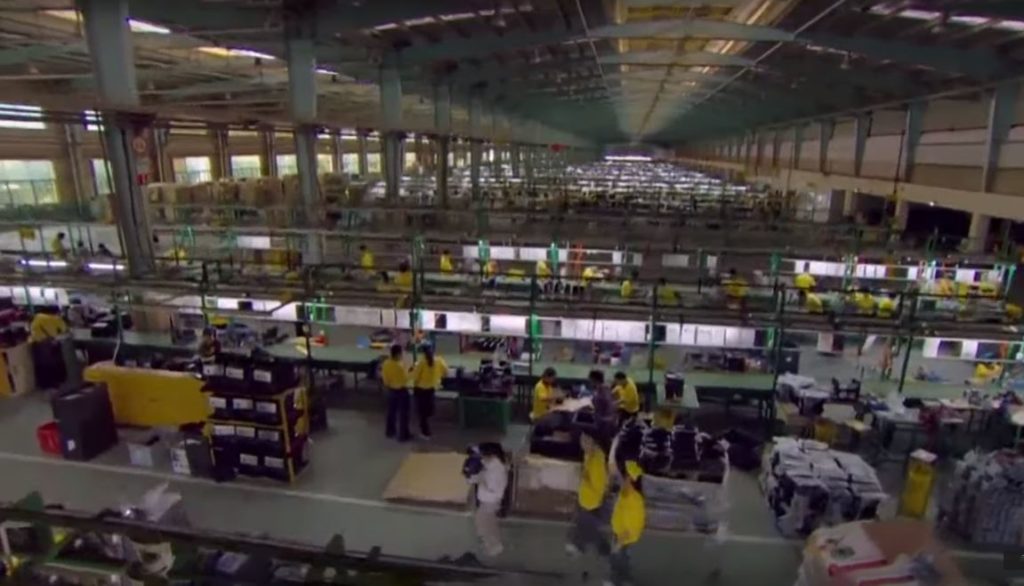
Hình ảnh một nhà máy gia công hàng ở Trung quốc, nơi được gọi là công xưởng của thế giới

Trung quốc cũng giống như Việt nam, họ bị bệnh hình thức rất nặng và tìm mọi cách tuyên truyền quá mức mô hình kinh tế XHCN của mình.

Dường như lãnh đạo xứ này chưa học được kinh nghiệm của Nhật Bản ba chục năm trước, là thắt lưng buộc bụng để xuất khẩu tối đa bất kể lời lỗ, chỉ cần gia tăng thị phần của mình là đủ, sau đó lại nhắm mắt đầu tư ra nước ngoài, thấy gì cũng mua, tưởng rằng đó là bành trướng thế lực và ảnh hưởng.
Cũng vậy, Trung Quốc đã thổi lên một trái bóng đầu tư với nhiều dự án có giá trị kinh tế thấp, điển hình là ở Thượng Hải hay Thâm Quyến, chưa nói tới bế tắc tại Hồng Công.

Lãnh đạo chậm tiến ưa khánh thành các công trình nguy nga để tiếng cho đời mà ít khi nghĩ đến dự án nhỏ bé mà thiết thực cho dân đen. Cho đến khi tất cả sụp đổ, như các nước Đông Á đã gặp năm 1997, thì lại đổ lỗi cho tư bản và đầu cơ….
Trái bóng Trung Quốc sẽ vỡ và nay đang vỡ trước mắt chúng ta?
Chúng ta có mọi chất liệu cần thiết cho một vụ bể bóng đầu tư. Kinh tế Trung Quốc phải hãm đà tăng trưởng để tránh nguy cơ lạm phát khi thị trường hết hồ hởi với ảo giác phồn thịnh và triển vọng đầu cơ.

Lãnh đạo xứ này đã hoàn tất các chương trình cải cách dễ làm nhất, nay là lúc lần tới những khâu phức tạp và rủi ro hơn thì lại bị tai họa dịch bệnh. Nền móng kinh tế quá mong manh cho nên nạn suy trầm nhỏ cũng thành suy thoái lớn và lập tức chuyển ra động loạn xã hội.
Nền kinh tế Trung quốc đang bị tác động rất xấu khi gặp tai họa bất ngờ từ bệnh dịch không thuốc chữa khiến hàng nghìn người chết trong thời gian ngắn, Việt nam lại đi học tập mô hình này nên độ rủi ro cũng rất cao.

Chúng ta không để ý là dễ đến vài thế kỷ, lần đầu tiên Việt Nam mới có một hệ thống lãnh đạo tồn tại mấy chục năm để học bài trong một đất nước hết còn chiến tranh.
Suốt thời gian đó, lãnh đạo xứ này học được gì và làm được gì cho sự tiến hóa của xã hội và quốc gia? Suốt thời gian đó, lối cải cách nửa vời chỉ cải tiến mức sống cho thiểu số đảng viên chứ đất nước vẫn chậm tiến lạc hậu nếu so với xứ khác, và hố sâu giàu nghèo vẫn đào sâu.
Việt Nam có nhiều vấn đề tương tự như Trung Quốc, với tiềm lực thấp hơn. Một vụ khủng hoảng tại Trung Quốc có thể là lời cảnh báo, đôi khi quá trễ.
Việt Nam không có một chính quyền mạnh, tức là có khả năng tác động và yểm trợ cho sinh hoạt xã hội và kinh tế quốc dân như tại các nước dân chủ, mà chỉ có một chính quyền độc tài nhưng bất lực trước các vấn đề sinh tử của đất nước.
Lầm lẫn ách độc tài với thực lực của nhà nước là sự lạc hậu sau khi cầm quyền gần nửa thế kỷ. Việt Nam cần cải cách nữa, khi những gì bùng nổ tại Trung Quốc là một cơ hội đổi mới.

Tổng Bí thư, Chủ tịch nước Nguyễn Phú Trọng. Thủ tướng Nguyễn Xuân Phúc, Chủ tịch Quốc hội Nguyễn Thị Kim Ngân chúc Tết các lão thành cách mạng, lãnh đạo và nguyên lãnh đạo Đảng, Nhà nước

Việt nam và Trung quốc đều có chung một thể chế theo Chủ nghĩa Cộng sản với mô hình kinh tế thị trường XHCN đầy mâu thuẫn và ảo tưởng.

Đảng Cộng sản ở cả 2 nước này cai trị người dân theo đường lối độc tài , mất dân chủ và thiếu vắng tự do. Chính điều đó đã dẫn tới tai họa ngày hôm nay cho nhân dân cả 2 nước, vì thiếu cơ chế kiểm tra và giám sát quyền lực bằng lực lượng chính trị đối lập cùng tự do báo chí.

Muốn phát triển bền vững và công bằng xã hội, chỉ còn con đường duy nhất là đảng và Chính phủ của cả Trung quốc và Việt nam phải trả lại quyền làm chủ thực sự cho người dân 2 nước.

Thu Thủy từ TpHCM – Thoibao.de (Tổng hợp)
Nguồn: RFA

Bộ Quốc Phòng Việt Nam vừa khẳng định với cử tri Đà Nẵng qua văn bản trả lời ngày 12 tháng 2 rằng trong số những quân nhân cấp tướng bị xử lý kỷ luật, không có người nào bị xử lý vì tham nhũng. Thật sự có phải như lời Bộ Quốc Phòng?

Hôm 13/2, Nhà văn, Đại tá Phạm Đình Trọng, từng công tác nhiều năm trong lực lượng quân đội, nhận xét:“Theo tôi, việc đấy là họ nói tránh đi để họ bảo vệ danh dự của họ thôi, chứ nhân dân ai cũng biết, các tướng tá đó đều tham nhũng đất đai, chứ không phải là không có tham nhũng.”
Trong khi đó, theo Bộ Quốc Phòng Việt Nam thì vi phạm của những quân nhân cấp tướng quân đội Việt Nam trong thời gian qua chủ yếu là do buông lỏng quản lý, thiếu trách nhiệm trong tổ chức thực hiện các qui định của Nhà nước, của Quân đội trong quản lý, sử dụng đất quốc phòng. Bộ Quốc Phòng còn nhấn mạnh những sai phạm của các vị tướng quân đội tập trung vào thời điểm các nhiệm kỳ 2005-2010 và 2010 đến 2015.
Đại úy Võ Minh Đức, người từng phục vụ quân đội hơn 10 năm, nói: “Về việc quản lý đất đai, tưởng mấy ông đó lên tới cấp tướng mà không biết gì… nó tất tần tật là vì tiền… chung chi, đút lót, để nó cho người này được dự án, người kia được dự án, rồi lấy đất quốc phòng đổi chác, bán tùm lum… Không chỉ cấp tướng, cỡ đồng trang lứa như tôi, là cấp thượng tá, không ai mà nhà tranh vách lá, toàn là ít nhất 3 tầng, 4 bánh hay có người là biệt phủ. Toàn nhà cao cửa rộng, tiền ở đâu ra, lương quân đội so với ngành khác là cao ngất ngưỡng rồi đó, nhưng chưa đủ để có cơ ngơi như thế.”

Theo Đại úy Võ Minh Đức, đó là bề nổi, chưa kể bề chìm là đưa con đi học nước ngoài, mua nhà ở nước ngoài thì tiền ở đâu ra? Đó chính là tiền bổng lộc lợi dụng chức quyền, tham nhũng , ăn cắp của công đem lại trong quản lý đất đai và các mảng khác.

Hình ảnh lô ‘đất vàng’ 3.500 m2 tại số 7 – 9 Tôn Đức Thắng Quận 1 TpHCM – của Công ty Hải Thành thuộc Bộ tư lệnh Hải quân nhưng cuối cùng trở thành đất tư nhân

Còn theo Trung tá Vũ Minh Trí, trước khi về hưu công tác tại Cục Kỹ thuật, Tổng cục 2, Bộ Quốc Phòng, có thể nhìn rõ các tướng tá trong quân đội có tham nhũng hay không qua những tài sản mà họ có. Ông nói:
“Tôi từng ở trong quân đội, với mức lương được cấp phát, để đủ sống ở thành phố đã khó, chưa nói đến chuyện mua sắm xe cộ nhà cửa. Thế nhưng tôi thấy xung quanh tôi, không đến cấp tướng đâu, mà đến cấp tá thôi, cũng nhiều người giàu có rất là bất thường. Tôi nghĩ rằng với vị trí công tác như vậy, tính chất công việc, thời gian như vậy, không thể có cách kiếm tiền nào khác ngoài tham nhũng.”
Người giữ chức vụ cao nhất trong quân đội Việt Nam bị xử lý kỷ luật tính đến thời điểm hiện nay là cựu Đô đốc Nguyễn Văn Hiến, nguyên Thứ trưởng Quốc Phòng, Tư lệnh Quân chủng Hải quân.
Vào ngày 22 tháng 10, Cơ quan Điều tra Hình sự Bộ Quốc Phòng phối hợp với Viện Kiểm Sát Quân sự Trung ương thi hành quyết định khởi tố bị can, lệnh cấm đi khỏi nơi cư trú đối với ông Nguyễn Văn Hiến về tội thiếu trách nhiệm gây hậu quả nghiêm trọng theo khoản 3 điều 360 Bộ Luật Hình sự Việt Nam năm 2015.

Biện pháp khởi tố ông Nguyễn Văn Hiến được tiến hành trong quá trình điều tra mở rộng vụ án Đinh Ngọc Hệ, Bùi Văn Nga và những tòng phạm về tội vi phạm các qui định về quản lý đất đai theo khoản 3 điều 229; và tội lừa đảo chiếm đoạt tài sản theo khoản 3 Điều 174 Bộ Luật Hình sự Việt Nam năm 2015.

Đô đốc Nguyễn Văn Hiến, nguyên Thứ trưởng Bộ Quốc phòng, nguyên Tư lệnh Quân chủng Hải quân, có rất nhiều sai phạm nhưng chỉ bị cấm đi khỏi nơi cư trú

Trung tá Vũ Minh Trí, nói tiếp:
“Ở Việt Nam có câu thành ngữ ‘Nó lú có Chú nó khôn’, tức là bản thân ông tư lệnh hải quân, ở dưới có rất nhiều cơ quan hay cá nhân tham mưu giúp việc, nếu bản thân ông ta có nhầm lẫn hay sai sót, sẽ có một hệ thống cảnh báo, ngăn chặn… kể cả cấp trên.
Thế nhưng để ra sai phạm lớn như vậy, tôi nghĩ họ không lầm đâu mà họ biết làm vậy là sai phạm… nhưng họ cố tình làm sai, vì liên quan hàng ngàn tỷ đồng thì ai cũng có thể thấy. Ví dụ ra chợ, mớ rau 5 ngàn 3 ngàn còn phải mặc cả, đằng này đây, những khối tài sản cực kỳ lớn, rõ ràng họ phải biết, nếu chênh lệch thì cũng chỉ có thể chút ít thôi chứ không phải như vậy
.”
Thượng tướng Lê Chiêm, thứ trưởng Bộ Quốc phòng, khi trả lời báo chí trong nước trước đây từng thừa nhận, vẫn có một số đơn vị trong quân đội không quan tâm đến công tác phòng chống tham nhũng, khi cho rằng đơn vị mình không có tham nhũng. Đến khi phát hiện có tham nhũng thì xử lý lúng túng.
Từ đầu năm 2019 đến nay, đã có hàng chục tướng, tá quân đội và công an bị kỷ luật, xử lý vì để xảy ra những vi phạm trong công tác quản lý đất đai. Điển hình như trường hợp của Đô đốc Nguyễn Văn Hiến.

Ngoài ra, trong danh sách tướng, tá quân đội bị kỷ luật vì đất đai còn có Thượng tướng Phương Minh Hòa, Trung tướng Nguyễn Văn Thanh, Trung tướng Nguyễn Hoàng Thủy, Đại tá Trương Thanh Nam, Đại tá Nguyễn Hải Châu, Đại tá Phạm Ngọc Dũng.v.v…

Dự án CityLand Park Hills tại Gò Vấp 27 ha – 2 mặt đường Phan Văn Trị và Nguyễn Văn Lượng, vốn đầu tư 6.000 tỷ đồng, là một trong những dự án có nguồn gốc đất quân đội

Ngoài tham nhũng trong đất đai, việc mua sắm trang thiết bị, vũ khí cho Bộ quốc phòng cũng được nêu lên nhiều dấu hỏi về những khoảng ‘lại quả’ ‘hoa hồng’…
Theo Viện Nghiên cứu Hòa bình Quốc tế Stockholm, Việt Nam nằm trong top 10 nước mua nhiều thiết bị quân sự nhất trên thế giới. Cụ thể trong giai đoạn từ 2014 tới 2018, số vũ khí nhập khẩu của Việt Nam chiếm 2,9% tổng số vũ khí bán ra trên toàn cầu. Chỉ trong năm 2016, chi tiêu quốc phòng của Việt Nam là 5 tỷ đô la và dự kiến sẽ tăng lên hơn 6 tỷ đô la vào năm 2020.
Liên quan vấn đề này, Trung tá Vũ Minh Trí cho biết ý kiến của mình:
“Tôi không có thông tin thật cụ thể nhưng nghe nói nhiều, nhưng tôi có thể suy ra từ những việc nhỏ, ví dụ như mua giấy văn phòng, xe công, hay quà cáp… thì đề có tình trạng ăn hoa hồng hay kê giá cao lên. Nên tôi nghĩ việc mua vũ khí thì rất khó tránh khỏi tham ô. Đặc biệt khi không có giám sát của cơ quan chức năng, với lý do bảo mật, an ninh quốc phòng…”
Vào năm 2017, trang tin Shephard Media trích dẫn một nguồn tin quốc phòng của Mỹ cho biết, các giới chức quốc phòng Việt Nam thông báo cho phái đoàn của Mỹ biết trong một cuộc họp ở Hà Nội, rằng các thương vụ mua bán vũ khí phải được “lại quả” 1/4 của tổng giá trị. Sau khi phía Việt Nam đưa ra yêu cầu đó, cuộc họp đã “đột ngột dừng lại”.

Nhận xét về việc đòi hoa hồng trong mua sắm thiết bị quốc phòng, ông Phạm Đình Trọng nói: “Cái đó thì gần như là đương nhiên ở cái lệ mua bán ở Việt Nam, không cần phải nói thì ai cũng biết là họ có đi đêm. Ví dụ mua vũ khí của Mỹ thì họ đòi đến 25% chẳng hạn, chính vì thế không mua được vũ khí của Mỹ mà phải mua của những nước tham nhũng như Nga, Ấn Độ… vì Mỹ quy định chặt chẽ, quan chức khó tham nhũng được.”

Hình ảnh Hải quân Việt Nam với tàu ngầm lớp Kilo mua của Nga

Tài liệu công bố chính thức của Bộ Tư pháp Mỹ có phần nói về cáo buộc tại Việt Nam. Đây là liên quan việc Airbus bán máy bay quân sự C-295 cho Ghana, Indonesia và Việt Nam.
Phần về Việt Nam không đề cập có hay không việc Airbus hối lộ quan chức Việt Nam. Thay vào đó, cáo buộc của Mỹ là Airbus đã sử dụng môi giới để giúp xúc tiến bán máy bay quân sự C-295.
Liên quan vụ mua bán, Airbus sẽ trả “đóng góp chính trị, chi phí, hay tiền hoa hồng” (political contributions, fees, commissions) cho các bên thứ ba.
Mỹ nói rằng từ khoảng 2009 tới 2014, Airbus tìm cách bán máy bay quân sự cho Việt Nam, với kết quả là bán được ba chiếc C-295.
Hợp đồng bán ba chiếc C-295 giữa Airbus và Bộ Quốc phòng Việt Nam ký ngày 17/12/2013.
Bộ trưởng Quốc phòng Việt nam giai đoạn này là Đại tướng Phùng Quang Thanh.

Hồi đầu tháng 2/2020, truyền thông quốc tế cho biết Airbus đồng ý trả 4 tỷ đô la tiền phạt cho Tòa án ở Pháp, Anh và Hoa kỳ để giải quyết một cuộc điều tra tham nhũng toàn cầu kéo dài 4 năm kể từ 2016 đến nay. Vụ việc có liên quan đến phi vụ Việt nam mua máy bay quân sự C-295 của Airbus.

Bộ trưởng Quốc phòng Đại tướng Phùng Quang Thanh

Các nhà điều tra Mỹ nói Airbus, hoặc người liên quan Airbus, đã hứa hẹn trả “đóng góp chính trị, chi phí, hoặc tiền hoa hồng” (political contributions, fees, commissions) là 6.150.226 Euro.
Hồ sơ của Mỹ mô tả tiếp rằng, một Tổ chức 4 (Organization 4), là một công ty Hong Kong làm ăn ở Việt Nam. Có ba Nhà tư vấn 6, 7, 8, đều là công dân nước ngoài, là đối tác kiểm soát Tổ chức 4.
Nhà tư vấn 7 được Mỹ mô tả là có quan hệ cá nhân lâu dài với các quan chức chính phủ và lãnh đạo hàng không Việt Nam.
Tổ chức 4 bắt đầu làm việc cho Airbus từ khoảng năm 2002.
Ngày 20/12/2013, sau khi bán xong C-295 cho Việt Nam, Airbus có thỏa thuận sẽ trả cho Tổ chức 4 khoản phí thành công, là 6.150.226 Euro.
Và rốt cuộc, theo phía Mỹ, Airbus đã thực trả ít nhất 2.935.541 Euro, theo thỏa thuận.

Thủ đoạn của Airbus là chi trả tiền cho một công ty môi giới Hongkong và 3 nhà tư vấn khác do công ty Hongkong này giới thiệu, rồi thông qua công ty môi giới ấy sẽ chi tiền cho các quan chức lãnh đạo Quốc gia đã mua máy bay.

Hình ảnh máy bay quân sự C-295 mà Việt Nam đã mua của Airbus

Quân đội là lực lượng trụ cột, với chức năng bảo vệ đất nước, nhưng tại Việt nam thì họ lại lao vào làm ăn kinh tế, kinh doanh đa ngành để thu lợi nhiều nhất, cũng từ đây phát sinh nạn tham nhũng, ăn cắp của công lan tràn.
Mỗi năm, hàng tỷ đô la tiền thuế của người dân, dùng để nuôi lực lượng này, cũng như mua vũ khí trang bị cho họ đã trở nên vô nghĩa vì sự thiếu chuyên nghiệp của quân đội và khi xảy ra chiến tranh thì hàng triệu người dân sẽ gặp hiểm nguy vì chính sách sai lầm của Đảng cộng sản Việt nam.

Hải Yến từ Hà nội – Thoibao.de (Tổng hợp)
Nguồn: RFA

  President Donald Trump reading the 2020 Federal Message in US Congress on the evening of Feb 4, behind him is Vice President Pence (left) and House Speaker Pelosi

“America’s enemies are fleeing, America’s fortunes are up and America’s future is bright.”
US President Donald Trump began his speech like that with a constant applause in the auditorium. Below is the entire US Congress and all the most powerful positions of the United States of America including: Government, House of Representatives, Senate and Supreme Court.

“Our ancestors built the most special republic in human history. And we are making it greater than ever!”
It was one of the most eloquent sentences of the Federal message delivered by President Donald Trump in US Congress on Feb 4.
Not once did he have to glance at the manuscript, throughout the 1-hour and 20-minute speech, he spoke in an unrelenting, uninterrupted and inspiring manner.
Commentators said his speech is as emotional and dramatic as a reality TV show, the State of the Union address speech is just a day before the impeachment trial in the Senate announces its verdict. President Trump showed his confidence, as observers predicted that he would almost certainly be acquitted.
The reading of the Federal Message was shaded by the tense atmosphere between the White House and the House of Representatives which is under Democratic control. Trump repeatedly delivered messages that attacked the previous government and the Democratic Party’s stance on many issues.

The event was also mixed with many “expensive” details, from a guest who was opposition Venezuelan leader Juan Guaido, whom Mr. Trump introduced as “the legitimate president of Venezuela.” The US president changed the tradition and conducted a reading of the Federal Message with unprecedented highlights, making it almost impossible for viewers to take their eyes off the screen, ABC News commented.

Venezuelan opposition leader Juan Guaido in the US Congress, whom Trump solemnly calls “Mr. President” and is “the legitimate president of Venezuela”

Three Vietnamese newspapers published translations of US President Donald Trump’s speech, but cut off a speech about his warning that “socialism destroys nations.”
In the supposed “full text” translation of Mr. Trump’s State of the Union address, the young intellectuals of the Tổ Quốc (Homeland) newspaper under the authority of the Ministry of Culture, Sports and Tourism, erased the part referring to the US “supporting the hope of restoring democracy of the people of Cuba, Nicaragua and Venezuela“, as well as the United States “leading 59 diplomatic countries to fight against Venezuela’s socialist dictator Nicolas Maduro? Whom Mr. Trump labelled a “tyrant who suppresses the people” nut “will be smashed.”

Presenting the Venezuelan opposition leader Juan Guaido, Mr. Trump said that “the legitimate president of Venezuela,” and “the man is very brave, carries the hopes, dreams and aspirations of all Venezuelans” also disappeared in the translated version of the Tổ Quốc.

Sentences: “legitimate struggle for freedom” of the Venezuelan people, and “Socialism destroys nations. But always keep in mind: Freedom of soul attachment, were also deleted.

General Secretary Nguyen Phu Trong (right) receives Venezuelan President Nicolas Maduro in Hanoi on Aug 31, 2015

In early June last year, General Secretary cum President Nguyen Phu Trong directed the preparation for the 13th National Congress of the Communist Party, saying that the party has to “grasp” and “persist in the goals and ideals of communism” and “strengthening the leading role of the Party.”

Late last year, National Assembly Chairwoman Nguyen Thi Kim Ngan received the ruling Socialist Socialist Party of Venezuela and said “believe under the leadership of President Nicolas Maduro, the Venezuelan people will succeed in realizing the goals set by late President Hugo Chavez, overcoming difficulties, challenges, stabilizing the situation to develop a prosperous and prosperous Venezuela.”
Vietnam’s top legislator was also quoted as saying that “Vietnam is willing to share experiences in socio-economic development” with Venezuela.

Regarding the Cuban-Vietnam relationship, according to Vietnam’s Ministry of Foreign Affairs, in September last year, Mr. Trong received Cuban Revolutionary Armed Forces Minister Leopoldo Cintra Frías, Trong also expressed his confidence that the armies of the two countries will “always be worthy of the trust and trust of the two Parties and people of the two countries; ready to fight and sacrifice for the independence, freedom of the Fatherland, for socialism.”

After the MPs, judges and guests at the event left the auditorium for the most time, Ms. Pelosi smiled and walked away from the podium and waved a torn copy in half to greet family members and friends present at the building. U.S. Congress.

NA’s Chairwoman Nguyen Thi Kim Ngan and First Vice President of Venezuelan Socialist Party Diosdado Cabello

The most mentioned thing after President Trump’s Federal Message ended is the image of House Speaker Nancy Pelosi tearing up a copy of the leader’s speech. She then responded to the media that it was the “most polite act she could do” after the speech ended.

Earlier, the president had refused to shake Pelosi’s hand when he came to the podium. Democrats in the House of Representatives break the tradition by not respecting President Trump’s introduction to Congress, according to the Guardian.
“Normally, the Speaker of the House of Representatives will introduce: ‘Members of the Congress, I am honored to introduce to you all the President.” Ms. Pelosi just said: ‘Members of Parliament. President of the United States,” reported journalist Jake Tapper.
Throughout his speech, President Trump also repeatedly attacked the Democratic Party and its party candidates, on a range of issues: economic indicators and policies between its predecessor and the government policies for illegal immigrants; US health insurance; and the 2nd Amendment to American people’s right to own guns.
At least 3 Democrats left the hall before the speech ended. Many congressmen present in the auditorium were upset and did not applaud Mr. Trump’s statements.

House Speaker Nancy Pelosi tearing off a copy of the Federal Message in half

“Since I was elected, we have created 7 million new jobs – more than 5 million jobs that government experts set out during their predecessors.
The unemployment rate was the lowest in more than half a century, and lower than all other governments in American history.
If we do not change the failed economic policies of the previous administration, the world will now not be able to witness the great economic achievements of the United States.
The poverty rate in the African American community has dropped to the lowest ever recorded.
In the eight years of my predecessor, more than 300,000 people of working age left the labor force. In just three years of my administration, 3.5 million people of working age have joined the workforce.
Since I took office, the net income of the lower half of the list of wage workers has increased 47%, three times faster than the increase of the first 1% group.
Actual average household income is now at a record high.
The US stock market has grown 70%, adding $12,000 billion to national assets, far beyond all expectations
.”

For China he said:
I have imposed taxes to prevent China from robbing large numbers of US jobs.
A few days ago, we signed with China groundbreaking deals, which included provisions to protect American workers, protect our intellectual property, and bring our budget billions of dollars and opens up new markets for products grown, grown and made in the US.
China has taken advantage of the United States for decades. Now we have changed that. At the same time, we have the best relationship we’ve ever had with China, with Chinese President Xi Jinping. They respect what we do.

To be frank, they cannot expect to continue to commit wrongdoing without being stopped by someone in the United States or saying “Enough.”

Now we want to rebuild the country, and that’s exactly what we’re doing. We are rebuilding America. And while we restore America’s worldwide leadership, we once again struggle for freedom in the region.”

Vietnam is an unlucky country that has been ruled by the Communist Party for 75 years, the media and the press are under the strict censorship of the party, they have a habit of hiding their mistakes and information about progress in the world.

Now, with the Internet and globalization, nearly 100 million people in Vietnam have quick access to honest information from free media.

The ruling party and its government, headed by Mr. Trong and Prime Minister Nguyen Xuan Phuc cannot hide forever, they need to end their illusory and miserable socialist orientation in order to hand over the country’s governance to the people of Vietnam.

Thu Thuy from Hochiminh city – Thoibao.de (Translated)

The Communist Party of Vietnam (CPV), which has just celebrated the 90th anniversary of its establishment this month, has existed longer than many people thought, especially with rivals during the Vietnam War (1945-1975). When the communist regimes in Eastern Europe and the Soviet Union collapsed in the late 1980s-early 1990, many commentators and analysts expected the remaining communist regimes, especially in Vietnam, to also collap soon.

Ho Chi Minh crying because of the mistakes in the 1956 Land Reform in which CPV unjustly murdered tens of thousands of Vietnamese people

An important reason why CPV is still growing is because the regime has often adjusted, even fundamentally changed major policies when faces local resistance. Another important reason is that the communists often deal with people’s criticism in subtle and clever ways.

The party’s Secretariat, Politburo, and Central Committee set national priorities.
The prime minister and senior officials are the party’s members.
Every five years, there is a National Assembly election to have delegates representing the constituencies.
Most constituencies have more candidates than seats, so voters have a limited choice of individuals rather than parties.
Most of the candidates are communist members, and as a result the majority of legisters are also. The same procedure applies to electing officials at all levels of local governments.
But despite such continuity, Vietnamese political life has changed a lot. One major reason is that the communist leaders turned 180 degrees away from the direction of national leadership in the 1980s. And one reason why the leadership changes its direction is because of the objection of farmers, workers, businessmen, teachers, intellectuals, and others.
 

Compared to the Communist regime in North Korea, Cuba, or Laos, the Vietnamese communist regime has surprisingly adaptive changes as a morphological virus. This is the reason why the Communist regime of Vietnam can last longer.

CPV’s General Secretaries over periods of time

From the acts of non-organization, their non-cooperation still causes officials to shape the way. As a result, from the early 1990s, the country’s political economy was reworked: the market replaced the centralized economic system; family agriculture replaced collectivized agriculture; and state-owned enterprises no longer dominate production and services, but most are now owned by domestic private enterprises and foreign companies.
That change strengthens citizens. The state’s interference in the life of Vietnamese citizens has decreased significantly.
For example, in the 1970s and 1980s, the government restricted travel, people had almost no freedom of association, socializing outside activities and organizations allowed by the state, most residents of the capital. Most people lived in dormitories and citizens had almost no access to information and publications other than those provided by the state.
Today, Vietnamese citizens travel easily and live in private homes. They also form groups, clubs, organizations around needs such as health, the environment, religion, sports, commerce, science, education and politics – which are less often intervened by officials. Some civil society organizations register with government agencies, many do not.  

Government and party organizations remain active but no longer monopolize the association life in the country.

Media outside state control has evolved from nothing in the 1970s to the 1980s but it is now numerous. Many Vietnamese today have easy access to radio, international television, and read – often online – newspapers, global publications.
Social media, especially Facebook, has been extremely popular in Vietnam. Citizens in Vietnam also use and create newsletters, magazines, blogs, websites with personal content that can also be very political.
Another major change is that the political criticism of public opinion has become an important factor in the Vietnamese political space.
Until the early 1990s, discontent about the economy, housing, education, employment, land, officials, state policies and most political issues was seldom publicized.
It is said only in family, friends, stealthy activities, for fear that the critic may be punished, even go to jail. This type of opposition and discontent is still common today.

People are opposed to China encroaching on Vietnamese territory and officials seem reluctant to talk about this issue. Dissidents criticize the whole regime and demand democratization. The government’s reaction to criticism of course included cruel repression. But there is also respect, discontent, and even a response. Indeed, an important reason why political criticism among the population has increased is because the government cannot, and is somewhat unwilling, repressive. The second reason is that Vietnamese people, in every region and many places, have motivated, sometimes very actively, to expand the space to be talked about on many issues.
In addition, officials often attach great importance to the state motto “of the people, by the people and for the people,” not merely a slogan.
Public political criticism expands because people are unhappy, dissatisfied and eager to hear. And as a result of the new market economy and communications technology, they have the opportunity, the means to organize and express their demands.
In order to maintain the economic, political and social order, the government felt it was necessary to listen to and follow certain people’s concerns. Therefore, they tolerate and even accept some people’s demands.

Facebookers Nguyen Lan Thang and Thao Theresa are pointing at bullet marks that police shot at Mr. Le Dinh Kinh’s house

Whether women or men, old or young, rural or urban, all can have ready and cheap means – phones, blogs, websites, photos, videos – to express frustration, protest notices, petitions, open letters, complaints to express their concerns.
To a significant extent, communist officials have let the people speak, or cannot stop them from speaking. Organizing a simultaneous, aggressive campaign to stop criticism creates the risk of a political and economic crisis that will almost certainly open up further discontent and challenge the Party’s rule.
The government often supports strike workers, who say employers are deceiving or exploiting them. Officials often found the villagers’ claims to be real, and increased compensation. The government has also revised its labor and land laws to address some concerns of workers and farmers. The government has allowed many anti-China protests. They also left some individuals openly demanding democratization.
The limit of protest when the government becomes repressive differs depending on political issues and activities. In the field of labor, the limitation is when workers plan to set up their own unions. Regarding land conflicts, the government used the police to force people after the dispute lasted for many years, and used the police to disperse large protests.
 

Officials often tolerate mild critics made by elderly, former military officers, retired government officials, or people having relations with officials, or promoted a non-confrontational democratic approach.

If the past can provide guidance, then perhaps the communist government will be less reliant on suppressing critics, peasant protesters, which will return to tolerance, and respond to complaints and demands of the people
Since the late 1990s, tolerance for democratization and human rights has been up and down. The ignorance was relatively high during 2000-2006, then decreased and the government became more repressive until about 2011. After that, for 5 years, the imprisonment of the critics was reduced. But in the past few years, the regime has returned to imprisoning dissidents.
Recently, the communist regime has proved unusually oppressive to farmers who oppose taking land. On Jan 9 this year, the violent suppression occurred when the central leadership sent armed police and other forces, perhaps more than a thousand troops, into Dong Tam commune, 40 kilometers away from Hanoi. Villagers since 2016 have protested the claim for land. It is not clear why the government decided to give up on ongoing negotiations.

In Vietnam, CPV exists by applying two ways, namely adjusting and changing.

But during 75 years of rule, they have never once given Vietnamese people a voice in the governance and administration of the country, which has led to disastrous mistakes, killing millions of lives and destroying them. Tens of thousands of cities and villages in meaningless wars.

Once the peace was restored, the Party still tried to propagate for the construction of injustice socialism, full of suffering and illusion. This cannot continue and people need to embrace their destiny soon to change the nation.

Hoang Lan from Ha Noi – Thoibao.de (Translated)

Nguồn: BBC