
Link Video: https://www.youtube.com/watch?v=nMZkpn2GPLc

128 người chết và mất tích, miền Trung lại đón áp thấp nhiệt đới có thể mạnh thành bão, báo tuổi trẻ đưa tin tối ngày 19-10.

Ở Quảng Bình, nước lớn đến nỗi tàu thuyền của làng biển đi sâu được vào trong đất liền để cứu dân. Hàng ngàn người dân bị cô lập trong đói rét trên các nóc nhà.

Ở Hà tĩnh, phương án phá đập tràn của hồ Kẻ Gỗ đã được đưa ra. Hiện hồ Kẻ Gỗ đang xả 1.000 m3/s, nếu phá đập tràn thì sẽ xả trên 4.100 m3/s, Hà tĩnh chắc chắn sẽ chìm trong biển nước.

Từ ngày 15-10 đến chiều 19-10, tại các tỉnh từ Hà Tĩnh – Quảng Trị đã làm 166.782 nhà dân bị ngập. Ba tỉnh này cũng phải sơ tán khẩn cấp 28.938 hộ/90.967 người dân, 461.627 con gia súc, gia cầm bị chết, cuốn trôi.

Về giao thông, 13 tuyến quốc lộ và nhiều tuyến đường giao thông địa phương bị ngập, sạt lở, hư hỏng tại các tỉnh Hà Tĩnh, Quảng Bình, Quảng Trị. Hiện tại, ngập lụt tiếp tục chia cắt tại 3 điểm trên quốc lộ 1 thuộc tỉnh Quảng Bình và 1 vị trí trên đường Hồ Chí Minh, nhiều tuyến đường nội tỉnh đang ngập lụt, chia cắt.

Từ ngày 6 đến 19-10 đã có 102 người chết, hiện vẫn còn 26 người đang mất tích.

Các quân nhân bị núi lở vùi xác đều đã tìm thấy, nhưng 15 công nhân ở thủy điện Rào Trăng 3 vẫn chưa tìm thấy xác, bên quân đội có lẽ đã buông tay, Facebook Đặng Dung nhận xét:

“Vậy là 22 quân nhân của đoàn kinh tế quốc phòng 337 đã lấy được xác. Trước đó 13 sĩ quan và cán bộ bị chết ở trạm kiểm lâm 67 cũng đã tìm thấy và mang về truy điệu ở Huế.

Riêng 15 công nhân ở Rào Trăng dù thiệt mạng trước nhưng hiện vẫn còn nằm dưới đống đất đá nơi đồi núi. Hai công nhân chung nhóm đã mang được xác ra là do may mắn không bị vùi lấp.

Gia đình 15 công nhân này chắc buồn lắm vì con em họ đến nay vẫn chưa được về nhà. Gặp đại nạn như nhau nhưng mỗi người lại có một số phận khác nhau dù đã chết.”

Lũ đặc biệt lớn trên sông Kiến Giang (Lệ Thủy – Quảng Bình) vượt mức lũ lịch sử năm 1979. Thêm nhiều người chết, mất tích do lũ.

Nước lũ cuồn cuộn đổ về nhấn chìm tỉnh Quảng Bình trong đêm hàng ngàn ngôi nhà ngập sâu hơn 3 mét, nhiều ngôi nhà chìm tới nóc. Mất điện, đêm tối như mực, khắp nơi tiếng người dân thất thanh kêu cứu. Cả Quảng Bình một đêm thức trắng để chống chọi với cơn đại hồng thuỷ chưa từng thấy trong lịch sử lũ lụt của tỉnh này.

Ảnh 1: phía dưới là những căn nhà ngập tới nóc ở Quảng Bình, dân kêu cứu tuyệt vọng trong đêm không có lời đáp. Bên trên là ảnh căn nhà sử dụng 80 mét khối gỗ của ông Chi Cục trưởng Kiểm lâm tỉnh Quảng trị được báo chí cho rằng nguồn gốc gỗ hoàn toàn hợp pháp xây bằng nguồn tiền dành dụm nhiều năm của gia đình ông

“12h đêm rạng sáng 19-10, bắt đầu nước cao lên, 4 chân giường được kê lên bằng 4 bình ga, nước lại dâng lên nữa thì bắc ghế lên ngồi”, một người dân được cứu vào sáng hôm sau kể lại.

Rất nhiều người quy tội cho việc phá rừng lấy gỗ và cám cảnh cho những đại hội đầy hoa và chương trình múa hát hoành tráng với chi phí hàng trăm tỷ đồng cho mỗi tỉnh trong khi người dân không có chiếc áo phao để mặc trong cơn lũ dữ.

Nhắn với ông bí thư TpHCM Nguyễn Thiện Nhân, nhà báo Nguyễn Tiến Tường viết trên Facebook của mình:

“Bí thư Nhân đừng quên rằng người nhập cư chiếm quá nửa dân Sài Gòn, đa phần đến từ miền trung. Đêm qua nước về, người miền trung xé mái nhà mò mẫm tìm đường sống, tiếng kêu cứu dậy đất trời. Cả một khúc ruột miền trung mòm mọp trong nước bạc, triệu triệu người đều hoảng loạn.

Ngay tại Sài Gòn, người gốc quê cũng không thể nào ngủ được, mắt cay xè nuốt lệ cầu trời. Ngoài van lơn ông trời ra, không biết làm gì nữa cả!

Bí thư nhân tặng hoa cho Tạ Minh Tâm, Đàm Vĩnh Hưng vui bề hát xướng, ông có nghĩ đến dân không?

Thành phố nghĩa tình của bí thư Nhân là như vậy sao?

Ở một quốc gia:

– Nhà tướng lĩnh biên phòng, cán bộ kiểm lâm nhiều gỗ là bình thường

– Quan chức khoe dinh thự gỗ, nhà vườn gỗ là bình thường

– Những ông sư trọc đầu ngồi nói chuyện nhân quả trước một chiếc bàn làm từ cây cổ thụ là bình thường

– Liên hoan văn nghệ song trùng với nỗi đau đồng bào là bình thường

Đó là một quốc gia khủng hoảng đạo đức trầm trọng!

Cho dù đây chưa phải lúc chỉ trích, thì cũng không phải là lúc phô bày những điều bình thường rất dị thường ấy ra khắp nơi như vậy.

Ảnh 2: nước lũ dâng cao khắp nơi ở Quảng bình

Sự cuồng nộ của thiên nhiên chưa chắc đã lớn bằng sự cuồng nộ ẩn chứa trong lòng người đâu!” ông Nguyễn Tiến Tường viết trong giọng văn đầy chua xót.

Facebook Nguyễn Đại đưa lên Facebook ảnh chụp một văn bản của tỉnh Lạng sơn, cho thấy chi phí tổ chức Đại hội Đảng các cấp tỉnh Lạng Sơn là hơn 86 tỷ đồng và đưa ra bản tính toán rằng:

“Cứ cho bằng nhau đi, mỗi tỉnh chi phí 86 tỷ

63 (tỉnh thành) nhân với (x) 86 tỷ bằng (=) 5.400 tỷ (năm ngàn bốn trăm tỷ). Đó là số tiền chi cho các Đại hội Đảng cả nước mà thực tế có thể lớn hơn rất nhiều vì Lạng sơn là một tỉnh nhỏ dân số ít.

Một đảng phái chính trị lấy 5.400 tỷ tiền thuế của người dân ra xài cho đại hội của đảng mình. Còn nhân dân thì gồng mình cứu trợ lũ lụt cho nhau!” Ông Nguyễn Đại đưa ra nhận định về con số chi phí tổ chức đại hội khủng khiếp của Đảng Cộng sản lấy từ ngân sách.

Nhà báo Hà Phan khiến mọi người ngạc nhiên vì cứ đổ tội cho lâm tặc. Lâu nay người ta cứ đổ “rừng cơ bản bị phá xong” là do bọn lâm tặc và người dân làm nương rẫy. Nhưng chúng ta đã lầm, xin hãy đọc con số này:

Thống kê của Tổng cục Lâm nghiệp ( Bộ NN và PTNT), chỉ trong hơn 5 năm từ năm 2012 -2017, diện tích rừng tự nhiên đã bị mất do chặt phá rừng trái pháp luật mất chiếm 11%, 89% còn lại do chuyển mục đích sử dụng rừng tại những dự án được duyệt.

Thế đấy! Rừng tự nhiên bị mất gần 90% là do những dự án được duyệt và thủy điện chiếm phần không nhỏ.

Như nơi xảy thảm họa ở Rào Trăng 3 đã cướp đi sinh mạng 3 công nhân và 13 CBCS khác bị nạn đang tìm kiếm hai ngày nay thì 200 ha rừng của Khu bảo tồn thiên nhiên Phong Điền phải ” chuyển đổi mục đích” nhường chỗ cho Rào Trăng 3 và 3 thủy điện khác. Chưa kể mở đường đi vào!

Tàn phá thiên nhiên thì rừng núi nổi giận không có gì lạ, chỉ đau đớn một điều là người gánh chịu thường không phải kẻ duyệt dự án!” nhà báo Hà Phan nhận định.
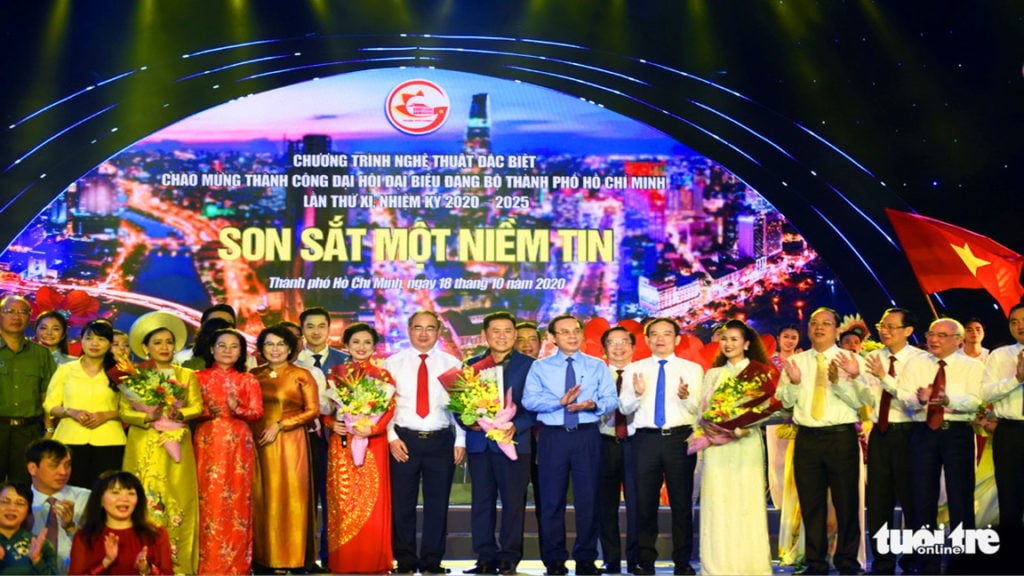
Ảnh 3: Tối 18-10, bí thư Nguyễn Thiện Nhân tặng hoa cho các nghệ sĩ Tạ Minh Tâm và Đàm Vĩnh Hưng tham gia chương trình nghệ thuật đặc biệt chào mừng thành công Đại hội đại biểu Đảng bộ TP.HCM lần thứ XI nhiệm kỳ 2020-2025.

Nhà báo Đoàn Hồng Lê kể: “Một chuyến đi quay, tôi phỏng vấn 4 vị cựu quan chức tại nhà, thì phòng khách cả 4 vị đều đặt những bộ bàn ghế gỗ cẩm lai gỗ hương to nặng nề vật vã màu vàng ệch chình ình như muốn lấy sự giàu có đè bẹp khách.

Không bao giờ tôi chọn khuôn hình phỏng vấn dùng hậu cảnh là những chiếc ghế này, vì tầm vóc thấp bé và màu da đen của người chủ ngồi lọt thỏm trong đó nhìn cực kỳ phản cảm.

Cũng chuyến đó, đến ngôi nhà rông của một làng Bana ở Kon Tum thì nhà rông đúc xi măng lợp tôn, hỏi già làng sao lạ thế, già làng nói gỗ đâu còn mà làm.”

Trận lũ ghi vào lịch sử

Theo Văn phòng Ban Chỉ huy PCTT-TKCN Quảng Bình và Đài Khí tượng thủy văn Quảng Bình, lũ trên sông Kiến Giang tại Lệ Thủy đã vượt mức báo động 3 rất cao và vượt mức lũ lịch sử năm 1979.

Trên mạng xã hội, nhiều người dân ở Lệ Thủy đã kêu cứu, chờ đợi lực lượng cứu hộ trong đêm. Một người tên Hiền Trần chia sẻ: “Mấy chục năm chưa hề thấy nước lên nhanh như lần này, và giờ nước còn lên cao nữa. Chỉ mong trời nhanh sáng“.

Theo đó, nhiều nhà dù được xây cao ráo nhưng cũng chìm trong lũ. Có những vùng thấp như Tân Hóa – Quảng Bình đã ngập tận 6 mét. Theo cập nhật của bà Jang Kều, người sáng lập ra dự án Nhà chống lũ, khu vực này các hộ đều có nhà phao nên 100% người dân an toàn về tính mạng.

Nhà báo Dương Phong, trú tại Đồng Hới, Quảng Bình cập nhật: “Lũ vẫn còn lên khủng khiếp. Bất an vì mưa lũ đã xô đổ mọi kỷ lục lịch sử, không chỉ đổ xô vài cm mà cả mét rồi mét rưỡi. Cả đêm tiếng dân kêu giữa trời mưa nước lạnh“.

Trong đêm 17/10 rạng sáng 18/10, nhiều hộ ở khu vực Đông Hà, Quảng Trị cũng bị ngập nặng và cô lập. Người dân đã lên mạng kêu cứu trong vô vọng. Nhiều gia đình có trẻ con, người già và người bệnh bị mắc kẹt, không có xuồng hay cano trong tình trạng nước vẫn tiếp tục lên cao.

Ảnh 4: Văn bản ngày 01-04-2020, của UBND tỉnh Lạng sơn gửi Bộ Tài chính đề nghị duyệt chi kinh phí tổ chức đại hội Đảng các cấp với tổng chi phí là 86.522.000.000 đ – tám sáu tỷ năm trăm hai hai triệu đồng

Lũ lụt miền Trung năm 2020 được xem được xem là một đợt lũ lụt lịch sử mới, được đặt mức báo động IV, thuộc về cấp bậc thiên tai nguy hiểm nhất của Việt Nam.

Đợt bão lũ lụt này bắt đầu từ đêm ngày 06, rạng sáng ngày 07/10/2020, tập trung chủ yếu ở các tỉnh Hà Tĩnh, Quảng Bình, Quảng Trị, Thừa Thiên – Huế của Bắc Trung Bộ, một phần Nam Trung Bộ gồm Đà Nẵng, Quảng Nam, Quảng Ngãi, Bình Định, Phú Yên.

Thiên tai hay nhân tai?

Trước thảm họa sạc lở đất, ông Trần Quốc Thành, Giám đốc sở KHCN Nghệ An đã cảnh báo “Thủy điện cóc” là nguyên nhân cho tình trạng này.

Báo Lao Động trích ý kiến của ông Thành, thủy điện “cóc” là dạng dự án thủy điện có công suất nhỏ. Dạng dự án này được nhiều doanh nghiệp lao vào làm vì suất đầu tư vừa phải, thu hồi vốn nhanh, lợi nhuận lớn.

Tuy nhiên, theo ông Thành, nếu đầu tư thủy điện “cóc” ở khu vực miền Trung nhất là Bắc Trung bộ thì lợi bất cập hại. Bởi đây là khu vực có địa hình độ dốc lớn, sông ngắn lại là nơi tập trung vào nhiều Khu bảo tồn thiên nhiên, địa chất ở vùng này phần lớn thuộc nhóm đất dễ sạt lở.

Về tác hại của loại dự án thủy điện “cóc“, ông Trần Quốc Thành đánh giá, việc đầu tư ở đây vừa góp phần phá rừng hợp pháp lại ở nơi đầu nguồn là chính. Hơn nữa, lại góp phần gây ngập lụt và thiếu nước ở hạ du. Vì mùa khô hạ du cần nước thì thủy điện lại tích, mùa lụt hạ du thừa nước thì lại xả vì dung tích thấp không thể tích.

Nhà báo Bạch Hoàn bình luận trên Facebook cá nhân rằng:

“Xin đừng nói rằng thảm hoạ đang xảy ra ở miền Trung là thiên tai. Nó không phải chỉ là thiên tai. Xin hãy gọi đúng tên là nhân tai.

Thiên nhiên nổi giận. Thiên nhiên đòi nợ. Thiên nhiên đòi con người trả giá.

Những gì đang xảy ra hôm nay là bởi chúng ta. Những người dân miền Trung khốn khổ đang phải giành giật sự sống trong cơn lũ dữ là bởi chúng ta.

Là bởi rất nhiều người trong đó có tôi. Chính tôi đã góp phần để xảy ra thảm hoạ này.

Tôi đã nhiều lần im lặng, phớt lờ, lướt qua trước những cánh rừng bị tàn phá, những quả đồi bị cạo trọc. Tôi đã không phẫn nộ trước tình trạng quan lại sai nha, khắp nơi khắp chốn chở gỗ về nhà, biến những khoảnh rừng thành biệt thự, biệt phủ, lâu đài. Tôi đã thờ ơ khi những kẻ phá rừng, tận diệt thiên nhiên, thách thức cả đất trời không phải trả giá.
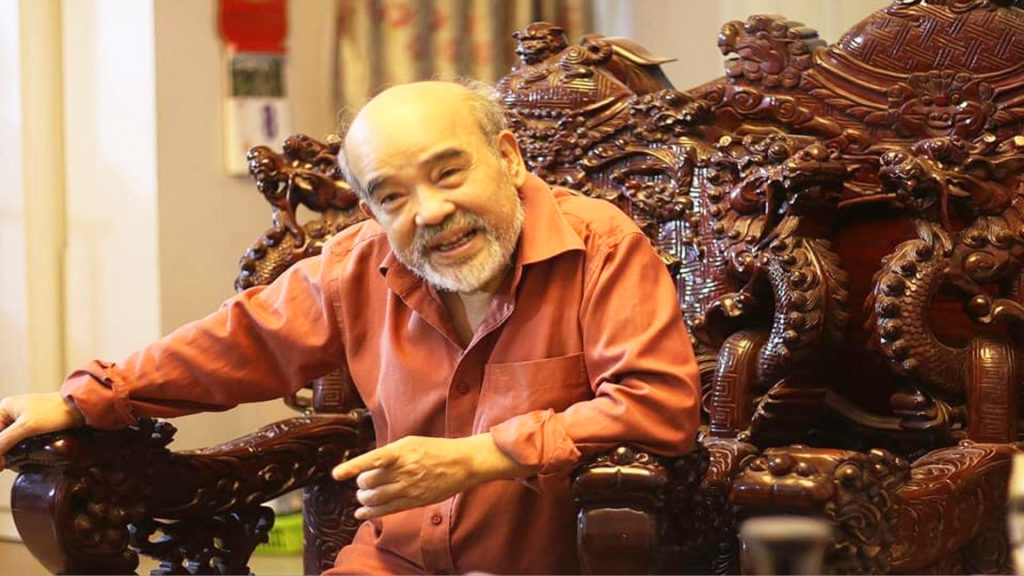
Ảnh 5: nguyên thứ trưởng Bộ Tài nguyên môi trường Đặng Hùng Võ ngồi trong nhà riêng với bộ sa lông gỗ quý chạm rồng có giá hàng tỷ đồng

Thế cho nên, nước lũ tràn về, lẽ ra tàn phá một, thì nay sức phá huỷ có thể thành mười.

Chính tôi, tôi đã không quyết tâm phản đối đến cùng khi người ta đổ cả núi tiền – tiền mồ hôi và tiền nước mắt, tiền xương máu và tiền linh hồn – để xây những tượng đài, khắp nơi khắp chốn, nơi này trăm tỉ, nơi kia ngàn tỉ.

Đất nước của những tượng đài. Tượng đài càng lớn thì phận dân càng nhỏ. Tượng đài càng cao thì lưng dân càng còng.

Để rồi, cứ mỗi lần thiên nhiên nổi giận, cứ mỗi lần thiên nhiên đòi trả giá, những người dân thấp cổ bé họng chỉ biết xót xa cho đời dân, phận lính. Để rồi cảm xúc tiếp theo là phẫn nộ, phẫn nộ vì tiền đầu tư cho cơ sở vật chất phục vụ sơ tán, cứu dân, tiền cho cứu hộ cứu nạn được bao nhiêu mà thương đau nối tiếp thương đau, mất mát trùm lên mất mát?

Tượng đài vẫn cứ cao. Biệt phủ, đền đài vẫn cứ lớn. Cơn nước cứ dâng lên. Chỉ có phận người dần chìm xuống, vùng vẫy trong nhân tai. Và rồi bây giờ lại bất lực, không biết bao giờ mới tìm ra lối thoát…” Nhà báo Bạch Hoàn nêu quan điểm.

Trên Facebook cá nhân, nhà báo Vũ Kim Hạnh chia sẻ:

“Cả đêm đọc những mẫu tin kêu cứu và cả (ít oi) những tin nhắn trả lời là chưa cứu được, hãy chờ trời sáng… Không thể không nghĩ đến những ngôi nhà toàn bằng gỗ quí, cột kèo, ghế bàn, tủ kệ“.

“Lệnh đóng cửa rừng ban hành từ tháng 7-2016 mà không được thực thi? Vì sao? Vì sản phẩm gỗ rừng tự nhiên vẫn cứ được ưa dùng và được tự nhiên bán buôn khắp các tỉnh, còn xuất khẩu tự do sang nước bạn (?). Và thủy điện vẫn cứ được cấp giấy phép. Rào Trăng là một cảnh báo quá bi thảm, đau thương liệu có đủ sức nặng để có biện pháp tức thì ngăn thảm họa? Thiên tai và nhân tai, thứ tai họa nào lớn hơn. Thảm họa kinh hoàng không chừa ai. Mà phá rừng, đắp đập, chỉ một số người ký, một số người làm và hưởng lợi“, bà đặt câu hỏi.

Ảnh 6: Tượng đài trăm tỷ ở Quảng Bình đặt ở nơi cao nhất nên không ngập, trong khi hàng ngàn căn nhà dân ngập lụt tận nóc, dân kêu cứu cả đêm trong tuyệt vọng

Hải Yến – Thoibao.de (Tổng hợp)

>>> Tướng, Tá bị bị chôn vùi – Cứu hộ hay Cứu của?

>>> Lê Thanh Hải về vườn – Lê Trương Hải Hiếu cũng “ra ma”

>>> Đảng lo Đại hội, Dân đang chết chìm

Việt Nam: Đấu đá dành quyền lãnh đạo mới – Cuộc chiến vẫn chưa ngã ngũ

Cách cài vượt tường lửa miễn phí:

Điện thoại di động (mobile phone) = https://bit.ly/2QCRpE7

Trình duyệt (browser) = https://bit.ly/3hKTidT


Link Video: https://www.youtube.com/watch?v=-45rnLDXCQc

Ngày 12 tháng 10, một quan chức về hưu đã viết rằng sự đồng thuận đã đạt được và ông Phúc sẽ là Tổng Bí thư. Phó thủ tướng đương nhiệm Trương Hòa Bình sẽ giữ chức Chủ tịch nước, và bí thư thành ủy Hà Nội hiện nay là Vương Đình Huệ sẽ kế nhiệm ông Phúc làm Thủ tướng. Bà Trương Thị Mai, hiện là Trưởng Ban dân vận, hoặc Bộ trưởng Ngoại giao hai nhiệm kỳ Phạm Bình Minh sẽ nắm quyền lãnh đạo Quốc hội.

Nội dung trên được tiết lộ qua bài bình luận của tác giả David Brown đăng trên tạp chí Asia Sentinel, nội dung chính như sau:

Hội nghị trung ương 13 của Đảng Cộng sản Việt Nam đã hoãn lại vào giữa trưa ngày 10 tháng 10 với một thông cáo kết thúc cuộc họp chỉ tiết lộ rằng khoảng 200 ủy viên Trung ương đã thảo luận về “các vấn đề nhân sự.”

Theo một blogger được biết là có liên hệ khá tốt với trung ương đảng, “tất cả đều bị kẹt trong cuộc đấu tranh sinh tử để giành quyền thống trị.”

Đây là hội nghị mà theo thông lệ được cho là để thống nhất xem ai sẽ lãnh đạo Việt Nam trong 5 năm tới và ai sẽ nghỉ hưu. Nếu mọi việc suôn sẻ như Tổng Bí thư Nguyễn Phú Trọng và các đồng chí của ông hy vọng thì giờ đây ông đã có trong tay danh sách các ứng cử viên, đúng bằng số lượng có chức vụ lãnh đạo, để tán thành thông qua trong Đại hội lần thứ 13 vào đầu năm 2021.

Những người dân bình thường có thể kết luận chắc chắn rằng quá trình phân loại vẫn đang diễn ra. Đó là bởi vì chúng tôi được biết sẽ có một cuộc họp toàn thể khác vào cuối tháng 12, ngay trước khi khoảng 1600 đại biểu tham dự đại hội đảng được triệu tập tại Hà Nội.

Người ta đồn thổi ở quán cà phê rằng ông Trọng, Tổng bí thư đảng trong 10 năm qua, đã không thể thuyết phục các đồng chí tán thành cho ông Trần Quốc Vượng làm người kế nhiệm. Vượng đã từng là cánh tay phải của Trọng trong một chiến dịch thanh lọc đảng cấp cao để loại bỏ những ai sai phạm, thiên lệch và tham nhũng.

Blogger này cũng là một quan chức cấp cao về hưu cho biết vào ngày 3 tháng 10 rằng “khi nhiệm kỳ của ông Trọng sắp kết thúc, quyền lực cũng như sức khoẻ của ông Trọng đã suy giảm. Căn đột quỵ khiến ông ấy đi loạng choạng và lầm lũi“.

Ảnh: toàn cảnh Hội nghị TƯ 13 họp phiên bế mạc ngày 10-10-2020

Theo blogger này, ngày càng trông giống với như một màn tái hiện lại trận thư hùng trước Đại hội 12 giữa ông Trọng và người kế nhiệm là Thủ tướng Nguyễn Tấn Dũng.

Hoặc có thể không quá hoành tráng. Lần này cuộc chiến khó có khả năng lan sang công chúng, và có tin đồn rằng, thay vì người của Trọng là Trần Quốc Vượng, thì Thủ tướng đương nhiệm Nguyễn Xuân Phúc đã vận động được sự ủng hộ của hầu hết các ủy viên Trung ương.

Ngày 12 tháng 10, một quan chức về hưu đã viết rằng sự đồng thuận đã đạt được và ông Phúc sẽ là tổng bí thư. Phó thủ tướng đương nhiệm Trương Hòa Bình sẽ giữ chức chủ tịch nước, và bí thư thành ủy Hà Nội hiện nay là Vương Đình Huệ sẽ kế nhiệm ông Phúc làm thủ tướng. Bà Trương Thị Mai, hiện là Trưởng Ban dân vận, hoặc Bộ trưởng Ngoại giao hai nhiệm kỳ Phạm Bình Minh sẽ nắm quyền lãnh đạo Quốc hội.

Tuy nhiên, không có gì là chắc chắn, cho đến khi đa số ủy ban trung ương của đảng tán thành một loạt các ứng cử viên và vào tháng 1, Đại hội 13 của đảng cũng tán thành.

NGHI THỨC ĐỔI MỚI CỦA ĐẢNG

ĐCSVN thay mặt 95 triệu công dân Việt Nam nắm quyền lực tuyệt đối. Nói một cách ẩn dụ, nếu chính phủ Việt Nam là bộ xương của nhà nước, thì đảng, từ trưởng thôn được ít người biết đến nhất cho đến các lãnh đạo mà chúng ta đang bàn luận, chính là cơ bắp vận động bộ xương đó.

Cứ 15 người Việt Nam trên 15 tuổi thì có một đảng viên. Đối với hầu hết các đảng viên, tham gia đảng chỉ là một động thái nghề nghiệp. Họ không thực sự cho rằng nắm giữ quyền lực chính trị nào.

Ảnh: Chương trình nghệ thuật MỪNG thành công Đại hội Đảng Hà Nội, ngay lúc miền Trung TANG THƯƠNG nhất!

Tuy nhiên, có lẽ nửa triệu đảng viên – cán bộ cấp thôn, huyện, tỉnh và trung ương, lãnh đạo các đoàn thể, cán bộ quản lý các doanh nghiệp nhà nước, giám đốc các viện, chính ủy, hiệu trưởng, trưởng khoa, biên tập viên, v.v. – mong muốn được được tham khảo ý kiến về các quyết định ảnh hưởng đến lĩnh vực của họ.

Có thể nói họ là khu vực bầu cử của 200 ủy viên thường trực và dự khuyết của ủy ban trung ương đảng, cơ quan nơi diễn ra “cuộc đấu tranh sinh tử” 5 năm một lần.

Đổi mới thường xuyên dàn lãnh đạo ĐCSVN là việc nghiêm túc. Các quy tắc được tạo ra để ngăn chặn bất kỳ phe phái hoặc bè phái nào đạt được sự thăng tiến vĩnh viễn hoặc sự xuất hiện của một lãnh đạo chuyên quyền, chẳng hạn như Tập Cận Bình của Trung Quốc. Trong khoảng 40 năm qua, quyền lực được truyền từ một nhóm lãnh đạo đảng này sang nhóm kế tiếp.

Các nhà phân tích có xu hướng giải thích động lực lựa chọn lãnh đạo của ĐCSVN bằng cách tham khảo các quy tắc của đảng về cân bằng khu vực và tuổi nghỉ hưu bắt buộc. Trên thực tế, đây chỉ là những hướng dẫn, sẽ được bẻ cong và phá vỡ khi cần để đạt được sự đồng thuận trong việc ai sẽ được nâng lên vị trí nào, ai sẽ lập chương trình nghị sự và đưa ra quyết định trong tương lai.

Cũng có thể hiểu những sai lầm trong nội bộ đảng hiện nay là một vòng đấu khác nhằm tiếp tục cạnh tranh giữa những người ưu tiên đưa ra chính sách tốt và những người nghĩ rằng chỉ khi giáo điều và kỷ luật đúng thì chính phủ tốt sẽ tuân theo.

Trở lại năm 2010, các câu chuyện trên “phương tiện truyền thông nhà nước” thường xuyên than thở về tính hợp pháp chính trị của đảng.

Nhìn lại, có thể dễ dàng nhận thấy rằng những lời chỉ trích trong nội bộ đảng này nhắm vào Thủ tướng Dũng và phe phái của ông vì cáo buộc quản lý yếu kém.

Ảnh: Ông Nguyễn Tấn Dũng bị miễn nhiệm vì chịu trách nhiệm về Tập đoàn công nghiệp tàu thủy Việt nam Vinashin được báo chí Việt nam gọi tên là tội đồ tàn phá nền kinh tế với hàng chục ngàn tỷ thua lỗ thất thoát. Trước đó được xem là quả đấm thép cùng với hàng loạt tập đoàn và Tổng công ty nhà nước đồng loạt thua lỗ thất thoát nghìn nghìn tỷ

Và mặc dù Việt Nam đã bị rung chuyển do cuộc Đại suy thoái, những thất bại ngoạn mục của các công ty đóng tàu và vận tải biển quốc doanh và đợt lạm phát khủng khiếp, ông Dũng vẫn giành được nhiệm kỳ Thủ Tướng thứ hai. Tuy nhiên, cho đến nay ông Nguyễn Phú Trọng vẫn được mệnh danh là Tổng Bí thư, và mục đích của ông ta là để loại bỏ ông Dũng.

Bộ chính trị là một ban lãnh đạo tập thể gồm 15 đến 20 đảng viên thuộc ủy ban trung ương. Tổng bí thư đứng đầu bộ chính trị. Đến năm 2012, ông Trọng đã thuyết phục được phần lớn Bộ chính trị rằng ông Dũng, được coi là không tuân theo lệnh tập thể cũng như đầy tham vọng, cần phải ra đi. Thay vì từ chức, ông Dũng đã kháng cáo lên ủy ban trung ương và được giải cứu.

Ông Dũng ấp ủ hy vọng thay thế ông Trọng làm tổng bí thư vào năm 2015. Trọng không có được điều đó. Ông Trọng tập hợp một liên minh ‘ai cũng được trừ ông Dũng’ và tô vẽ ông Dũng, với một phần sự thật, là kẻ để lọt ‘ nhóm lợi ích’ tham nhũng. Sau nhiều tháng đấu tranh nửa công khai giữa các phe phái, những người theo thuyết giáo điều đã thắng thế. Ông Dũng đã bị loại.

Ông Trọng đã vận động tốt. Khi vận động tranh cử vào năm 2015, ông hứa sẽ truy tố quan chức tham nhũng, và đã khiến dư luận bất ngờ khi thực hiện mạnh mẽ lời hứa đó. Ông Trọng nói rằng ông hài lòng về thành công của chiến dịch thay thế những người “phạm pháp” và “những người sai lệch nhận thức” trong hàng ngũ của Đảng bằng “những cán bộ gương mẫu“. Song song đó là những chiếc đinh vít đã dần dần siết chặt những công dân dám thách thức chế độ đảng-nhà nước, dù là trực tuyến hay ngoài đời.

Người ta nói rằng sau khi tổng bí thư bị đột quỵ vào tháng 4 năm 2019, phe đối lập ông Trọng vẫn cân nhắc việc kéo dài nhiệm kỳ của ông thêm 5 năm, thậm chí là 2 năm. Thay vào đó, ông Trọng tập trung vào việc củng cố di sản của mình bằng cách đưa những người được từ trung ương đảng vào những vị trí then chốt, và đặc biệt là việc Trần Quốc Vượng được chọn làm tổng bí thư tiếp theo. Ông Vượng, hiện là người đứng đầu văn phòng trung ương đảng, là người không thể thiếu trong chiến dịch chống tham nhũng.

Mặt khác, giống như hầu hết những người mới bắt đầu, ông Vượng không được nhiều thành viên ủy ban trung ương đặc biệt yêu thích.

Ảnh: Ông Nguyễn Phú Trọng (giữa) cùng một số thành viên lãnh đạo Việt Nam, bên lề cuộc họp của Bộ Chính Trị đảng Cộng Sản, Hà Nội, ngày 21/06/2019. Ông Trần Quốc Vượng (thứ hai phải qua). Ảnh: báo Tuổi trẻ

Và, đối với các ủy viên trung ương đã dày công tập trung thanh lọc thành phần xấu trong đảng 5 năm qua, Thủ tướng Nguyễn Xuân Phúc có vẻ một sự thay thế hấp dẫn, một nhà lãnh đạo đủ ‘đỏ’ nhưng cũng có tài điều hành chính quyền.

NGƯỜI KẾ THỪA

– Từ trước đến nay, Tổng Bí thư của ĐCSVN luôn là người miền Bắc. Nguyễn Xuân Phúc không chỉ xuất thân từ miền Trung, mà còn có con đường đi đến đỉnh cao cũng rất khác thường. Ông Phúc đã trải qua 28 năm đầu tiên làm quan tại quê nhà Quảng Nam. Ông Phúc vươn lên vị trí thứ 2 trong tổ chức đảng cấp tỉnh và là ủy viên mới của ban chấp hành trung ương đảng khi Thủ tướng Dũng sắp xếp chuyển ông Phúc ra Hà Nội vào năm 2006 để giúp ổn định công việc nội các.

Rõ ràng là ông Phúc đã làm rất tốt nhiệm vụ. Mười tám tháng sau, ông được bổ nhiệm làm thư ký chính phủ và năm 2011, được bầu làm Ủy viên Bộ Chính trị và được bổ nhiệm làm Phó Thủ tướng thứ nhất.

Trước thềm Đại hội 12 vào năm 2015, như chúng ta đã thấy ông Trọng đã lật tẩy được nỗ lực lật đổ tổng bí thư của ông Dũng. Bằng cách nào đó, ông Phúc lại nổi lên từ đống đổ nát của chính phủ Nguyễn Tấn Dũng để giữ chức thủ tướng. Nhiều người sẽ nói rằng anh Phúc đã làm việc đó một cách xuất sắc.

– Chủ tịch nước luôn dẫn đầu việc tham gia các chuyến thăm và nghi lễ cấp nhà nước. Là người đứng đầu Ủy ban Quốc phòng và An ninh Quốc gia, ông có nhiều ảnh hưởng đến các bộ công an và quốc phòng. Một số người đương nhiệm vị trí này đã tạo ra một vai trò lớn hơn trong các vấn đề quốc nội nhờ có thâm niên và mối quan hệ với các đồng chí trong Bộ Chính trị.

Khi Chủ tịch nước Trần Đại Quang từ trần vào năm 2018, Tổng Bí thư Trọng đã quyết định nhận luôn chức chủ tịch nước cho đến Đại hội 13.

Ông Trương Hòa Bình, người được cho là sự lựa chọn đồng thuận để kế nhiệm ông Trọng làm Chủ tịch nước, đã có nhiều năm phục vụ trong các cơ quan tư pháp.

Ảnh: Ông Trương Hòa Bình xuất thân ngành Công an, sau qua Viện kiểm soát rồi qua Tòa án nhân dân tối cao, ông là người có đủ thẩm quyền nhưng đã khước từ kháng nghị giám đốc thẩm vụ án Hồ Duy Hải đầy oan ức

Từ năm 2016, ông Bình là Phó Thủ tướng Chính phủ thứ nhất.

Sự nghiệp cách mạng của Bình bắt đầu từ vai trò là liên lạc viên cho Ủy ban cách mạng Sài Gòn-Chợ Lớn trong “Chiến tranh chống Mỹ“, khiến rất có thể ông là cựu binh cuối cùng phục vụ trong Bộ Chính trị.

– Thủ tướng Vương Đình Huệ đã liên tiếp đảm nhiệm vai trò chính sách kinh tế và từng là Phó Thủ tướng thứ nhất dưới thời Nguyễn Xuân Phúc. Từ đầu, anh Huệ đã lđược chọn để đi theo ông Phúc. Để hoàn thiện lý lịch với một chút kinh nghiệm đảng, ông Huệ được bổ nhiệm làm Bí thư Thành ủy Hà Nội vào tháng 2 năm 2020.

– Vì Quốc hội hiếm khi định hình chính sách nên Chủ tịch của Quốc hội được cho là người ít quyền lực nhất trong “tứ trụ” đảng-nhà nước. Bà Trương Thị Mai có thể cầm chắc sẽ được giao cho chức này mặc dù lý do chính để thăng chức là chỉ để cân bằng giới tính cho tứ trụ. Ngoài ra, Bộ trưởng bộ ngoại giao Phạm Bình Minh, có thể được giao đảm nhiệm Chủ tịch Quốc hội để an ủi cho việc hụt bổ nhiệm làm Chủ tịch nước.

Khoảng một nửa số thành viên Bộ Chính trị hiện tại sẽ hết tuổi phục vụ, và những người kế nhiệm trẻ hơn sẽ được đại hội đảng sắp tới hoan nghênh. Có thể đoán ra nhiều gương mặt mới, mặc dù với vị trí tứ trụ nêu trên, vẫn sẽ có rất nhiều điều đang diễn ra và theo lời của nhà bóng chày bất hủ người Mỹ Yogi Berra, “Mọi chuyện vẫn chưa kết thúc cho đến khi nó kết thúc.”

Một người chắc chắn sẽ được bổ sung vào bộ chính trị là Nguyễn Văn Nên, người đã giữ chức chánh văn phòng trung ương đảng từ năm 2016 và được bổ nhiệm làm tân bí thư thành ủy Thành phố Hồ Chí Minh vào ngày 11 tháng 10. Ông Nên gần như là người nhà: với quê Tây Ninh ở phía bắc đô thị lớn miền nam.

Lan Anh – Thoibao.de (Tổng hợp)

>>> Ép doanh nghiệp ký kết – Đảng “chôn” tỷ Đô trên sa mạc

>>> Lê Thanh Hải về vườn – Lê Trương Hải Hiếu cũng “ra ma”

>>> Đảng lo Đại hội, Dân đang chết chìm

Đại hội 13 và nhu cầu bức xúc về dân chủ

Cách cài vượt tường lửa miễn phí:

Điện thoại di động (mobile phone) = https://bit.ly/2QCRpE7

Trình duyệt (browser) = https://bit.ly/3hKTidT


Link Video: https://www.youtube.com/watch?v=LluG5lAoYu8

Nhà nghiên cứu chính sách công, PGS.TS Phạm Quý Thọ (nguyên Trưởng khoa Chính sách công, Học viện Chính sách và Phát triển, Bộ Kế hoạch và Đầu tư) trước thềm Đại hội 13 đã tái khẳng định chuyển đổi dân chủ là một quá trình mang xu hướng tất yếu cho các nước đang phát triển, trong đó có Việt Nam. Đặc biệt, để đạt được tăng trưởng bền vững trong dài hạn, một việc làm cấp thiết là Việt Nam cần phải nghiên cứu vận dụng quá trình chuyển đổi dân chủ một cách thiết thực, tránh ý thức hệ giáo điều.

Theo ông Thọ, thực tế ở nhiều quốc gia đang phát triển và các công trình nghiên cứu đã chỉ ra rằng dân chủ có liên quan chặt chẽ với phát triển bền vững.

Nhiều nghiên cứu lý luận và thực tế về mối liên hệ giữa dân chủ và tăng trưởng kinh tế trong các quốc gia mới nổi, đặc biệt ở châu Á, cho thấy rằng quá trình tăng trưởng cao trong một thời kỳ có thể sẽ đạt “điểm tới hạn”, sau đó sẽ giảm dần, và sự chuyển đổi dân chủ có vai trò quan trọng trong việc tìm kiếm mô hình thay thế để tăng trưởng bền vững.

Ông nhấn mạnh, quá trình dân chủ hoá đem đến sự ổn định thực chất và phát triển bền vững trong dài hạn. Cân nhắc tình hình cụ thể của Việt Nam, có thể vận dụng mối liên hệ giữa dân chủ và tăng trưởng để đánh giá giai đoạn tăng trưởng theo chiều rộng và tìm kiếm mô hình tăng trưởng bền vững, trong đó chuyển đổi dân chủ cần được xác định là một trụ cột quan trọng để cải cách.

Trong những năm thập niên 1990 đã từng có nhận định lạc quan rằng Việt Nam có thể trở thành “hổ” khi đạt tăng trưởng kinh tế tương đối cao, tăng GDP trung bình năm trên 7%. Hơn thế, quá trình này được hỗ trợ bởi các cải cách quan trọng về thể chế và chính sách, đơn cử như ban hành các luật doanh nghiệp, luật đầu tư nước ngoài… để hội nhập kinh tế khu vực và quốc tế, như gia nhập Hiệp hội các quốc gia Đông Nam Á, bình thường hoá quan hệ với Hoa Kỳ, gia nhập Tổ chức Thương mại Thế giới WTO…

Ảnh: Nhà nghiên cứu chính sách công, PGS.TS Phạm Quý Thọ, nguyên Trưởng khoa Chính sách công, Học viện Chính sách và Phát triển, Bộ Kế hoạch và Đầu tư

Thế nhưng thực tế đã diễn ra không như kỳ vọng khi mà hiện nay Việt Nam bị tụt hậu về kinh tế so với các nước trong khu vực, các quốc gia ASEAN.

Theo các chuyên gia, sự chậm chạp cải cách do bị níu kéo bởi ý thức hệ giáo điều là nguyên nhân quan trọng của tình hình này. Quan điểm kinh tế nhà nước nắm “vai trò chủ đạo” đã dẫn đến sai lầm của chính sách tăng trưởng nóng vội dựa vào các tập đoàn, tổng công ty nhà nước. Hậu quả nặng nề là sự sụt giảm tăng trưởng và bất ổn kinh tế vĩ mô kéo dài hơn một thậm niên sau đó, thậm chí cho đến nay chưa khắc phục xong, điển hình là 12 đại dự án nhà nước làm ăn thua lỗ và xây dựng dở dang kéo dài nhiều năm, gây thiệt hại nặng nề về kinh tế…

Ông Thọ tiếp tục khẳng định chuyển đổi dân chủ là con đường tất yếu cho Việt Nam nhất là trong bối cảnh nền kinh tế đã trải qua thời kỳ tăng trưởng cao nhờ những cải cách chuyển đổi nền kinh tế sang thị trường.

Ông Lê Thân, Chủ nhiệm CLB Lê Hiếu Đằng ở Sài Gòn, trong một bài viết đăng trên BBC vào tháng 11/2019, đã từng bày tỏ những quan điểm tương tự. Ông viết:

“Thực tế lịch sử dân tộc và lịch sử thế giới cho thấy có nhiều con đường khác nhau để phát triển, nhưng trong đó nổi rõ có hai con đường chủ yếu:

– Phát triển bằng thể chế dân chủ và tự do, dựa chính vào nhân tố con người. Người ta thường gọi đó là “con đường dân chủ”.

– Phát triển bằng sự tập trung quyền lực, toàn trị, mệnh lệnh, mất dân chủ và thậm chí kể cả độc tài. Người ta còn gọi đó là “con đường chuyên chính”.

Cả hai con đường đó đều có thể phát triển. Một bên dựa chính vào nhân tố động lực con người, còn bên kia thì dựa chính vào khả năng tập trung nguồn lực và quyền lực. Và đương nhiên con đường nào cũng đều có những gian khổ, chông gai, đừng nghĩ con đường nào là bằng phẳng, dễ dàng và chỉ có ưu điểm.

Phương Tây ngày nay rất nhiều nước phát triển theo con đường thứ nhất.

Phương Đông trước kia nhiều nước đi theo con đường thứ hai, nhưng thời kỳ sau đó đã có một số nước chuyển đổi theo con đường thứ nhất và họ đã thành công. Nhật Bản, Hàn Quốc, Singapore, Đài Loan là loại nước và vùng lãnh thổ kiểu đó.

Liên Xô trước đây cũng như Trung Quốc ngày nay đã có những thành công nhất định theo con đường thứ hai

Cả hai nước này thì Liên Xô đã từng và Trung Quốc ngày nay đang trở thành nước có nền kinh tế thứ nhì thế giới nếu tính theo tổng sản phẩm quốc nội.”

Ảnh: Biểu đồ GDP các nước ASEAN năm 2019 trong đó Việt Nam thuộc nhóm các nước thấp nhất

Tuy nhiên, ông nhận định sự phát triển theo con đường thứ nhất tức phát triển bằng thể chế dân chủ và tự do, dựa chính vào nhân tố con người mới bền vững, nhân dân hạnh phúc hơn vì có tự do, dân chủ, vấn đề con người được đặt vào vị trí trung tâm…

Ông đề xuất một lối loát cho Đảng – đó là dân chủ hóa: “Đi theo con đường dân chủ, Đảng không thoái hóa mà lại trưởng thành, tốt hơn, dương cao ngọn cờ dân chủ và xứng đáng với ngọn cờ ấy là con đường để Đảng trường tồn cùng với sự phát triển của dân tộc và đất nước.”

Facebooker Dương Quốc Chính thì dự đoán con đường dân chủ cho Việt Nam sẽ theo một quy trình như các nền dân chủ phương Tây. Tức là dân chủ sẽ phải có cho tầng lớp tinh hoa trước, dần dần mở rộng cho tầng lớp trung lưu, rồi tới toàn dân.

Ông phân tích: Ở Anh và Mỹ thì chủ nghĩa tư bản phát triển rất sớm nhờ vào tầng lớp thương gia được tự do kinh doanh, từ đó xây dựng nên tầng lớp trung lưu đông đảo và họ đã gây sức ép lên chính quyền để ép buộc chính quyền phải chia sẻ quyền lực cho nhân dân.

Cụ thể, ở Anh, thế kỷ 13, giới quý tộc đã đòi chia sẽ quyền lực với nhà vua, để lập nên Nguyên lão nghị viện, tiền thân của Thượng viện. Kể từ đó, giới quý tộc và tăng lữ mới được dân chủ, còn giới bình dân chưa được. Đến thế kỷ 17, sau cách mạng công nghiệp thì có cách mạng tư sản, giới bình dân mới ngoi lên đòi quyền bình đẳng, để rồi xuất hiện Viện thứ dân, tiền thân của Hạ viện Anh bây giờ.

Nhưng phải đến giữa thế kỷ 20, phụ nữ Anh mới được bầu cử và ứng cử.

Hiện nay, quyền lực chính được trao cho Hạ viện, Thượng viện có rất ít quyền lực, vua chỉ có quyền lực tượng trưng. Nước Anh mới trở thành dân chủ hoàn chỉnh.

Như vậy, nước Anh mất khoảng 300 năm để vua bắt đầu chia sẻ quyền lực cho quý tộc cho đến khi phụ nữ Anh được đi bầu vào năm 1930, tức là mới có quyền dân chủ đầy đủ.

Còn ở Mỹ thì giai cấp trung lưu lãnh đạo dân lật đổ chế độ thực dân.

Năm 1824, 48 năm sau khi giành độc lập, thì mới có 5% dân số trưởng thành của Mỹ được quyền bỏ phiếu. Phụ nữ Mỹ được bầu cử vào năm 1920 và đến thập kỷ 70 thì người da đen mới được đi bầu, tức là Mỹ mới có dân chủ khá đầy đủ.

Dẫn lịch sử như vậy không có nghĩa là nước nào sau này cũng phải mất 300 hay 200 năm mới từ phong kiến hay thuộc địa thành dân chủ. Bởi vì thực tế Hàn quốc và Đài Loan chỉ mất hơn 20 năm để từ độc tài thành dân chủ với nền tảng không khác Việt Nam là mấy. Còn Thái Lan và Nhật Bản thì có dân chủ theo mô hình Anh mà không cần cuộc cách mạng nào (tức là tự diễn biến).

Ông Chính cũng khẳng định: Tự do phải có trước dân chủ. Bởi vì, khi có tự do thì tầng lớp trung lưu sẽ dần dần nâng cao dân trí và có thể tích lũy kinh tế, nhờ đó mà gây sức ép được với chính quyền để chính quyền phải chia sẻ quyền lực. Tầng lớp trung lưu càng đông và mạnh thì quyền lực nhà nước càng giảm sút và đó là mầm mống của dân chủ.

Còn dưới chế độ cộng sản toàn trị, cả tự do lẫn dân chủ đều bị triệt tiêu. Vì dân không có quyền tự do ngôn luận, không được tự do báo chí, xuất bản và giáo dục, chỉ được có thông tin 1 chiều, nên dân chỉ có tư duy 1 chiều. Vì thế người dân bị triệt tiêu khả năng phản biện và không có kiến thức về khoa học chính trị, hiểu lệch lạc về pháp luật và kinh tế vĩ mô, lịch sử. Nói cách khác là dân trí thấp về kiến thức kinh tế, chính trị, triết học và lịch sử. Mục tiêu là để không thể có tổ chức ngoài đảng nào mà có hiểu biết chính trị hòng cạnh tranh quyền lãnh đạo với đảng cộng sản.

Ông Chính cũng chỉ ra những nguyên nhân giải thích cho việc ở Việt Nam lượng người cần có dân chủ không đông lắm.

Ảnh: Tháp nhu cầu Maslow

Ông nhận định thực trạng ở Việt Nam hiện nay nói đúng hơn là người ta không dám bộc lộ nhu cầu có dân chủ vì sợ mất an toàn, mất cơ hội kiếm sống và thăng tiến. Có nhu cầu mà không/chưa dám bộc lộ là còn tốt. Thực tế nhiều người thực sự không có nhu cầu. Vậy khi nào họ có nhu cầu?

Nói chung, khi có thu nhập đủ cao, đã thỏa mãn được phần thể xác (nhu cầu giản đơn như ăn, ngủ,…) người ta sẽ có nhu cầu về mặt tinh thần. Đại khái như muốn được tôn trọng, được thể hiện bản thân, khi đó nhu cầu về dân chủ mới manh nha.

Việt Nam mới là nước đang phát triển, đa số dân mới ở 2 tầng đáy của tháp, nên ít người có nhu cầu cao hơn về mặt tinh thần. Một nhóm nhỏ trí thức trung lưu mới đang ở tầng thứ 3, các tầng trên thì không có mấy. Nhưng ở chế độ toàn trị thì tháp này cũng bị biến tướng. Nhiều người có thu nhập ở tầm đại gia nhưng nhu cầu về tinh thần lại rất thấp.

Ở chế độ cộng sản, người ta hạn chế giáo dục về chính trị, xã hội, nói cách khác là ngu dân, để dân không có nhu cầu đòi hỏi dân chủ. Vì vậy, muốn dân ở các nước cộng sản có nhu cầu về dân chủ thì phải cho họ có kiến thức về dân chủ. Khi người dân chưa thoát khỏi 2 tầng dưới của tháp thì cũng rất khó để họ nảy sinh nhu cầu đó, trừ khi những nhu cầu cơ bản của họ bị đe dọa như trường hợp của các tài xế đấu tranh chống lại việc mua vé BOT Cai Lậy hay vụ việc của nông dân mất đất ở Đồng Tâm…

Thu Thủy – Thoibao.de (tổng hợp)

>>> Lê Thanh Hải về vườn – Lê Trương Hải Hiếu cũng “ra ma”

>>> Đảng lo Đại hội, Dân đang chết chìm

>>> Tàn phá miền Nam – Đảng bê tới tượng ông Hồ

Tượng đài khô ráo – Dân tình ngụp lặn

Cách cài vượt tường lửa miễn phí:

Điện thoại di động (mobile phone) = https://bit.ly/2QCRpE7

Trình duyệt (browser) = https://bit.ly/3hKTidT


The 11th Ho Chi Minh City Party Committee’s Congress for the 2020-2025 term, announced the results of the election of the 11th  Ho Chi Minh City Party Committee on Saturday afternoon.

Those on the list will be key officials of the city in the next 5 years.

Hình ảnh này chưa có thuộc tính alt; tên tệp của nó là 2020-10-19_191754-1024x575.jpg
Prime Minister Nguyen Xuan Phuc attended the opening session of the Ho Chi Minh City Party Congress on October 15, 2020

Some of the well-known officials in the city were not on the list of the new Party Committee, who are familiar with HCMC politics. Among these are those who are disciplined or about to retire so it’s no wonder, and there are also faces that are said to be young, promising but not elected this time.

Some of the absent officers could be named:

Tat Thanh Cang, Deputy Head of the Standing Committee of Ho Chi Minh City Historical Buildings Steering Committee

Tran Vinh Tuyen, City Vice Chairman, recently prosecuted

Le Van Thinh, Secretary of the Binh Tan District Party Committee

Le Truong Hai Hieu, Chairman of District 12 People’s Committee

Vo Khac Thai, District 7 Party Secretary

Huynh Van Hanh, Director of the Department of Justice

Hoang Tung, Chairman of Nha Be District People’s Committee

Duong Hong Thang, Chairman of Hoc Mon District People’s Committee

Mr. Le Truong Hai Hieu is the eldest son of former Ho Chi Minh City Party Secretary and Politburo member Le Thanh Hai.

Mr. Hieu was named in the Executive Committee of Ho Chi Minh City Party Committee for the term 2015-2020, but was not on the list of next term.

Of the 48 candidates introduced for the new term, 47 were re-elected. The only case of failing for re-election is Mr. Le Truong Hai Hieu.

Hình ảnh này chưa có thuộc tính alt; tên tệp của nó là 2020-10-19_191813-1024x576.jpg
On October 17, Mr. Nguyen Van Nen was elected Secretary of the Ho Chi Minh City Party Committee

In related personnel developments, Mr. Nguyen Van Nen was elected as the Secretary of the City Party Committee for the term 2020 – 2025 with 100% of the votes (62/62 votes).

On the basis of the proposal of the Central Organizing Commission, the Politburo and the Secretariat agreed to assign Mr. Nguyen Thien Nhan, former city Party Secretary, to continue monitoring and directing the City Party Committee of the city until the end of the 13th National Congress of the Party.

Previously, on October 11, the Politburo announced the decision to appoint Mr. Nguyen Van Nen, chief of the Party Central Office to lead the party’s organization in the city for the 2020-2025 period.

The fact that Mr. Le Truong Hai Hieu, the son of ex-Politburo member Le Thanh Hai, was removed from the HCM City Party Committee, despite being included in the re-election list, is quite special, showing the weakening period of Le Thanh Hai’s family.

Before that, Mr. Hieu was only disciplined for having an emotional relationship with a woman and having a common child, but he failed to report to the organization.

Hình ảnh này chưa có thuộc tính alt; tên tệp của nó là 2020-10-19_191826-1024x575.jpg
May 2015, Secretary Dinh La Thang appointed Mr. Le Truong Hai Hieu to join the Executive Committee of the City Party Committee, without going through voting procedures, because before that Hieu did not have enough votes to enter

Author Dien Vy has a comment on Dan Luan with the title – Le Truong Hai Hieu: My life is full of surprises! – the following content:

Appointed as the chairman of the People’s Committee of District 12, Mr. Le Truong Hai Hieu (34 years old) became the leader of the youngest district in Ho Chi Minh City. Mr. Le Truong Hai Hieu expressed that he was personally surprised when the Standing Committee of Ho Chi Minh City Party Committee whose father was the secretary gave the decision to transfer him to the chairman of District 12.

When asked about his surprise before the appointment, Mr. Le Truong Hai Hieu cordially confided: “My 34-year-old life is full of surprises, every day I wake up, I know that there will be surprises waiting for me.”

When he was born, for example, he was amazed to find himself the child of his parents, he recalls. Turning around, he was surprised to learn that his second aunt was Vice President Truong My Hoa.

Another event that surprised him was his study abroad. “My academic capacity is just as good, normal as other friends, so I was completely surprised when I was selected to graduate school in Business Administration in the US under the program of 300 masters and doctoral degrees with the money of the budget of the city, where my father worked as Secretary.”

From one surprise to another, before joining the delegation as a member of the Executive Committee of the Trade Law Faculty, a member of the Executive Committee of the Ho Chi Minh City University of Law delegation, he was surprised, knowing that his father also started a career in leadership from participating in the Youth Union and the City Party Committee.

During eight consecutive years working in District 1, experiencing the titles of District 1 Secretary, Secretary and chairman of Ben Thanh Ward People’s Committee and Vice Chairman resident in charge of economics, Standing Deputy Secretary of the District Party Committee, and the offices of the City Party Committee were under the responsibility of his father, and every time he was promoted for mandate, he was surprised.

“Later, I feel extremely surprised to know that my work history and promotion are identical to my father, and I will also be surprised if my career path is exactly the same as my father in the future,” he expressed.

He was also very surprised to receive the Prime Minister’s Medal “For children in difficult circumstances.” However, these children are completely not surprised at all about their situation.

These students are not surprised to learn that in the future they will not be able to study abroad.

When asked about the question of “The king’s son will become king again, a son of pagoda’s worker continues his father’s career to clean the temple’s yard,” Mr. Hieu said that he was surprised because this was the first time he heard this sentence.

In an interview with the press about his son being appointed as the chairman of District 12, Mr. Le Thanh Hai, the Secretary of the Ho Chi Minh City Party Committee frankly said: “I have two surprises. First, I am also surprised when I heard about this appointment. During nearly ten years of follow-up, my grandchildren’s structure in there, every day instructed the way to move; career path so clear, yet it was surprised What is surprising, comrade Kim Jong-un has just replaced his father as the leader of your country a few years ago.”

“Secondly, I was surprised when he returned to District 12. For the past eight years, the city party I led by structuring it to District 1 was also on purpose, from the Standing Deputy Secretary of the District Party Committee, Deputy Secretary of State. Chairman of District 1 People’s Committee, I think it would be more appropriate for him to be promoted to the position in District 1.”

The author Dien Vy recounted with a sarcastic voice about the shamelessness of the two father and son of this large parasite.

Hình ảnh này chưa có thuộc tính alt; tên tệp của nó là 2020-10-19_191904-1024x577.jpg
Mrs. Truong My Hoa, former vice-chairman of the National Assembly, vice state president, is the aunt of Le Truong Hai Hieu

Another article that takes a closer look at Le Truong Hai Hieu by author Le Hong Ha is titled “Le Truong Hai Hieu: A sassy man!” Published on Tieng Dan Dan newspaper with the following content:

At the 10th City Party Committee in 2015, Hieu did not have enough votes to enter the list of 69 members of the Executive Committee. However, he also “got into” the City People’s Council.

Even more strange, when Dinh La Thang returned as Secretary of Saigon, on the afternoon of May 25, 2016, Thang gave “the godfather” Le Thanh Hai a priceless gift, which was a decision of the Secretariat appointing Hieu directly to join the Party Committee, although he was eliminated not long ago.

In April 2018, Le Truong Hai Hieu committed a violation of “having an affair with a woman and having a common child, but delayed reporting to the organization.” Hieu was disciplined by the Standing Committee of District 12 District Party Committee to “raise his head lightly” by reprimanding.

Hình ảnh này chưa có thuộc tính alt; tên tệp của nó là 2020-10-19_191920-1024x575.jpg
Ex-Party Secretary Le Thanh Hai, from left to left is his younger brother Le Tan Hung (currently in prison), his wife Truong Thi Hien, the principal of the HCM City cadres school. Hien is the younger sister of Mrs. Truong My Hoa (top right photo). The bottom row is Le Truong Hien Hoa, the second son, and Le Truong Hai Hieu, the eldest son of Hai

Even recently, the Chief of the City People’s Committee Office Vo Van Hoan brazenly replied to the press: “It’s a small thing, Hieu will pass it quickly.”

In fact, the story is not as simple as Vo Van Hoan “said,” nor as the Standing Committee of the Party reported to the Party Committee of Ho Chi Minh City that “Hieu promptly added his party member history” …

Le Truong Hai Hieu lives a depraved life. Like his brother (Le Truong Hien Hoa lives as husband and wife with beautiful woman Ly Nha Ky). Hai Hieu is not constrained in “marriage” but just wants to flirt with beautiful, chaotic, and sensual girls.

And Hai had a child with a beautiful woman named Bao Phuong. With a huge amount of money from the “Le Thanh Hai family,” Bao Phuong was offered the luxury life in Saigon. Friends and the press considered her “the daughter-in-law” in … the Saigon royal family.

However, a 7-year love affair and gave birth to Le Truong Hai Hieu 2 children, but Bao Phuong still could not keep a leper like him.

Abandoned, betrayed, despised, and has no chance to became his official wife as he promised, Bao Phuong “rebelled.” She filed a denunciation to the media and central agencies to denounce and expose the truth of Le Truong Hai Hieu and the family of “Southern warlords.”

The peace of the father and son Le Truong Hai Hieu up to now is a formidable challenge to ‘Mr. Trong’s furnace,’ is a mockery of the laws of the country,” author Le Hong Ha concludes.

Thoibao.de (Translated)

“Torrential rains poured heavily on Quang Tri, Quang Binh, Ha Tinh and a part of Nghe An. Please pray for this country. The Party is concentrating on its congresses while the people are dying from floods and landslides. This is Vietnam’s fate,” Mr. Nguyen Dat An, a researcher on climate change, wrote on his Facebook.

News of the dead from the landslides in the Central region is appearing in the domestic press and more painful with calls for help in the middle of the night when the floodwaters rise too quickly last night on the morning of October 18 in Quang Tri.

Meanwhile, the Party congresses with colorful flags and many expensive gifts have not ended nationwide.

Hình ảnh này chưa có thuộc tính alt; tên tệp của nó là 2020-10-19_192136-1024x576.jpg
The scene of the landslide at the Army’s National Defense Forces Camp 337 in Huong Phung commune, Huong Hoa district, Quang Tri province. The mountain collapsed from a distance, crushing many barracks houses, causing the deaths of 22 officers and soldiers

After the incident at the Rao Trang 3 hydropower area in Thua Thien Hue, at 1 am on October 18, 22 more officers and soldiers died after being buried in landslides at the 337th National Defense Forces Camp in Huong Phung commune, Huong Hoa district, Quang Tri province.

On the afternoon, at 4.30 pm of October 17, a family of 6 people were also buried by a landslide and disappeared in Huc commune, Huong Hoa district, Quang Tri province. A a 10-month-old baby was among two bodies found.

Although bodies of a military major general and 12 high-ranking officers were found, only 2 bodies of a group of 17 workers at the Rao Trang 3 hydropower plant in Phong Dien district, Thua Thien Hue province, were found, the remaining 15 people are still in a missing state.

As of October 18, there were 4 major landslides, a total of 122 people died and missing in the Central region during this flood. 52,933 houses were flooded, 24,734 Houses were damaged or collapsed. Flood have damaged 924 ha of rice, 106,616 ha of other crops, 461,627 livestock and poultry died or being swept away.

Just last night, October 18, floods rose too quickly in the night. Quang Tri people went online to ask for help on Facebook while the rescue lines were busy, unable to call.

From the heart of the flood in Bac Binh village (Cam Tuyen commune, Cam Lo district, Quang Tri province), where he has suffered four consecutive floods in the past days, Mr. Ho Xuan Sinh said at 9.15 pm of October 17 that the Hieu river water reached its peak compared to the historic flood on October 8, 2020.

At Mr. Sinh’s house, the water was almost up to the roof of the house, now he has to stay on the ground (the mezzanine to avoid floods of the Central people) and if the water level continues up, he has to break the tiled roof to go out. “At night, the canoe cannot come to rescue while in the garden, we heard the cry of the cows,” said Sinh.

Meanwhile, on Facebook, users of this social network are constantly sharing messages of help from people trapped in floodwaters.

Facebooker Tien Dung in Dong Ha City posted the information at 10 pm: “I hope people can rescue residents in Dong Thanh. The elderly and children are calling for help. It’s already 2 meters deep“.

Hình ảnh này chưa có thuộc tính alt; tên tệp của nó là 2020-10-19_194741-1024x576.jpg
A series of calls for help from Quang Tri people on Facebook appear all night when floods rise

Le Cuc user in Cam Lo district announced again at 11 pm: “Urgent urgency, we need rescuers to team 6 An Binh, Cam Thanh, Cam Lo. The house has 2 small children that the water is flowing rapidly, the family members could not swim, was swinging on the window looking for things to destroy the house and escape. Everyone shared to find a rescuer, but the hotline could not call anymore “.

Similarly, user Le Tuyet in Cam Lo also went online to ask for help with information that his family in Cam Hieu commune was deeply flooded, there were 7 children and 2 old grandparents trapped … At 10.10 m, Facebooker Thi Tran in Dong Ha City posted: “The mother and daughter were hugging each other and crying at 72 Hoang Dieu, thanks to everyone’s help, there was no place to drain the water.”

At present, people only know to share the duty numbers of districts and towns, but many people say that these numbers are overloaded.

Commenting on the terrible incident at Rao Trang 3 Hydropower Plant, journalist Mai Quoc An wrote on Facebook:

In the Rao Trang 3 hydropower case, many people died. Then, besides the pain and sharing, it is impossible not to consider who has agreed on the policy, approving the EIA (environmental impact assessment) and licensing for the construction of hydropower clusters in the protected forest and put 13 hydroelectricity in “one tray” in general.

Please note: This is a job with very serious consequences!

Do not use natural disasters. Review EIA (environmental impact assessment) can find who is responsible! And building hydroelectricity in the protection forest is very messy.

Hình ảnh này chưa có thuộc tính alt; tên tệp của nó là 2020-10-19_194801-1-1024x576.jpg
Rao Trang 3 Hydropower Plant in Phong Dien District, Thua Thien Hue, where 4 factories in the reserve destroyed 200 Ha of the special forest

Let the people and senior managers be told the truth. It is also a way for the souls of the dead to rest.

And the deforestation has to pay the price, if they are not exposed to the public, what else will they pay for?” journalist Mai Quoc An stated his opinion.

Outraged at the Party Congress that was held wildly and hundreds of monuments everywhere, but almost no people were given life vests, rescue canoes were completely absent in the past days … Facebook Bui Van Thuan wrote on Facebook:

“The ruling party is spending huge financial resources for organizing congresses in all levels and building monuments everywhere while ordinary people in flooded areas have no life vests?

Hình ảnh này chưa có thuộc tính alt; tên tệp của nó là 2020-10-19_194816-1024x576.jpg
Happy art show for successfully Hanoi Party Congress, right at the moment in the Central region suffered from floods and landslides

And especially, people and businesses pay taxes to feed a huge parallel system of party-state, taking care and saving people is the responsibility of the party-state. If the people cannot be saved and the people cannot be taken care of, the state-party system which is subscribed to the state budget will be a failed, harmful and useless system,” Mr. Bui Van Thuan stated.

Regarding the case of 22 buried soldiers, Facebook Bui Van Thuan wrote:

“The Department of Economic and Defense 337, is merely an economic unit, deforestation is also an economy. The dead are too many, but everything has a root and a core point: Nuclear power, reservoirs, and deforestation make hydroelectricity economic.”

Natural disasters are also not human, and it is people who deforestation for timber that is the cause of today’s deaths. Journalist Huu Danh has a commentary titled Nha Go and Xac Dan, the content is as follows:

“In just 40 years, Vietnam’s immense forests have been almost erased. Years of war, suffering from bombs and bombs, the forest is still immense green “covering the army, besieging the enemy.” After the war, the forest disappeared.

Where does the forest go? Into the rich people’s houses. But giants love wood, far behind officers. In a month, we traveled through the forests of the Central Highlands, from Dak Nong to Dak Lak, Gia Lai and Kon Tum, Lam Dong, everywhere we saw the forest slaughter. After Prime Minister Nguyen Xuan Phuc’s order to close natural forests, deforestation is still rampant.

The wood at K’Bang (Gia Lai) still rushed out of the forest even though there was only a single path from the forest, a barrier blocked by the forest rangers; Timber in Ngoc Hoi, Sa Thay (Kon Tum) also massively ran out of the forest day and night – even if you wanted to pass the block, you had to “fly to the sky” to escape.

The so-called “loggers” lamented to us, after the ban, the timber was still cut down, only the lubrication money increased, and the loggers’ income decreased. During the days of going to the forest, the group of reporters were not familiar with the sacred forest of poisonous water, everyone scratched their whole body due to falls, rakes, mosquito bites …

Only after entering the forest can see, “loggers” at the lowest level have a miserable life at the bottom of society. On average, they earn several hundred thousand dong a day, but the expenses in the forest are expensive, and every logger is poor. They are miserable and miserable, sweat and blood just to make ends meet.

In another poor district of Dak Lak province, mainly populated by Ede and Gia Rai people, district leaders are determined to fight against loggers.

During his term, the district chairman was the one who constantly called for forest protection and forest loggers because this was a very large area of ​​forest. He continuously directed rangers and police to destroy loggers.

Hình ảnh này chưa có thuộc tính alt; tên tệp của nó là 2020-10-19_194836-1024x576.jpg
Former Deputy Minister of Natural Resources and Environment, Dang Hung Vo, with a precious wooden coat that touches a dragon with a market price of about VND1.5 billion

And then, people fell back when he saw that in his last term, he started building a wooden mansion near the armpit of the Forest Protection Department. The very large round pillars, full of wood car plugs, coffees were massively transported. Monolithic planks of incense and marble are also gathered. The furniture was so large that it took a few dozen people to carry it and was brought home by a large truck.

Thoibao.de (Translated)

The Communist Party of Vietnam (CPV)’s leadership arrangements for the next term are “all decided by a small group” and the one-party institution “hardly guarantees that selected personnel will not be corrupted,” one local political observer told VOA.

The CPV is in the process of preparing for the 13th National Congress early next year to introduce a new generation of leaders when the current key leadership will largely retire.

Hình ảnh này chưa có thuộc tính alt; tên tệp của nó là 2020-10-18_004225-1024x495.jpg
General Secretary cum State President Nguyen Phu Trong, Prime Minister Nguyen Xuan Phuc, National Assembly Chairwoman Nguyen Thi Kim Ngan, and delegates at the closing ceremony of the 13th Plenum

Against this backdrop, there have been a number of moves in the Party’s personnel positions to prepare for new roles, including Party Secretary Kien Giang Nguyen Thanh Nghi, the oldest son of former Prime Minister Nguyen Tan Dung, returning to the position of deputy minister of construction and Mr. Nguyen Van Nen, Chief of the Office of the Party Central Committee, being introduced as Secretary of the Ho Chi Minh City Party Committee.

With this move, it is almost certain that Mr. Nen will have a seat in the Politburo for the 13th tenure, the supreme leading body of the party while the future of Mr. Nghi, already member of the Central Committee remains unclear.

Up or down?

Dr. Nguyen Quang A, a dissident and political observer in Hanoi, said that the move of Mr. Nghi could have two scenarios: promotion or demotion.

“One is that he is no longer the secretary of Kien Giang, so it is difficult to remain a member of the Central Committee, and the return of Mr. Nghi to his previous position at the Ministry of Construction can be seen as demoted,” said Dr. A.

“The second possibility is that Mr. Nghi will be promoted to lead the Ministry of Construction. In this case, Mr. Nghi can be considered ‘promotion.’”

“Promotion or demotion depends on the outcome of the struggle between the factions, between the factions of Mr. Trong and Mr. Dung,” the observer explained.

The removal of Mr. Nghi from Kien Giang, which is considered the “base” of Mr. Nguyen Tan Dung’s family, Mr. A said, “If he does not be re-elected to the Central Committee, it is uprooting Nguyen Tan Dung’s clan.”

The 11th term as well as the 12th National Congress of the party in 2016 have seen stiff competition between Nguyen Phu Trong and Nguyen Tan Dung.

As a result, Mr. Trong continued to work as General Secretary for another term and Mr. Dung had to retire.

Hình ảnh này chưa có thuộc tính alt; tên tệp của nó là 2020-10-18_004055-1024x577.jpg
Nguyen Thanh Nghi, ex-Secretary of the Kien Giang Provincial Party Committee, son of former Prime Minister Nguyen Tan Dung

Since the retirement of Mr. Dung, many figures that were seen as the faction of Mr. Dung, such as former Ho Chi Minh City Party Secretary Dinh La Thang, have been removed. Mr. Thang was jailed for his previous mistakes.

“No democracy”

Regarding the transfer of Mr. Nguyen Van Nen, who has no background in the largest city in the country, to become the highest leader in this city, Mr. A said that if they appoint a native person to be the leader of HCM City, it would have many benefits because “the selected person has wife, children, family, relatives, and friends.”

Former Ho Chi Minh City secretaries or chairmen were mostly people who come from or go through the process of working in this city and were promoted later, while Mr. Nen comes from Tay Ninh province. Then he became the head of the Office of the Government and then changed to the chief of the Office of the Party Central Committee.

Dr. A said that the promotion of Mr. Nen to lead Ho Chi Minh City was the right of the Politburo without taking opinions from the local Party Committee and its members there while it should be their right to vote for their leader.

“Democracy in the communist-style, even within the Party there is no democracy,” commented the activist.

“The personnel issues of the Party are all decided by a group of people,” so if the Party chooses the less corrupt and capable, the people can rely on, otherwise, the people have to suffer,” said Dr. Nguyen Quang A.

“For decades, they have always been doing very tightly and carefully about personnel, not only under Mr. Nguyen Phu Trong but have they been able to do it?” Mr. A raised the question.

Hình ảnh này chưa có thuộc tính alt; tên tệp của nó là 2020-10-18_004111-1024x576.jpg
National Assembly Chairwoman Nguyen Thi Kim Ngan handing over the decision of the Politburo to Mr. Nguyen Van Nen on October 11. Nen was introduced to be elected Ho Chi Minh City Secretary to replace Mr. Nguyen Thien Nhan

Therefore, Mr. A thinks that the corruption issue is an institutional issue and not about choosing people.

“The Vietnamese people have no interest, no matter which side wins the confrontation between Mr. Trong and Mr. Dung,” said activist Nguyen Quang A. “They are just groups of people who strive for their own interests, not the interests of the country.”

According to lawyer Tran Quoc Thuan, public opinion and interested parties also raised the issue of another aspect in the occasion of the CPV’s preparation of this 13-th National Congress, which he emphasized that there is still a problem of fractions based on locality in the important organs of the party’s power apparatus.

“Now, if you look at the personnel issues of the party, as I said to submit and conclude that there is a crime, there is a mistake, there are shortcomings or not, it is clear here there is or is accidentally or intentionally but all see numerous senior officials coming from the two provinces of Nghe An and Ha Tinh.”

“Specifically, as the chairman of the Central Inspection Commission, who has proposed disciplines, is from Ha Tinh.”

“Then it was found that the head of Internal Affairs Commission is from Nghe An, and the State Auditor General is also from Nghe An, not to mention the personnel from these two localities in many agencies, committees and ministries, and central agencies, including in some important provinces and cities.

“Recently there is information that Mr. Ho Duc Phoc, now the State Auditor General, can now be promoted as the chairman of Ho Chi Minh City. If this news is valid and true, then he is a person from Nghe An.”

Hình ảnh này chưa có thuộc tính alt; tên tệp của nó là 2020-10-18_004123-1024x575.jpg
Mr. Ho Duc Phoc State Auditor General is from Quynh Thach commune, Quynh Luu district, Nghe An province.

“So those who submit plans, make proposals to condemn, discipline, handle cadres and personnel, find that the key positions are mostly Nghe An and Ha Tinh, these are a fact that the public sees and based on that, people say, should the party need to consider and do it in time?”

According to ae representative of the CPV’s Secretariat, the 13th Plenum that took place in Hanoi on October 5-10 only considered cases in the age frame.

And the personnel under special circumstances, over 60 years old for the Central Committee; over 65 years old for members of the Politburo, the Secretariat; special cases whether joining for the first time, re-election or not, such as some provincial party secretaries reaching the age limit, the first participation is not more than 55, until now 56 are not considered in the first entry. This is, which the Central Committee will consider in 14th and possibly 15th plenums.

Explaining more about the above-mentioned content, lawyer Tran Quoc Thuan, former standing vice chairman of the National Assembly Office living in Ho Chi Minh City, told RFA on the evening of October 14 as follows:

“When considering the cases where the Politburo’s documents are issued, there are issues related to the party’s charter that need to be passed by the National Congress.

If someone too old to stay, there are some people who are too old but plan to stay, such as the Prime Minister. There is an internal rule that those who are currently the Politburo and want to be re-elected are entitled to re-election for the next term under 65 (age 65), if they are over 65 they cannot be elected. Or those who reach the retirement age of 60 (age) and go to the Congress is 60, they cannot be elected. Now, if it is regulated that people over 65 (years old) continue to stand for election, those cases are also special.

According to the Party’s charter, the person who works as the General Secretary is not allowed to have 2 consecutive terms, ie at most 2 terms, but also someone who has passed the 3rd term, if he wants to stay, his/her case must be approved by the new Central Committee.”

Before that, the 12th Communist Party Congress held in early 2016 had 5 people introduced as “special cases.”

At the same age and party age as the current head of the Communist Party of Vietnam, attorney Tran Quoc Thuan suggested a few leaders who may be on the special case list for the upcoming National Congress:

“Also heard that there are a few special cases of the Secretary-General, the Prime Minister and the President. If talking about overage, Mr. Tran Quoc Vuong is over 2 years old, Mr. Phuc is over 1 year old, Mrs. Kim Ngan is over 1 year old, Mrs. Trong is too many years, including 2 terms, this is the third term. So the National Congress will decide.”

Thoibao.de (Translated)

After the Dak Lak Police’s emergency arrest of Dr. Pham Dinh Quy in the middle of the night with the charge of slandering which is stirring up the public opinion, many journalists recently announced on Facebook a letter addressed to the lecturers and students of Ton Duc Thang University of its suspended Rector Prof. Dr. Le Vinh Danh. Mr. Danh is being disciplined being suspended from work for 90 days and his lawsuit was refused by the court.

Mr. Danh wrote the letter on October 2, after a lecturer of the university, Dr. Master Pham Dinh Quy, met legal trouble.

Dr. Le Vinh Danh, suspended rector of Ton Duc Thang University and on the left is his letter sent by email on October 2

In the letter, Mr. Danh expressed his passion to build a world-class university with an aim to train global citizens. All projects that have been implemented are “with the intention of turning the university into a research university, an incubator for creativity to reform the country” and with “ideals and actions for the nation.” Danh also implied that what was happening was aimed at undermining that ideal and the achievements of the university. He also expressed his confidence in the integrity of Dr. Pham Dinh Quy even though Mr. Quy was being accused of slander.

The full text of Dr. Le Vinh Danh’s letter is as follows:

“Ho Chi Minh City, October 2, 2020;

– Dear teachers, teachers, and employees of Ton Duc Thang University,

– Dear students of the university,

Our Ton Duc Thang University is going through difficult days. As an individual and a main person responsible for recruiting and training you for many years, I would like to have a few words to you.

The achievements of our school, from position on international rankings to a world-class learning environment that some might think, we are striving to become an international university, to train global citizens.

But, for Ton Duc Thang University that you have spent all your sweat and wisdom, most of your life to building together, not just that.

Because, behind that international measure is the ideal and action of national service.

In this school, all projects have been and are being implemented, from the library to the Institute of Computational Science, from the Institute of Genetics and Breeding to the Vietnam-Finland International School, from school sports development to laboratories … were born with the intention of turning the university into a research university, an incubator for innovation to reform the country.

We have invested together in a future where Ton Duc Thang University becomes an elite school, where training people will make great and great contributions to the development of the country and the world in the long run.

What is happening can not destroy that ideal as well as the achievements already there.

Mr. Bui Van Cuong, Party Committee Secretary of Dak Lak province, and on the left side are 7 documents which are previously completed dissertations that Mr. Cuong has copied for his Ph.D. dissertation, was denounced in great detail by Dr. Pham Dinh Quy

Dr. Pham Dinh Quy came to our Ton Duc Thang University for sharing this ideal. And I fully believe in the integrity of Mr. Quy, even though he is facing charges of “slandering” others.

I hope that we – those of you who are friends, colleagues, who have been building this school together, will continue to keep your faith in Mr. Quy.

I also hope that the students who are students of Mr. Quy will continue to trust their teacher, as they have believed and selected Ton Duc Thang University as a place to grow and prepare for the future.

I understand that teachers and students are feeling anxious, even confused and helpless by the allegations of violation that the testing agencies have made to our school and me personally. I share this feeling with you.

But, I hope you will continue steadfast in the path we have opened together to preserve the ideal of school service.

I also hope you understand that your job is to continue to protect the unfinished educational projects, the innovations and creativity of our university over the past 13 years; to protect the future of a school on its way to becoming an elite research university, incubating ideas to reform the country, instead of protecting me personally.

My job, I have a duty to clarify and I believe superiors will have a fair reconsideration.

With this letter, I want to reiterate that every maid, guardians, students, lecturers, and staff members of the University are the subjects, together creating Ton Duc Thang University today. It was not readily available, nor it was from outside.

I am very grateful for this! And, believing that justice will endure, our university will definitely restore the form we have had over the past 13 years.

Students of the Faculty of Applied Sciences of Ton Duc Thang University are surveying and doing research in the University Experimental Garden

Commenting on the letter of Dr. Le Vinh Danh, journalist Pham Ngoc Hung wrote on his personal Facebook as follows:

“Mr. Le Vinh Danh defended the integrity of Mr. Pham Dinh Quy at the time of Mr. Quy’s prosecution, which shows his leadership character worth mentioning.

The essence of the letter, however, was that Danh positioned himself as a reformer of higher education, and with firm-believe reasons, it was positioning of success.

This self-positioning also meant to push the Vietnam General Confederation of Labor and the Ho Chi Minh City Party Committee into a very bad political position, which is the position of conservatives trying to stop reform.

Although the struggle between the conservative and reform factions is still going on, reform is still an inevitable trend.

The letter places Danh at the vanguard of the reform faction in education, and so he may remain out of office but is likely to return to a different position when reform prevails.

Just hope it’s not too late, because he is 57 years old.

If Danh is removed from office and dismissed, it also means that the reform faction has been crushed, and is a sign of a desperate future for the regime.”

Regarding the plagiarism of the doctoral thesis of Secretary Bui Van Cuong, journalist Hoang Nguyen Vu commented on an article titled “The law cannot protect the stolen cadres!” with the following content:

“If it is plagiarism, just one sentence of another person without quoting, not recording the source, or using a generic document without specifying the reference source, is still stealing.

A dissertation can use many resources, possibly hundreds or thousands of books and works. But that does not mean being allowed to immaculate one’s work as if you write it, as if you do research – it is blatant stealing and deception.

Dr. Professor, honored with People’s Teacher tittle Luong Cong Nho, who is a Ph.D. academic supervisor for Secretary Bui Van Cuong with a two-fronted house in the center of Hai Phong costs hundreds of billions VND. In an interview with Dan Viet newspaper about the amount of hundreds of billions of dong and $2 million sent to the bank for saving, Mr. Nho said that he stood in the name of his relatives, but through verification, his wife sent most of them for their two children studying abroad at the time

To be a Ph.D., which steals other people’s brainpower, is a kind of shameless kind. If we have no integrity, we are not qualified to lead whom, to manage whom, to teach whom, let alone sit on top of people’s necks.

Even though the thesis examines the “stealing” rate within the allowed category, it is a matter of science. As for the morality of state officials, stealing is still a bad behavior, not ethical enough to be a leader. Don’t say sitting there blatantly squeezing other people with belly fat.

Let’s see, when are you going to get the fire wrapper?

Not to mention the motivations of the whistleblower, only the accused behavior – the theft – the law needs to be clarified, the professional council is needed – even the copyright protection agencies appraise to do so clear. Be fair to the public: if you think the whistleblower is slander, you must also prove that the other person did not steal. Thesis touching, although it was taken down, but the photocopies were complete. Please prove “purity”!

The dissertation was taken down, and ambiguity began to appear. Just let the public prove it, but doing so is like a series of intellectuals unanimously covering the thief and the next law as a tool to help protect him?

The confidence of the people does not deserve to be hurt by the kind of cadres that lie, blatantly stealing the brains of others to paint education for their power.

And of course, if the law is in favor of a thief, the consequences are dire. It is impossible to defend wrong with a greater difference.

Let me see, and all the good guys, what are you going to do! “

Thoibao.de (Translated)

On the morning of October 12, the 17th Hanoi Party Committee Congress for the 2020-2025 tenure, opened with the participation of an unprecedented number of leaders of the party and state.

After Mr. Chu Ngoc Anh took over the chairmanship of Hanoi, the press simultaneously reported that Nguyen Duc Chung’s application for bail to cure cancer had been rejected on the grounds that his mistake was very serious.

Hình ảnh này chưa có thuộc tính alt; tên tệp của nó là 2020-10-14_231600-1024x576.jpg
General Secretary cum State President Nguyen Phu Trong attends the Congress

Attending the Hanoi Party Congress were General Secretary – State President Nguyen Phu Trong and other high-ranking officials such as former General Secretary Nong Duc Manh, former State President Truong Tan Sang, National Assembly Chairman Nguyen Thi Kim Ngan, and 497 official delegates representing more than 45,000 party members in the entire city party’s unit.

The capital’s economy is “not breakthrough”

Speaking at the opening of the congress, Hanoi Party Secretary Vuong Dinh Hue affirmed that the Party Committee, government, army and people of the capital have successfully implemented the Resolution of the 16th City Party Congress, achieving many important results with the spirit “Hanoi for the whole country.”

According to Mr. Hue, the city economy, culture, and society continued to develop impressively; national defense, security, social order and safety are guaranteed in all circumstances; the urban and rural appearance has had a new change, becoming brighter, greener, cleaner, more beautiful, more spacious and modern.

According to the political report submitted to the congress, for the 2015-2020 term, the capital’s economy achieved a good growth rate, on average in the 2016-2020 period, the total gross domestic product (GDP) was estimated to increase by 7.39%, reaching the set target (7.3-7.8%), higher than the 2011-2015 period (6.93%).

Political report stated the target to 2025, complete the target of industrialization, GDP/person will reach $8,300-$8,500.

By 2030, Hanoi will become a “green – smart – modern” city with regional and international competitiveness; to complete the capital industrialization; GDP/person reached $12,000-$13,000.

By 2045, Hanoi will have a high quality of life; comprehensive and sustainable economic, cultural and social development; is a globally connected city with international competitiveness, GDP/person reaching over $36,000.

”Hanoi must be really representative, model in every way“

Hình ảnh này chưa có thuộc tính alt; tên tệp của nó là 2020-10-15_003821-1024x575.jpg
Overview of the Congress hall with a large number of leaders from the Party and State agencies

According to the Secretary of the Hanoi City Party Committee, the General Secretary cum the President of the State has directed: The Hanoi Party Congress “must be a truly representative, model in all aspects and substantially successful” as is the capital, the heart of the country, the political and administrative center of the country.

The Hanoi Party Committee has determined the high political determination in building and developing the capital in the period 2020 – 2025, with a vision to 2030, with a vision to 2045 as: “Exemplary building the Party Committee and the main clean and strong system.”

Mr. Hue also emphasized that “it is necessary to focus on detecting and selecting virtuous, talented, reputable and promising comrades through practical action, ensuring a reasonable structure, especially young cadres and female ones.“

General Secretary Nguyen Phu Trong said at the ceremony: “Hanoi has never had the scale, stature, and position as it is now.”

“The higher the position, the more exemplary, especially in the capital,” Mr. Trong emphasized.

In 2020, Hanoi will experience many upheavals with Hanoi’s leaders being disciplined, probed, and arrests of dissidents.

Specifically, on August 28, the Ministry of Public Security probed and detained Mr. Nguyen Duc Chung for 4 months to investigate the allegation of appropriating State secret documents.

In addition to the above case, Mr. Chung is also investigated for responsibility related to two other cases.

Firstly, the case of smuggling, violation of accounting regulations causes serious consequences; money laundering; violation of bidding regulations caused serious consequences at Nhat Cuong Trading and Technical Services Co., Ltd.

Hình ảnh này chưa có thuộc tính alt; tên tệp của nó là 2020-10-15_003847-1024x576.jpg
Former Chairman of Hanoi Nguyen Duc Chung

In January, Mr. Hoang Trung Hai, member of the Politburo, secretary of the Hanoi City Party Committee, former member of the Party’s Civil Affairs Committee, former deputy prime minister was disciplined for ‘serious violations’ when he was deputy prime minister. Accordingly, Mr. Hai has had serious violations and shortcomings in the process of directing the implementation of phase II production expansion project – Thai Nguyen Iron and Steel Company (TISCO II project).

Hanoi also experienced upheavals with cases that caused insecurity in the hearts of the people such as the Dong Tam case and the Cat Linh – Ha Dong railway project.

The conflict between the government and the people of Dong Tam resulted in the deaths of Mr. Le Dinh Kinh and three police soldiers. As many as 29 people were put on trial for “murder” and “resisting on-duty state officials.”

In addition, the Vietnamese government has also increased repression and arrests of dissidents.

On the morning of June 24, the family of activist Trinh Ba Phuong, including himself and his younger brother Trinh Ba Tu and his mother Can Thi Theu, were arrested and detained to investigate the crime of “Making, possessing, disseminating or propagating information. documents, articles aimed at opposing the State of the Socialist Republic of Vietnam.”

On October 7, Hanoi issued a decision to probe a criminal case against activist Pham Thi Doan Trang on charges of “conducting propaganda against the State of the Socialist Republic of Vietnam” and “making, storing and distributing disseminate or propagate information, documents and articles to oppose the State of the Socialist Republic of Vietnam.”

The Vietnamese press reported on the morning of September 25, that Mr. Chu Ngoc Anh – deputy secretary of the Hanoi City Party Committee – was elected chairman of the Hanoi People’s Committee for the 2016-2021 term.

Hình ảnh này chưa có thuộc tính alt; tên tệp của nó là 2020-10-15_003905-1024x576.jpg
Mr. Chu Ngoc Anh, the new chairman of Hanoi (left), with eyes that express high expectations for Prime Minister Nguyen Tan Dung at the time

However, observers are not satisfied with the election of only 1 candidate and the result is 100% of the votes in a secret ballot.

The opinions that only the Party elected but the people did not vote, such voting was a formality, false, and underestimated the people were “far inferior” to the feudal era.

Professor Mac Van Trang quoted a newsletter from Vietnamnet to compare that Tokyo’s Mayor Koike Yuriko had competed over 21 candidates voted by the people with nearly 60% votes.

Mr. Nguyen Duc Chung was not given bail for medical treatment because his violation was very serious, the domestic newspaper reported on October 2.

According to To An Xo, the Security and Investigation Agency of the Ministry of Public Security has received a request to change the detention measure with Mr. Nguyen Duc Chung, former chairman of the People’s Committee of Hanoi.

“Through investigation and discussions with the Procuracy, seeing that the crime of appropriating state secrets is serious, there is no immediate change to preventive measures,” said Mr. Xo.

Mr. Xo affirmed that the Investigation Security Agency will coordinate with the medical agency to provide medical examination and treatment and provide health care for Mr. Chung in the detention center.

Mr. Xo said that Mr. Chung’s health as reported by the Investigation Agency was normal under the new conditions. The investigation is still being continued, related to 3 cases and if related, further investigation will be continued.

So the titles: Hero of the People’s Armed Forces (2004), First Class National Defense Medal (2007), First Class Victory Medal, did not save Chung.

What the public is concerned about is: a Public Security general who, when he was named the youngest general of the police forces was only 46 years old, had a Ph.D. in Law, was once considered a “legendary general“, with a thick record of achievements. He thought he is “inviolable” and no one dared to touch it, so he started to follow the example of the seniors in the police, and “earn money” at all costs to have money to invest to climb and get higher positions.

But: “No one learns all doubts in life.”

With a person who was once considered a bright candidate for the position of Minister of Public Security in the next term, why have such a painful “stroke“? The so-called “act of appropriating documents of state secrets” is just an excuse. As a general who used to be the Hani police chief then the chairman of the capital city, what needs to be “appropriated“?

As an adult and rising from the Public Security forces, Little Chung dared to “expose the shirt to the viewer“, saying so is like hitting the face of the police, which is the most favored force today. Then his death is “the right process.”

As for the crime of telling Nhat Cuong to evade taxes, or having a few “backyard“, then please … “mum ba la, we all are” not only Little Chung.

It is said that Chung because he believes in General Secretary Trong’s sentence: “It is difficult to fight against corruption because we beat us ourselvé.” Believing in the sentence “our party is very humane, humane, kind and loving“, so he can meet the party’s chief to “negotiate” for his positions and money just to avoid being arrested. But the “negotiation” failed and Little Chung has to “sacrifice his life to strengthen his son’s life.”

That is to say, there are many types of corrupted officials to be probed and investigated. They are in the same fraction or others.

If we compare the crime of Little Chung with that of Hai Heo and Tat Thanh Cang, Chung’s crime is just a nail. But Hai Heo, in addition to the “steel wall” that is the Chinese factor and the power of his wife, must have “paid for” and now does not threaten anyone in any faction. And Tat Thanh Cang does not “melt into shit” because he “knows things.”

Among the ranks of police officers who were thrown into the furnace, there were two people who were named Hero of the Armed Forces of Vietnam, Phan Van Vinh and now Nguyen Duc Chung.

That is:

Yesterday was Hero

Today is the general “waving around” … the furnace.

Thoibao.de (Translated)

Primary school students at Phu Tho Primary School Primary in a coastal village

Vietnamese Grade 1 textbook of the Canh Dieu group is currently facing fierce criticism from the online community for “errors” content. How serious are these errors? Is there any measure to deal with when the book has been taught?

Talking to BBC News Vietnamese, translator and researcher Nguyen Viet Long said that the Canh Dieu set has a few “incomplete” places, but not to the point of “anti-educational” or “vulgar” and others like online comments, there are even many innovations to increase children’s vocabulary and reading time, especially with the support of picture and videos as well as and teachers.

Mr. Long told the BBC:

“I see in general there are three main criticisms on social media: the use of the word rough and vulgar words, using dialect instead of the national standard word; the division of fables (part 1, part 2) easily misleading; the allegory was edited to the point of “lack of logic, objection, lack of humanity.”

“When I first read these criticisms, I find it very plausible, even to cause aggression. But in fact, very few people have mentioned the professional and pedagogical aspects of the above issues but mainly deduce, even fabricate, to attack book writers and appraisers, and even attack their descendants online.”‘

Outrage on social networks

La Fontaine’s fable “cicada and ants” becomes “cicada and chickens” in the Vietnam first grade textbook”

Controversial

The online comments mainly suggest that the textbook uses many dialects instead of the standard language. For example, “no/không replaced by “chả,” “gà con/chick” becomes “gà nhép,” “ăn/eat” becomes “nhá” or words that are considered unfamiliar to young children such as bean sprouts, crayfish, milkfish, grouse, yang, giant umbrella, …

In addition, the online community is also resentful that some readings are adapted from the fables of famous authors, but there are a lot of changes, content undercuts, or changes of the characters which lead to losing the education. For example the story “chickens and ants” changed to “chickens and ticks,” and “crows and foxes” to “crows and dogs,” etc.

Many angry comments that the book compilation team, in which Professor Nguyen Minh Thuyet is the editor, and the book appraisal committee, all “shut up to eat money.”

Why lead to controversy?

According to researcher Nguyen Viet Long, because students must ensure that students finish reading early in order to have time to learn other knowledge, the first-grade Vietnamese book Canh Dieu has included many stories from the first lessons. Unlike the old Vietnamese books, which mainly teach spelling, there are only one or two stories at the end of the book.

Because of having to teach students to read stories early while not fully learning the rhymes, book writers are in a “stuck” position: They have to correct and force words to ensure that they do not include words with uneducated rhymes.

That is the reason why in lesson 1, there is a controversial word “chả” that contains “a” instead of the word “ông” that rhymes “grandfather” until lesson 85 is learned. Lesson 33 has the word “chew” instead of “eat” and contains “eat” rhymes until lesson 58 is new.

Writer Phan Ho Diep, from the perspective of the person who wrote a book for grade 1 students, also shares this idea.

“Because of that principle, the writer of the book must set up a “matrix” to choose the correct language/word containing the rhymes that the child has learned …. leading to forced sentences, the paragraphs that you think are naive,” Mrs. Diep wrote on her personal Facebook.

Regarding words that are considered “vulgar” like “chả,” “tợp”  and “cuỗm,” researcher Nguyen Viet Long disagrees. “They can be blatant rhetoric used with peers. They cannot distort a student’s character, especially when there is an instructor to use,” he said.

“In everyday life, many of these words still appear normal, or in proverbs, like grandma chewing / chewing rice for you, I don’t know, Who knows, ghosts eat them …”

Mr. Long added: “Some other words were criticized as local dialects, the authors said they were from Tran Dang Khoa’s poetry. The crow calls for “quà quà” instead of quạ quạ from Ma Văn Khang’s work. I think that from onomatopoeia, “gift” or “quà quà” is based on the subjective perception of each person and the content to be directed towards the story.”

“Many words are criticized as a foreign dialect for students such as bean sprouts, crayfish, milkfish, grouse, yang, giant umbrellas… in fact, the words are quite popular or are official name of a species of tree or fish, there is not even an alternative word.”

“Or abstain from” shady hibiscus,” assuming it must be” hibiscus,” while the Vietnamese dictionary says “shady hibiscus. In my opinion, this seems like plucking the hair for traces. If you know or can’t look up these words, you should do something else. Not to say the book writer’s motto is to provide some relatively common local words (in the Vietnamese dictionary) for students.”

“Many local words are very popular, in Vietnamese dictionary or names of animals and plants, so they should learn, if parents do not know, their children cannot or do not need to know. And besides words, there are channels. pictures and teachers to help students understand the correct words and usage.”

“There is a barrier to the introduction of fables in the book that the content often exceeds the number of words and lines allowed in each lesson, so it has to be edited in the form of” adaptations,” retell,” sometimes divided into two lessons, part one, part two.”

“This place is also very controversial, some people do not accept it, saying that cutting the paragraph like that causes misunderstandings about meaning, spoils students, is to teach cheeky speech, to cheat, to be insolent. Here, students do not study by themselves with books, but there is always an instructor to correctly understand the other lesson! “

However, researcher Nguyen Viet Long also pointed out the places he called “errors,” “lack of logic,” and “need to be edited” in the book.

He said that with the fable, when editing, it is necessary to comply with what is in accordance with nature and ancient correct conceptions of animals.

For example, the fox represents cunningness. If replacing with a dog is an animal that is friends with humans, it is not advisable. Or replace ants with ticks, the character relationship has changed. Because chickens will eat ticks right away and no friendly talk.

Some are not very standard or somewhat confusing, like the story “Ticks and chickens.” Sticks said “give something to go” sounds very confusing. Even so, in a conversation situation, it is acceptable. The book has a picture of the leaf and the previous sentences help to understand better.

According to Mr. Long, under the pressure of public opinion, the next book compilation team will fix some “errors” places, but not to the extent of having to withdraw.

Lonely opinions

In addition to the anger of the online community, there are still opinions that are considered “isolated” when defending the book series.

Dr. Tran Van Phuc – who has an account of more than 56,000 followers on Facebook – said “this is a good book.” He wrote:

“Regarding the idea that the book distorts the original stories, I disagree, this is like the fun-filled students who like to ‘make’ a song like ‘We can’t boil vegetables’ which singer Son Tung previously covered from the song ‘We don’t talk anymore’ to become a famous hit.”

“Regarding the opinion that local words, words are not suitable; I personally do not think so. Obviously, the number of Vietnamese words is very limited, so the inclusion of local words only makes the vocabulary only get richer, not to mention the use of words in the book is quite new to create the story’s appeal.”

Researcher Nguyen Viet Long also has some opinions in favor of the book.

Mr. Long said that many people are “nostalgic,” wanting to reuse the old Vietnamese books with beautiful poems and full of morality. “But actually the memory is not completely loyal to them,” because in fact the old Vietnamese book mainly learned rhyme (in volume one of 83 articles), without having a complete story.

While the book of TV Canh Dieu, with the renewed intention of the authors: help students learn to read and write faster, diversify vocabulary, closer to life, not encapsulated in a few sentences of three sentences describing scenes romance, the meaning is always smooth in formality and custom, right from the beginning of the book (lesson 3), there is a listening page for stories that does not depend on rhyme learning, and then there is a story like that every few times.

Writer Phan Ho Diep, after clarifying the book series, is that it is necessary to comply with many principles leading to many words lacking beauty and humanity,” quoted Nguyen Tran Bat’s Dialogue with the Future:

“I think that educational reform is to organize a series of rational technologies and organize a reasonable attitude. The rational and technologically reasonable attitude for us today is to pick up and throw away one in a very quiet way all the irrational elements of existing education, and quietly put in their new ones.”

“All taking out and putting in there must ensure the tranquility of education, not disturb the psychology of teachers and students.”

Thoibao.de (Translated)

Source: https://www.bbc.com/vietnamese/vietnam-54549978

Mr. Dinh La Thang used to be the chairman of the Board of Members of Vietnam National Oil and Gas Group in the 2008-2011 period

The case of “Violation of the regulations on construction investment which leads to serious consequences” occurred at the Phu Tho Ethanol Plant Construction Project, for which jailed former Politburo member Dinh La Thang has to go to court again.

This case, probed for the first time in June 2018, made a series of oil and gas industry leaders – of PVN, PVB, and PVC to be caught up in the legal cycle, including Mr. Dinh La Thang as chairman of PVN’s Board of Directors cum the head of the Steering Committee for implementation of biofuel projects of Vietnam Oil and Gas Group (PVN).

In July, the Central Steering Committee on Anti-Corruption, chaired by General Secretary cum State President Nguyen Phu Trong, said it was focusing on directing the completion of the first-instance hearings of 9 cases key projects according to plan.

Among them is the case of “Violation of regulations on construction investment which caused serious consequences” occurred at the Phu Tho Ethanol Plant project.

Before being indicted in the Phu Tho Ethanol case, Mr. Dinh La Thang was sentenced to a total of 31 years in prison for his wrongdoings at PVN and PVC.

In February 2020, Mr. Dinh La Thang continued to be prosecuted for his wrongdoing related to a project of Petrochemical and Biofuel Joint Stock Company (PVB).

The consequences of the unfinished implementation of the Phu Tho Ethanol project (stopped from 2013) are determined to cause great damage to the State, with the loss of VND540 billion in interest alone.

Former Ho Chi Minh City Secretary Dinh La Thang went to the court of PVN to contribute 800 billion to Ocean Bank. Recently, Mr. Dinh La Thang continued to be prosecuted related to the Phu Tho Ethanol project that lost thousands of billion VND

What does the police investigation say?

The conclusion of the investigation by the Vietnamese police, completed in February 2020, said that on October 29, 2007, Mr. Dinh La Thang, then chairman of the Board of Directors of PVN, approved the investment policy of the Ethanol factory in the North area.

At the end of that year, PVB was established as project investor, founding shareholders are subsidiaries of PVN, accounting for 49% of charter capital.

On September 12, 2008, PVB decided to approve the bidding for prequalification of package TK05 to build a factory in Tam Nong district, Phu Tho province to pre-select contractors.

The police concluded that Mr. Dinh La Thang “knew” that the Vietnam Oil and Gas Construction Corporation (PVC) had never worked on Ethanol, and had difficulties in finance, but Mr. Thang had “directed the contract to PVC for the implementation this project.“

For example, when chairing the meeting with PVC on July 30, 2008, Mr. Thang concluded: “to permit from now to 2010, for projects with special specialties and projects with special requirements in the oil industry gas is given priority to the contract for PVC.”

Following the direction of PVN, PVB did not organize the bidding, but switched to preparing a request for the PVC / Alfa Laval / Delta-T contractor partnership under the contractor appointment process.

The investigation said that although PVB and PVC knew that the consortium of contractors was “not qualified and experienced,” since the meeting on May 7, 2009, these two companies only negotiated on the price and content of the EPC contract not overcome the shortcomings in capacity and experience of the contractor partnership.

The police concluded that the contractor consortium “fails to meet the capability and experience conditions required by the dossier” and “is not qualified to perform the TK05 project for Phu Tho Ethanol Project.”

On March 27, 2013, this project construction was stopped.

The 12th Party Congress took place in January 2016

“Offense“

The Vietnamese police concluded that Mr. Dinh La Thang, knowing that the consortium of contractors was not qualified enough, still “directed drastically and made a decision” to assign them to implement the TK05 package.

During the investigation, Mr. Thang was said to have “sincerely declared, actively cooperated.” Because the defendant used to have “excellent performance in the work,” the police also requested the Procuracy to apply extenuating circumstances when prosecuting.

In the Phu Tho Ethanol case, many other defendants were prosecuted.

For example, accused Vu Thanh Ha, the general director of PVB, was found to have helped the bidding evaluation to establish a dossier requesting the removal of some evaluation criteria.

In February 2020, the investigating agency proposed to prosecute the following subjects:

Vu Thanh Ha, former General Director of Petrochemical and Biofuel Joint Stock Company;

Nguyen Xuan Thuy, former Deputy Head of Project Investment Department, Petrochemical and Biofuel Joint Stock Company;

Pham Xuan Dieu, former General Director of PetroVietnam Construction Joint Stock Corporation;

Nguyen Ngoc Dung, former Deputy General Director of Petrovietnam Construction Joint Stock Corporation (PVC);

Do Van Quang, former Head of Economic Planning Department (later Department of Bidding Economy), PetroVietnam Construction Joint Stock Corporation;

Tran Thi Binh, former Deputy General Director of Vietnam Oil and Gas Group;

Khuong Anh Tuan, former Deputy Head of the Chamber of Commerce; Le Thanh Thai, former Head of Sales Department

Hoang Dinh Tam, former Chief Accountant of Petrochemical and Biofuel Joint Stock Company (PVB).

9 key cases

As mentioned above, in July in Hanoi, the Central Steering Committee on Anti-Corruption held the 18th session chaired by General Secretary cum State President Nguyen Phu Trong, Head of Steering Committee.

At that time, this agency said that by the end of 2020, it focused on directing the completion of the first-instance hearings of 9 key cases according to the plan of the Steering Committee:

(1) The case of “Violation of the regulations on land management” occurred at the Beer – Alcohol – Beverage Corporation (Sabeco), District 1, Ho Chi Minh City;

(2) The case of “Violation of regulations on the management and use of State property causing wasteful losses” related to project 8-12 Le Duan, District 1, Ho Chi Minh City;

(3) The case of “abuse of credit to appropriate property; Violation of banking regulations” occurred at BIDV and related units;

(4) The case of “Violation of regulations on construction investment causing serious consequences” occurred at the construction project of Phu Tho Ethanol Plant;

(5) The case “Violation of accounting regulations causes serious consequences; Violation of regulations on management and use of State assets causes loss and waste” occurred at Yen Group Joint Stock Company Khanh and related units;

(6) The case “Violation of regulations on construction investment causes serious consequences; Violation of regulations on management and use of State assets causing loss and waste” occurred at the project. creating and expanding production phase 2 – Thai Nguyen Iron and Steel Company;

(7) The case of “Violation of regulations on management and use of State property causes loss and waste” occurred at Saigon Agricultural Corporation;

(8) The case of “Violation of banking regulations” occurred at Southern Bank (Sacombank);

(9) The case of “Violation of regulations on construction investment causing serious consequences” occurred at the Danang – Quang Ngai Expressway Project.

Thoibao.de (Translated)

Source: https://www.bbc.com/vietnamese/vietnam-54569723
