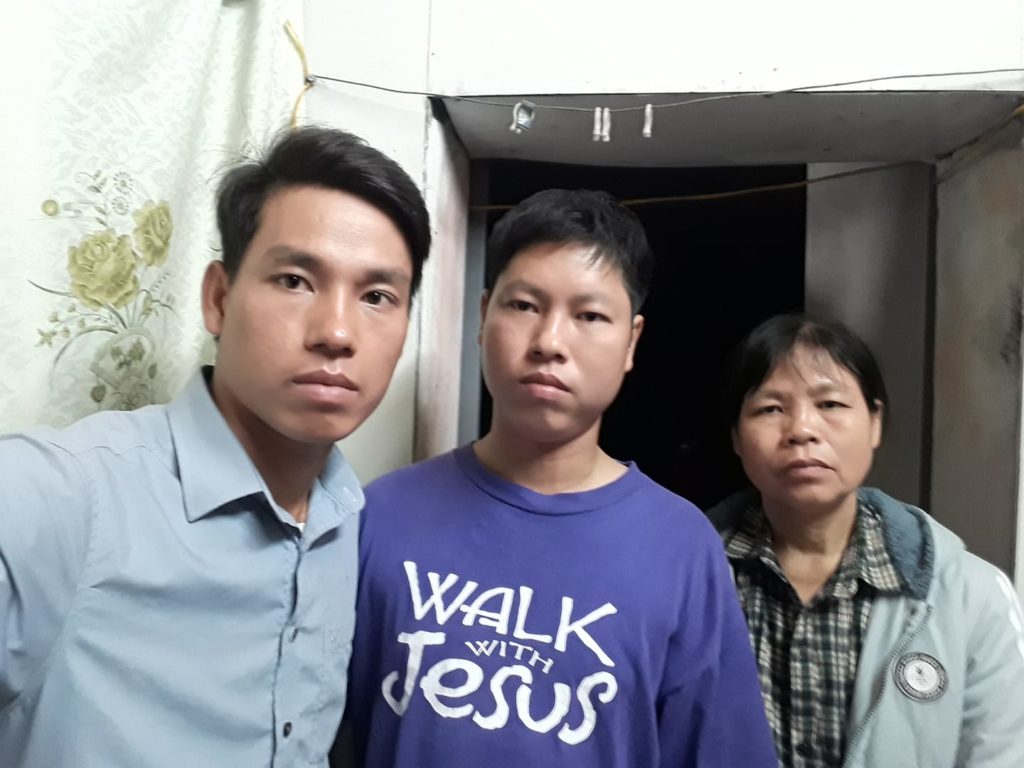
More and more young Vietnamese are interested in civil society and human rights issues

On June 25, 2020, Han-Nom researcher Tran Khue, a well-known dissident passed away in Saigon, a number of democracy activists and human rights in Vietnam shared their views on the power and prospects of democracy, human rights and civil society activities in the country, ahead of the 13th National Congress of the ruling Communist Party of Vietnam (CPV) and long term.

Through talks on June 29, activists told BBC News Vietnamese about whether the generations following famous dissidents such as Tran Khue or Hoang Minh Chinh, etc., can now do something or not.

Freelance journalist Cat Linh (from Hanoi): The next generation will have their own role. The information world has been flooded, it is not difficult to develop the ability to think critically and in different ways, each citizen will gradually understand the asymptoticities of the shoulds and don’ts. They will continue their role in society.

Master Nguyen Tien Trung (former political prisoner, from Saigon): It can be said that Professor Hoang Minh Chinh and Han-Nom researcher Tran Khue were the first two people who inspired me to actively participate in democracy movement. In 2006, the two men themselves established the Vietnam Democratic Movement. Immediately after that, it was also Professor Hoang Minh Chinh who restored the Democratic Party of Vietnam and took the new name of the Democratic Party of the 21st century. Professor Hoang Minh Chinh was its general secretary, and researcher Tran Khue was his deputy. The perseverance, the courage to be committed to justice, freedom, and democracy for the two elderly people made me very touched. I believe that the next generation will certainly push the democracy movement further because of the better times, more modern technology, and higher intellectual standards. And the next generation can learn a lot of lessons from the activities of the previous generation.

Activist Nguyen Vu Binh (former editor of the Communist Review, former political prisoner): All generations of dissidents in Vietnam can do the same thing, which is to educate people and contribute to the process of self-collapse of the Vietnamese communist regime. The difference between the next generation and the first generation of Hoang Minh Chinh, Tran Do and Mr. Tran Khue, Pham Que Duong, Le Hong Ha and Nguyen Thanh Giang is the efficiency of the intellectual activities due to the expansion of Internet systems and social networks, especially Facebook.

Doctor of Science Nguyen Quang A (former director of the Independent Policy Review Institute – IDS): I have never met Mr. Tran Khue, but I have read his articles and especially because I know that Mr. Pham Que Duong and Mr. Tran Khue decided to set up the association to help the CPV fight against corruption but they were imprisoned, so I heard about Khue very much, he had the respectful knowledge of a resilient struggle literally up to the last breath. The following generations must follow in their footsteps, learn from their experience, promote their beauty, and avoid errors if they committed, creating new and trendy ways to push the movement forward.

What should not be compared?

BBC: It is said that many people in the dissident circle, the activists of the previous class have the position and professional position, thereby having a strong and profound influence on the community and people. How about the next generation? What are their new features and what are their strengths and weaknesses?

Cat Linh freelance journalist: If the next generation is the people who have the status, position, expertise and contribute critics to society, it is very important. Because they are the ones who have the opportunity to express their wishes, requests .. directly at government agencies. If you are a professional, at least words will be persuasive and will be heard …

Disadvantages can be said to be reduced, and they also have the opportunity to learn themselves. The world is becoming more and more easily connected so they will learn many things and visions, the perspective will be changed in an objective direction.

Suong Quynh activist (independent journalist from Saigon): First of all, I want to say that to those who struggle for freedom and democracy, like Hoang Minh Chinh and Tran Khue are always good examples with consistent valuable road to struggle for our generation to learn and follow.

With the first generation, they have really gained extensive and influential knowledge so their voice is prestigious and awakening for the next generation. But at that time they were too few and severely suppressed. But the generation now has the advantage that the Internet has mounted and can spread a case. Thus, due to the spread of information, many people have been awakened and more and more people joined when the authorities could not conceal the information as before.

MSc Nguyễn Tiến Trung: The activists of the next generation have more diverse components and that is the advantage. The previous class consisted of revolutionary elders, those who were trained by the regime, while the next generations, besides those who came out of the regime, there were also independent intellectuals, peasants, and land petitioners and workers, etc. Thanks to social networking, information and influence on the community spread far better than previous generations.

Mr. Nguyen Vu Binh: The position and expertise if helping to affect the community is not much. What made a profound and profound impact on the community and people of the previous generation is their knowledge and judgment. The previous generation who participated in the democracy movement have come to a conclusion, and they struggle towards that conclusion and goal. That is, it is necessary to struggle to change social regimes. To draw that conclusion, they must learn, research as well as internal struggle a lot. Because of that research and firm conclusions, they are respected and admired by many.

Dr. Nguyễn Quang A: There are always people like that. Do not compare one person with another, one time with another!

More and more young Vietnamese are interested in civil society and human rights issues

“Respectfully, don’t decry“

More and more young Vietnamese are interested in civil society and human rights issues

BBC: Some people wonder if certain weaknesses compared to the previous generation, the previous class, will probably create a hard-to-overcome weakness, or some people call it a “bad spot” in a part of the unintended generation. At the present time, the political dissent, which limits the attractiveness of public opinion, can affect the development of the democracy movement in Vietnam, do you agree with this view?

Freelance journalist Cat Linh: My opinion is not. Because in order for a country to develop, an independent and mature nation, all citizens, especially the left, must grow and be independent from themselves. Every citizen has a role to protect and build the country.

Mrs. Suong Quynh: In my opinion, a weakness of the previous generation and this generation is that the ego cannot be ignored, that is, it is only possible to disagree with each other to not shake hands with each other to discuss and come to the end doing the same purpose. In other words, not only political disagreements with the authorities but also disagreements with each other so that it is difficult to unite honestly. Another weakness is due to the level of awareness and knowledge crammed in the period of Socialism very backward and shortsighted. Those who struggle are not trained professionally, which is also the cause in disagreements.

MSc Nguyễn Tiến Trung: From my personal perspective, one of the biggest points that makes me wonder is the lack of unity in democracy and civil society movement to create greater strength, both for the previous generation and the next generation. However, it is pluralistic, it must accept this phenomenon. Over time, excellent organizations and individuals will attract the masses, gather a wider social force to be able to build true democracy in Vietnam.

Mr. Nguyen Vu Binh: The common weakness of the current generation of dissidents is that the common knowledge base is not equal to the previous generation. Because most are educated in a Socialist environment, where the goal of education is ignorant. One of the major, but very difficult to overcome, problems of the current generation is the lack of cultivating knowledge, being less willing to learn from those who go ahead while the Vietnamese communist society is extremely complex. The lack of knowledge, along with aggression and conservative instincts, lead to constant and endless debates and debates affecting the solidarity and atmosphere of the democracy movement.

Doctor Nguyen Quang A: Those who have a great influence have a disability, that disability also has an influence later, but the next generation must always have a critical view: relying on the beauty of their predecessors to promote the trendy today and avoid the bad, but always in the spirit of respect and construction, not to decry.

Try taking a ‘portrait’ photo

BBC: From your perspective, if there is a portrait of dissidents, democracy activists, human rights, civil society … in Vietnam today, the most striking feature is there. What is awareness?

Ms. Suong Quynh: In order to recognize the portrait of the activist, most of them go to Facebook to write disagreements with the policy or the case of the government towards the country and the people. Or those who took to the streets to protest or sign petitions.

MSc Nguyễn Tiến Trung: I believe it will be a colorful picture. From my personal experience, many individuals and organizations, silently and publicly, in the communist party and outside the party, are taking a variety of ways to contribute to the process of democratization.

Mr. Nguyen Vu Binh: It is very difficult to have a common picture for Vietnamese dissidents today. However, if you have to generalize, it is courage, steadfast in the struggle but quite impulsive and superficial, conservative. Quite creative in fighting and always maintaining humor in fighting.

Dr. Nguyen Quang A: More crowded, more diverse, more efficient but still weak compared to the requirements of society.

Future design, achievements?

BBC: Whether the methods, measures and strategies against peaceful evolution and internal transformation against the leadership of the government, the State and the Communist Party of Vietnam have promoted in recent years, have been causing difficulties. Is it certain for the dissident movements and activists mentioned above? In the new situation, new context, which are these adaptations?

Freelance journalist Cat Linh: I sometimes do not understand concepts such as “fighting against the peaceful evolution” … because in my opinion, dissent is just giving new ideas to build the country, protect national peace. So adapting is not necessary.

Ms. Suong Quynh: The methods of the government against the struggle movement are increasingly fierce and persecuted, preventing sternly and making the movement of fighting on appearance no longer frantic but yet to continue, those who struggle to write more to raise people’s awareness as well as give more truthful news to the people. And the way to raise people’s awareness as well as their sense of responsibility is also a way to fight for a peaceful but slow progress.

MSc Nguyễn Tiến Trung: Measures to suppress, divide, isolate and arrest activists that have made it difficult for the democracy movement. That’s for sure. However, more and more activists will appear because of social injustice, environmental pollution, corruption and so on. I have personally witnessed the explosion in the number of democracy activists and civil society from 2006 to the present (2020). 2006 was the year I officially became a public democracy activist.

So far, there have been many repressions and arrests of activists, but in the end, the democracy movement has always been more and more powerful. Democratization is the indispensable rule of society.

Before the oppressive measures of the authorities, the activists must be more cautious and wiser to survive in order to maintain and develop the movement. The red line that the authorities have clearly drawn though not specified in the Criminal Code: not to establish organizations, not to have foreign relations, not to advocate violence, not to broadcast (livestream) called for protests …

Mr. Nguyen Vu Binh: The persecution and prosecution of people belonging to civil society groups in Vietnam, the severe suppression of protests, the streets of people and dissidents make current dissidents face many difficulties. However, in that situation, the dissidents turned to cyber activities in the direction of actively criticizing policy directions, specific incidents that were analyzed and commented critically. At the same time, activists should promote the lawsuits and fight according to the available laws. Some groups have stepped up their struggles through international routes, applying foreign laws to punish rulers for human rights violations.

Dr. Nguyễn Quang A: Certainly, it is difficult, but if you know how to use it to fight against yourself the tactics to bend the truth of the authorities, then it is an advantage.

Above are the views of the interviewees, please welcome to watch the second part of the exchange between BBC News Vietnamese and activists, dissidents from Vietnam, in which the opinions are about difficult problems of activists in daily life, earning a living and vision for the future of their country.

Thoibao.de (Translated)

RFA, July 1, 2020

Website của Nghiệp đoàn Độc lập Việt Nam (VIU)
Website of Vietnam Independent Union (VIU)

The Vietnam Independent Union (VIU), founded by a group of people from many different professions, announced its debut on July 1, 2020. VIU President Bui Thien Tri gave RFA an interview about this newly established independent union organization.

First of all, Mr. Bui Thien Tri said about the context and purpose of VIU’s establishment:

Mr. Bui Thien Tri: Currently, Vietnam has joined or signed many free trade agreements, especially CPTPP (Comprehensive and Progressive Agreement for Trans-Pacific Partnership) and more recently EVFTA (European Union-Vietnam Free Trade Agreement). In order to participate in these trade agreements, the Vietnamese Government must accept the conditions of workers’ rights. In particular, there is the right to establish free trade unions. And recently, Vietnam’s National Assembly also passed a new Labor Code. In particular, there are provisions on the right to establish a representative organization of workers at the grassroots level; that is to say, it is a union.

In the context of Vietnamese workers’ knowledge of the law, their rights are very limited and these regulations are very new, as well as the lack of access to legal regulations. Therefore, we want to launch in order to disseminate the provisions of the law on workers ‘rights, as well as to support workers in establishing workers’ representative organizations in enterprises. This is the main purpose of establishing the VIU.

RFA: Currently, the VIU is officially operated under the recognition of the Vietnamese Government or not?

Mr. Bui Thien Tri: In Vietnam, we now organize this model based on Vietnam’s Constitution on the right to establish civic associations. Regarding the legal framework for the establishment of this organization, at present, there is no law on associations in Vietnam, or it is still in the drafting process. Although the new Labor Law has been passed, it has not yet taken effect. And the decree under this Law stipulates that the Government will issue a decree to guide the organization of grassroots workers. However, up to now, this decree has not been issued.

Meanwhile, the current regulations on association in Vietnam are also very limited. And according to these regulations, only one association can be organized in each field. Currently, the Vietnam General Confederation of Labor is the organization of workers. Therefore, if other associations have the same purpose and want to apply for the establishment, it will be very difficult. Therefore, we are currently not registered with the government. We hope that in the future when there are legal provisions on the establishment of workers’ organizations, we will have the opportunity to register with the government.

RFA: Regarding interaction with workers and working people in Vietnam, is VIU oriented as well as ways to support or disseminate legal information for workers?

Mr. Bui Thien Tri: At present, we set immediate operational goals: Firstly, to disseminate the provisions of Vietnamese law as well as international treaties that Vietnam has acceded to regarding the rights of workers, as well as workers’ right to form a union. The second is to provide legal advices for employees on issues related to workers’ rights as well as other legal issues. The third is to support workers in enterprises on the establishment of their representative organizations under the new Labor Law, if those who need advice on the procedures for establishment. In addition, we provide information on the situation of workers, labor and employment on the Internet.

We now have a website and a Facebook page with the same name ‘Vietnam Independent Union’. And, we also have a section on legal advice for workers.

We hope that through these channels, we will have access to workers and will assist them in labor rights issues in Vietnam.

Ảnh minh họa. Công nhân công ty Chí Hùng ở Bình Dương đình công hôm 28/5/2020
Workers of Chi Hung Company in Binh Duong went on strike on May 28, 2020

Because currently the VIU has not been officially recognized by Vietnam’s Government s, VIU anticipates that such activities will encounter any obstacles from the government?

Mr. Bui Thien Tri: We have also posed problems as well as difficulties in the immediate future, because anyway, an organization established without government recognition, there are things that the authorities will not support, if not to say that they may be prevented.

As we have said, VIU’s establishment was based on the right of citizens to association enshrined in the Constitution for the benefit of the community, as well as to assist workers and workers. Therefore, we think we will operate within the framework of the law of Vietnam. And, those things we think are only beneficial to society without affecting the interests of the government.

Therefore, we hope that VIU’s activities will be well received and workers in Vietnam will support us.

RFA: In the context of Vietnam signing new generation trade agreements such as EVFTA and CPTPP, VIU intends to connect with other unions; in particular the trade unions of the member states of the two Agreements mentioned above; to learn or exchange experiences in union activity?

Mr. Bui Thien tri: Firstly, on the domestic side, through the study of the Labor Code 2019, we find that in terms of union regulations in Vietnam, the law now provides for the right to form trade unions at facility. That is, it has not allowed the establishment of an association between grassroots unions. However, there is no provision in the law that prohibits this. If understood according to the provisions of law, what is not prohibited by law, citizens have the right to do. We hope that in the future, grassroots unions in Vietnam will be established, we will have the opportunity to work together to support each other to operate effectively.

On the foreign side, we also expect the trade unions of the countries as well as international organizations, if possible, to support and coordinate with us to implement each other’s work effectively. and coherent.

We look forward to the union organizations at home and abroad to contact and cooperate with us to develop together.

RFA: Thank you very much for the time of Mr. Bui Thien Tri to share with Radio Free Asia about the Vietnamese Independence Union.

Thoibao.de (Translated)

Chủ tịch Hà Nội Nguyễn Đức Chung
Chairman of Hanoi People’s Committee Nguyen Duc Chung

Hanoi’s Chairman Nguyen Duc Chung is in the list of individuals and organizations with outstanding achievements in combating the COVID-19 pandemic announced by the Hanoi Emulation and Reward Council to collect people’s opinions before awarding medals. Mr. Chung was personally considered to be awarded the First-class Labor Medal in the role of the chief of COVID-19 Prevention and Control Committee of the capital city.

The consideration for this medal was given to the public for 7 days before the proposal was made. However, in reality for a long time, the ruling Communist Party of Vietnam and its government have arbitrarily decided many important things affecting the people and the whole country, causing serious consequences. For example, the Central Highlands bauxite project, which was raised by intellectuals who sent letters to the party and the government but their opilnions were ignored.

This project has been approved by the Politburo of the Communist Party of Vietnam since 2001. By early November 2007, Prime Minister Nguyen Tan Dung signed a decision approving the zoning, exploration, exploitation and processing planning to change and use bauxite ore from 2007-2015, with a vision to 2025.

Many scientists and intellectuals have sent recommendations for further research and consider the Central Highlands bauxite exploitation. Specifically, on January 5, 2009, General Vo Nguyen Giap sent a letter to the PM requesting to stop deploying this bauxite mining project, but at the press conference at the beginning of the year on February 4, 2009, then PM Dung said the exploitation of bauxite in the Central Highlands was a “major policy of the Party and the State” despite the project’s opposition from many sides.

Another project in Hanoi that greatly affects people’s lives without people being consulted is the Cat Linh – Ha Dong elevated railway project. In addition to nearly doubling capital, the project is delayed for too long, making people lose confidence. Besides, the greenery has been cut off due to the development of this elevated railway, which makes the city hotter when the summer comes.

Artist Kim Chi, who refused to make a request to the PM for rewarding because she did not want the house to have the signature of a person whom she considered to be “someone who is impoverishing the country, causing misery to the people,” laughed when she heard the news of Hanoi soliciting referendum on Hanoi Chairman Nguyen Duc Chung. According to her, all these actions are false, because if the authorities listen to the people, there can be no cases such as the death sentence for Ho Duy Hai, the attack to kill elderly community leader Le Dinh Kinh in Dong Tâm and many other cases … Artist Kim Chi said that the medal is not important.

As for Professor Mac Van Trang, he called Hanoi’s opinion of the people in presenting a medal to Chairman Chung a “funny story.” He explained:

“This is very funny because there are so many important things they have not asked the people. For example, three policemen who died in Dong Tam, they were awarded the medal of victory next day, did they ask the people for that? They have never asked people’s opinions when they give medals to each other. The same situation about of the environment, how many trees were cut, the elevated railway was built they did not consult the people.”

According to Professor Mac Van Trang, it is okay for the people to fight against epidemics, but if a leader who has outstanding achievements can award a medal, it’s okay but don’t ask the people. The members of the COVID-19 prevention committee just gathered together, selected people to reward each other.

On January 10, 2020, General Secretary cum President Nguyen Phu Trong signed a decision to award the First-Class Victory Medal to three policemen who died in the Dong Tam incident a day earlier. The reason for the medal being said is that the three men have made particularly outstanding feats in combat and combat service, contributing to the cause of building socialism and defending the Fatherland.

At that time, Lt. Col. Dinh Duc Long thought that this was probably something unprecedented in the history of conferring noble titles, especially the first-class medal of victory in the armed forces of the Vietnamese People’s Army as well as the police force. He explained that the process of awarding a medal must be from the bottom. It means that there must be an emulation council to report the achievements and then approve all levels. On this occasion, the three officers died on January 9, and on January 10, the General Secretary – President immediately signed a decision to award the first-class medal of victory them.

According to Mr. Nguyen Khac Mai, former head of the Central Commission for Public Affairs, collecting opinions for regarding a medal for the Hanoi’s chairman was a lie. He said that it was to collect opinions of the people but in fact only they took only the opinions of individuals from the Fatherland Front Committee, the unions or some representatives of the selected voters.

I want to tell Mr. Nguyen Duc Chung that he would rather be kind and make a good reputation in the hearts of the people. It is equal to ten thousand medals, but this communist medal is like a “jackfruit leaf,” Mr. Nguyen Khac Mai said.

Mr. Nguyen Khac Mai said that he did not believe and justify that even the meetings between the national legislators and the local voters are just “lies,” and nothing is sincere. He said he had lost faith for a long time and continued:

“He made a joke to praise himself, but the irony is that the officials now ‘speak like dragons, eat like dragons but do nothing or very bad. State officials eat all of the people and want medals also. The paradox is that. Let them give medals each other. The trick only made it clear that the things are lies. Giving a medal is an old game for a long time, negligible. They can give medals for anyone they want.

According to Decree 91/2017 / ND-CP, the First-class Labor Medal to be given for individuals who have been awarded the Second-class Labor Medal and continue to have excellent achievements in next 5 years. During that period, the candidates must have 4 initiatives that are highly effective and exemplary in the whole country, which are recognized by ministries, agencies, provinces and mass organizations.

In addition, such individuals must make exceptionally outstanding achievements in labor, study, and work with influence and set an example throughout the country, which are ministries, departments, branches, provinces and mass organizations recognize or establish extraordinary special achievements, get high awards in the region or the world.

Thoibao.de (Translated)

Vietnamese Prime Minister Nguyen Xuan Phuc affirmed that he “does not want to take a side” between the US and China in the context of increasing tensions between the two world powers.

Phuc’s remarks were made at a press conference on Jun 26 at the end of the ASEAN 36 Summit last weekend on the capacity of the rotating chairman of the 10-nation bloc this year.

“ASEAN always wants an Asia-Pacific region of peace, stability, prosperity, cooperation, and development and certainly does not want to take a side,” said Phuc.

Conflict over trade and the Covid-19 pandemic put the UA and China in a tense situation, leading to conflicts of influence across the globe, including the Asian region with the sovereignty dispute in the East Sea (South China Sea) becoming increasingly heated by Beijing’s aggressive acts recently.

Answering the reporter’s question about how the tensions between the two powers are affecting ASEAN, the Vietnamese PM acknowledged that the conflict between the US and China is affecting the globe, including ASEAN, and “Vietnam strongly wants China and the UA to promote similarities, overcome differences to build trust and promote cooperation for the common good of the world and the region.”

The head of the Vietnamese government asserted that both powers are “the most important partners” and “we are very interested.”

“The two-way trade between Vietnam and China is very large and with the US we are important complementary partners,” Phuc said.

In addition to trade, conflict in the South China Sea is also a topic of concern at the press conference of the ASEAN conference, amid the backdrop that China is intensifying its activities to assert sovereignty and the UA has responded to demonstrate freedom of navigation in the area.

At the press conference, PM Phuc said that the Covid-19 pandemic had interrupted discussions to develop a Code of Conduct in the South China Sea (COC).

“In this context, Vietnam is working with ASEAN to cooperate with stakeholders to refrain from actions that complicate the situation at sea and comply with international law,” Phuc said.

South China Sea: China prohibits boats in the Hoang Sa (Paracels) for military exercises

Immediately after the ASEAN meeting, on June 29, China announced that a new exercise would take place on July 1-5 in the Paracels area and prohibit all vessels from entering the area.

The Chinese military will conduct military drills in the waters off the Xisha Islands (ie, Paracels) on July 1-5, the Ministry of Defense news site quoted notice from the Authority Maritime Safety and the Hainan Customs Bureau.

The announcement of the exercise was made immediately after PM Phuc in a press conference closing the 36th ASEAN Summit saying that “Vietnam and ASEAN cooperate with stakeholders to refrain from actions that complicate the situation at sea and reaffirming ASEAN’s determination to contribute to building the South China Sea into a maritime area of ​​cooperation, development, security, and safety.”

The Chinese notice stated the location of the exercises in detail and added that “during this period, no ships were allowed to travel in the above routes and all ships had to follow the commanding ship’s instructions in place.”

The information is stated in an analysis article published in the Global Times on the evening of June 28. Thus, within five days, China unilaterally banned all boats operating in this area. According to the Nikkei Asia Review, China’s decision will cause Hanoi to respond strongly, since Vietnam’s Paracels have been seized and controlled by China since 1974.

Every year, China still organizes a military exercise around the Paracels to strengthen and assert control of this area. Still, according to the Nikkei Asia Review, China still asserted that the South China Sea is an essential “basic interest” to maintain the Chinese Communist Party’s political control.

The new move follows a series of activities that the domestic media consider provocative and overwhelming of Beijing in the South China Sea recently for neighboring countries, amid the world effort to deal with the Covid-19 translation.

Also in the Paracels region, in early April, China allowed the coast guard to sink fishing vessels and catch Vietnamese fishermen. The incident led the US Department of Defense to issue a statement condemning the behavior that “destabilized the region” and “distorted the global effort to focus on dealing with the pandemic.”

Later, also in April, China continued to announce the establishment of new administrative areas, Xisha district to manage the Paracel region and “Nansha district” to manage the Truong Sa (Spratlys), prompting Vietnam to protest and demand that China respect Vietnam’s sovereignty.

Recently, on June 26, Benarnews cited satellite images showing China resuming dredging at a bay on Phu Lam Island in Paracels, apparently to expand the artificial island that China had built earlier.

Until the end of June 29, Vietnam did not comment or respond to China’s new exercise announcement.

At the same time that the US Secretary of State agreed with ASEAN’s position and condemned China’s intention to monopolize the South China Sea, two US aircraft carriers, USS Nimitz and USS Ronald Reagan conducted joint exercises in the Philippine maritime area on Jun 28.

According to the release of Rear Admiral George Wikoff, commander of the US Navy’s No. 5 Aircraft Carrier Task Force, the exercise aimed at strengthening the US’ positive, flexible and sustainable commitments. defense with allies and partners in the Indo-Pacific region, as well as strengthening the US Navy’s “operations in all areas.”

Just a week earlier, two aircraft carriers USS Nimitz and USS Theodore Roosevelt also conducted joint drills of similar scale. According to the Japan Times page on June 29, it is very rare for all three US aircraft carriers to carry out joint drills at the same time, and even more rarely when two aircraft carriers are involved in the short period of time.

China again sent a survey ship to penetrate Vietnam’s EEZ

A Chinese survey ship once again invaded Vietnam’s exclusive economic zone, and was determined to be present in the sea area 182 miles from Vietnam’s Phu Quy island, the US Benar News reported.

According to Benar News, two different maritime traffic monitoring tools show China’s Geological Ocean Cruise 4 heading towards Vietnam’s waters on Sunday, June 14, 2020, across a military base that China built on Cross Rock in the Spratlys.

The vessel was last located on the morning of Tuesday, about 182 nautical miles from Phu Quy island in Binh Thuan province, ie within Vietnam’s 200-mile Exclusive Economic Zone.

It is not clear why the Hai Duong 4 ship was dispatched into the area, and the Chinese and Vietnamese governments have not yet spoken about this move.

In July 2019, China deployed Hai Duong 8 ship and escort ships to the Vanguard Bank, also in Vietnam’s exclusive economic zone, to harass Vietnamese oil exploration activities with a Russian oil and gas corporation.

The presence of Hai Duong 4 in Vietnamese waters, according to Benar News, may be related to Vietnam’s oil and gas exploration activities with Russian company Rosneft near Vanguard Bank.

There are signs that oil detection activities are about to take place near this area. Vietnam’s state media reported that Noble Corp’s Clyde Boudraux oil rig planned to operate in this area. According to the positioning data, the rig was towed to Vung Tau port on April 22 but has not yet left the port.

China has long pressured international oil and gas companies to stop cooperating in oil and gas exploration and production with Southeast Asian countries, including Vietnam.

Thoibao.de (Translated)

Hoa Binh province’s police arrest activist Trinh Ba Tu on June 24, 2020

On June 24, Vietnam’s authorities unexpectedly arrested several informants about the recent Dong Tam incident, including four land petitioners and human rights advocates from Duong Noi named a former prisoner of conscience Can Thi Theu and her two sons Trinh Ba Phuong and Trinh Ba Tu, as well as Mrs. Nguyen Thi Tam.

Talking to Radio Free Asia via a message on June 24, 2020, regarding the incident, lawyer Dang Dinh Manh, who has a contract to consult, defend and protect the rights of Trinh Ba Phuong, said:

“Early this morning, I received information about the authorities’ arrest of three people in Can Thi Theu’s family, including both sons Trinh Ba Phuong and Trinh Ba Tu.

So far, the authorities have not officially released the reason for their arrest. Therefore, there have been many unconfirmed rumors. In recent times, I also know that the three often give very frankly critical information and statements about the developments surrounding the Dong Tam case that may not please the authorities. If only at the level of exercising the right of speech is arrested, it is worrying. So, I think there might be a more serious reason to justify this arrest.”

Particularly for Trinh Ba Phuong, he had a contract with our lawyer’s office to consult, defend, and protect his rights before the law. Therefore, we are trying to find out which of the proceedings in Hanoi has made the arrest so that we can contact the authorities to register for a defense soon.”

Attack on unjust people

Ms. Can Thi Theu, an injustice, and an activist were sentenced to 15 months in 2014 for “causing public disorder” when she and her family objected to the government seizure of their land without giving proper compensation. In 2016, Ms. Theu was sentenced to 20 months in prison for the second time for allegedly “disturbing public order” for participating in peaceful protests with many others.

Her two sons Trinh Ba Phuong and Trinh Ba Tu, also spoke out about social injustices.

Ms. Nguyen Thi Tam, also known as Facebooker Tam Duong Noi, is famous for her live videos she reports at hotspots such as lawsuits, demonstrations or interviews with petitioners.

Activist Bui Thi Minh Hang, who regularly contacts her family, told RFA on June 24:

“The fact that today they attacked and arrested Theu’s family and Mrs. Tam in Duong Noi, I think they are fighting against the unjust people, because it is a hot spot of solidarity and a lot of strong objections of the government socio-economic issues. Arresting unjust people has many purposes, but perhaps the nearest goal is probably due to the upcoming hearings of 29 Dong Tam people, this is also a strong voice. After the embarrassing incidents, the injustice of Duong Noi also shared a lot with the people of Dong Tam, they have the same unjust memories. From that point on, I think the arrest and attack on Duong Noi today is directly related to the upcoming Dong Tam trial. ”

Mr. Dao Cong Su, an injustice in Duong Noi, who used to fight with Theu before, told Radio Free Asia on June 24, 2020, about the arrest of Ms. Tam and her family.

“In this case, the people who are unjustly waiting for resolution, do not know because they are arresting their mother and daughter, yesterday in Duong Noi arrested 4 people. The work in Duong Noi has long been up to the government, just waiting for the government to resolve, not sure why the people were arrested. People injustice are looking for danger, do not read orders but come to arrest people like that, they are asking where they are being kept.”

Ms. Can Thi Theu and her two sons Anh Trinh Ba Phuong and Trinh Ba Tu.

Recently, the police constantly harassed Mrs. Can Thi Theu’s family, one of the causes of the police harassment, she told RFA before being arrested, because through Dong Tam incident, her family joined with all those who have conscience, not silent before injustice, have brought a lot of information about Dong Tam, to condemn the evil of the government.

The fact that her two sons Can Thi Theu was a civil activist Trinh Ba Phuong, and her younger brother Trinh Ba Tu, constantly updated the news of the incident on social networks, is an action that is The right to conceal information as Vietnam’s communist regime does not want.

So far, Trinh Ba Phuong has had many meetings with officials of the US Embassy in Hanoi, to clarify all information related to the police raid attack on Dong Tam people, in the middle of the night of January 9, 2020.

“The fear of the government“

Dr. Nguyen Quang A, former Director of IDS Development Research Institute, has dissolved and commented to Radio Free Asia on June 24, 2020:

“I think the authorities are getting more and more scared, whoever tries to talk back to them, they find ways to kill them,” he said. The families of Sister Theu, Phuong, Tu, and Mrs. Tam have very strong voices … all of them itchy their eyes, and they attacked and arrested today … I think this arrest is very serious and important. I think these arrests were probably related to many things, not just because of Dong Tam. Because the Dong Tam affair only involved Trinh Ba Phuong and Trinh Ba Tu, but they arrested both Mrs. Hue and Mrs. Tam, while Tam often spoke only to the injustice Duong Noi. “

According to Dr. Nguyen Quang A, it can be said that it is related to the Dong Tam case, but from now until the end of the year, until the next congress of the Communist Party of Vietnam, whatever voice they don’t like, they arrest them and place them in prison..

Dr. Nguyen Quang A: This government is more and more afraid, seeking to arrest those who seek to speak against them. Families of Sister Theu, Phuong, Tu and Mrs Tam have very strong voices … all of them itchy their eyes, and they attacked and arrested today …

It was not until the evening of June 24, 2020, that state media simultaneously reported prosecuting and detaining Ms. Can Thi Theu and Trinh Ba Tu on charges of “Making, storing, distributing and disseminating propaganda, information, documents and materials against the Socialist Republic of Vietnam under Article 117 of the Criminal Code 2015.

According to information from the Police Department of Hoa Binh Province cited by the state press, the authorities seized a number of documents such as “Prisoner Handbook,” “Non-violent protest,” “Put your hands on Vietnam, ” ‘Popular politics.’ The arrest records stated that these books were named after Pham Doan Trang, along with a number of handwritten documents believed to have content related to propaganda against the State.

However, the article did not mention the arrest of Mr. Trinh Ba Phuong and Ms. Nguyen Thi Tam, nor the Dong Tam incident.

Increased repression

Article 117 of the Criminal Code 2015, the crime of making, storing, distributing or disseminating information, documents, items against the Socialist Republic of Vietnam, jf convicted, the offenders may be sentenced to between 5 and 12 years of imprisonment. Committing the crime in extremely serious circumstances, the offenders shall be sentenced to between 10 and 20 years of imprisonment. Those who prepare for this crime are also sentenced to between 1 and 5 years of imprisonment.

Talking to Radio Free Asia on June 24, Professor Nguyen Dinh Cong, a party member who left the party for years ago, enounced the party, said:

“Before festive events or party congresses, the communists still seek to arrest as many people as possible. Recently, they arrested Sister Theu and her son Mr. Phuong, who are struggling for unjust people, fighting against unjustly and struggling for democracy. Especially, Mr. Trinh Ba Phuong wrote a number of articles proving the police’s mistake in the Dong Tam case. Recently, the police announced to prosecute 29 people in Dong Tam. I don’t know if the arrests are related, but when I saw the information that I saw before the party congress, they tried to catch it to calm down the public opinion, to resist the criticism … ”

Professor Nguyen Dinh Cong is sure that this is a policy of intimidation and persecution, so that those who have a little sense of conscience, a little spirit of criticism, must shrink, dare not say anything, to ensure the party’s lies were carried out smoothly … He said that he saw the current persecution and suppression of the communists.

Thoibao.de (Translated)

https://www.youtube.com/watch?v=rl_fSyyM2Qg

Link Video: https://www.youtube.com/watch?v=rl_fSyyM2Qg

Một ngày sau Tuyên bố “Tầm nhìn về ASEAN gắn kết và chủ động thích ứng” được các lãnh đạo ASEAN thông qua tại Hội nghị Cấp cao ASEAN lần thứ 36 ngày 26/6, Hoa Kỳ là trong những cường quốc đầu tiên đã lên tiếng hoan nghênh lập trường của các nước Đông Nam Á về Biển Đông.

Ngoại trưởng Mỹ Mike Pompeo viết trên Twitter ngày 27/6: “Mỹ hoan nghênh sự kiên định của các nhà lãnh đạo ASEAN về việc giải quyết tranh chấp trên Biển Đông theo luật pháp quốc tế, bao gồm Công ước Liên Hợp Quốc về Luật Biển (UNCLOS) 1982. Trung Quốc không được phép coi Biển Đông là đế chế hàng hải của mình. Chúng tôi sẽ sớm thảo luận thêm về chủ đề này.”

Điểm đáng chú ý là trong thông điệp của mình, ông Pompeo đã đính kèm bản Tuyên bố của các lãnh đạo ASEAN mang tên “Tầm nhìn về ASEAN gắn kết và chủ động thích ứng: Vượt lên các thách thức và duy trì tăng trưởng”, đã được thông qua nhân Hội nghị Thượng đỉnh ASEAN lần thứ 36.

Các lãnh đạo ASEAN đã nhất trí tái khẳng định Công ước UNCLOS năm 1982 là cơ sở cho việc xác định các quyền trên biển, là khuôn khổ pháp lý cho tất cả các hoạt động trên biển và đại dương. Tuyên bố chung của Thượng đỉnh ASEAN, do nước chủ nhà Việt Nam, chủ tịch luân phiên của khối, chủ trì soạn thảo, khẳng định các lãnh đạo ASEAN « nhấn mạnh tầm quan trọng của thực hiện đầy đủ và hiệu quả Tuyên bố ứng xử của các bên ở Biển Đông (DOC), sớm xây dựng Bộ quy tắc ứng xử ở Biển Đông (COC) hiệu quả và thực chất, phù hợp với luật pháp quốc tế, bao gồm Công ước Liên Hợp Quốc về Luật Biển (UNCLOS) 1982.

Lo ngại về việc cải tạo các đảo, những diễn biến gần đây và những sự cố nghiêm trọng xảy ra gần đây tại Biển Đông, làm xói mòn lòng tin, gia tăng căng thẳng và có thể làm suy yếu hòa bình, an ninh và ổn định trong khu vực, các lãnh đạo khẳng định sự cần thiết phải tăng cường lòng tin và sự tin cậy lẫn nhau, tự kiềm chế trong các hoạt động và tránh các hành động có thể làm phức tạp thêm tình hình và giải quyết hòa bình các tranh chấp phù hợp với luật pháp quốc tế, bao gồm UNCLOS 1982 ».

Ảnh chụp màn hình đoạn chia sẻ trên Twitter của Ngoại trưởng Mỹ Mike Pompeo

Mặc dù Trung Quốc không được nêu đích danh trong Bản tuyên bố chung nhưng nhiều nhà quan sát cho rằng đây đã là một bước tiến cho thấy ASEAN đã bước đầu thống nhất được lập trường, để chống lại các tham vọng bành trướng của Trung Quốc.

Theo hãng tin Mỹ AP, tuyên bố về Biển Đông của khối ASEAN lần này là một trong những nhận định cứng rắn nhất của khối đối với việc Trung Quốc đòi hỏi chủ quyền trên hầu như toàn bộ Biển Đông trên cơ sở lịch sử.

Trả lời hãng AP, ba nhà ngoại giao Đông Nam Á xin giấu tên nhận định : bản thông cáo nói trên « đánh dấu một bước tiến quan trọng » trên con đường khẳng định giá trị nền tảng của luật pháp quốc tế tại khu vực Biển Đông, nơi vốn được coi là một trong những địa điểm xung đột dễ dàng bùng phát thành chiến tranh, trong bối cảnh các tham vọng chủ quyền trên biển của Trung Quốc ngày càng gia tăng.

Theo giáo sư Carl Thayer, một nhà nghiên cứu nổi tiếng về khu vực Đông Nam Á, tuyên bố của ASEAN mang ý nghĩa là một động thái bác bỏ các cơ sở mà Bắc Kinh dựa vào để yêu sách chủ quyền trên Biển Đông, thể hiện một sự thay đổi đáng kể trong lời lẽ của ASEAN đối với Trung Quốc.

Theo báo Philippines, cũng trong Thượng đỉnh nói trên, Tổng thống Philippines đã báo động về căng thẳng gia tăng tại nhiều khu vực tranh chấp. Với tư cách quốc gia phụ trách điều phối đối thoại giữa ASEAN và Bắc Kinh, Tổng thống Rodrigo Duterte kêu gọi các bên tìm kiếm các biện pháp mới, có thái độ mềm dẻo để đạt được mục tiêu giữ hoà bình và ổn định.

Theo ông Duterte, Manila đang nỗ lực thúc đẩy các bên đi đến được một Bộ quy tắc ứng xử ở Biển Đông (COC) trong thời gian sớm nhất. Quan hệ giữa Philippines và Trung Quốc tại các vùng biển tranh chấp cũng tiếp tục căng thẳng. Trong thời gian gần đây, Manila đã phải hai lần gửi công hàm phản đối Bắc Kinh về các hành động gây hấn.

Ảnh: Cuộc họp Thượng đỉnh khối ASEAN lần thứ 36 qua cầu truyền hình, Hà Nội, ngày 26/6/2020

Trong bối cảnh Trung Quốc tăng cường hoạt động quân sự trên biển Đông giữa lúc các nước trong khu vực gồng mình chống đại dịch COVID-19, Philippines đang thay đổi những tính toán địa chính trị.

Philippines đang thực hiện những động thái chậm rãi nhưng chắc chắn nhằm thách thức Trung Quốc trên biển Đông. Giới chức Bộ Năng lượng và Bộ Ngoại giao Philippines đang kêu gọi Tổng thống Rodrigo Duterte nối lại hoạt động thăm dò năng lượng trong vùng biển tranh chấp này với mục tiêu củng cố an ninh năng lượng và tái khẳng định tuyên bố chủ quyền đối với các nguồn tài nguyên năng lượng dưới đáy biển bị Trung Quốc tranh chấp.

Trong khi đó, Bộ Tư pháp Philippines đang gia tăng sức ép, yêu cầu Trung Quốc bồi thường cao hơn cho 22 ngư dân Philippines suýt thiệt mạng vào năm ngoái, sau khi bị tàu quân sự Trung Quốc đâm chìm tàu cá.

Theo báo Asia Times, những động thái cứng rắn nêu trên phản ánh quan hệ chiến lược Washington – Manila đã hồi sinh, cũng như nhu cầu gia tăng của Philippines về việc bảo đảm an ninh năng lượng trong bối cảnh khủng hoảng kinh tế sắp xảy ra.

Bên cạnh đó, việc Philippines thay đổi thái độ với Trung Quốc còn phản ánh tầm ảnh hưởng vẫn lớn mạnh của nền tảng chính sách ngoại giao và quốc phòng của nước này, vốn từng bị đe dọa phá vỡ bởi lập trường thân thiện của Tổng thống Duterte đối với Bắc Kinh khi ông mới nhậm chức. Hồi đầu tháng này, Tổng thống Duterte quyết định tạm ngừng rút Thỏa thuận các lực lượng thăm viếng quân sự (VFA), vốn là trung tâm của quan hệ đồng minh Mỹ – Philippines. Theo giới chuyên gia, động thái này cho thấy Manila đang thay đổi những tính toán địa chính trị giữa lúc Bắc Kinh ngày càng hung hăng trên biển Đông.

Trước đây, Tổng thống Duterte từng vận động hành lang để đạt được thỏa thuận “đồng sở hữu” các nguồn tài nguyên tranh chấp thông qua những dự án thăm dò và phát triển với Trung Quốc. Tuy nhiên, động thái ngày càng ngang ngược của Trung Quốc trên biển Đông giữa khủng hoảng đại dịch COVID-19, trong đó có tăng cường tập trận hải quân trong các khu vực tranh chấp, dường như đã hủy hoại những nỗ lực trước đó của Bắc Kinh và Manila về một thỏa thuận chia sẻ tài nguyên.

Ngoài Philippines, giới quan sát nhận định ba nước khác có tranh chấp chủ quyền với Trung Quốc gồm Việt Nam, Malaysia và Indonesia, đã tỏ ra mạnh mẽ hơn trong việc bảo vệ chủ quyền và phản đối yêu sách của Bắc Kinh.

Ảnh: Công hàm của Mỹ gửi lên Liên Hiệp Quốc phản đối yêu sách ‘bất hợp pháp’ của Trung Quốc trên Biển Đông ngày 01/6/2020

Trên phương diện ngoại giao, các nước này đã lần lượt gửi công hàm lên Liên Hiệp Quốc phản đối « đường 9 đoạn » của Trung Quốc vi phạm Công ước Liên Hiệp Quốc về Luật Biển UNCLOS 1982.

Liên Hiệp Quốc đã chứng kiến một cuộc chiến công hàm phản đối Trung Quốc trên Biển Đông từ cuối năm 2019 đến nay.

Ngày 12/12/2019, Malaysia gửi lên Uỷ ban Ranh giới thềm lục địa (CLCS) Báo cáo ranh giới thềm lục địa mở rộng tại khu vực phía Bắc Biển Đông. Ngay trong ngày, Trung Quốc gửi Công hàm số CML/14/2019 tới TTK LHQ phản bác Báo cáo này của Malaysia. Tại Công hàm này, Trung Quốc cho rằng: (i) Trung Quốc có chủ quyền đối với bốn nhóm đảo là Hoàng Sa, Trường Sa (của Việt Nam), Trung Sa, Đông Sa (gọi chung là Nam Hải chư đảo); (ii) Trung Quốc có các vùng biển (nội thuỷ, lãnh hải, vùng tiếp giáp, vùng đặc quyền kinh tế và thềm lục địa) từ các nhóm thực thể và (iii) Trung Quốc có quyền lịch sử ở Biển Đông.

Tiếp theo, ngày 06/3/2020, Philippines gửi lên Tổng thư ký Liên Hiệp Quốc hai công hàm: thứ nhất là Công hàm số 000191-2020 phản đối Công hàm số CML/14/2019 của Trung Quốc, Philippines tuyên bố các yêu sách của Trung Quốc không phù hợp với luật pháp quốc tế, trong đó có Công ước Liên hợp quốc về Luật biển năm 1982 (UNCLOS); thứ hai là Công hàm số 000192-2020 của Philippines đưa ý kiến về Báo cáo của Malaysia. Ngày 23/3/2020, Trung Quốc gửi Công hàm CML/11/2020 lên Tổng thư ký Liên Hiệp Quốc để phản bác các Công hàm của Philippines. Trong Công hàm này, Trung Quốc yêu sách chủ quyền đối với Trường Sa (của Việt Nam), bãi Scarborough (mà Trung Quốc gọi là Hoàng Nham) và các vùng biển lân cận; yêu sách quyền chủ quyền và quyền tài phán đối với các vùng biển liên quan cũng như vùng đáy biển và vùng đất dưới đáy biển. Trung Quốc cũng tiếp tục nhắc lại yêu sách quyền lịch sử ở Biển Đông.

Trong bối cảnh đó, ngày 30/3/2020, Việt Nam gửi Công hàm số 22/HC-2020 lên Tổng thư ký Liên Hiệp Quốc để phản bác hai Công hàm CML/14/2019 và CM/11/2020 của Trung Quốc. Ngày 10/4/2020, Việt Nam gửi hai Công hàm số 24/HC-2020 và 25/HC-2020 lên Tổng thư ký Liên Hiệp Quốc lần lượt nêu ý kiến về báo cáo của Malaysia và về các công hàm của Philippines.

Đến ngày 01/6/2020, Mỹ cũng gửi công hàm lên Tổng thư ký Liên Hiệp Quốc liên quan tới Công hàm số CML/14/2019 do Phái bộ thường trực của Cộng hòa Nhân dân Trung Hoa gửi cho Tổng thư ký Liên Hiệp Quốc vào ngày 12/12/2019 để phản hồi đệ trình của Malaysia lên Ủy ban về Ranh giới thềm lục địa (CLCS) ngày 12/12/2019. Trong công hàm của mình, Hoa Kỳ bác bỏ các yêu sách hàng hải này vì nó không phù hợp với luật pháp quốc tế như được phản ánh trong Công ước Luật biển 1982.

Không dừng lại ở các động thái ngoại giao, Mỹ còn khẳng định sự hiện diện mạnh mẽ của mình tại khu vực Biển Đông nhằm răn đe Trung Quốc.

Một mặt, Mỹ tăng cường cuộc tuần tra bảo đảm tự do hàng hải (FONOPS) trên không và trên biển với sự điều động một lực lượng hùng hậu không quân và hải quân trong khu vực mà gần đây nhất là sự có mặt của ba tàu sân bay Mỹ tại cửa ngõ Biển Đông hồi trung tuần tháng 6.

Mặt khác, Mỹ tiếp tục hỗ trợ trực tiếp nhiều nước Đông Nam Á có tranh chấp chủ quyền ở Biển Đông với Trung Quốc : Chỉ tính từ đầu năm 2020; vào tháng 3, tầu sân bay USS Theodore Roosevelt thăm cảng Đà Nẵng Việt Nam; vào tháng 4, chiến hạm Mỹ « hiện diện » gần khu vực giàn thăm dò dầu khí West Capella của Malaysia; vào tháng 5, Mỹ tặng nhiều máy bay không người lái cho Hải quân Malaysia…

Một sự kiện khác được coi là những thay đổi tích cực mới trong quan hệ giữa Việt Nam và Mỹ, đó là Việt Nam, cũng như New Zealand và Hàn Quốc được mời tham gia cuộc họp trực tuyến « Quad Plus » ngày 27/3/2020 với « Bộ Tứ » gồm Mỹ, Úc, Ấn Độ và Nhật Bản, trong đó nhiệm vụ chính của Quad là đoàn kết chống đà bành trướng của Trung Quốc ở Ấn Độ – Thái Bình Dương.

Còn với Trung Quốc, Biển Đông được coi là mặt trận bên ngoài thứ ba sau Đài Loan và Hồng Kông nhằm khơi dậy tinh thần dân tộc, khẳng định sức mạnh khổng lồ của quốc gia này.

Trả lời phỏng vấn RFI, Giám đốc nghiên cứu Benoît de Tréglodé (Bê-noa Đờ Thê-gờ-lô-đê), Viện Nghiên cứu Chiến lược của Trường Quân Sự Pháp (IRSEM) nhận định :

« Kỳ họp Quốc Hội hàng năm là sự kiện lớn, quan trọng đối với chính trị Trung Quốc. Kỳ họp lần này diễn ra sau đỉnh điểm khủng hoảng dịch tễ COVID-19 trong khi cách xử lý dịch của Trung Quốc bị phản đối từ trong nước lẫn ở nước ngoài, đặc biệt phải kể đến việc tổng thống Mỹ Donald Trump lên án Trung Quốc phải chịu trách nhiệm với quốc tế.

Trong bối cảnh căng thẳng, chính quyền Bắc Kinh cần phải khuấy động tinh thần dân tộc nhằm tái thể hiện sức mạnh Trung Quốc trước một sự kiện mang ý nghĩa lớn, đó là kỷ niệm 100 năm thành lập đảng Cộng Sản Trung Quốc vào năm 2021 (ngày 23/07/1921). Chính quyền trung ương tỏ rõ quyết tâm trong việc tập hợp, tăng cường đoàn kết dân tộc và khẳng định vị trí cường quốc bên trong lãnh thổ cũng như ở các vùng ngoại vi của nước này, như Đài Loan, Hồng Kông và mặt trận bên ngoài thứ ba chính là Biển Đông. Trong cả ba trường hợp, tầm cỡ tinh thần quốc gia và chính sách đối nội đều rất quan trọng. »

Vì vậy mà ngay trong đại dịch COVID-19, Trung Quốc vẫn thúc đẩy chủ quyền phi pháp của mình trên Biển Đông. Về mặt hành chính, Trung Quốc ngang nhiên lập trái phép hai « quận » mới Tây Sa (Xisha) tại Hoàng Sa và Nam Sa (Nansha) ở Trường Sa, trực thuộc « thành phố Tam Sa » (Sansha) để hoàn thiện và củng cố hệ thống quản lý ở vùng biển chiến lược này. Về quân sự, Hải Quân Trung Quốc liên tục tập trận ở Biển Đông từ cuối tháng 4 đến đầu tháng 5/2020, trong đó có cả tầu sân bay Liêu Ninh tham gia. Ngân sách quốc phòng cũng được Quốc hội Trung Quốc bỏ phiếu tăng thêm 6,6% ngay cả trong bối cảnh suy thoái kinh tế do đại dịch.

Greg Poling, Giám đốc Tổ chức Sáng kiến Minh bạch Hàng hải châu Á (AMTI) cho biết: « Hàng ngày có hàng chục tầu hải cảnh Trung Quốc khuấy đảo quanh các đảo ở Trường Sa và có hàng trăm tầu cá sẵn sàng ra khơi. Những hòn đảo này đầy những radar giám sát. Chúng theo dõi được hết những gì xảy ra ở Biển Đông. Trong quá khứ, Trung Quốc không biết bạn khoan dầu ở đâu, giờ thì họ biết chính xác vị trí ». Và dĩ nhiên kể cả mọi hoạt động của tầu thuyền trong vùng.

Hoàng Lan từ Hà nội – Thoibao.de (Tổng hợp)

>>> Mỹ bắt tay EU trừng trị Trung Quốc

>>> Huawei sắp bị chính phủ Anh miễn cưỡng ép ra đi?

>>> Đã đến lúc cần loại Trung Quốc ra khỏi các định chế quốc tế

https://www.youtube.com/watch?v=rZk31op_WGE
Mỹ bắt tay Châu Âu “cắt tiền” TQ


Link Video: https://www.youtube.com/watch?v=oAswAKkJDYw

Hôm 25/6, Ngoại trưởng Hoa Kỳ Mike Pompeo, Cố vấn Tổng thống Ivanka Trump, và Đại sứ John Richmond công bố phúc trình thường niên 2020 về Buôn người, trong đó liệt Việt Nam vào nhóm các nước cần được theo dõi “do chưa thực hiện đầy đủ các tiêu chí tối thiểu” trong việc xóa bỏ nạn buôn người.

Phúc trình của Bộ Ngoại giao Mỹ viết: “Chính phủ Việt Nam không đáp ứng đầy đủ các tiêu chí tối thiểu để loại bỏ nạn buôn người, dù đang nỗ lực rất nhiều để làm như vậy”.

Đây là năm thứ ba liên tiếp, chính phủ Việt Nam vẫn báo cáo rằng con số nạn nhân năm nay thấp hơn đáng kể so với năm trước. “Các thủ tục xác định và hỗ trợ nạn nhân vẫn còn cồng kềnh, chậm chạp và không hiệu quả”, phúc trình cho biết.

Chính phủ Việt Nam báo cáo con số nạn nhân buôn người trong năm 2019 là 300, so với năm 2018 là 490, phúc trình cho biết.

“Chính phủ không cung cấp toàn diện thống kê các trường hợp phân loại buôn bán người, tuổi hay giới tính nạn nhân, nơi xuất phát hoặc điểm đích của các vụ buôn người”, báo cáo viết.

Phúc trình của Bộ Ngoại giao Mỹ cũng nhắc đến vụ 39 người Việt chết trong thùng xe đông lạnh ở Anh vào tháng 10/2019 và sau đó chính phủ Việt Nam bắt đầu điều tra làm rõ thảm họa này, cũng như ngăn chặn việc đưa di dân lậu ra nước ngoài.

Chưa có phản hồi chính thức nào từ Việt Nam về phúc trình mới nhất của Bộ Ngoại giao Mỹ, nhưng trước đây Việt Nam từng nói báo cáo này của Hoa Kỳ có những nhận xét “không khách quan”.

Vào năm 2019, lần đầu tiên kể từ năm 2012, Việt Nam bị Hoa Kỳ hạ cấp xuống nhóm các nước cần được theo dõi về tình trạng buôn người, tức Bậc 2 Cần Theo dõi (Tier 2 Watchlist).

Theo Bộ Ngoại giao Hoa Kỳ, một nước chỉ được liệt hai năm liên tiếp vào Bậc 2 Cần Theo dõi. Với quy định này, nếu tình hình buôn người ở Việt Nam trong năm nay không được cải thiện, nước này sẽ bị liệt vào Bậc 3 vào năm tiếp theo.

Báo cáo của Đại sứ quán Hoa kỳ tại Việt nam ghi nhận THỰC TRẠNG BUÔN NGƯỜI Ở VIỆT NAM như sau:

Ảnh: Cố vấn Tổng thống Ivanka Trump phát biểu hôm 25/6/2020, cùng Ngoại trưởng Hoa Kỳ Mike Pompeo (phải), và Đại sứ John Richmond, trong lễ công bố phúc trình thường niên 2020 về Buôn người

Như đã báo cáo trong 5 năm qua, bọn buôn người bóc lột các nạn nhân trong nước và nước ngoài ở Việt Nam và bóc lột các nạn nhân từ Việt Nam đi ra nước ngoài.

Đàn ông và phụ nữ Việt Nam di cư ra nước ngoài để lao động tự do hoặc thông qua các công ty tuyển dụng lao động của nhà nước, tư nhân hoặc cổ phần.

Một số công ty tuyển dụng không đáp lại các yêu cầu trợ giúp của người lao động trong những trường hợp họ bị bóc lột, và một số công ty thu phí quá cao khiến cho người lao động dễ bị rơi vào tình trạng buộc phải lao động trừ nợ.

Bọn buôn người biến các nạn nhân trở thành đối tượng của cưỡng bức lao động trong các ngành xây dựng, ngư nghiệp, nông nghiệp, khai thác mỏ, khai thác gỗ và công nghiệp chế tạo, chủ yếu ở Angola, Nhật Bản, Lào, Malaysia, Hàn Quốc, Đài Loan và Các tiểu vương quốc Ả rập thống nhất;

ngày càng có nhiều báo cáo về nạn nhân buôn người là người lao động Việt Nam ở Vương quốc Anh và Ailen (trong đó có người lao động ở các trang trại trồng cần sa), châu Âu, Trung Đông, và trong các ngành công nghiệp hàng hải Thái Bình Dương.

Các dự án đầu tư cơ sở hạ tầng quy mô lớn của Việt Nam ở các nước láng giềng như Lào có thể bóc lột người lao động Việt Nam và nước ngoài.

Bọn buôn người bóc lột phụ nữ và trẻ em Việt Nam là nạn nhân của tình trạng buôn bán nô lệ tình dục ra nước ngoài;

Nhiều người bị lừa gạt về các cơ hội lao động và sau đó bị bán cho các nhà thổ ở vùng biên giới Trung Quốc, Campuchia, Lào và các nước châu Á khác, trong đó có Malaysia, Hàn Quốc, Singapore, Đài Loan và Thái Lan.

Một số phụ nữ Việt Nam ra nước ngoài để kết hôn theo môi giới quốc tế hoặc để làm việc trong các nhà hàng, cơ sở mát-xa, quán bar karaoke – bao gồm đến các nước như Trung Quốc, Cộng hòa Síp, Nhật Bản, Hàn Quốc, Malaysia, Ả rập Xê út, Singapore, và Đài Loan – trở thành nô lệ giúp việc gia đình hoặc nô lệ tình dục.

Bọn buôn người ngày càng gia tăng sử dụng internet, các trang web chơi game và đặc biệt là mạng xã hội để nhử các nạn nhân tiềm tàng vào những tình huống dễ bị tổn thương; đàn ông thường dụ dỗ phụ nữ trẻ và trẻ em gái vào các mối quan hệ hẹn hò trên mạng và thuyết phục họ ra nước ngoài, sau đó biến họ thành nạn nhân của cưỡng bức lao động hoặc nô lệ tình dục.

Một số kẻ buôn người đăng hình ảnh của mình giống như cảnh sát trên mạng xã hội để chiếm được lòng tin của nạn nhân.

 Trong quá trình di cư, các băng nhóm tội phạm ở châu Âu và bọn buôn người thường bóc lột nạn nhân Việt Nam dưới hình thức cưỡng bức lao động hoặc bóc lột tình dục trước khi nạn nhân đến được đích cuối cùng.

Ở trong nước, bọn buôn người bóc lột đàn ông, phụ nữ và trẻ em Việt Nam – đặc biệt là trẻ em lang thang và trẻ em khuyết tật – biến họ thành nạn nhân của cưỡng bức lao động, mặc dù có rất ít thông tin về các vụ việc này.

Bọn buôn người bóc lột trẻ em và người đã thành niên dưới hình thức cưỡng bức lao động trong ngành may mặc, tại đó công nhân bị ép buộc làm việc thông qua hình thức đe dọa và hăm dọa.

Có các báo cáo về việc trẻ em 6 tuổi đã phải làm nghề may dưới các điều kiện cưỡng bức lao động trong các cơ sở may mặc nhỏ thuộc sở hữu tư nhân và trong các xưởng không chính thức, và trẻ em 12 tuổi đã phải làm việc khi đang bị tạm giữ trong các trung tâm cai nghiện của nhà nước.

Ảnh: hồi tháng 4-2020, hình ảnh Cậu bé Hà Giang 12 tuổi cõng gạch cay kiếm 18.000 đồng/ngày đã khiến cộng đồng mạng sửng sốt. Tuy nhiên đây chỉ là một trong số nhiều trường hợp trẻ em miền núi phải vật lộn mưu sinh khi đang tuổi cắp sách đến trường. Có thể thấy trong bức ảnh, một cậu bé nhỏ người đang oằn mình cõng 3 viên gạch cay lên bản với giá 2.000 đồng/viên gạch nặng khoảng 12 kg. Theo người đăng tải thì quãng đường lên bản khá xa và dốc ngược, xe máy không lên được nên đều phải dùng sức người; Mỗi ngày cậu bé cõng được 3 chuyến, đồng nghĩa với việc kiếm được 18.000 đồng và đây là một số tiền khá lớn đối với cậu và gia đình.

Bọn buôn người ép buộc trẻ em hành nghề bán rong và ăn xin trên đường phố ở các trung tâm đô thị lớn. Chúng biến một số trẻ em trở thành nạn nhân của cưỡng bức lao động hoặc lao động để trừ nợ trong các nhà máy gạch, các gia đình ở đô thị và các mỏ vàng ở nông thôn do tư nhân khai thác.

Bọn buôn bán nô lệ tình dục nhắm mục tiêu vào nhiều trẻ em đến từ các vùng nông thôn nghèo và ngày càng nhiều phụ nữ đến từ tầng lớp trung lưu và khu vực đô thị.

Bọn buôn người cũng ngày càng gia tăng bóc lột trẻ em gái thuộc các cộng đồng người dân tộc thiểu số ở Tây Bắc, bao gồm bóc lột nô lệ tình dục và nô lệ giúp việc gia đình, bằng cách lợi dụng tập quán bắt cóc cô dâu truyền thống để thực hiện hoạt động tội phạm của chúng.

Khách du lịch tình dục trẻ em, theo báo cáo đến từ châu Á, Vương quốc Anh và các nước khác ở châu Âu, Australia, Canada và Hoa Kỳ, có bóc lột trẻ em ở Việt Nam. Các nhà hàng Bắc Triều Tiên hoạt động ở Việt Nam có thể bóc lột người lao động Bắc Triều Tiên dưới hình thức cưỡng bức lao động.

Mặc dù chính phủ công bố rằng người sử dụng ma túy không còn bị cưỡng bức lao động trong các trung tâm cai nghiện, nhưng các tổ chức quốc tế và giới truyền thông báo cáo rằng nhà chức trách vẫn tiếp tục duy trì tình trạng nói trên.

Một điều luật năm 2014 yêu cầu phải có trình tự tố tụng tư pháp trước khi tạm giữ người sử dụng ma túy trong các trung tâm cai nghiện bắt buộc và người bị tạm giữ chỉ phải làm việc tối đa bốn giờ một ngày.

Tháng 8 năm 2018, có các báo cáo về việc 200 người trốn khỏi một trung tâm cai nghiện ma túy của nhà nước khai rằng nhà chức trách ép buộc họ làm việc tám giờ một ngày không có thù lao và trừng phạt họ, bao gồm cả đánh đập, nếu họ “cư xử không đúng”.

Pháp luật Việt Nam cho phép bắt buộc tù nhân lao động chân tay, tức là cho phép sử dụng cưỡng bức lao động như một phương tiện để trừng phạt những người bất đồng chính kiến về chính trị và tôn giáo.

Ảnh: hầu hết tù nhân Việt nam đều bị cưỡng bức phải lao động mà không được trả lương

Theo báo cáo, tù nhân làm việc trong ngành nông nghiệp và chế tạo, và đã có các báo cáo về việc tù nhân lương tâm đang làm việc trong các ngành nghề độc hại như chế biến hạt điều.

Các cán bộ nhà nước Việt Nam, chủ yếu ở cấp xã và thôn, đồng lõa và giúp sức cho việc buôn bán hoặc bóc lột nạn nhân bằng cách nhận hối lộ của bọn buôn người, bỏ qua các dấu hiệu cảnh báo buôn người, và moi tiền để đổi lấy việc nạn nhân được đoàn tụ với gia đình.

Giới chức ngoại giao Hoa Kỳ gặp gỡ người Thượng Tây Nguyên

Các nhà ngoại giao Hoa Kỳ vừa gặp gỡ các tín hữu Tin Lành độc lập, các cựu tù nhân, và đại diện các nhóm tôn giáo khác nhau tại các tỉnh Tây Nguyên của Việt Nam. Theo những người tham dự, hai cuộc gặp tại Đăk Lăk và Gia Lai vào tuần trước diễn ra suôn sẻ, dù họ bị an ninh “theo dõi” cả trước và sau khi gặp phái đoàn Hoa Kỳ.

Mục sư Tin Lành Nguyễn Hồng Quang cho VOA biết nội dung trao đổi giữa các tín đồ và ông Noah Zaring, tham tán chính trị và ông Gaetan Damberg-Ott, viên chức chính trị:

“Tại Gia Lai có 8 người gặp, tại Đăk Lăk có 12 người gặp. Khác với các lần gặp trước, lần này [phía Mỹ] quan tâm rất chi tiết hơn, hỏi thăm các nhóm Tin Lành chưa được công nhận, kể cả nhóm có pháp nhân, họ có khó khăn gì và còn vấn đề gì tồn tại? khi đã cho phép hoạt động thì họ còn gặp khó khăn gì? Đối với các tín đồ vì lý do tự do tôn giáo mà trước đây từ 2001-2004 đấu tranh mà bị đi tù thì quay về phải đối diện với những khó khăn gì?”

Ông Y Quy Buon Dap, người dân tộc Eđê, ở làng Ea Khit, huyện Cư Kuin, tỉnh Đăk Lăk, một tín đồ Tin Lành, đồng thời là một thành viên nhóm vận động Người Thượng vì Công lý (Montagnards stand for Justice), cho VOA biết thêm về cuộc gặp giữa ông, cùng các tín đồ khác và hai viên chức ngoại giao Hoa Kỳ.

“Tôi nói lên sự thật về tình hình tự do tôn giáo và nhân quyền tại Việt Nam, từ năm 2018 cho đến nay chúng tôi vẫn còn chịu sự sách nhiễu, đe dọa, đàn áp, bắt bớ từ nhà cầm quyền. Họ canh gác, theo dõi thường xuyên. Nhiều tín đồ và lãnh đạo hội thánh bị áp giải lên đồn công an thẩm vấn.

“Họ tuyên truyền trong các cuộc họp với quần chúng để tẩy chay hội thánh của chúng tôi, hăm dọa người dân không được tiếp cận với giáo dân, tín đồ trong hội thánh của chúng tôi, cho rằng đó là “tà đạo.”

“Họ nói chúng tôi lợi dụng tôn giáo để chống phá Đảng và Nhà nước. Họ gán ghép như vậy để xóa bỏ tôn giáo của người Montagnard Đềga của chúng tôi.

“Nhiều hội thánh của chúng tôi chưa dám công khai hoạt động, thờ phượng vì sợ bắt đi tù như trường hợp của thầy truyền đạo Y Pum Bya, tín đồ Y Min Ksor, mục sư A Đảo.”

Mục sư Nguyễn Hồng Quang cho biết lực lượng an ninh có mặt xuyên suốt và “làm phiền” tại cuộc gặp ở Đăk Lăk hôm 17/06:

“Rất đông an ninh, công an tỉnh Đăk Lăk biết trước cuộc gặp này, họ ngồi đó rất đông, gây áp lực với khác sạn Sài Gòn Buôn Mê, nơi phái đoàn Mỹ đặt phòng họp. Họ hỏi danh sách, lấy giấy tờ giống như mình nghỉ qua đêm, trong khi mình là khách mời đến chỉ uống nước. Tôi có nói với họ là đừng làm phiền chúng tôi.”

Ông Y Quy Buon Dap cho VOA biết cả ba tín đồ trong nhóm của ông đều bị an ninh theo dõi, có trường hợp an ninh tìm đến nhà để “dò xét” sau cuộc gặp.

“Cả ba người đều bị theo dõi. Khi gặp viên chức đại sứ quán Mỹ có công an chụp hình lén. Hôm sau, tôi về tới nhà thì có công an canh gác tư gia rất nhiều.”

VOA đã liên lạc với công an tỉnh Đăk Lăk và khách sạn Sài Gòn Ban Mê để tìm hiểu thêm về cáo cuộc “làm khó” khách tham dự cuộc họp với các nhà ngoại giao Mỹ, nhưng chưa được phản hồi.

Từ North Carolina, ông Y Phic Hdok, đại diện cho Montagnards Stand for Justice cho VOA biết rằng “cuộc gặp gỡ giữa phái đoàn Hoa Kỳ và các tín đồ của hội thánh tư gia là một điều rất quan trọng.”

Ông Y Phic cho biết thêm: “Đó là cơ hội để họ lắng nghe những câu chuyện thật của từng cá nhân bị đe doạ, đàn áp về vấn đề thực hành niềm tin của mình.

Nhiều mục sư và tín đồ khác hiện tại luôn bị đe doạ, ép bỏ đạo, để theo tôn giáo mà họ trọn quyền kiểm soát, họ tuyệt đối không cho những tín đồ họp lại với nhau, họ kiếm những lý do để mời các tín đồ lên đồn công an hay làm việc một cách vô cớ, họ cho rằng tôn giáo mà các tín đồ đang theo là “của Mỹ đang âm mưu lật đổ chính quyền,” nhưng đó chỉ là cái cớ để chính quyền gán mác để đàn áp, và xúi giục những người dân khác không đi theo.”

Hôm 10/06/2020, trong phúc trình thường niên về tự do tôn giáo 2019, Bộ Ngoại giao Hoa Kỳ cho biết “chính quyền ở các tỉnh Tây Nguyên tiếp tục sách nhiễu các tín đồ Tin lành thuộc dân tộc thiểu số,” với việc “các quan chức chính phủ tiếp tục tấn công, theo dõi, thẩm vấn, bắt giữ một cách tùy tiện và phân biệt đối xử với các tín đồ, một phần vì các hoạt động tôn giáo của họ.”

Hoàng Trung từ Hà nội – Thoibao.de (Tổng hợp)

>>> Mỹ chuẩn bị “trừng phạt” các công ty gian lận tại Việt Nam

>>> Xuất khẩu “gái bán hoa” – ưu việt kinh tế XHCN

>>> Vụ Repsol: Việt Nam phải bồi thường 1,2 Tỷ đô?

Vụ Hồ Duy Hải: Thêm bằng chứng “ngoại phạm” và sự trâng tráo của hai “ông Nghị”

President’s adviser Ivanka Trump spoke on June 25, 2020, with US Secretary of State Mike Pompeo (right), and Ambassador John Richmond, during the announcement of the 2020 annual report on human trafficking

On June 25, US Secretary of State Mike Pompeo, Adviser to President Ivanka Trump, and Ambassador John Richmond announced the 2020 annual report on Human Trafficking, which places Vietnam in a group of countries that need to be monitored due to failing to meet minimal criteria in eliminating human trafficking.

“The Vietnamese government does not fully meet the minimum criteria to eliminate human trafficking, despite a great effort to do so,” the State Department report said.

This is the third consecutive year the Vietnamese government still reports that the number of victims this year is significantly lower than the previous year. “The procedures for identifying and supporting victims are still cumbersome, slow, and ineffective,” the report said.

The Vietnamese government reports 300 trafficking victims in 2019, compared with 490 in 2018, the report said.

“The government did not provide comprehensive statistics on trafficking cases, age or sex of the victim, place of origin or destination of trafficking cases,” the report said.

The State Department report also mentioned the case of 39 Vietnamese deaths in refrigerated trunks in the UK in October 2019 and then the Vietnamese government began investigating the incident, as well as preventing the introduction of smuggled immigrants abroad.

There has been no official response from Vietnam on the latest State Department report, but Vietnam has previously said the US report contained “non-objective” remarks.

In 2019, for the first time since 2012, Vietnam was downgraded to a group of countries that need to be monitored for trafficking status, Tier 2 Watchlist.

According to the U.S. Department of State, a country can only be listed for two consecutive years in Tier 2 Need Tracking. With this provision, if the situation of human trafficking in Vietnam does not improve this year, the country will be listed in Tier 3 next year.

The report of the Embassy of the United States in Vietnam recognizes the Status of humanity in Vietnam as follows:

As reported in the last 5 years, traffickers exploit domestic and foreign victims in Vietnam and exploit victims from Vietnam to travel abroad.

Vietnamese men and women emigrate abroad to work as freelance workers or through government-owned, private or share employment companies.

Some hiring companies do not respond to workers’ support requests in cases of exploitation, and some charge too high fees, making workers vulnerable to forced labor while clearing debts.

Trafficking makes victims subject to forced labor in the construction, fishing, agriculture, mining, logging and manufacturing industries, primarily in Angola, Japan, and Laos, Malaysia, South Korea, Taiwan and the United Arab Emirates;

More and more reports of trafficking victims are Vietnamese workers in the United Kingdom and Ireland (including workers on marijuana farms), Europe, the Middle East, and in maritime industry.

Large-scale infrastructure investment projects of Vietnam in neighboring countries such as Laos can exploit Vietnamese and foreign workers.

Traffickers who exploit Vietnamese women and children who are victims of sex trafficking abroad;

Many were deceived about labor opportunities and then sold to brothels on the borders of China, Cambodia, Laos and other Asian countries, including Malaysia, South Korea, Singapore, Taiwan and Thailand.

Some Vietnamese women go abroad to get married on an international broker or to work in restaurants, massage parlors, and karaoke bars – including to countries like China, Cyprus, Japan. Japan, Korea, Malaysia, Saudi Arabia, Singapore, and Taiwan – become domestic servants or sex slaves.

Traffickers increasingly use the Internet, gaming websites and especially social networks to lure potential victims into vulnerable situations; men often lure young women and girls into online dating relationships and persuade them to go abroad, then turn them into victims of forced labor or sex slavery.

Some traffickers post pictures of themselves like police on social media to gain the trust of the victims.

 During the migration process, European criminal gangs and traffickers often exploit Vietnamese victims in the form of forced labor or sexual exploitation before the victims reach their final destination.

In the country, traffickers exploit Vietnamese men, women and children – especially street children and children with disabilities – making them victims of forced labor, although very little is known news about these cases.

Traffickers exploit children and adults in the form of forced labor in the garment industry, where workers are forced to work through threats and intimidation.

There are reports that 6-year-old children had to work as tailors under forced labor conditions in small privately-owned garment factories and informal workshops, and 12-year-old children had to working while being held in state detention centers.

a 12-year-old Ha Giang boy carrying a brick for VND18,000 a day shocked the online community, but this is only one of many cases of children in mountainous areas struggling to earn a living. As can be seen in the photo, a small boy who is bending to carry 3 spicy bricks on the village for VND2,000/brick weighing about 12 kg.

Traffickers force children to work as street vendors and beggars on the streets of major urban centers. They turn some children into victims of forced labor or labor to pay off debts in brick factories, urban families, and privately-owned rural gold mines.

Sex slave traders target more children from poor rural areas and more and more women come from the middle and urban areas.

Traffickers are also increasingly exploiting girls from the ethnic minority communities in the Northwest, including sexual exploitation and domestic servitude, by taking advantage of abduction practices on getting traditional brides to carry out their criminal activities.

Child sex tourists, reportedly from Asia, the United Kingdom and other countries in Europe, Australia, Canada and the United States, have exploited children in Vietnam. North Korean restaurants operating in Vietnam may exploit North Korean workers in the form of forced labor.

Although the government announced that drug users were no longer subjected to forced labor in rehab centers, international organizations and the media reported that the authorities continued to maintain their status.

A 2014 law requires judicial proceedings before detaining drug users in compulsory detoxification centers, and detainees only have to work for up to four hours a day.

In August 2018, there were reports of 200 people fleeing from a state drug rehabilitation center claiming that authorities forced them to work eight hours a day without pay and punished them, including even beating, if they “behave improperly.”

Vietnamese law allows forced prisoners to do manual labor, that is, the use of forced labor as a means to punish political and religious dissidents.

According to the report, prisoners work in agriculture and manufacturing, and there have been reports of prisoners of conscience working in hazardous industries including cashew nut processing.

Vietnamese government officials, mainly at the commune and village level, complicit and assist in trafficking or exploitation of victims by accepting bribes from traffickers, ignoring human trafficking warning signs, and extort money in exchange for the victim being reunited with his family.

Thoibao.de (Translated)

Tổng thống Trump tổ chức cuộc tụ tập ở Tulsa, Oklahoma, trong bối cảnh lo ngại về coronavirus

The author said Vietnamese and foreign people support Trump because he has expressed anti-China sentiment.

Never have the Vietnamese been divided by a US president as they are now. Different views about Donald Trump are making it difficult for many Vietnamese to accept each other.

The 45th president of the US has been the subject of debate between Vietnamese people at the same level as the quarrel between the nationalists and the communists from 1975 to the present.

“Don’t write about my President anymore“

Last week I was told by an older friend who lives in the same city to break up and delete our friendship with me on Facebook. The reason, he repeatedly reminded me, “Well, you do not write anything about my President anymore,” but I still did not follow his request.

This is not the first time I have been stopped talking and unfriending after I wrote about Donald Trump, although before that we were quite close in real life, matching on many topics from politics, history, and culture, society, to faith.

On Facebook, I have friends from different regions, countries, religions, not the same way to fight, dont share the same hobby … I used to talk to each other about many issues to learn from each other. But knowing that I think of Trump differently than them, there are many of them stopping interacting with me and canceling friendship.

Not only individuals, but also groups and organizations are drawn into this debate. Diverse Democracy Coalition, a political organization having members in many countries that has lost a member in Australia for more than 20 years. The reason is because he supports Donald Trump, while the majority of the other members of the group are not.

The split between the Vietnamese for the 45th US President is most evident through the case of Ms. Nguyen Ngoc Nhu Quynh who posted her opinions regarding Trump’s administration on Facebook. This is a personal statement about Donald Trump, about the US when the Covid-19 began to break out in this country in the second half of March.

The things Ms. Quynh wrote were true to that fact at that time and after that.

However, no matter what Quynh wrote right or wrong, many Vietnamese people hated her and kicked her in social networks. They said she was indebted to Donald Trump who took her from Vietnam’s prison to the US, they slandered her as “a Communist.”

Advocacy events in support of Mr. Trump’s second term election continue during the Covid-19 pandemic

Many Vietnamese political dissidents and social activists also followed suit saying that Quynh was not right about Mr. Trump and the US personally. Others launch individual differences to add attacks her.

They have “denounced” her because she criticized the 45th US President and say the country is not great in contrast to what Trump boasted.

Some went further to collect signatures calling for her deportation back to Vietnam.

This was completely contrary to Quynh’s warm welcome less than a year ago when many Vietnamese Americans invited her to speak after she was expelled from the prison by the Vietnamese government.

Many Vietnamese who support Donald Trump also make a list of those who do not like Trump to attack, similarly to Vietnam’s government supporters making a list of activists for their online attacks.

People who dislike Trump, often face accusation by Trump’s supporters “Communist,” “sabotage the US,” “Working for China’s Intelligence,” and “Receiving money from the Chinese Communist to work against the US.”

To many Vietnamese, Donald Trump is like an absolute truth. They say supporting Donald Trump means loving America and Vietnam, and vice versa. It is like loving the Communist Party and Socialism means loving Vietnam!

Support Trump for not liking China

Mr. Huynh Ngoc Chenh, a well-known activist based in Hanoi said “I tend to support Trump, because he weakens China. Other factors can be considered later.”

Similarly, Huynh Thuc Vy also admitted, “Whoever suppresses the eternal enemies of my country, I like it.” Donald Trump is like that, so she likes and supports.

Overseas and domestic Vietnamese who support Donald Trump meet at the point that he demonstrates a strong anti-China sentiment without considering the effectiveness and ways of the White House owner.

US-China tensions in many fields

This is an understandable psychology of most Vietnamese people regarding China for thousands of years because China just wanted to conquer and control Vietnam. Therefore, the Vietnamese easily support anyone who opposes China.

The tense dispute in the East Sea (South China Sea) has further reasons for the Vietnamese to expect Donald Trump to curb China’s greed and aggression.

Many Vietnamese put their trust in ease, that Donald Trump’s trade war with China will make this giant country collapse. As a result, the current Vietnamese government will also disintegrate toward a free and democratic society.

Many Vietnamese Catholics and Protestants who support Donald Trump have more reasons, because he opposes abortion and gay marriage.

Someone gave a reason to support Donald Trump, because he made the President only get one dollar salary/year. This thinking is of the way the US people lack money to pay their president.

Others support the incumbent US President because he speaks bluntly and responds quickly. In fact, Trump behaves emotionally, in a big ego, heavier than losing, lacking a strategic vision.

Vietnamese in America support Donald Trump because he is a Republican. For many Vietnamese leaving their homeland after April 30, 1975, the Republican party was like a “marriage” of politics.

Ignoring the truth

Because supporting Donald Trump, many Vietnamese do not look at the truth that is happening to the US for nearly half a year. A US that has just passed a legal crisis with the impeachment of the President in the US House of Representatives and the Senate, and the Covid-19 pandemic.

After more than three months of outbreaks, the US was still at its peak with tens of thousands of new cases every day. While most countries have outbreaks with a shorter time to control the disease.

The Trump administration is awkward in dealing with the pandemic. Daily press conferences in the White House have shown a “drum blowing backward” situation between the President and health professionals, between the federal government and state governors, between the issue of social distance and reopen businesses.

When the pandemic is not over, George Floyd incident in late May sparked a smoldering fever about police violence and discrimination against blacks.

While many Vietnamese support Trump in spite of the facts, there are signs that the support for the President is declining.

A series of military officials and former security advisers openly criticized Trump for trampling the Constitution.

John Bolton’s allegations in his book angered Donald Trump

Within the Republican party, the Lincoln Project was formed to prevent Mr. Trump from winning another term.

This summer promises a few books containing elements that are not happy to Mr. Trump such as the memoirs of former security adviser John Bolton or the grandson of President Mary Trump.

Support but please do not ignore the facts to defend in any way.

In order to support Donald Trump, many Vietnamese are trying to poison themselves and the community with fake news.

From Joe Biden kneeling in front of George Floyd’s trunk; four policemen were killed by protesters; smashing cemeteries and memorial steles; nail salon owners were raped by blacks; or Trump’s campaign in Tulsa had hundreds of thousands of attendees, etc.

Support or not with Donald Trump that is normal in a democratic society. But do not support or oppose by spreading false information, fabricating, proving by conspiracy theories, slandering, and denouncing people with other thoughts.

Doing such things will only bring about gloating because of humiliation, disdain, and crushing others. However, it is not shown that one who respects the truth, acts civilized, behaves democratically distorted and does not aim for a good society.

There is a need for the truth to be exposed, Donald Trump’s policies and ways of working need to be analyzed from many perspectives.

All to see whether the current US President has put the health, benefits, and safety of the people and the US first or not. And the number one world power like the US is also responsible for international affairs.

Do not let the elements of Donald Trump make supporters and oppositing individuals not to accept each other, do not make the gap between these two groups in the Vietnamese community widening.

In the middle of a divided America, many people say the slogan “America first” is not equal to “Donald Trump first.”

Thoibao.de (Translated)

After the statement of national legislator Do Van Duong “morning glory,” lawyer Trinh Vinh Phuc had to say that Duong is wanting to kill Ho Duy Hai. The latest statement of Mr. Truong Hoa Binh, a member of the National Assembly of Long An Province and incumbent standing deputy prime minister, also received many negative comments on social networks.

Mr. Truong Hoa Binh used to be the Chief Justice of the Supreme People’s Court and also went up from a senior police officer, then to the director of Ho Chi Minh City People’s Procuracy, then to the Deputy Minister of Public Security, and then to head the Supreme People’s Court. In general, Mr. Truong Hoa Binh’s background and promotion process is very similar to those of Mr. Nguyen Hoa Binh, the incumbent chief of the Supreme People’s Court.

The two chief justices Truong Hoa Binh (left) and Nguyen Hoa Binh both went up from the police sector. During the time they worked, the number of deaths in the police station increased, torture cases of corporal punishment are common and unfair convictions are spread from South to North

When these men held the supreme position of justice, the unjust conviction spread throughout the South to the North, but these Supreme Court justices did not remove the unjust conviction for anyone. Today, the public will only consider their through justice thinking for Ho Duy Hai.

Regarding Mr. Truong Hoa Binh’s speech, the journalist Trung Bao has a commentary titled: In order to get the court’s decisions respected by people.

During a meeting with voters in Long An province, , when being asked about the Cau Voi Post Office case, national legislator Truong Hoa Binh quoted Chairwoman of the National Assembly Nguyen Thi Kim Ngan as talking about Ho Duy Hai as follows.

“We have no basis to say injustice or not, but the principle is to respect the ruling of the court, a civilized society must always respect the ruling of the court.”

With this statement, the wrongful determination of the Cau Voi case is still being placed on the table by the National Assembly.

However, with the documents that have been published recently, it shows that the investigation and trial processes of the courts have many issues that need to be considered. That is why the Judicial Committee of the National Assembly decided to refer the case to the Standing Committee of the National Assembly for review.

However, national legislator Do Van Duong, a deputy chairman of a NA’s committee, has a text sent to senior leaders with the will to oppose the above. He soon condemned Ho Duy Hai with arguments that were shown to be false from reality.

Courts are legal representatives and are governed by the rule of law. But running the court is human and not always the will of the people coincides with the will of the legal documents because life is not paper.

Respecting the decision of the court means using current laws to review the decision, in accordance with the legal process. That’s what people wait from the National Assembly’s Standing Committee.

Legislator Luu Binh Nhuong with a parliamentary statement saying: “Never before has the reputation of the judiciary been as low as now”

In order to ensure that the judgments are always correct, there should be no omission in the investigation process. When there are any signs of errors in the proceedings that affect the outcome of the trial, it is necessary to review the entire process by re-investigating it to ensure compliance with the law. Even if you have to cancel the sentence to re-investigate to ensure the correctness of the proceeding process is also necessary. At that time, no one could talk about the injustice in the verdict sentenced by the court.

Therefore, although the court’s ruling must still be illuminated in the light of the law, it cannot be taken as true. Especially when it comes to human life, Trung Bao reached a conclusion.

A reader made the following comment: I would like to say something to Long An-based legislator Truong Hoa Binh that what our people need is the supremacy of the law, the supremacy of the constitutional right of the people according to the constitution, that is civilization. As for civilization as you say, I think you are too subjective and arrogant.

The court is also just a judicial body, it is also run by humans. The judgments are right or wrong, and mistakes there are sometimes unavoidable. A civilized society that sees wrong, must admit errors and must correct, must have a discriminatory attitude, listen to social criticism. However, I, as well as all good Vietnamese, do not see your civilized behavior in Ho Duy Hai case.

To tell the truth, when I thought back to the saying “careless but didn’t change the nature of the case”, I felt creepy in my body. Is that civilization? No, that’s not it, it is a brazen impudence … You just do your duty, leave civilization and Vietnamese can take care of themselves.

Mr. Do Van Duong, who met Ho Duy Hai in prison and asked Hai, “Van and Hong who is more beautiful?” – Van and Hong are the two female victims who were brutally murdered at Cau Cau Post Office.

Facebook Le The Thang made a comment about the brazen, pathetic as a “pervert” of Mr. Do Van Duong, as follows:

Do Van Duong, also known by the nickname “the morning glory“. In 2014, he was a member of the supervising delegation of the National Assembly Standing Committee, met Ho Duy Hai in the detention center.

Contrary to her colleague, Ms. Le Thi Nga, Do Van Duong gave Hai very strange questions, deviating from the purpose, responsibility and value of the unjustly supervised delegation. Duong then used these answers to steer, capturing that Hai pleaded guilty, Hai was guilty.

Duong asked: do you suggest early death?

Hai answered: I suggested to die early, because being imprisoned like this very difficult life

But with this answer of Hai, he took it to make emotional and intentional conclusions that Hai wants to be executed because he is guilty. Then, this time, he continued to plead guilty to Hai with those silly arguments.

But that is not all. Of course, it is “sick” when he asked Hai an unnecessary question that (2 victims) “Van and Hong who is more beautiful?”

On his personal Facebook page named Vo Tong, Master Vo Van Tai – former deputy director of the People’s Procuracy of Tay Ninh City, currently a lecturer at the Ho Chi Minh City Procuracy, based on the first statement of Ho Duy Hai, he made the remark that:

There has been solid evidence of falsificating the case documents and wrong conviction of innocent people, in this case Ho Duy Hai.

With the information that he received, there were three main comments made: one is clear evidence of Ho Duy Hai’s alibi, the other is evidence of falsifying records, the third is prosecuting criminal responsibility for those who are not guilty, that is, the intentional criminal prosecution for Ho Duy Hai is also the criminal crime prescribed in Vietnam’s Penal Code.

An experimental image of the investigation of Ho Duy Hai ransacked the table to rob property. But the scene there was no fingerprints of Ho Duy Hai

The article of Vo Tong Facebook is as follows:

At the end of the cassation review of Ho Duy Hai case, the public raised doubts about the lack of objectivity, impartiality, and trial in a “more serious” manner than the “conviction” of Long An Court and the Higher People’s Court in Ho Chi Minh City (formerly the Court of Appeal) and the Council of Judges, the Supreme Court. It must be said that the widespread psychological discontent towards the ‘unknowingly’ the police investigation agency captures particularly important evidence in proving the true killer (such as a cutting board, knife, sports newspaper); Other important traces (such as fingerprints, sandals, bloodstains on the aisles and patios, injuries on the victim’s body, etc.) are not exploited responsibly and seriously; then the scene examination was not comprehensive, not checking the floor of the post office was very sloppy, did not carefully examine the place where the crime occurred, and quickly assigned it to the Post Office to clean up. Haunting … Although harshly condemning the “primary” violations of the police investigation agency, but most of the people interested in the case did not dare to conclude that: Ho Duy Hai is innocent.

The ideas of the fate of Ho Duy Hai will be decided, but no, “People count not by God!”

Still, insiders who are conscientious, brave and unable to accept such absurdities have leaked pictures of the scene and corpses, both experimental images and important written statement; and must really thank the brave and fearless reporters who turn out “deadly” evidence in turn, like a knife stabbing deeply into the hearts of those who yesterday bragged that they were always justice, objectivity and a pledge to protect justice, people like Ho Duy Hai must be properly punished with the death penalty, not mercy, if any, for the victims’ families …

And there are more powerful people, besides eloquently protecting the work that heaven and earth intolerance (which contributes to the death of innocent people), along with the threat that those who try to ignore protection for Hai is deliberately distorting in order to defame the image of leadership and the judiciary.

Regarding the Ho Duy Hai case, national legislator Truong Trong Nghia (left) argues with his colleague Pham Hong Phong that: “Do not borrow the specter of hostile forces to attack people’s commenters.”

It is true that the threat has partly worked to make many people fear, but it does not prevent the truth, more and more evidence is beneficial for Hai to be posted on social networks, real images of the crime scene, the withdrawn testimonies (such as Dinh Van Coi, Le Thanh Tri, Ho Van Binh, and Mr. Long), made the sounds of the executioners weakened, and came to petition, the testimony rejecting the accusation of Ho Duy Hai at the first-instance trial and the appeal was also brought to light, making those who preach about justice like choking their throat.

Thoibao.de (Translated)