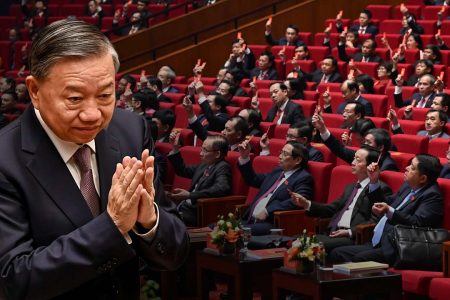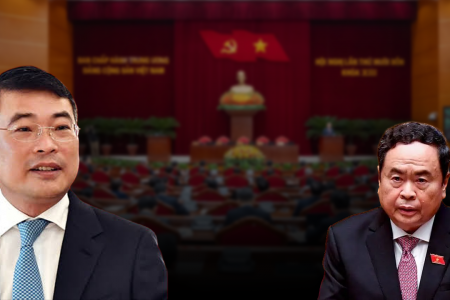
On the afternoon of January 23, 2026, the 14th National Congress of the Communist Party of Vietnam officially concluded a day and a half earlier than scheduled. The outcome, according to international observers, was hardly surprising: incumbent Tô Lâm was re-elected with a perfect 180/180 vote by the newly elected Central Committee.
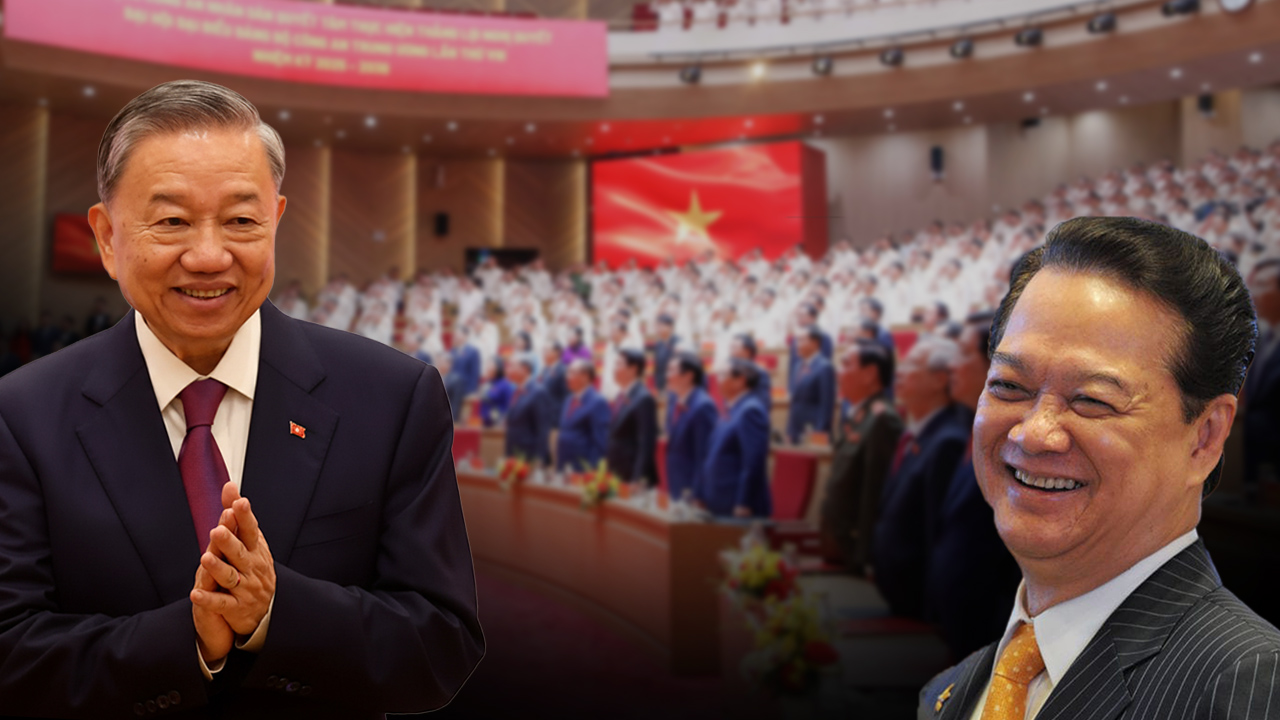
After decisively removing major political rivals such as Prime Minister Phạm Minh Chính and State President Lương Cường from the power arena, and with 9 out of 19 new Politburo members reportedly aligned with him, Tô Lâm appears to have taken full control of Vietnam’s political landscape.
However, a major question remains open—and contentious among analysts: Given such a dominant position, why has Tô Lâm not immediately implemented the “position-merging” model—serving simultaneously as General Secretary and State President—as previously rumored to happen right at the Congress?
The answer seems to lie in a fierce tug-of-war between personal ambition and institutional constraints that even Tô Lâm cannot instantly overcome.
According to Regulation 368-QĐ/TW, the shift from the “four pillars” model to a “five pillars” model—adding the Standing Member of the Secretariat to the top leadership group—was designed to create a new balance while awaiting more fundamental legal changes.
At the closing ceremony, Trần Cẩm Tú, the Standing Member of the Secretariat, immediately announced that he would direct research into revising and supplementing the Party Charter “from the very beginning of the term,” with a proposal to be submitted within 2026. This is seen as a signal that Tô Lâm is opting for formal legitimacy to legalize his supreme authority.
Analysts note that the current Party Charter and constitutional provisions remain technical barriers, meaning that an immediate move to merge the two top posts could trigger unnecessary constitutional conflicts. Not taking on the State Presidency right away does not mean Tô Lâm has abandoned that ambition.
If Tô Lâm were to impose a hasty administrative decision, it could provoke resistance from factions within the Party, and even risk a resurgence of military-linked factions. Therefore, he appears compelled to adopt a strategy of “one step back to take two steps forward”—first consolidating personnel, then rewriting the rules.
Observers believe the period from now until April 2026, when Vietnam’s 16th National Assembly is expected to convene to elect key government leadership positions for the 2026–2031 term, will be decisive.
By then, revisions to the Party Charter are expected to be completed, providing the additional changes needed to legalize institutional synchronization in a constitutionally compliant manner.
This suggests a carefully calculated roadmap to pave the way for Tô Lâm’s “exclusive” concentration of power to be finalized in the first half of 2026.
In this way, Tô Lâm can avoid being labeled a “dictator” or appearing to break the principle of collective leadership right at the 14th Congress, while also gaining time to complete the legal framework and turn a centralized power model into an officially recognized arrangement.
In sum, even if he has not become the absolute leader in name immediately after the 14th Congress, the 100% vote and his control over the Party Charter revision process mean that General Secretary Tô Lâm is, in practice, holding an unprecedented level of power since 1986, exercising leadership influence across both the Party and state apparatus.
The “delay” in assuming the State President’s chair is not a failure, but a cautious move in a context where Tô Lâm still faces pressure from the mechanism of collective leadership and oversight by the broader leadership.
The power “merger” chess game is only beginning, as General Secretary Tô Lâm continues to rewrite the rules. Let’s wait and see.
Trà My – Thoibao.de