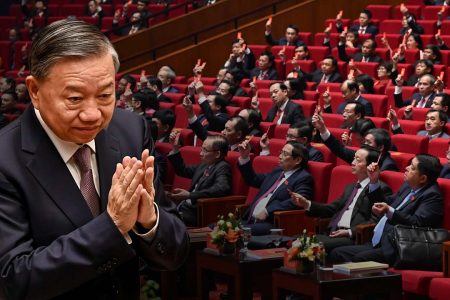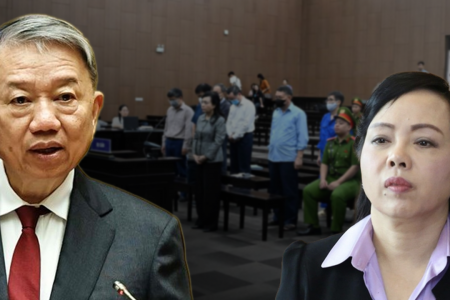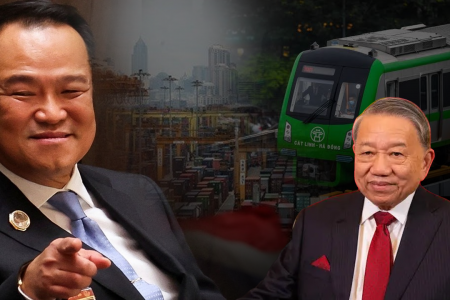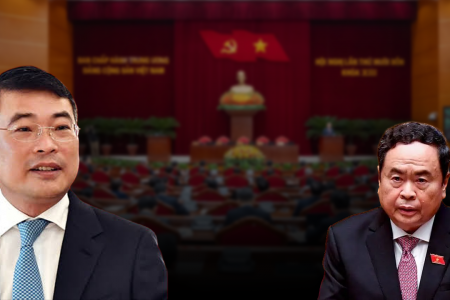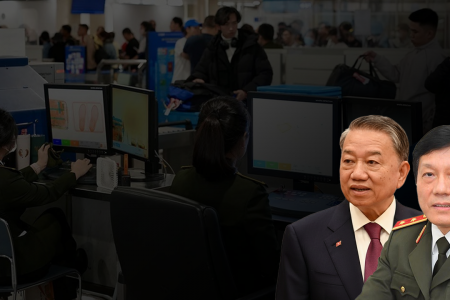
Ahead of the opening of the 14th Congress of the Communist Party of Vietnam, the picture of top-level personnel is gradually coming into view, even though officially it is still kept under the label of “strictly confidential.”
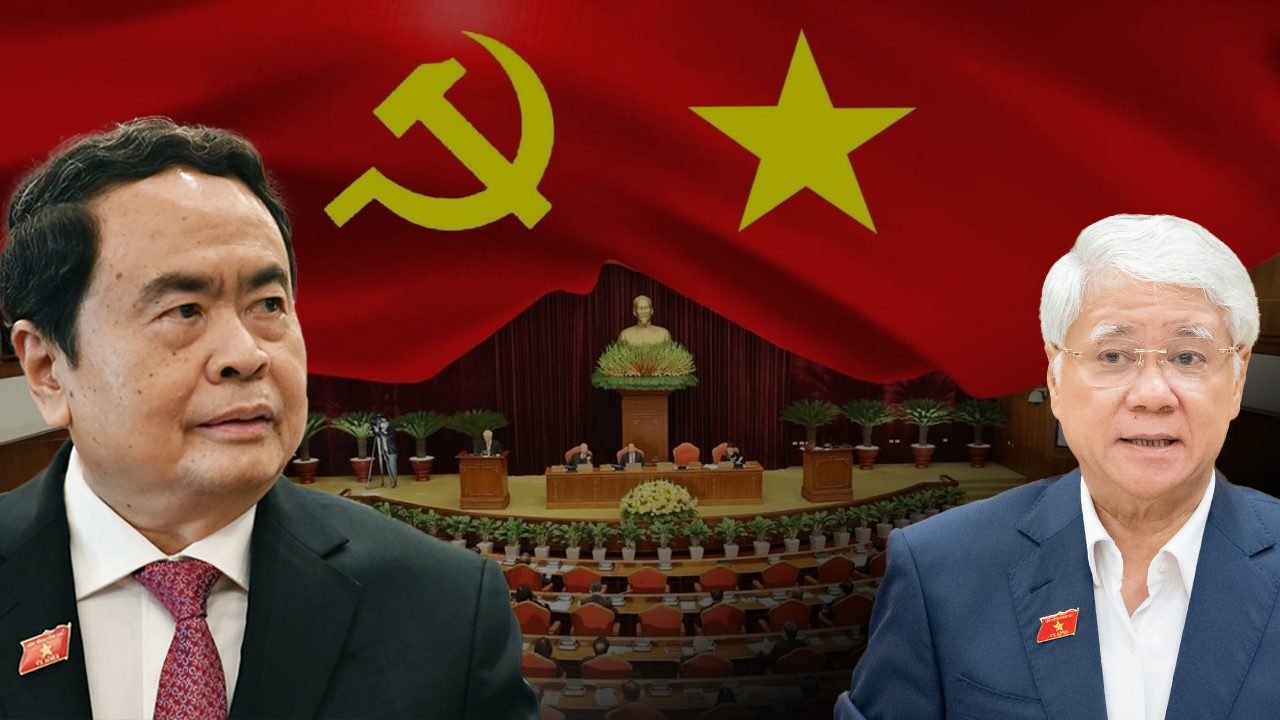
According to various international analyses, General Secretary Tô Lâm is expected to continue holding a substantial power base—enough to shape the “key” personnel order for the next term.
The scenarios most frequently cited by observers suggest that Tô Lâm is highly likely to remain General Secretary while also serving as State President under a model of consolidated leadership.
Meanwhile, Lê Minh Hưng is expected to assume the position of Prime Minister, replacing Phạm Minh Chính. Trần Thanh Mẫn would continue to hold the post of Chair of the National Assembly during a transitional period, while Deputy Chair Đỗ Văn Chiến is reportedly being prepared as a successor option. The position of Standing Member of the Secretariat is widely believed to be headed by Trần Cẩm Tú.
Within this structure, the role of Senior General Phan Văn Giang is assessed as stable but constrained. If re-elected, Giang would most likely remain in the Politburo as Minister of National Defence, or in an equivalent role, serving as the military’s representative within the leadership’s inner circle.
In that broader picture, Trần Thanh Mẫn stands out as an important link in maintaining political balance. Mẫn meets the age requirements, has completed a full term as a Politburo member, and currently holds the office of Chair of the National Assembly.
However, many analyses suggest that this may be only a transitional phase for Mẫn before the National Assembly is handed over to another figure deemed more aligned with the new post–14th Congress power arrangement.
For that reason, Tô Lâm’s earlier decision to transfer Đỗ Văn Chiến from his role as Chair of the Vietnam Fatherland Front to the post of Standing Deputy Chair of the National Assembly is not viewed as merely a technical personnel move.
On the contrary, it is seen as an early “piece placement.” Chiến’s status as an ethnic minority representative is also believed to help complete the regional and demographic balance of the overall structure. At the same time, it enables Chiến to become familiar with the National Assembly apparatus and accumulate political stature—ready to replace Trần Thanh Mẫn “if necessary” in the latter half of the term.
Meanwhile, the Party Secretariat is increasingly becoming a center of real power and control. The Standing Member of the Secretariat is therefore considered the most sensitive position, requiring absolute trust from the General Secretary. In that context, Trần Cẩm Tú has emerged as a near-uncontested choice.
Together with Lê Minh Hưng, both figures are originally from Hà Tĩnh. This has fueled perceptions of the rise of a “Hà Tĩnh faction” as a new power pillar, capable of enforcing internal discipline during a period of heightened power concentration such as the present.
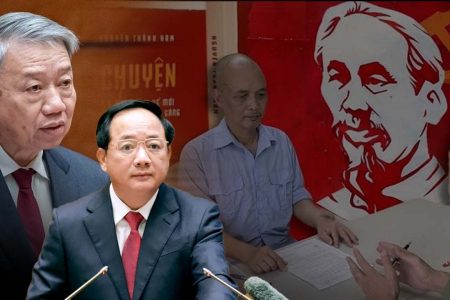
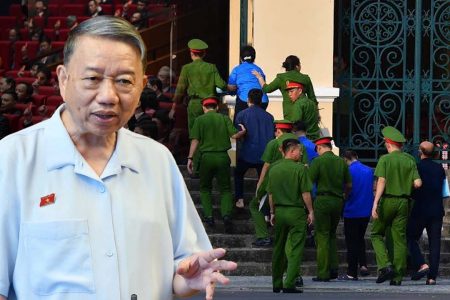
However, the Ministry of Public Security’s announcement of its investigation conclusions and its recommendation to prosecute Nguyễn Công Minh in absentia—Chairman of the Board of Công Minh Green Trees Company—right on the eve of the 14th Congress has sparked widespread speculation.
In public discussion, this move has been linked to the role of Standing Secretariat member Trần Cẩm Tú, who has previously been alleged to have political connections to this behind-the-scenes interest group.
Analysts, however, argue that this is not an attempt to remove Trần Cẩm Tú from the game, but rather a warning message and a set of conditions laid down by Tô Lâm.
Accordingly, the Standing Member of the Secretariat may hold broad control over organization and discipline, yet must still operate within the framework shaped by General Secretary Tô Lâm. This is described as a mechanism for “locking in” power through dossiers.
Although the First Plenum of the 14th Central Committee is the venue where the leadership for the 2026–2031 term will be formally finalized, the above developments indicate that the “key personnel” chessboard has already been arranged by Tô Lâm, with clear pillars of control in place.
Trà My – Thoibao.de